Make Your Own Flashcards App Guide: The Best Guide
Make your own flashcards in minutes without coding. Use Flashrecall to easily create custom flashcards and schedule your reviews with spaced repetition.
How Flashrecall app helps you remember faster. It's free
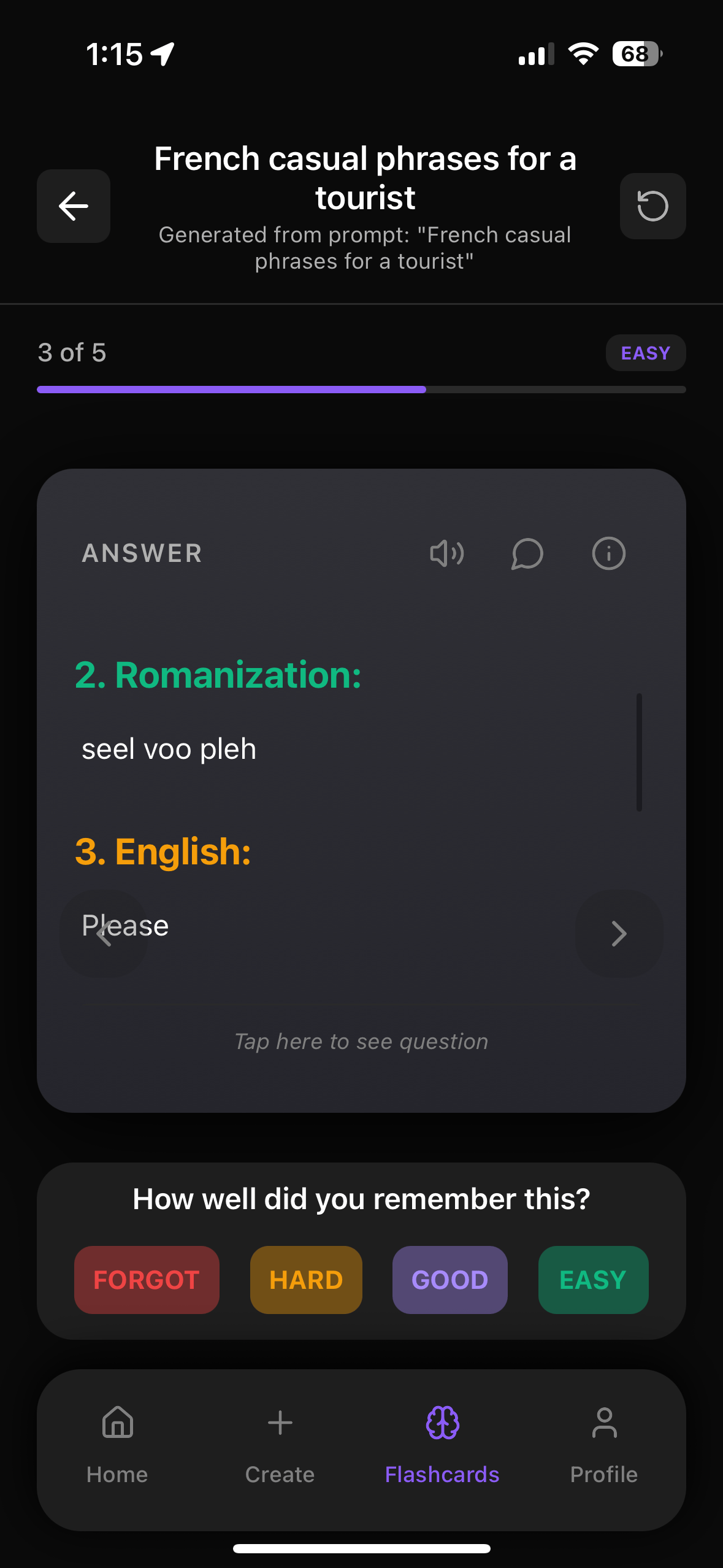
Stop Overcomplicating It: You Don’t Need to “Build” a Flashcards App
Here's what's up: make your own flashcards app guide might sound like a big project, but it's way more chill than you think. You know how sometimes studying can feel like you're juggling a million things? Well, flashcards are like a secret weapon to make life easier. They help you break stuff down into bite-sized pieces that your brain can actually handle. And the magic really happens when you use them the right way—like with this thing called active recall and spaced repetition. Now, Flashrecall is pretty awesome because it takes the hassle out of the whole process. You can just toss your study notes in, and Flashrecall does its wizardry, creating flashcards and planning review times for you. If you're curious about how to whip up your own flashcards without a ton of fuss, check out the guide we've got lined up for you. It's all about building flashcards in minutes instead of sweating over code for weeks. Trust me, it's worth a look!
If you're looking for information about create your own flashcards app: the essential guide to learning faster without the hassle – discover a smarter way to “build your own” flashcards in minutes instead of coding for weeks., read our complete guide to create your own flashcards app.
- You’re tired of clunky, old-school flashcard apps
- You want something that feels like your system, not a rigid template
- You’re even wondering if you should code your own app or use Notion/Excel/Docs as a DIY solution
Here’s the truth:
You don’t need to build a flashcard app from scratch.
You need an app that lets you make your own flashcards exactly the way you want—fast, flexible, and smart.
That’s where Flashrecall comes in:
👉 https://apps.apple.com/us/app/flashrecall-study-flashcards/id6746757085
It’s basically “your own flashcard app,” without the pain of actually building software.
What “Make Your Own Flashcards App” Should Really Mean
When people say they want to make their own flashcards app, they usually want:
- Control over what they study
- Control over how the cards look and work
- A system that reminds them to review at the right time
- Something that doesn’t feel like doing admin work every night
You don’t actually want to spend weeks learning to code, designing databases, and figuring out spaced repetition algorithms.
You want:
- “I take a photo of my notes → boom, flashcards.”
- “I paste a paragraph → boom, flashcards.”
- “I drop in a PDF or YouTube lecture → boom, flashcards.”
That’s literally what Flashrecall does.
Meet Flashrecall: The “Make Your Own Flashcards” App That Does the Boring Stuff For You
Flashrecall is a fast, modern flashcard maker app for iPhone and iPad that’s built for people who want full control over their content, but zero friction making it.
Download it here:
👉 https://apps.apple.com/us/app/flashrecall-study-flashcards/id6746757085
Here’s why it feels like your own custom app:
1. Make Flashcards From Almost Anything
You’re not limited to typing everything manually (unless you want to).
With Flashrecall, you can create cards from:
- Images – Snap a photo of your textbook, whiteboard, or handwritten notes → Flashrecall turns it into flashcards.
- Text – Paste notes from Google Docs, Notion, or wherever → auto flashcards.
- Audio – Record explanations or lectures and turn them into cards.
- PDFs – Upload slides, practice exams, or eBooks → extract the key info into cards.
- YouTube links – Drop a link to a lecture or tutorial → generate flashcards from it.
- Typed prompts – Tell it what you’re learning (“I’m studying cardiac physiology for med school”) → get suggested cards.
- Manual cards – Of course, you can still create cards the classic way if you like full control.
So instead of “spend 3 hours making cards,” it becomes “spend 10 minutes and start studying.”
2. Built-In Active Recall (So You Actually Learn, Not Just Read)
A lot of “DIY systems” end up being just… notes.
You look at them, you read them—but you’re not testing yourself.
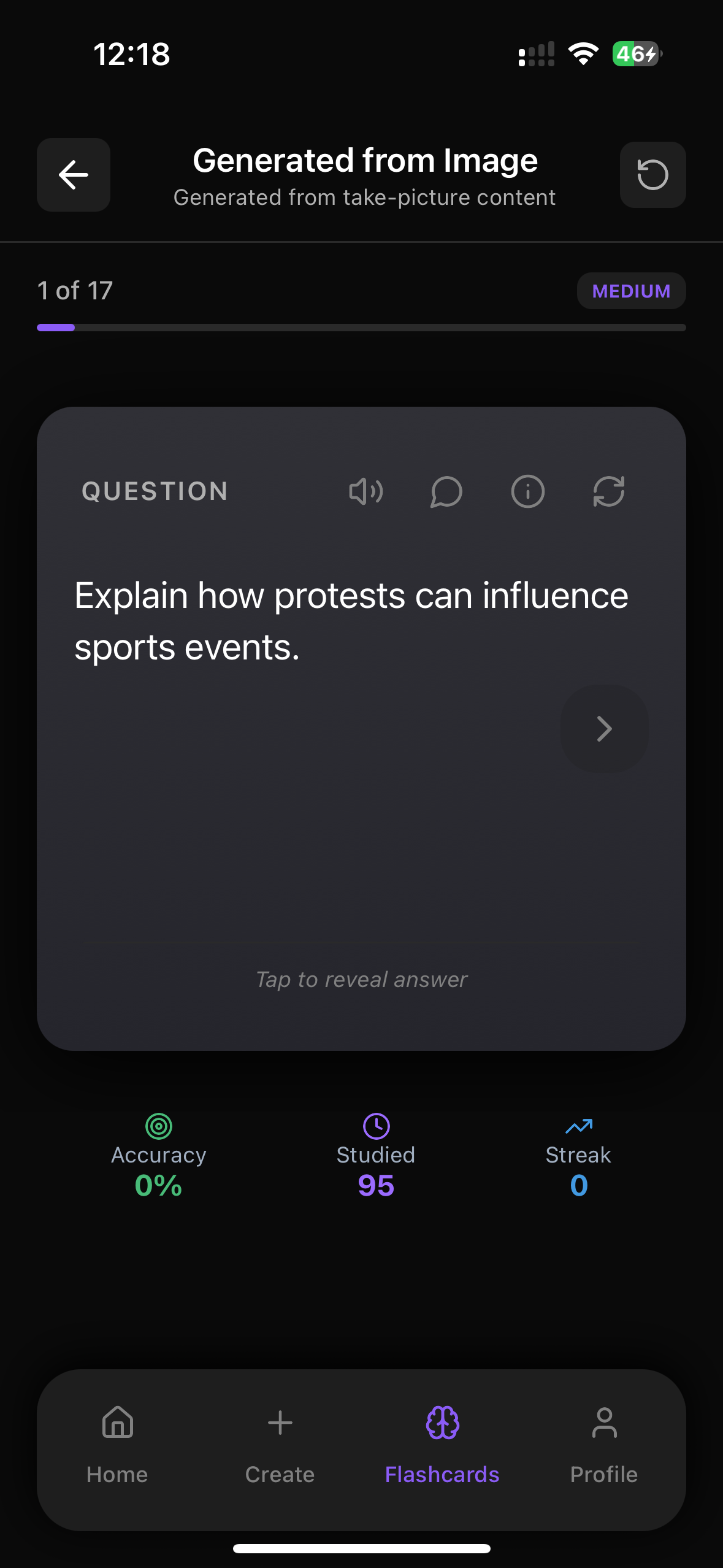
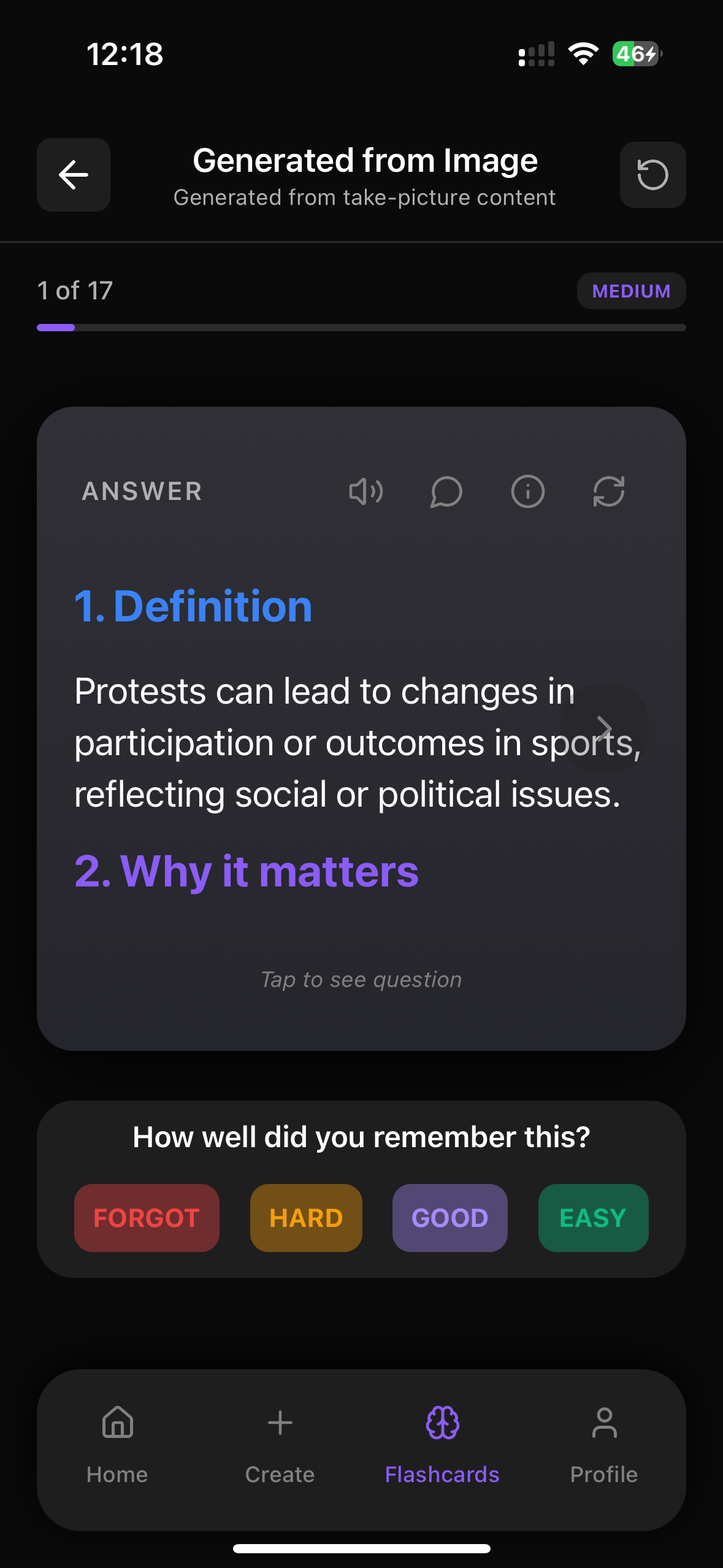
Flashrecall is built around active recall:
- It hides the answer so you have to remember it, not just recognize it
- You mark how well you remembered it (easy, medium, hard), which feeds into spaced repetition
- You repeat this enough times → the info sticks
You don’t have to design this logic yourself. It’s already baked into the app.
The Secret Sauce: Spaced Repetition Without Any Manual Scheduling
If you tried to “make your own flashcard system” in Notion, Excel, or paper, you’ve probably hit this wall:
> “When am I supposed to review which cards?”
Spaced repetition is the science-backed way to remember stuff long-term. But doing it manually is a nightmare.
Flashrecall has built-in spaced repetition:
- It automatically schedules cards for you
- Hard cards show up more often
- Easy cards get pushed further into the future
- You don’t have to remember when to review—Flashrecall does it
Plus, there are study reminders, so you get a gentle nudge to review before you forget everything.
No spreadsheets. No calendar hacks. Just open the app and it shows you what to study today.
Why Not Just Use Another Flashcard App?
You might be thinking:
Flashrecall automatically keeps track and reminds you of the cards you don't remember well so you remember faster. Like this :
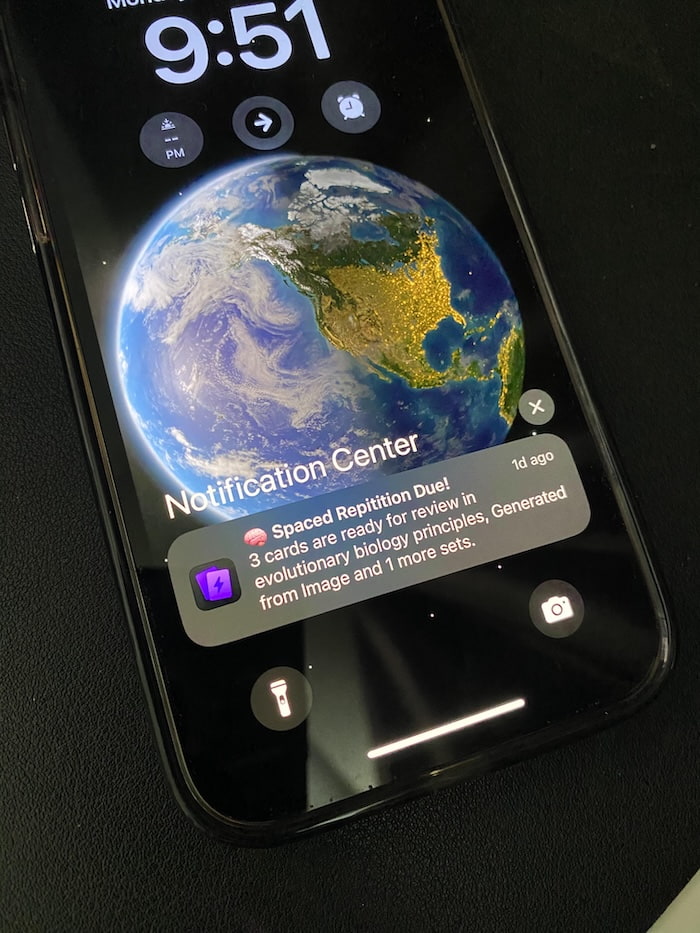
> “There are already flashcard apps out there. Why not just use one of them?”
Totally fair. Here’s how Flashrecall stands out if you want to make your own flashcards app-style setup:
1. It’s Built For Speed and Ease
A lot of older apps feel… old.
Menus everywhere, confusing settings, clunky design.
Flashrecall is:
- Fast
- Clean
- Modern
- Easy to use from day one
You don’t need a YouTube tutorial just to figure out how to add a deck.
2. Creation Is Almost Instant
Other apps often expect you to type everything manually.
With Flashrecall, you can build a full deck from:
- A lecture slide PDF
- A YouTube video
- A photo of your notes
This is a huge deal if you’re in med school, law, engineering, languages, or any heavy-content subject. You don’t have time to retype half a textbook.
3. It Works Offline
On a plane, in the subway, in a building with terrible Wi-Fi—you can still study.
Your decks are on your device, so you can review anywhere.
4. You Can Chat With Your Flashcards (Seriously)
This is one of the coolest parts:
If you’re unsure about a concept on a card, you can chat with the flashcard to go deeper.
- Don’t get a definition? Ask it to explain in simpler words.
- Need examples? Ask for them.
- Want a quick recap of a topic? Chat with the deck.
It’s like having a tutor attached to your flashcards.
What Can You Use Flashrecall For?
Pretty much anything that involves remembering stuff.
Some ideas:
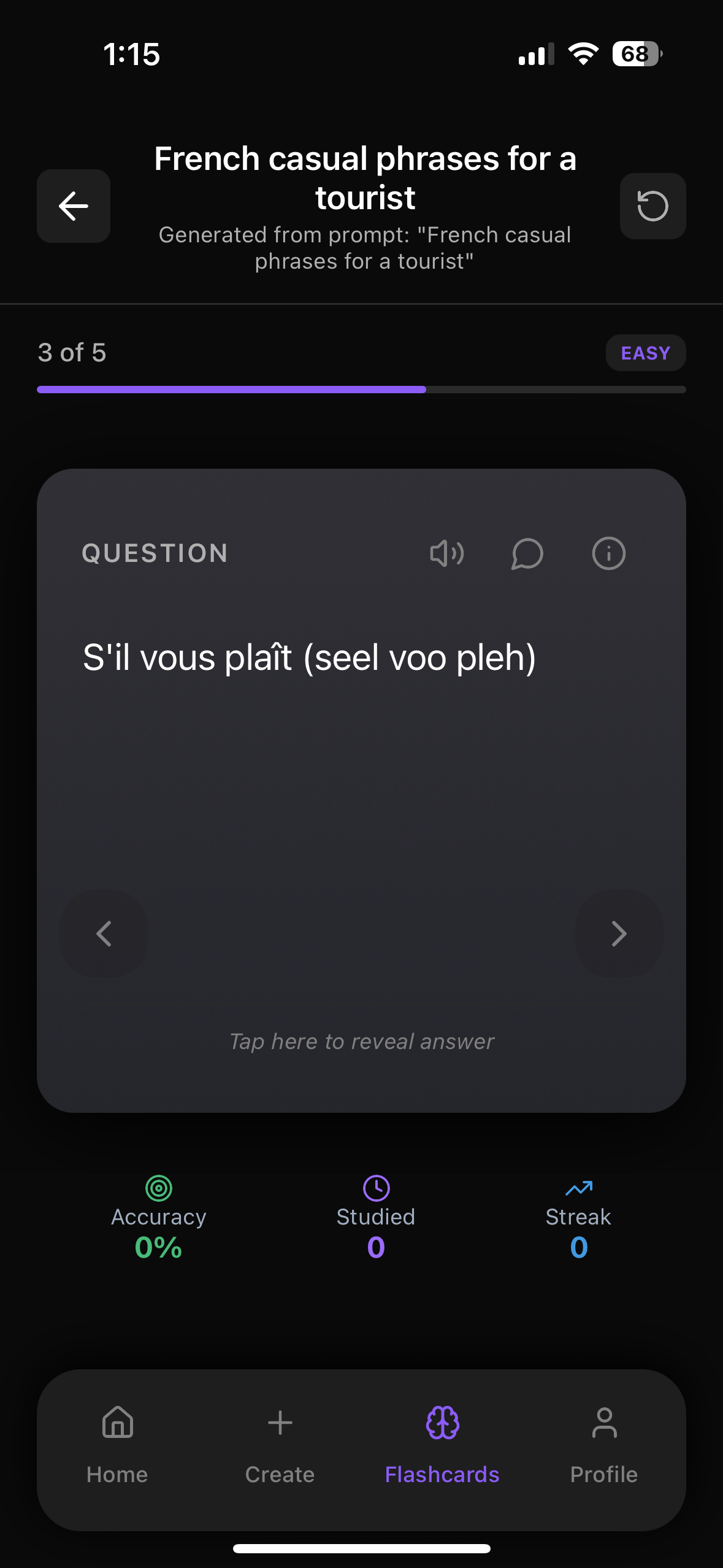
- Languages – Vocabulary, grammar patterns, phrases from YouTube videos or podcasts
- Exams – SAT, MCAT, USMLE, bar exam, CFA, finals, certifications
- School subjects – History dates, formulas, definitions, key concepts
- University – Lecture slides → instant decks, perfect for weekly reviews
- Medicine – Drugs, mechanisms, pathologies, anatomy
- Business & work – Frameworks, interview prep, sales scripts, product knowledge
- Personal learning – Coding concepts, music theory, geography, anything
If it can be written, shown, or explained… you can turn it into flashcards.
Example: Turning a Messy Study Setup Into “Your Own App”
Let’s say you’re studying for a big exam.
Right now you have:
- Screenshots in your camera roll
- PDFs in your email
- Notes in Apple Notes / Notion
- Links to YouTube videos
- Random voice memos
Here’s how you’d turn that into a clean, powerful flashcard system with Flashrecall:
1. Create a deck: “Biology Final – Semester 2”
2. Import your stuff:
- Upload the PDF of lecture slides
- Paste in some key notes
- Add the YouTube link from your teacher’s review video
- Snap a photo of the whiteboard from your last class
3. Let Flashrecall generate cards from all that content
4. Clean up or add manual cards for anything extra you want
5. Start a review session with active recall + spaced repetition
6. Set study reminders so you don’t ghost your deck for 2 weeks
In under an hour, you’ve basically built “your own flashcards app” for that exam—without writing a single line of code or building a database.
Why Building Your Own App Is (Honestly) a Trap
If you’re a coder or tech person, you might be tempted to literally create your own flashcards app.
But think about:
- Designing the UI
- Building the database
- Implementing spaced repetition logic
- Handling sync, offline mode, reminders
- Fixing bugs
- Updating it when iOS changes
All of that time could be spent… actually learning.
Using something like Flashrecall means:
- You get all the power of a polished app
- You still fully control your content
- You can start in minutes, not months
You’re not locked into someone else’s weird workflow. You’re just skipping the boring engineering part.
How To Get Started With Flashrecall Today
If what you really want is a “make your own flashcards app” experience without the headache, here’s your move:
1. Download Flashrecall (free to start):
👉 https://apps.apple.com/us/app/flashrecall-study-flashcards/id6746757085
2. Create your first deck for whatever you’re studying right now
3. Import something (photo, PDF, text, YouTube link) and let it generate cards
4. Do a 10-minute review session with active recall + spaced repetition
5. Turn on study reminders so future-you doesn’t forget
Give it a week.
You’ll feel the difference in how much you remember—and how little time you spend making cards instead of using them.
Final Thought: You Don’t Need a Custom App. You Need a Smart One.
You don’t actually want to make your own flashcards app from scratch.
You want:
- Your own content
- Your own decks
- Your own pace
- With the smartest tools (spaced repetition, active recall, reminders) built in
That’s exactly what Flashrecall gives you—without any of the technical pain.
Try it, build your own decks, and let the app handle the rest:
👉 https://apps.apple.com/us/app/flashrecall-study-flashcards/id6746757085
Frequently Asked Questions
What's the fastest way to create flashcards?
Manually typing cards works but takes time. Many students now use AI generators that turn notes into flashcards instantly. Flashrecall does this automatically from text, images, or PDFs.
Is there a free flashcard app?
Yes. Flashrecall is free and lets you create flashcards from images, text, prompts, audio, PDFs, and YouTube videos.
How do I start spaced repetition?
You can manually schedule your reviews, but most people use apps that automate this. Flashrecall uses built-in spaced repetition so you review cards at the perfect time.
Related Articles
- Make Your Own Flashcards: 7 Powerful Tricks To Learn Faster (Most Students Don’t Know) – Turn anything you’re learning into smart, auto-review flashcards that practically make you remember.
- Custom Flashcards Online: The Best Way To Learn Faster With Smart, Automated Study Tools – Discover How To Turn Anything Into Powerful Flashcards In Seconds
- Audio Flashcards: The Powerful Way To Learn Faster (And Actually Remember Stuff) – Discover How To Turn Anything You Hear Into Smart, Auto-Reviewing Flashcards In Minutes
Research References
The information in this article is based on peer-reviewed research and established studies in cognitive psychology and learning science.
Cepeda, N. J., Pashler, H., Vul, E., Wixted, J. T., & Rohrer, D. (2006). Distributed practice in verbal recall tasks: A review and quantitative synthesis. Psychological Bulletin, 132(3), 354-380
Meta-analysis showing spaced repetition significantly improves long-term retention compared to massed practice
Carpenter, S. K., Cepeda, N. J., Rohrer, D., Kang, S. H., & Pashler, H. (2012). Using spacing to enhance diverse forms of learning: Review of recent research and implications for instruction. Educational Psychology Review, 24(3), 369-378
Review showing spacing effects work across different types of learning materials and contexts
Kang, S. H. (2016). Spaced repetition promotes efficient and effective learning: Policy implications for instruction. Policy Insights from the Behavioral and Brain Sciences, 3(1), 12-19
Policy review advocating for spaced repetition in educational settings based on extensive research evidence
Karpicke, J. D., & Roediger, H. L. (2008). The critical importance of retrieval for learning. Science, 319(5865), 966-968
Research demonstrating that active recall (retrieval practice) is more effective than re-reading for long-term learning
Roediger, H. L., & Butler, A. C. (2011). The critical role of retrieval practice in long-term retention. Trends in Cognitive Sciences, 15(1), 20-27
Review of research showing retrieval practice (active recall) as one of the most effective learning strategies
Dunlosky, J., Rawson, K. A., Marsh, E. J., Nathan, M. J., & Willingham, D. T. (2013). Improving students' learning with effective learning techniques: Promising directions from cognitive and educational psychology. Psychological Science in the Public Interest, 14(1), 4-58
Comprehensive review ranking learning techniques, with practice testing and distributed practice rated as highly effective

FlashRecall Team
FlashRecall Development Team
The FlashRecall Team is a group of working professionals and developers who are passionate about making effective study methods more accessible to students. We believe that evidence-based learning tec...
Credentials & Qualifications
- •Software Development
- •Product Development
- •User Experience Design
Areas of Expertise
Ready to Transform Your Learning?
Start using FlashRecall today - the AI-powered flashcard app with spaced repetition and active recall.
Download on App Store