Microeconomics Flashcards: 7 Proven Study Hacks To Master Supply & Demand Fast – Stop Rereading Your Textbook And Use Smart Flashcards To Actually Remember It
Microeconomics flashcards don’t need to be boring. See exactly what to put on cards, how to handle graphs, and how Flashrecall turns notes into SRS in seconds.
How Flashrecall app helps you remember faster. It's free
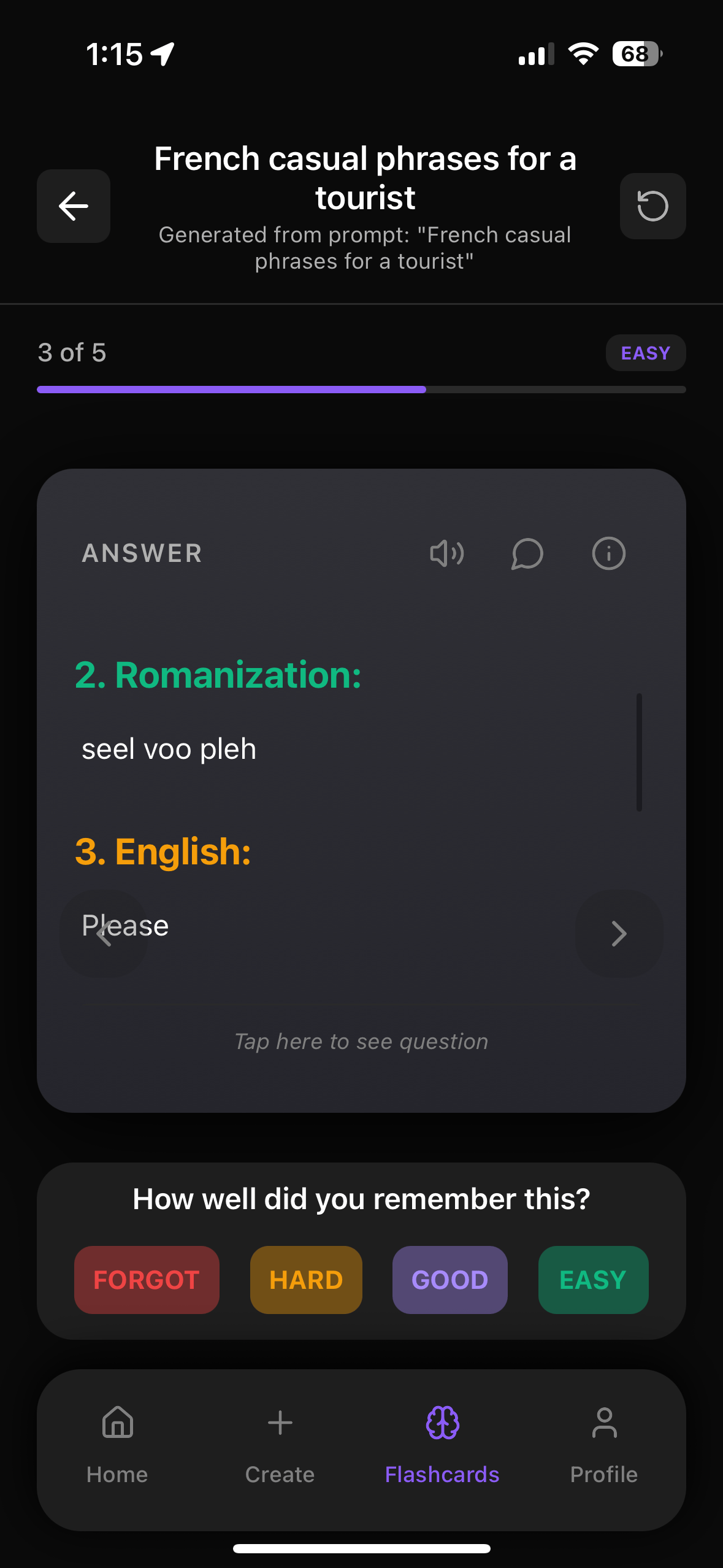
Stop Drowning In Curves And Formulas – Use Microeconomics Flashcards The Smart Way
Microeconomics can feel brutal: supply and demand graphs everywhere, elasticities, cost curves, game theory… and then your exam is 60% multiple choice on tiny details you barely remember.
This is exactly where flashcards shine – if you use them right.
Instead of spending hours making ugly cards in random apps, you can use Flashrecall to turn your micro notes, slides, PDFs, and even YouTube videos into flashcards in seconds:
👉 https://apps.apple.com/us/app/flashrecall-study-flashcards/id6746757085
It’s fast, modern, works on iPhone and iPad, and has built‑in spaced repetition so you actually remember the concepts, not just cram them the night before.
Let’s break down how to use microeconomics flashcards the smart way, and how Flashrecall makes it way easier than doing everything manually.
What You Should Actually Put On Microeconomics Flashcards
Don’t try to put the whole textbook on cards. Focus on stuff your brain naturally forgets:
1. Core Definitions (But Not Boring Ones)
You definitely want cards for:
- Opportunity cost
- Marginal cost / marginal benefit
- Diminishing marginal returns
- Elasticity (price, income, cross-price)
- Consumer surplus / producer surplus
- Deadweight loss
- Perfect competition / monopoly / oligopoly
- Public goods / common resources / externalities
But instead of:
> Q: What is opportunity cost?
> A: The value of the next best alternative foregone.
Try:
> Q: You spend Saturday working instead of going to a concert. What’s the opportunity cost?
> A: The value of the concert (next best alternative), not the money you earned or the ticket price alone.
This forces you to apply the idea, not just parrot the definition.
With Flashrecall, you can:
- Paste definitions from your notes or textbook
- Let the app help you turn them into clearer, shorter flashcards
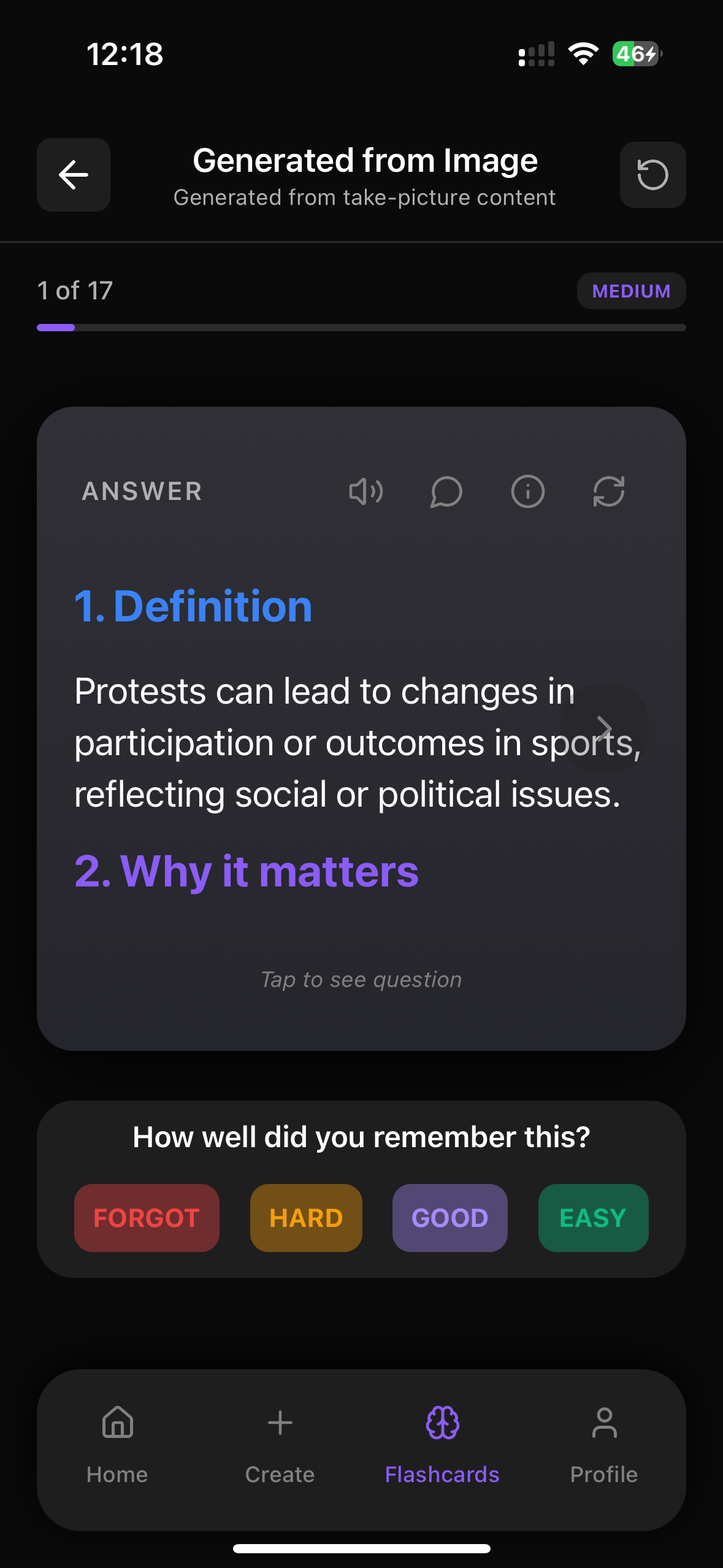
- Use active recall mode so you see the question first and must answer from memory
2. Graphs And Curves (Yes, You Can Flashcard Those)
Graphs are huge in microeconomics, and most people try to memorize them by staring at slides. That doesn’t work.
Instead, turn them into flashcards like:
- Image → Concept
- Front: A supply and demand graph with a tax added (screenshot from your slides).
- Back: “Tax wedge, deadweight loss shaded, who bears more burden if demand is inelastic vs elastic.”
- Concept → Image (mentally)
- Front: “Draw a perfectly inelastic demand curve and explain what it means.”
- Back: “Vertical demand curve; quantity demanded doesn’t change when price changes (e.g., life-saving medicine).”
With Flashrecall, this becomes super easy:
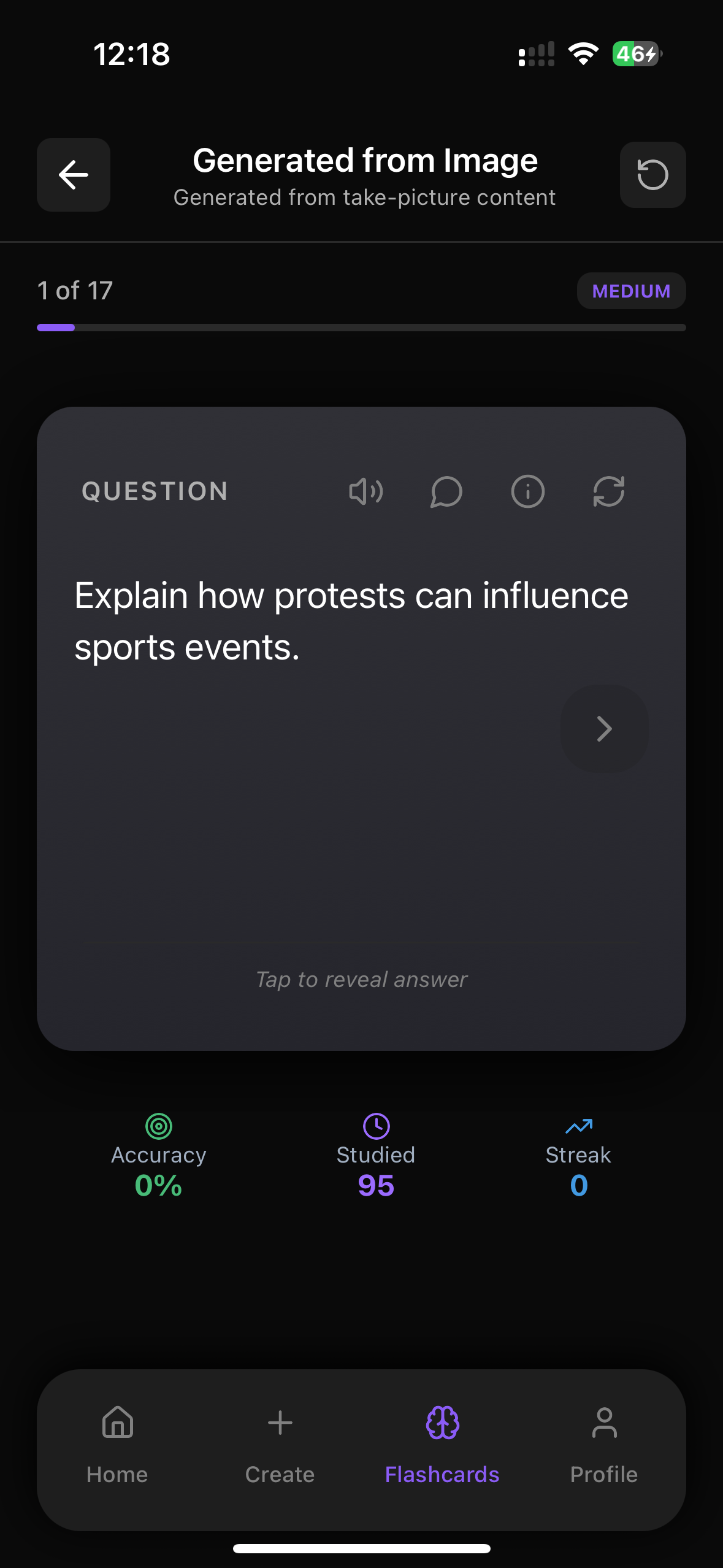
- Take a photo of the graph from your textbook / slides
- The app turns the image into flashcards automatically
- You can even chat with the flashcard if you’re unsure: “Explain this tax diagram again in simple terms.”
No more redrawing the same graph 10 times in your notebook.
3. Formulas And When To Use Them
Memorizing formulas is only half the job; you also need to know when to use them.
Examples of good formula flashcards:
- Front: “Formula for price elasticity of demand (midpoint method)?”
Back: “(ΔQ / average Q) ÷ (ΔP / average P). Used when calculating elasticity over a range instead of a single point.”
- Front: “When do we use marginal cost = marginal revenue?”
Back: “To find the profit-maximizing output level for a firm.”
In Flashrecall, you can:
- Paste formula-heavy chunks from your PDF or notes
- Let the app auto-generate flashcards
- Edit them quickly to add “when to use” notes, not just the naked formula
4. Real-World Scenarios (What Professors Love To Test)
Those annoying exam questions like:
> “A government sets a price ceiling below equilibrium. What happens to consumer surplus, producer surplus, and deadweight loss?”
Perfect flashcard material.
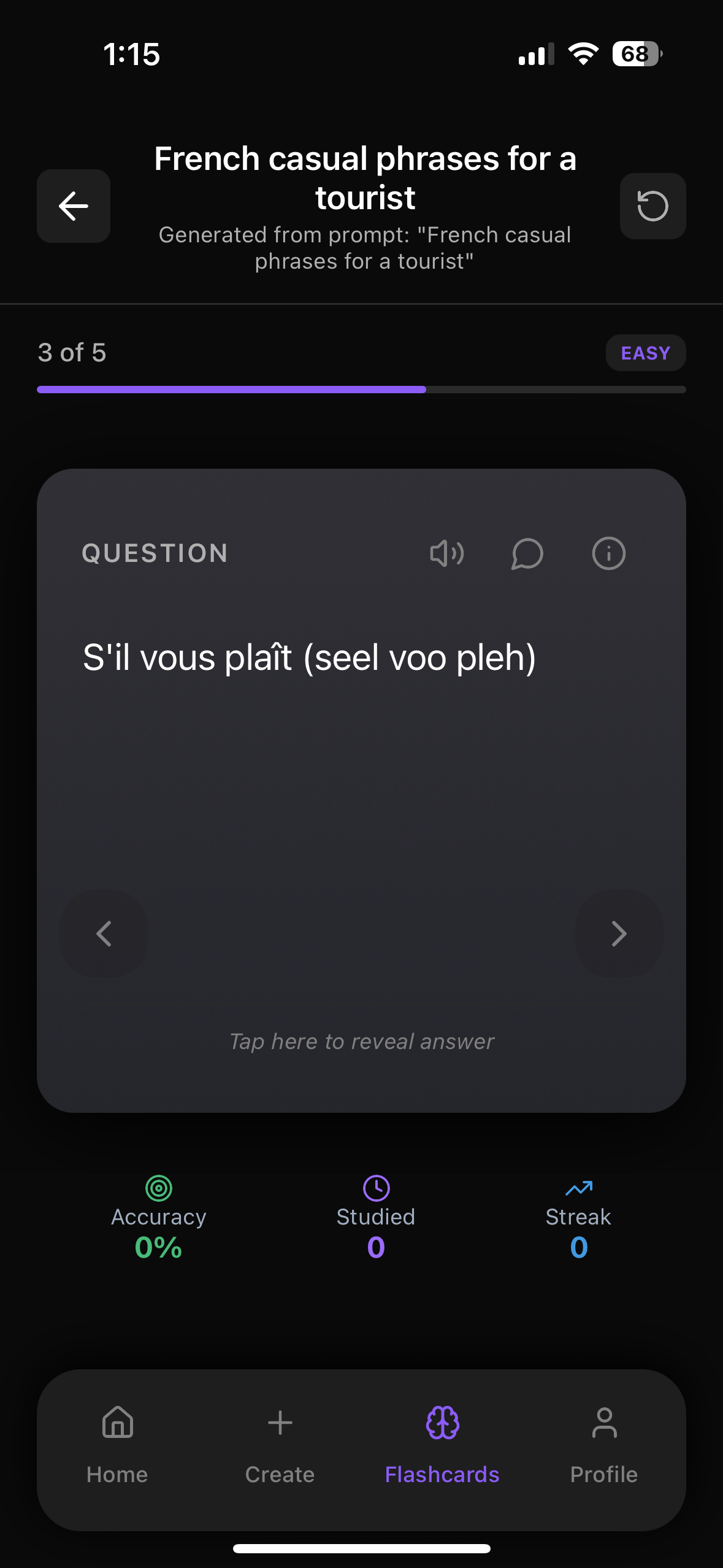
Flashrecall automatically keeps track and reminds you of the cards you don't remember well so you remember faster. Like this :
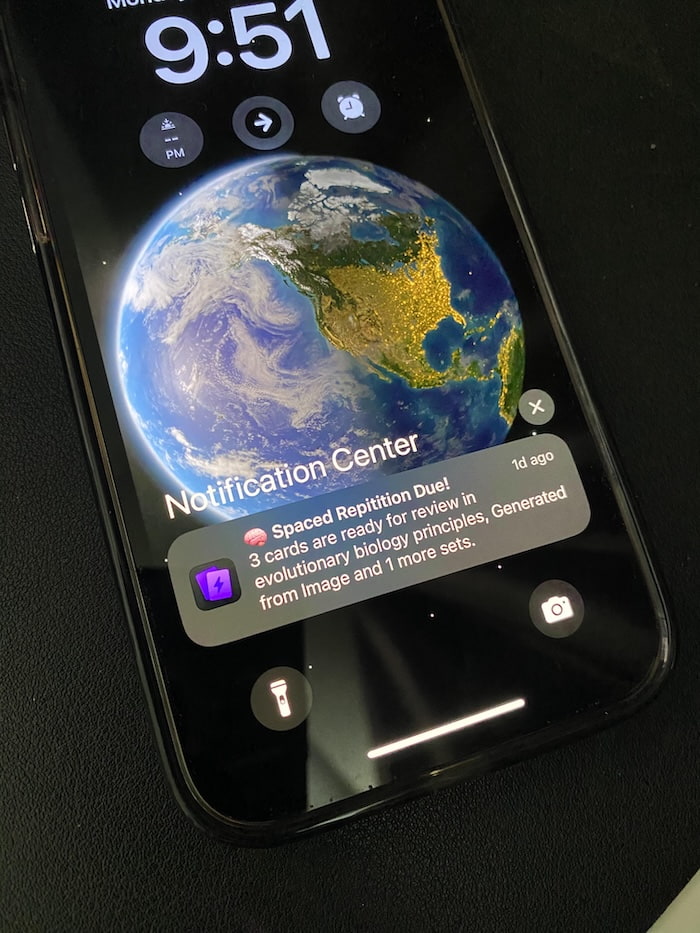
Make cards like:
- Front: “Price ceiling below equilibrium – what happens?”
Back: “Shortage, some consumers better off, some worse off (can’t buy at all), producer surplus falls, deadweight loss appears.”
- Front: “Negative externality example + government solution?”
Back: “Pollution from a factory; Pigouvian tax equal to marginal external cost, cap-and-trade, or regulation.”
This trains you to think like the exam.
With Flashrecall, you can:
- Import your professor’s problem sets as PDFs
- Auto-generate flashcards from them
- Practice them with spaced repetition so you don’t forget the logic 2 weeks later
Why Flashcards Work So Well For Microeconomics
Micro is full of:
- Similar-sounding concepts (marginal vs average, explicit vs implicit costs)
- Lots of small details (shifts vs movements along curves)
- Graph interpretations
- Math + words combined
Two things help the most here:
1. Active recall – forcing your brain to pull the answer out without looking
2. Spaced repetition – seeing the card right before you’re about to forget it
- Active recall mode: you always see the question first, then reveal the answer
- Built-in spaced repetition: it schedules reviews automatically based on how well you remembered the card
- Study reminders: it nudges you to review so you don’t ghost your micro flashcards for 2 weeks
You don’t have to think about “when should I review this again?” – the app does it for you.
Download it here if you want to try it while reading this:
👉 https://apps.apple.com/us/app/flashrecall-study-flashcards/id6746757085
It’s free to start.
How To Use Flashrecall To Build Microeconomics Flashcards Fast
Here’s a simple workflow you can literally do after each lecture.
Step 1: Capture Today’s Material In Seconds
With Flashrecall, you can create cards from:
- Lecture slides (PDFs or images)
- Upload the PDF or snap a photo
- Let Flashrecall pull out key points and turn them into draft flashcards
- Textbook pages
- Take a picture of the page with your phone
- The app extracts text and helps you create cards from definitions, examples, and key terms
- YouTube videos (e.g., microeconomics explainer channels)
- Paste the YouTube link
- Generate cards from the transcript and explanations
- Your own summaries
- Type or paste your notes
- Turn them into cards with a couple of taps
You can still make cards manually if you like full control, but the whole point is: stop wasting time on formatting.
Step 2: Make The Cards Actually Good (Not Just Walls Of Text)
Some quick “good micro flashcard” rules:
- One idea per card
- Short answers (no paragraphs)
- Use examples (“coffee market”, “Uber rides”)
- Ask yourself to explain, not just remember a label
Examples:
- Bad:
> Q: Market failure
> A: [Huge paragraph]
- Good:
> Q: What is market failure? Give 2 examples.
> A: When markets don’t allocate resources efficiently on their own. Examples: pollution (negative externality), national defense (public good).
In Flashrecall, editing is fast, so you can quickly trim down long generated cards into clean, punchy ones.
Step 3: Let Spaced Repetition Do Its Thing
Once your cards are in:
- Study a small batch daily (10–30 minutes is enough)
- Rate how well you remembered each card
- Flashrecall automatically schedules the next review
Because it works offline, you can review:
- On the bus
- Between classes
- Right before a tutorial
- In exam week when Wi‑Fi is trash
This way, by the time exams come around, you’ve already seen each key concept multiple times, exactly when your brain was about to forget it.
Using Flashcards For Different Microeconomics Topics
Here are some topic-specific ideas you can plug into Flashrecall.
Supply, Demand, And Elasticity
- “What shifts demand vs what moves along the curve?”
- “If demand is inelastic and price increases, what happens to total revenue?”
- “Examples of elastic vs inelastic goods.”
Use images of graphs from your slides and turn them into flashcards with the app.
Costs, Revenues, And Market Structures
- “Difference between accounting profit and economic profit?”
- “Characteristics of perfect competition vs monopoly vs oligopoly.”
- “Where is ATC minimized on a cost curve graph?”
You can chat with the flashcard in Flashrecall if you’re stuck:
“Explain this ATC and MC graph like I’m 12.”
Welfare, Taxes, And Externalities
- “How do taxes create deadweight loss?”
- “Why do negative externalities lead to overproduction?”
- “What’s a Pigouvian tax?”
Turn your problem set diagrams into image-based cards and practice explaining what each area means.
Game Theory And Strategy
- “Define dominant strategy.”
- “What is a Nash equilibrium?”
- “Example of a prisoner’s dilemma in real life.”
These are perfect for quick Q&A-style cards.
Why Use Flashrecall Instead Of Generic Flashcard Apps?
There are plenty of flashcard apps out there, but for microeconomics specifically, Flashrecall has a few big advantages:
- Instant card creation from real study materials
- Images, text, PDFs, YouTube links, audio – all can become cards in seconds
- Built-in active recall and spaced repetition
- You don’t have to set up anything complicated
- Chat with your flashcards
- If you don’t understand a concept, you can literally ask the app to re-explain it
- Works offline
- Perfect for studying on the go or in dead Wi‑Fi zones
- Fast, modern, and easy to use
- No clunky interfaces or confusing settings
- Free to start
- You can try it on one micro topic (say, elasticity) and see if it helps before going all in
For microeconomics – where you have a mix of graphs, definitions, formulas, and wordy explanations – that combination is insanely useful.
Grab it here:
👉 https://apps.apple.com/us/app/flashrecall-study-flashcards/id6746757085
A Simple Microeconomics Flashcard Plan You Can Steal
If you want something plug-and-play, try this:
- Spend 10–15 minutes in Flashrecall
- Import slides / notes → auto-generate cards
- Clean up the 15–25 most important ones
- Do 15–20 minutes of reviews (on the bus, in bed, between classes)
- Add a few new cards for anything that confused you in tutorials or readings
- Don’t start from scratch – just keep doing your daily reviews
- Add past exam questions as flashcards (question on front, full reasoning on back)
- Use chat with flashcards if any concept still feels fuzzy
Stick to that, and microeconomics stops being this giant scary thing and turns into a steady drip of concepts your brain can actually handle.
If you’re serious about using microeconomics flashcards to finally understand the graphs, formulas, and theory instead of just cramming them, try doing it with a tool that does the heavy lifting for you:
👉 https://apps.apple.com/us/app/flashrecall-study-flashcards/id6746757085
Turn your micro notes into smart flashcards, let spaced repetition handle the timing, and walk into your exam actually recognizing the questions.
Frequently Asked Questions
What's the fastest way to create flashcards?
Manually typing cards works but takes time. Many students now use AI generators that turn notes into flashcards instantly. Flashrecall does this automatically from text, images, or PDFs.
Is there a free flashcard app?
Yes. Flashrecall is free and lets you create flashcards from images, text, prompts, audio, PDFs, and YouTube videos.
How do I start spaced repetition?
You can manually schedule your reviews, but most people use apps that automate this. Flashrecall uses built-in spaced repetition so you review cards at the perfect time.
How can I study more effectively for this test?
Effective exam prep combines active recall, spaced repetition, and regular practice. Flashrecall helps by automatically generating flashcards from your study materials and using spaced repetition to ensure you remember everything when exam day arrives.
Related Articles
- Integumentary System Flashcards: 7 Powerful Study Tricks To Finally Master Skin Anatomy Fast – Stop rereading your notes and use smart flashcards to actually remember everything.
- COA Flashcards: The Essential Guide To Passing Faster With Smarter Study Tricks – Stop Wasting Time On Inefficient Notes And Start Using Flashcards That Actually Stick
- Factmonster Com Flashcards: 7 Powerful Reasons To Switch To A Smarter Study App Today – Stop Wasting Time On Basic Flashcards And Upgrade Your Learning Game
Research References
The information in this article is based on peer-reviewed research and established studies in cognitive psychology and learning science.
Cepeda, N. J., Pashler, H., Vul, E., Wixted, J. T., & Rohrer, D. (2006). Distributed practice in verbal recall tasks: A review and quantitative synthesis. Psychological Bulletin, 132(3), 354-380
Meta-analysis showing spaced repetition significantly improves long-term retention compared to massed practice
Carpenter, S. K., Cepeda, N. J., Rohrer, D., Kang, S. H., & Pashler, H. (2012). Using spacing to enhance diverse forms of learning: Review of recent research and implications for instruction. Educational Psychology Review, 24(3), 369-378
Review showing spacing effects work across different types of learning materials and contexts
Kang, S. H. (2016). Spaced repetition promotes efficient and effective learning: Policy implications for instruction. Policy Insights from the Behavioral and Brain Sciences, 3(1), 12-19
Policy review advocating for spaced repetition in educational settings based on extensive research evidence
Karpicke, J. D., & Roediger, H. L. (2008). The critical importance of retrieval for learning. Science, 319(5865), 966-968
Research demonstrating that active recall (retrieval practice) is more effective than re-reading for long-term learning
Roediger, H. L., & Butler, A. C. (2011). The critical role of retrieval practice in long-term retention. Trends in Cognitive Sciences, 15(1), 20-27
Review of research showing retrieval practice (active recall) as one of the most effective learning strategies
Dunlosky, J., Rawson, K. A., Marsh, E. J., Nathan, M. J., & Willingham, D. T. (2013). Improving students' learning with effective learning techniques: Promising directions from cognitive and educational psychology. Psychological Science in the Public Interest, 14(1), 4-58
Comprehensive review ranking learning techniques, with practice testing and distributed practice rated as highly effective

FlashRecall Team
FlashRecall Development Team
The FlashRecall Team is a group of working professionals and developers who are passionate about making effective study methods more accessible to students. We believe that evidence-based learning tec...
Credentials & Qualifications
- •Software Development
- •Product Development
- •User Experience Design
Areas of Expertise
Ready to Transform Your Learning?
Start using FlashRecall today - the AI-powered flashcard app with spaced repetition and active recall.
Download on App Store