N5 Vocabulary Flashcards Tips: The Essential Guide
N5 vocabulary flashcards tips focus on using active recall and spaced repetition. Flashrecall creates smart flashcards and reminds you when to review them.
How Flashrecall app helps you remember faster. It's free
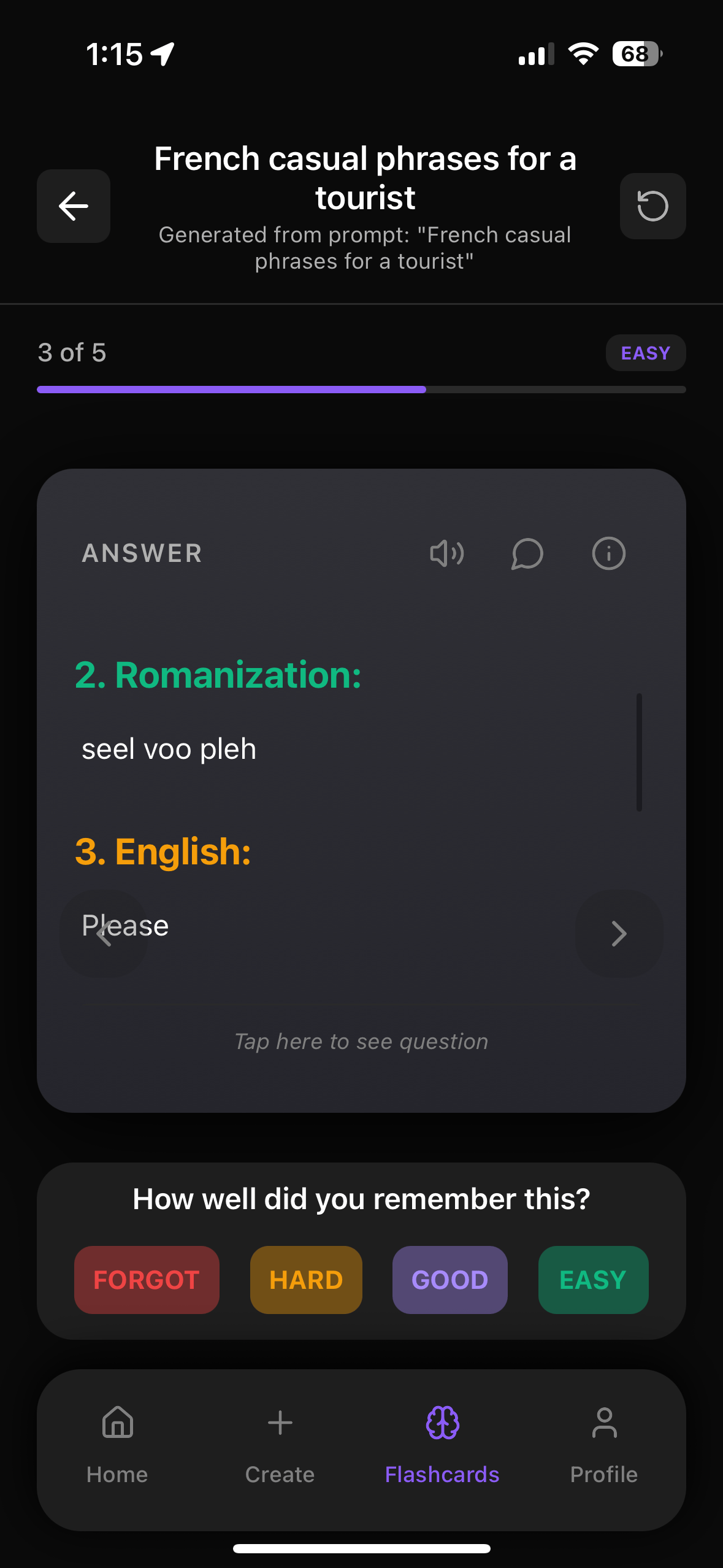
Stop Overcomplicating N5 Vocab – Flashcards Are Your Best Friend
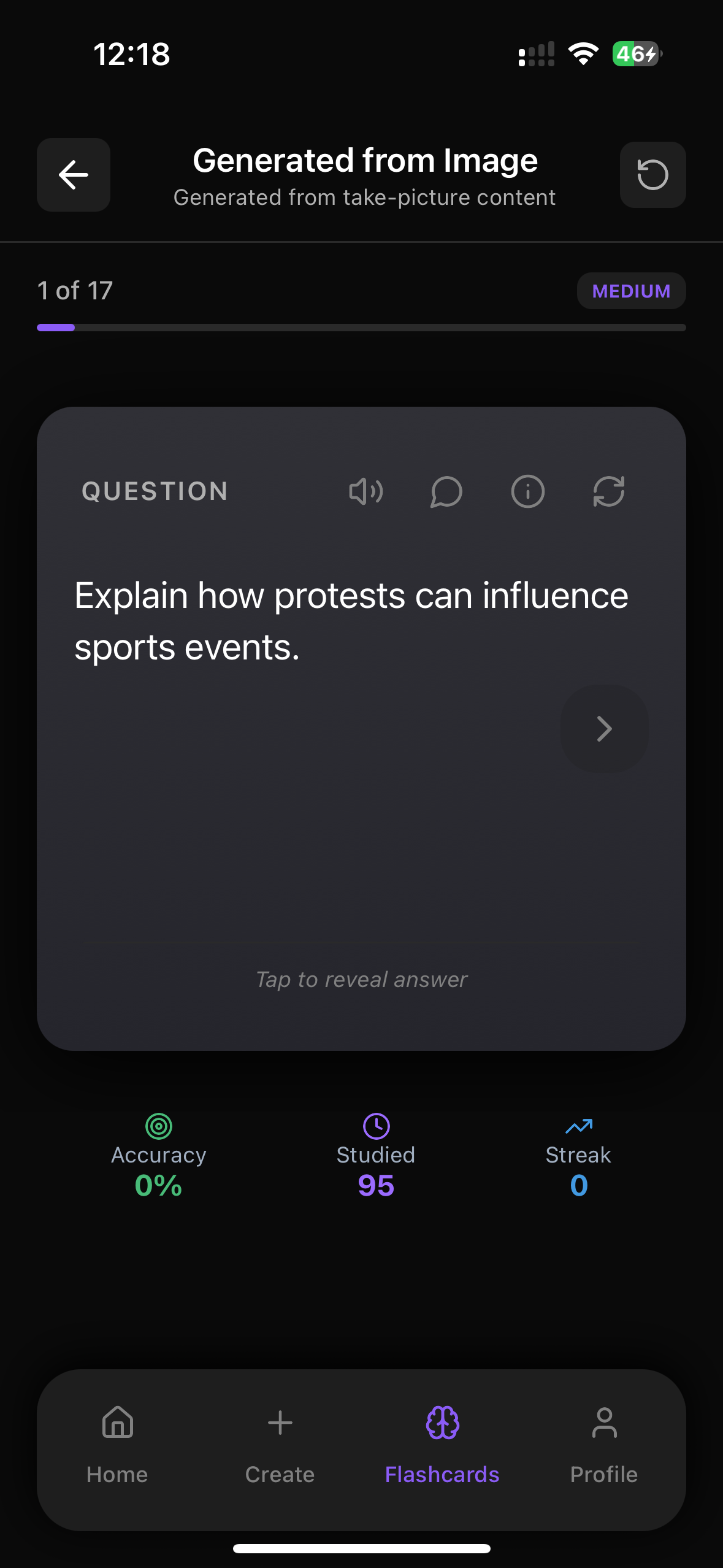
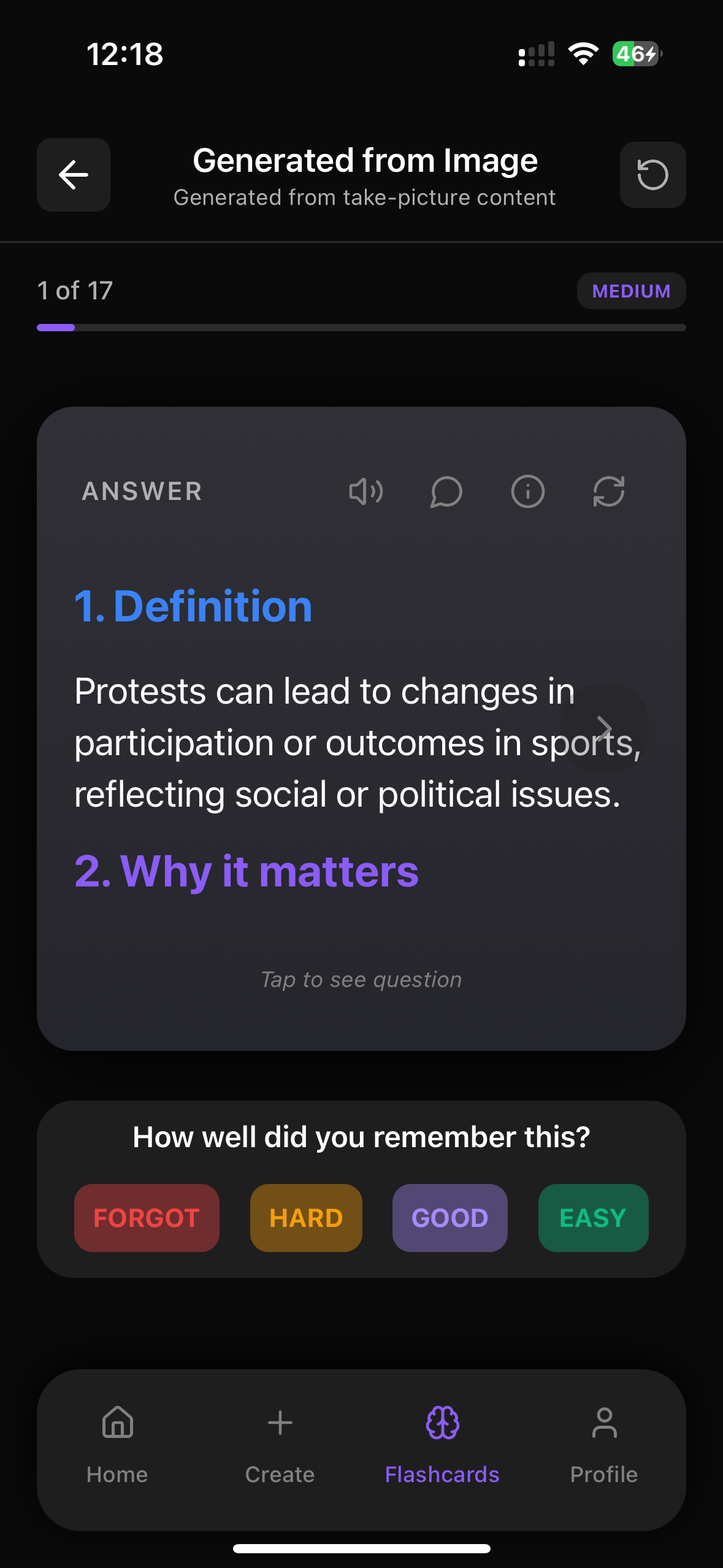
Alright, so let's talk about n5 vocabulary flashcards tips. If you're diving into language learning, flashcards are basically your new best friend. Picture this: they're like little memory bites that help you grab onto new words without feeling overwhelmed. You just need to know the trick to using them right, which is all about active recall and spaced repetition—fancy terms for making sure you actually remember the stuff later on. And here’s the cool part: Flashrecall totally has your back on this. It does the heavy lifting by cooking up flashcards straight from your study materials and reminds you when to review them, so you’re always on track. And hey, if you're curious about supercharging your Chinese vocab with HSK 1, you might wanna check out our guide, 'cause it’s packed with tips to get you speaking with confidence in no time!
If you're looking for information about hsk 1 vocabulary flashcards: 7 powerful ways to learn chinese faster and actually remember the words – stop forgetting basic hsk vocab and start speaking with confidence in weeks, not months., read our complete guide to hsk 1 vocabulary flashcards.
Instead of juggling random word lists, apps, and notebooks, you can just use one solid flashcard system and let it handle the memory part for you.
That’s exactly what Flashrecall does: it turns your vocab into smart flashcards with built‑in active recall and spaced repetition, so you don’t have to worry about when to review – it reminds you automatically.
You can grab it here:
👉 https://apps.apple.com/us/app/flashrecall-study-flashcards/id6746757085
Let’s break down how to actually use N5 vocabulary flashcards in a way that doesn’t feel overwhelming and actually sticks in your brain.
What Even Is “N5 Vocabulary” And How Much Do You Need?
JLPT N5 is the most basic level of the Japanese Language Proficiency Test.
For vocab, that means roughly:
- About 600–800 words (depending on the list you follow)
- Simple everyday words: food, family, school, numbers, time, basic verbs, etc.
- Words you’ll see in super simple texts and beginner conversations
Trying to memorize 600+ words by rereading a list is torture.
Using flashcards + spaced repetition turns that pile of words into small, manageable daily reviews.
Why Flashcards Work So Well For N5 (And Why Most People Use Them Wrong)
Flashcards are powerful because they force active recall:
- You see: “to eat” → you try to remember たべる / 食べる
- Or you see: ねこ → you remember “cat”
That “trying to remember” is what actually builds memory.
But here’s the trick:
Most people either:
- Review too little → they forget everything
- Review too much → they waste time reviewing words they already know
This is where spaced repetition comes in.
Spaced Repetition: The Secret Weapon For N5 Vocabulary
Spaced repetition is simple:
- Review new words often at first
- Then less often as you get better at them
- Hard words keep coming back more
- Easy words show up less
You’re always reviewing at the edge of forgetting, which is where your brain learns best.
In Flashrecall, this is built in:
- Every card you study is scheduled automatically
- The app decides when to show you a card again
- You just open it, study what’s due, and you’re done
No spreadsheets, no planning, no “What should I review today?”
Just open the app and let it tell you.
👉 Try it here if you want to feel what that’s like:
https://apps.apple.com/us/app/flashrecall-study-flashcards/id6746757085
How To Build Effective N5 Vocabulary Flashcards (With Examples)
Let’s talk about how to actually make good N5 flashcards, not just messy word dumps.
1. One Word Per Card (Keep It Simple)
Don’t cram 5 words on one card. Your brain hates that.
- Front: to eat
- Back: 食べる(たべる)– taberu
Or reversed:
- Front: 食べる(たべる)
- Back: to eat
In Flashrecall, you can create these manually in seconds, or even faster from text or images.
2. Always Include Kana + Kanji + Meaning
Even at N5, you’ll see some kanji. It’s good to start early.
- Front: water
- Back: 水(みず)– mizu
Or:
- Front: 水(みず)
- Back: water
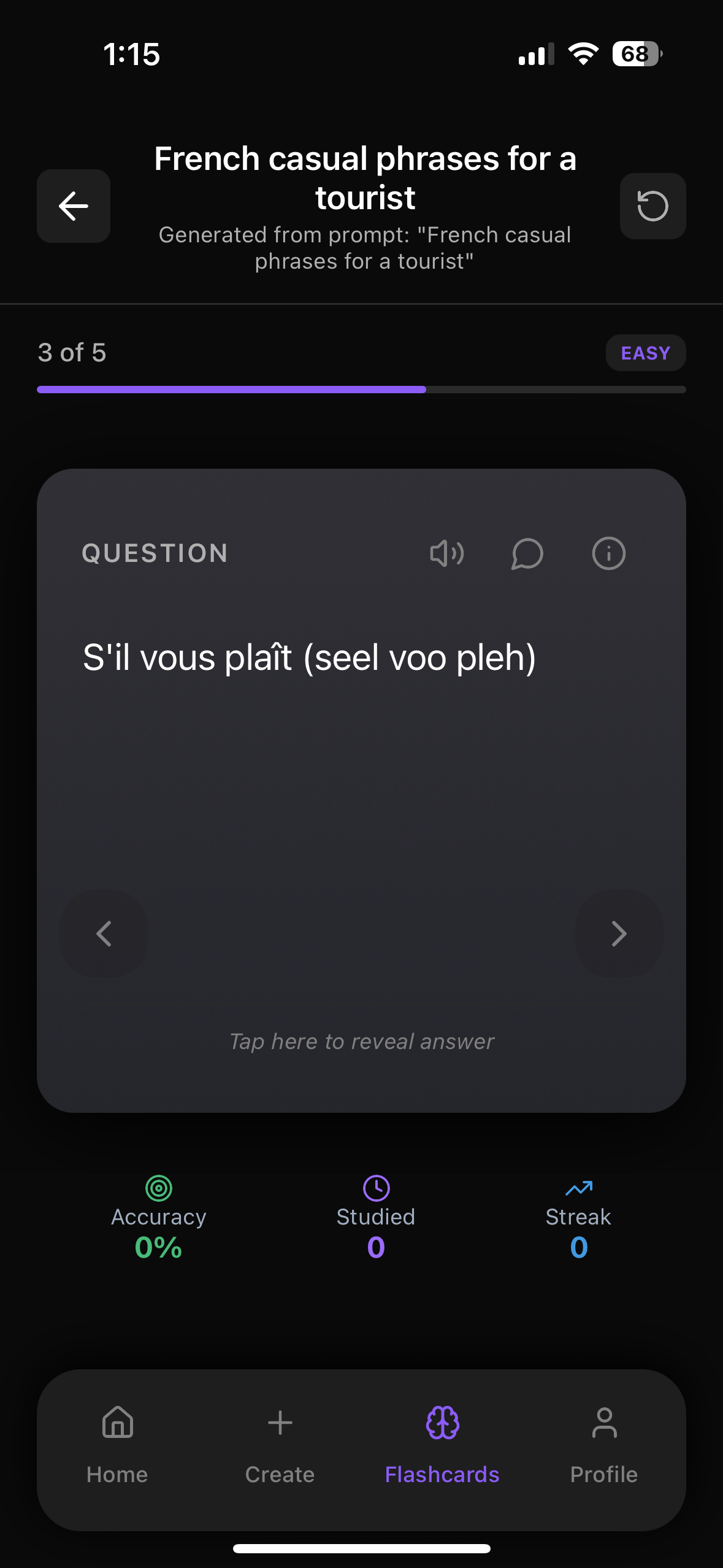
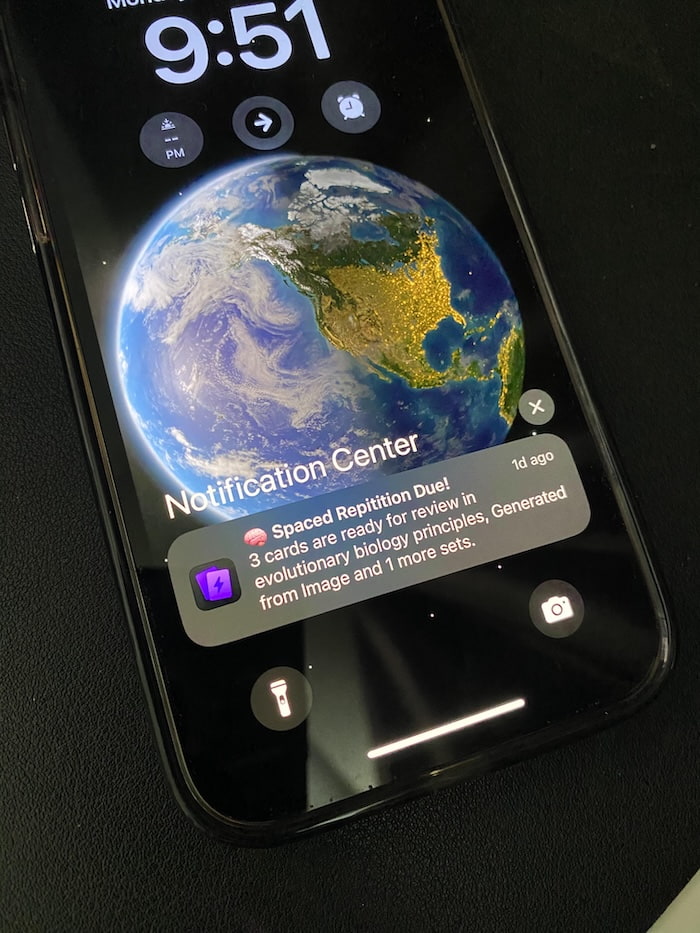
Flashrecall automatically keeps track and reminds you of the cards you don't remember well so you remember faster. Like this :
You can also add example sentences on the back:
- Back extra: みずを のみます。– I drink water.
In Flashrecall, you can type this or paste from a vocab list, and it’ll turn it into cards instantly.
3. Use Images Or Context When You Can
Your brain loves context and visuals.
With Flashrecall, you can:
- Take a screenshot of a vocab list
- Import an image or PDF
- Let the app auto-generate flashcards from it
So if you have a JLPT N5 vocab PDF or a textbook page, you can literally snap a photo and turn it into cards instead of typing each word.
4. Make Cards From YouTube, Audio, Or Text
If you like learning from YouTube videos (Japanese lessons, anime clips, etc.):
- Paste the YouTube link into Flashrecall
- Pull out vocab you don’t know
- Turn them into cards quickly
Same with audio or text: you can generate cards from what you’re actually watching/reading. That way your N5 vocab isn’t just random; it’s tied to stuff you care about.
How To Organize Your N5 Flashcards Without Going Crazy
You don’t need a perfect system; you just need a simple one you’ll actually use.
Here’s an easy setup:
- Deck: “JLPT N5 – Core Vocabulary”
- Optional sub-tags or groups:
- Verbs
- Adjectives
- Nouns (people, places, time, school, etc.)
- Particles / grammar bits (for extra cards)
In Flashrecall, you can keep everything in one deck and just tag or group cards if you want. Then you can:
- Study all N5 vocab
- Or just N5 verbs if you’re focusing on those today
Daily N5 Study Routine With Flashcards (20–30 Minutes)
Here’s a simple routine you can follow:
1. Do Today’s Reviews First (10–20 minutes)
- Open Flashrecall
- It shows you all cards due for review (spaced repetition)
- Go through them using active recall:
- Try to answer
- Flip
- Mark how well you knew it
The app automatically reschedules each card based on your answer. No thinking, no planning.
2. Add 5–15 New Words (5–10 minutes)
Pick a source:
- A JLPT N5 vocab list
- Your textbook
- An anime or YouTube video
- A graded reader or easy story
Then:
- Add new words into Flashrecall
- Or snap a picture / paste text and let it create cards for you
Start small. Even 5 new words a day is 150 a month. That’s already a huge chunk of N5.
3. Quick Review On The Go (5 minutes)
Because Flashrecall works offline on iPhone and iPad, you can:
- Review a few cards while waiting in line
- Do a mini-session on the train or bus
- Use short pockets of time instead of needing a big study block
The built-in study reminders also nudge you so you don’t forget to review.
Example N5 Flashcard Sets You Can Create
Here are some practical ideas:
1. Daily Life Pack
Words like:
- 食べる – to eat
- 飲む – to drink
- ねる – to sleep
- おきる – to wake up
- いく – to go
- くる – to come
Use example sentences on the back:
- 7じに おきます。– I wake up at 7.
- がっこうに いきます。– I go to school.
2. Numbers And Time
- いち、に、さん…
- じ(時)– o’clock
- ふん/ぷん(分)– minutes
- なんじ – what time
- きのう – yesterday
- あした – tomorrow
You can even create audio-based cards in Flashrecall by recording yourself or a native speaker and testing recognition.
3. Family And People
- かぞく – family
- おとうさん – father
- おかあさん – mother
- ともだち – friend
- せんせい – teacher
Again, one word per card, plus maybe a sentence.
Using “Chat With The Flashcard” When You’re Confused
One cool thing with Flashrecall is that if you’re unsure about a word, you can literally chat with the flashcard.
Example:
- You’re not sure when to use あした vs みょうにち
- You open the card and ask in the chat
- Get explanations, extra example sentences, and clarification right there
This is super helpful when you’re self-studying and don’t have a teacher on hand.
Why Use Flashrecall Instead Of Just Paper Or Generic Apps?
You can use paper cards or a basic flashcard app, but here’s what Flashrecall adds that makes N5 vocab way easier:
- Instant card creation from:
- Images (textbook pages, PDF screenshots)
- Text (copy-paste vocab lists)
- Audio and YouTube links
- Typed prompts
- Built-in spaced repetition – no manual scheduling
- Active recall built in – it’s not just flipping through notes
- Study reminders so you don’t fall off the wagon
- Works offline on iPhone and iPad
- Chat with the flashcard when you’re confused about usage
- Fast, modern, easy to use – not clunky or overwhelming
- Free to start, so you can test it without commitment
For N5, the big challenge isn’t “finding vocab lists”. It’s actually remembering the words long-term. Flashrecall is built exactly for that.
👉 If you’re serious about passing N5 or just want your Japanese basics to finally stick, try it here:
https://apps.apple.com/us/app/flashrecall-study-flashcards/id6746757085
Simple N5 Flashcard Strategy To Reach 600+ Words
If you want a clear plan, use this:
1. Start with 10 new words a day
2. Always do your reviews first (Flashrecall will show them)
3. Add new words from:
- JLPT N5 vocab list
- Your textbook chapter
- Anime/YouTube subtitles
4. Use example sentences on the back whenever possible
5. Stick with it for 2–3 months
10 words/day × 60 days = 600 words.
That’s basically N5 level vocab, without burning out.
Final Thoughts: N5 Vocab Doesn’t Have To Be Overwhelming
You don’t need to be “naturally good at languages” to pass N5.
You just need:
- A clear list of words
- A flashcard system that actually works
- Consistent, small daily effort
N5 vocabulary flashcards + spaced repetition = a very realistic path to passing.
If you want an app that handles the scheduling, reminds you to study, lets you create cards from literally anything (text, images, PDFs, YouTube), and even lets you chat with your cards when you’re stuck, Flashrecall is honestly perfect for N5.
Grab it here, set up your first N5 deck, and start knocking out those words today:
👉 https://apps.apple.com/us/app/flashrecall-study-flashcards/id6746757085
Frequently Asked Questions
What's the fastest way to create flashcards?
Manually typing cards works but takes time. Many students now use AI generators that turn notes into flashcards instantly. Flashrecall does this automatically from text, images, or PDFs.
Is there a free flashcard app?
Yes. Flashrecall is free and lets you create flashcards from images, text, prompts, audio, PDFs, and YouTube videos.
How do I start spaced repetition?
You can manually schedule your reviews, but most people use apps that automate this. Flashrecall uses built-in spaced repetition so you review cards at the perfect time.
What is active recall and how does it work?
Active recall is the process of actively retrieving information from memory rather than passively reviewing it. Flashrecall forces proper active recall by making you think before revealing answers, then uses spaced repetition to optimize your review schedule.
What's the best way to learn vocabulary?
Research shows that combining flashcards with spaced repetition and active recall is highly effective. Flashrecall automates this process, generating cards from your study materials and scheduling reviews at optimal intervals.
Related Articles
- Flash Card Of Noun: 7 Powerful Ways To Learn Grammar Faster (Most Students Don’t Know These) – Turn boring noun drills into quick, fun wins with smart flashcards that actually stick.
- Flashcards For Studying Online: 7 Powerful Ways To Learn Faster And Actually Remember Stuff – Stop Re-Reading Notes And Start Studying Smarter Today
- Abeka Spanish 1 Test 4: Proven Study Hacks To Boost Your Grade Fast (Most Students Don’t Know These) – Turn your notes into smart flashcards in minutes and walk into Test 4 actually feeling confident.
Research References
The information in this article is based on peer-reviewed research and established studies in cognitive psychology and learning science.
Cepeda, N. J., Pashler, H., Vul, E., Wixted, J. T., & Rohrer, D. (2006). Distributed practice in verbal recall tasks: A review and quantitative synthesis. Psychological Bulletin, 132(3), 354-380
Meta-analysis showing spaced repetition significantly improves long-term retention compared to massed practice
Carpenter, S. K., Cepeda, N. J., Rohrer, D., Kang, S. H., & Pashler, H. (2012). Using spacing to enhance diverse forms of learning: Review of recent research and implications for instruction. Educational Psychology Review, 24(3), 369-378
Review showing spacing effects work across different types of learning materials and contexts
Kang, S. H. (2016). Spaced repetition promotes efficient and effective learning: Policy implications for instruction. Policy Insights from the Behavioral and Brain Sciences, 3(1), 12-19
Policy review advocating for spaced repetition in educational settings based on extensive research evidence
Karpicke, J. D., & Roediger, H. L. (2008). The critical importance of retrieval for learning. Science, 319(5865), 966-968
Research demonstrating that active recall (retrieval practice) is more effective than re-reading for long-term learning
Roediger, H. L., & Butler, A. C. (2011). The critical role of retrieval practice in long-term retention. Trends in Cognitive Sciences, 15(1), 20-27
Review of research showing retrieval practice (active recall) as one of the most effective learning strategies
Dunlosky, J., Rawson, K. A., Marsh, E. J., Nathan, M. J., & Willingham, D. T. (2013). Improving students' learning with effective learning techniques: Promising directions from cognitive and educational psychology. Psychological Science in the Public Interest, 14(1), 4-58
Comprehensive review ranking learning techniques, with practice testing and distributed practice rated as highly effective

FlashRecall Team
FlashRecall Development Team
The FlashRecall Team is a group of working professionals and developers who are passionate about making effective study methods more accessible to students. We believe that evidence-based learning tec...
Credentials & Qualifications
- •Software Development
- •Product Development
- •User Experience Design
Areas of Expertise
Ready to Transform Your Learning?
Start using FlashRecall today - the AI-powered flashcard app with spaced repetition and active recall.
Download on App Store