Obsidian Anki: How To Connect Notes And Flashcards For Faster Learning (Plus A Better Alternative Most People Miss)
Obsidian anki doesn’t have to be a plugin mess. See how notes → flashcards really works, why it breaks, and when a tool like Flashrecall is just easier.
How Flashrecall app helps you remember faster. It's free
What Is “Obsidian Anki” And Why Do People Care?
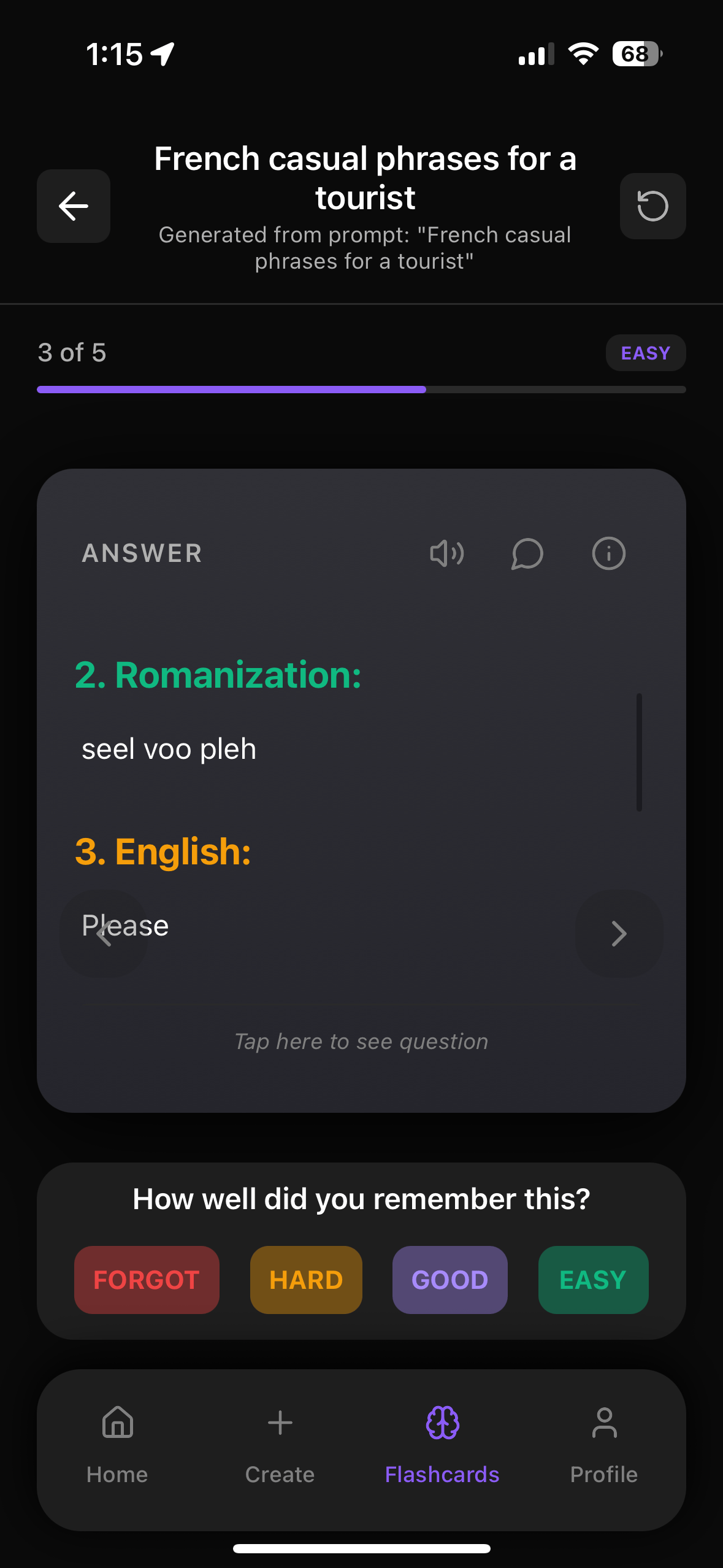
Alright, let’s talk about obsidian anki because it’s actually pretty simple: it’s basically the idea of taking your notes in Obsidian and turning them into Anki-style flashcards so you can use spaced repetition to remember stuff long-term. People like this because Obsidian is amazing for writing and organizing notes, and Anki is amazing for drilling those notes into your brain. So the whole “Obsidian Anki” thing is about connecting those two worlds—good notes + good flashcards—without doing double work. And if you don’t want to mess around with plugins and syncing, an app like Flashrecall) basically gives you the Anki benefits with way less setup.
Quick Breakdown: Obsidian vs Anki vs Flashrecall
Before we get into how to connect Obsidian and Anki, here’s what each thing is doing:
- Obsidian – A markdown note-taking app with backlinks, graph view, plugins, and all that nerdy goodness. Great for thinking and organizing.
- Anki – A spaced repetition flashcard app. Great for memorizing facts, vocab, formulas, exam content.
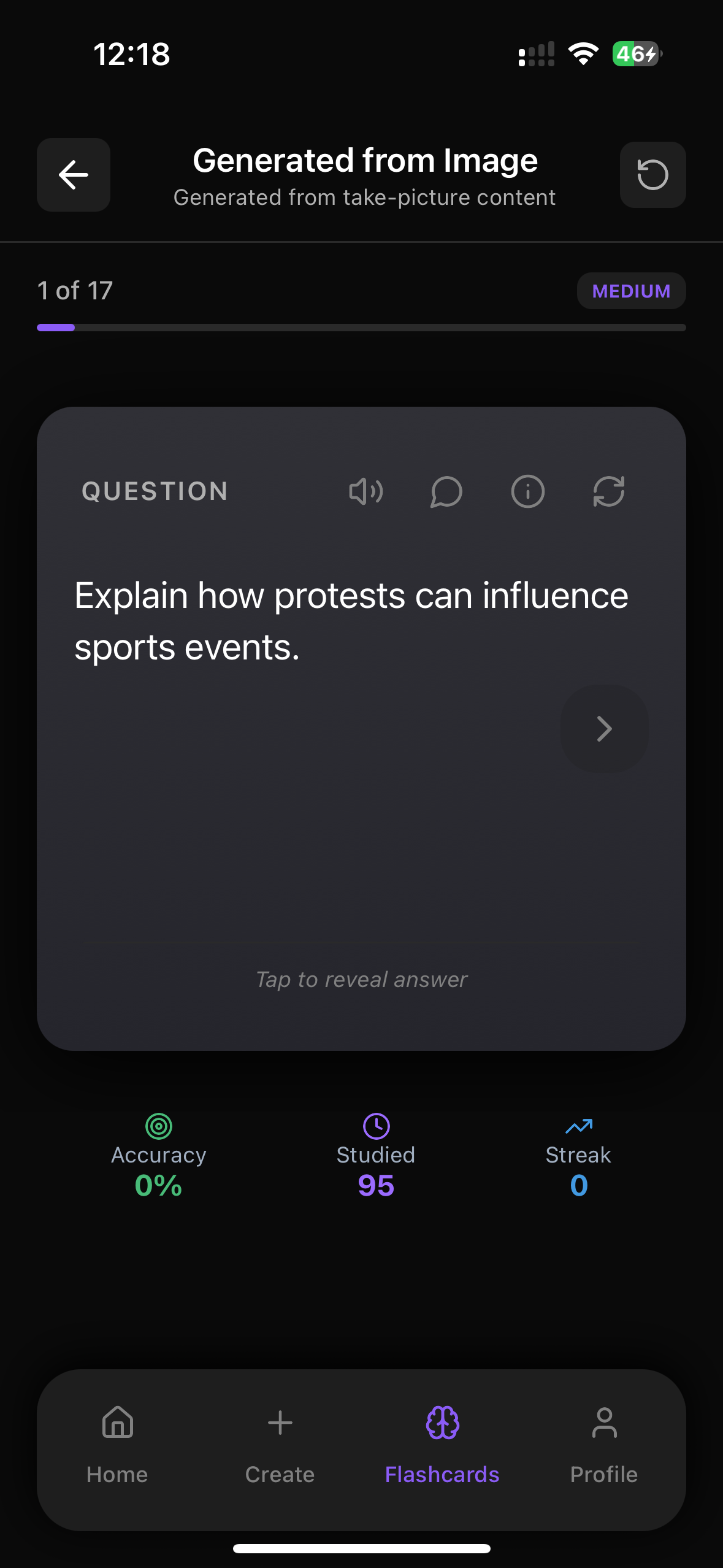
- Flashrecall – A modern flashcard app that feels like Anki but easier, faster, and built for iPhone/iPad with automatic spaced repetition, reminders, and even AI chat with your cards:
https://apps.apple.com/us/app/flashrecall-study-flashcards/id6746757085
The “obsidian anki” combo is usually:
1. Take notes in Obsidian
2. Mark certain lines as questions/answers
3. Use a plugin or export to send those to Anki
Or…
Skip the whole export circus and just turn your PDFs, screenshots, notes, and prompts straight into cards with Flashrecall.
How People Usually Connect Obsidian And Anki
There are a few common ways people do the obsidian anki workflow:
1. Using an Obsidian → Anki Plugin
Most folks use a community plugin (like Obsidian_to_Anki-style tools). The usual idea:
- You write notes in Obsidian in markdown
- You format cards like:
```text
Q:: What is the capital of France?
A:: Paris
```
- Then you run a command to export those into Anki
- Your “source of truth” stays in Obsidian
- Cards are generated from real notes, not random separate decks
- You can version-control your learning content (Git, etc.)
- Setup can be annoying (plugins, AnkiConnect, local server, etc.)
- Formatting is picky — one wrong tag and the card doesn’t work
- You’re stuck on desktop for a lot of the setup
- Syncing across devices can be fragile
This is powerful, but it’s also the kind of thing that’s fun for like 3 days and then you just want something that works.
2. Manually Copying From Obsidian To Anki
Some people skip plugins and just:
- Read notes in Obsidian
- Manually copy/paste questions into Anki
- Build decks from there
- No plugin drama
- You fully control what becomes a card
- Super slow
- Easy to get behind on card creation
- You end up with a pile of notes that never become flashcards
This is usually what makes people search for “obsidian anki” in the first place—they’re tired of this manual grind.
3. Using Flashrecall Instead Of Classic Anki
Here’s where Flashrecall comes in as a smoother alternative to the whole Obsidian → Anki pipeline.
Instead of wrestling with exports and plugins, you can:
- Keep your deep thinking and long-form writing in Obsidian
- Use Flashrecall as your actual memory engine on your phone/iPad
Flashrecall lets you:
- Make flashcards instantly from:
- Text you paste in
- Images (screenshots of your Obsidian notes, textbook pages, slides)
- PDFs
- YouTube links
- Typed prompts (e.g. “make cards about photosynthesis from this paragraph”)
- Or just create cards manually if you like control
So the workflow becomes:
1. Take notes in Obsidian like usual
2. When you decide “this is test-worthy”, either:
- Screenshot the note and import into Flashrecall
- Copy/paste key parts and let Flashrecall help generate cards
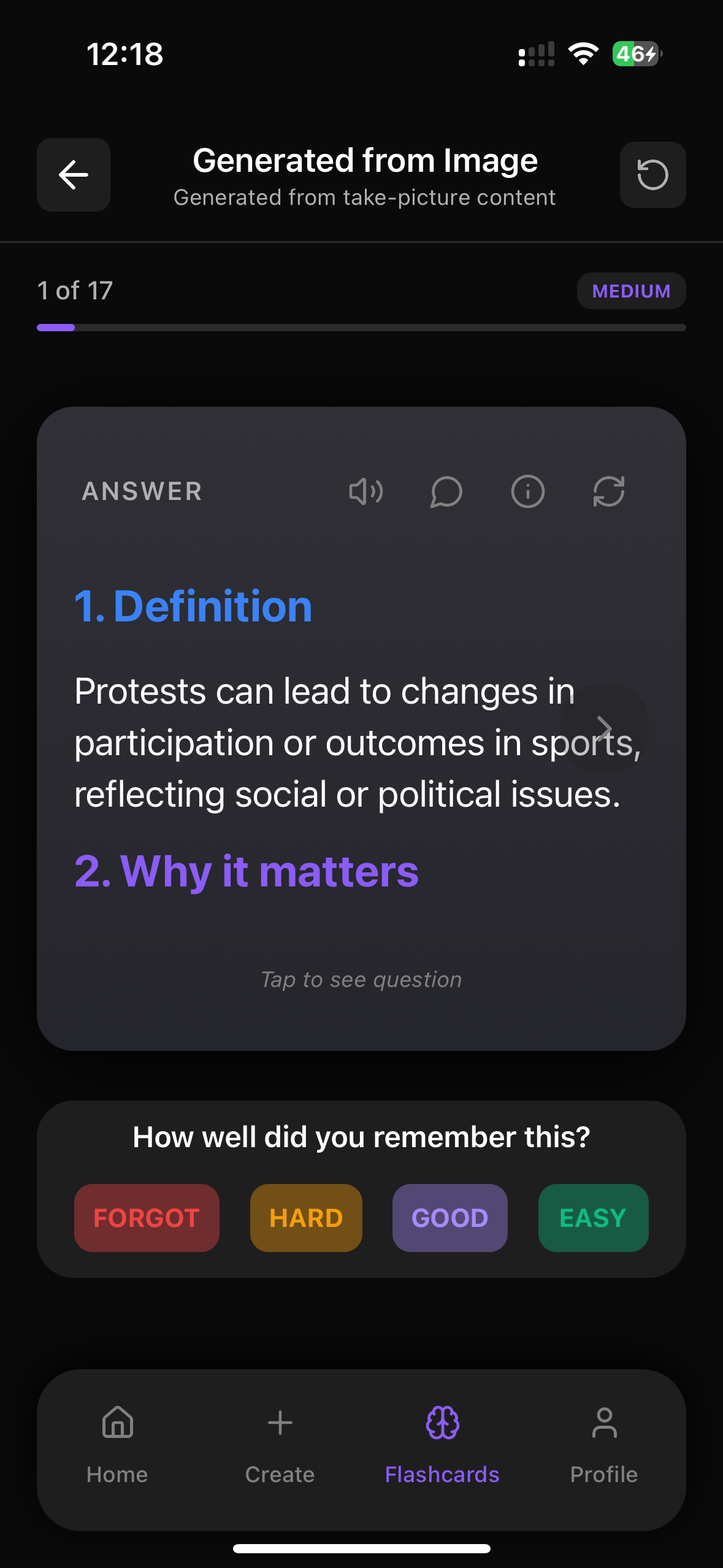
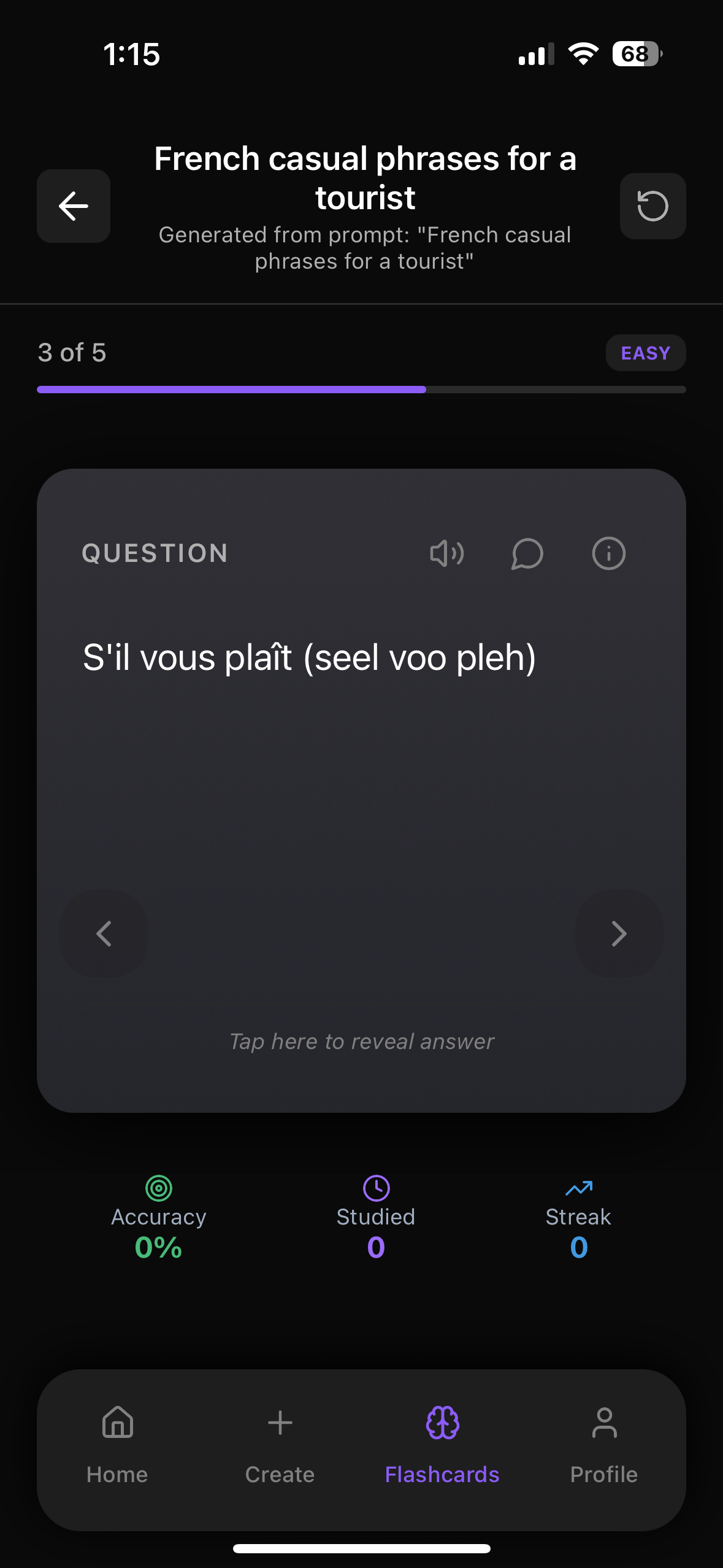
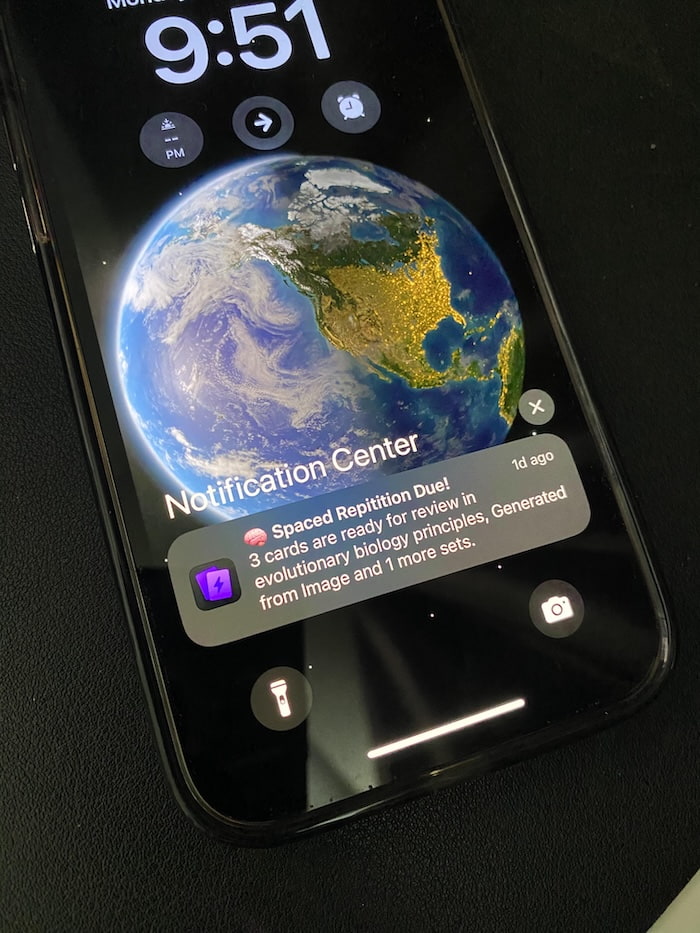
Flashrecall automatically keeps track and reminds you of the cards you don't remember well so you remember faster. Like this :
3. Flashrecall handles:
- Spaced repetition
- Active recall
- Study reminders
- Offline access
No plugins. No AnkiConnect. No weird markdown card syntax.
Grab it here if you want to try it:
https://apps.apple.com/us/app/flashrecall-study-flashcards/id6746757085
Why People Love The Obsidian + Flashcards Combo
The whole obsidian anki thing is popular because it solves a real problem: notes don’t equal memory.
You can have the prettiest Obsidian vault in the world and still bomb an exam because you never actually tested yourself.
Flashcards fix that by forcing active recall:
- You see a prompt
- You try to remember the answer without looking
- You get instant feedback
And spaced repetition makes sure you see hard stuff more often, and easy stuff less often, so you’re not wasting time.
Flashrecall bakes both of those in automatically:
- Every card is structured for active recall
- The app schedules reviews for you with spaced repetition
- You get auto reminders so you don’t forget to study
So Obsidian is where you understand things.
Flashrecall (or Anki) is where you remember them.
How To Build A Simple Obsidian → Flashcard Workflow
If you like the obsidian anki idea but want it simpler, here’s a clean setup:
Step 1: Take Notes Normally In Obsidian
- Use headings, bullet points, and short sentences
- Highlight or tag the stuff that feels “flashcard-worthy”
- Definitions
- Formulas
- Dates
- Vocabulary
- Key concepts
You don’t need to format them as cards in Obsidian. Just mark what matters.
Step 2: Extract The Important Bits
When you’re done with a topic or lecture:
- Either:
- Copy the key points into a new note called “Flashcards – [Topic]”
- Or just review the note and decide what to turn into cards on the fly
Step 3: Send Them To Flashrecall
Now open Flashrecall) on your iPhone or iPad and:
- Paste the text into the app and turn it into cards
- Or screenshot your Obsidian note and let Flashrecall create cards from the image
- Or type your own Q/A cards manually if you like full control
Flashrecall supports:
- Manual card creation for total precision
- Automatic card creation from text for speed
- Cards from images, PDFs, and YouTube links when you’re lazy or rushed
Step 4: Let Spaced Repetition Do Its Thing
Once your cards are in Flashrecall:
- The app automatically schedules reviews using spaced repetition
- You get study reminders so you don’t fall behind
- It works offline, so you can review on the bus, in a boring lecture, wherever
And if you’re unsure about a concept on a card, you can chat with the flashcard to get more explanation. That’s something classic Anki + Obsidian just doesn’t do.
Obsidian + Anki vs Obsidian + Flashrecall
If you’re deciding between traditional obsidian anki setups and using Flashrecall, here’s a quick comparison.
Setup & Maintenance
- Obsidian + Anki
- Requires plugins or manual exports
- Can be fragile after updates
- Takes time to format notes as cards
- Obsidian + Flashrecall
- No plugins
- Just copy/paste or screenshot
- Works instantly on iPhone/iPad
User Experience
- Anki
- Powerful but kind of clunky UI
- Feels old-school
- Great if you love tweaking settings
- Flashrecall
- Fast, modern, clean interface
- Built for mobile from the start
- Easy to use even if you’re tired and stressed
Features For Learning
Both Anki and Flashrecall give you spaced repetition and active recall, but Flashrecall adds:
- Automatic flashcards from:
- Text
- Images
- PDFs
- YouTube
- Prompts
- AI chat with your flashcards when you’re confused
- Study reminders built in
- Works great for:
- Languages
- School subjects
- Uni
- Medicine
- Business
- Pretty much any topic
And it’s free to start, so you can test it alongside your current Obsidian/Anki setup without committing.
Example: Using Obsidian + Flashrecall For A Real Class
Let’s say you’re studying anatomy.
1. In Obsidian
- You take detailed notes on “Muscles of the Upper Limb”
- You add headings like `## Rotator Cuff Muscles`
- You list each muscle with origin, insertion, innervation, action
2. You Decide What Needs Memorizing
- Names of muscles
- Nerve supply
- Key actions
3. In Flashrecall
- You screenshot your Obsidian note (or copy the text)
- Import it into Flashrecall
- Let the app help you generate flashcards like:
- “Which muscles make up the rotator cuff?”
- “What is the innervation of the supraspinatus muscle?”
- You review them daily with spaced repetition
End result:
Obsidian holds your full understanding.
Flashrecall makes sure you never forget the details you’ll be tested on.
So… Do You Actually Need Anki If You Use Obsidian?
You can do the full obsidian anki setup if you like tinkering and want everything super integrated.
But if your main goal is:
- “I want to remember my notes”
- “I don’t want to spend hours setting things up”
- “I want this to work smoothly on my phone and iPad”
Then Obsidian + Flashrecall is honestly easier:
- Take notes in Obsidian
- Turn the important stuff into flashcards in Flashrecall
- Let the app handle spaced repetition, reminders, and reviews
You still get the core benefit people chase with obsidian anki—notes → flashcards → long-term memory—but with way less friction.
If you want to try that setup, you can grab Flashrecall here:
https://apps.apple.com/us/app/flashrecall-study-flashcards/id6746757085
Use Obsidian for thinking.
Use Flashrecall for remembering.
That’s the combo that actually sticks long-term.
Frequently Asked Questions
Is Anki good for studying?
Anki is powerful but requires manual card creation and has a steep learning curve. Flashrecall offers AI-powered card generation from your notes, images, PDFs, and videos, making it faster and easier to create effective flashcards.
What's the fastest way to create flashcards?
Manually typing cards works but takes time. Many students now use AI generators that turn notes into flashcards instantly. Flashrecall does this automatically from text, images, or PDFs.
How do I start spaced repetition?
You can manually schedule your reviews, but most people use apps that automate this. Flashrecall uses built-in spaced repetition so you review cards at the perfect time.
Related Articles
- Anki Docs: The Complete Beginner-Friendly Guide (And a Simpler Alternative Most People Miss) – Confused by Anki documentation? Here’s the easy version, plus a faster way to start using flashcards today.
- Brainscape To Anki: The Complete Guide To Switching Flashcard Apps (And The Smarter Alternative Most People Miss) – Learn a faster way to move your decks and upgrade your whole study workflow.
- Anki Notes: The Complete Guide To Smarter Flashcards (And A Better Alternative Most Students Don’t Know) – Discover how to fix the annoying parts of Anki and upgrade your notes into powerful flashcards that actually stick.
Research References
The information in this article is based on peer-reviewed research and established studies in cognitive psychology and learning science.
Cepeda, N. J., Pashler, H., Vul, E., Wixted, J. T., & Rohrer, D. (2006). Distributed practice in verbal recall tasks: A review and quantitative synthesis. Psychological Bulletin, 132(3), 354-380
Meta-analysis showing spaced repetition significantly improves long-term retention compared to massed practice
Carpenter, S. K., Cepeda, N. J., Rohrer, D., Kang, S. H., & Pashler, H. (2012). Using spacing to enhance diverse forms of learning: Review of recent research and implications for instruction. Educational Psychology Review, 24(3), 369-378
Review showing spacing effects work across different types of learning materials and contexts
Kang, S. H. (2016). Spaced repetition promotes efficient and effective learning: Policy implications for instruction. Policy Insights from the Behavioral and Brain Sciences, 3(1), 12-19
Policy review advocating for spaced repetition in educational settings based on extensive research evidence
Karpicke, J. D., & Roediger, H. L. (2008). The critical importance of retrieval for learning. Science, 319(5865), 966-968
Research demonstrating that active recall (retrieval practice) is more effective than re-reading for long-term learning
Roediger, H. L., & Butler, A. C. (2011). The critical role of retrieval practice in long-term retention. Trends in Cognitive Sciences, 15(1), 20-27
Review of research showing retrieval practice (active recall) as one of the most effective learning strategies
Dunlosky, J., Rawson, K. A., Marsh, E. J., Nathan, M. J., & Willingham, D. T. (2013). Improving students' learning with effective learning techniques: Promising directions from cognitive and educational psychology. Psychological Science in the Public Interest, 14(1), 4-58
Comprehensive review ranking learning techniques, with practice testing and distributed practice rated as highly effective

FlashRecall Team
FlashRecall Development Team
The FlashRecall Team is a group of working professionals and developers who are passionate about making effective study methods more accessible to students. We believe that evidence-based learning tec...
Credentials & Qualifications
- •Software Development
- •Product Development
- •User Experience Design
Areas of Expertise
Ready to Transform Your Learning?
Start using FlashRecall today - the AI-powered flashcard app with spaced repetition and active recall.
Download on App Store