Occupation Flashcards App: The Powerful Guide
Occupation flashcards app helps you learn job vocab with active recall and spaced repetition. Create and review flashcards quickly with Flashrecall for.
How Flashrecall app helps you remember faster. It's free
Why Occupation Flashcards Are Actually Super Useful
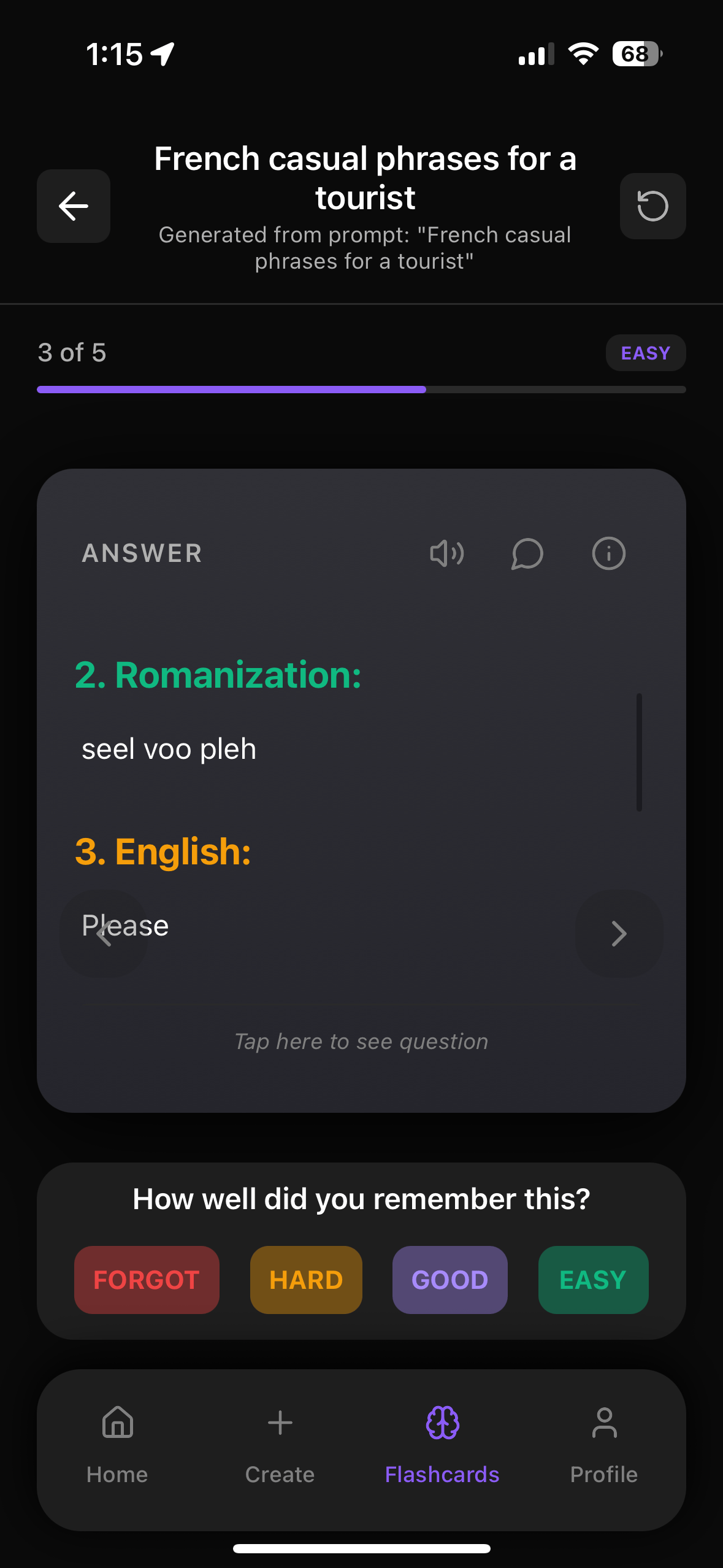
So, occupation flashcards app might sound like something out of a nerdy dream, right? But here's the thing: they’re super handy when you wanna learn stuff like job vocab or career details without feeling overwhelmed. You know how sometimes you just want to cram info into your brain and have it stick? Flashcards are all about that! They break down overwhelming info into these cute, bite-sized pieces. And, honestly, the magic happens when you use them with this cool trick called active recall and give your brain a little space with spaced repetition. Flashrecall, by the way, totally nails this. It’s like having a personal assistant that organizes your flashcards and reminds you when it’s time for a review sesh. If you're curious about how to make all this work and learn jobs and careers faster, check out our complete guide. Trust me, you'll be amazed at how quickly this stuff sticks!
Instead of staring at a boring word list like:
> doctor, teacher, engineer, firefighter…
…you can turn them into quick, visual flashcards and train your brain to recall them instantly.
And honestly, this is where an app like Flashrecall makes life way easier. You can create occupation flashcards in seconds, study them with spaced repetition, and never worry about forgetting what a “plumber” or “pharmacist” is again.
You can grab Flashrecall here (free to start):
https://apps.apple.com/us/app/flashrecall-study-flashcards/id6746757085
Let’s break down how to actually use occupation flashcards in a smart way—not just randomly flipping cards and hoping for the best.
What Are Occupation Flashcards, Really?
Occupation flashcards are just cards that help you learn job-related words and concepts.
They usually have:
- Front: a picture, word, or question
- Back: the answer, translation, explanation, or example sentence
For example:
- Front: 👩⚕️ “Who is this?”
- Back: “Doctor – a person who treats sick people.”
- Front: “Mechanic (definition)”
- Back: “A person who repairs cars and machines.”
- Front: “Firefighter – example sentence”
- Back: “The firefighter rescued the family from the burning house.”
Occupation flashcards are perfect for:
- Language learners (ESL, EFL, etc.)
- Kids learning basic jobs vocabulary
- Exam prep (IELTS, TOEFL, school tests)
- Career education or job counseling
- Teaching materials for classrooms and tutoring
Why Flashcards Work So Well For Jobs & Occupations
Occupation vocabulary is ideal for flashcards because:
1. They’re visual.
Jobs are easy to show with pictures: chef, dentist, pilot, nurse, etc.
2. You need fast recall.
In conversations or exams, you don’t have time to think for 10 seconds:
“Umm… the person who fixes pipes… what’s that job again?”
3. They’re easy to group.
You can organize by category: medical jobs, office jobs, creative jobs, etc.
Flashcards + occupations = fast, repeatable practice that actually sticks.
How Flashrecall Makes Occupation Flashcards Stupidly Easy
You could cut out paper cards and draw little stick-figure doctors and firefighters.
Or you can just use Flashrecall and let it do the heavy lifting.
👉 Flashrecall on the App Store:
https://apps.apple.com/us/app/flashrecall-study-flashcards/id6746757085
Here’s why it’s especially good for occupation flashcards:
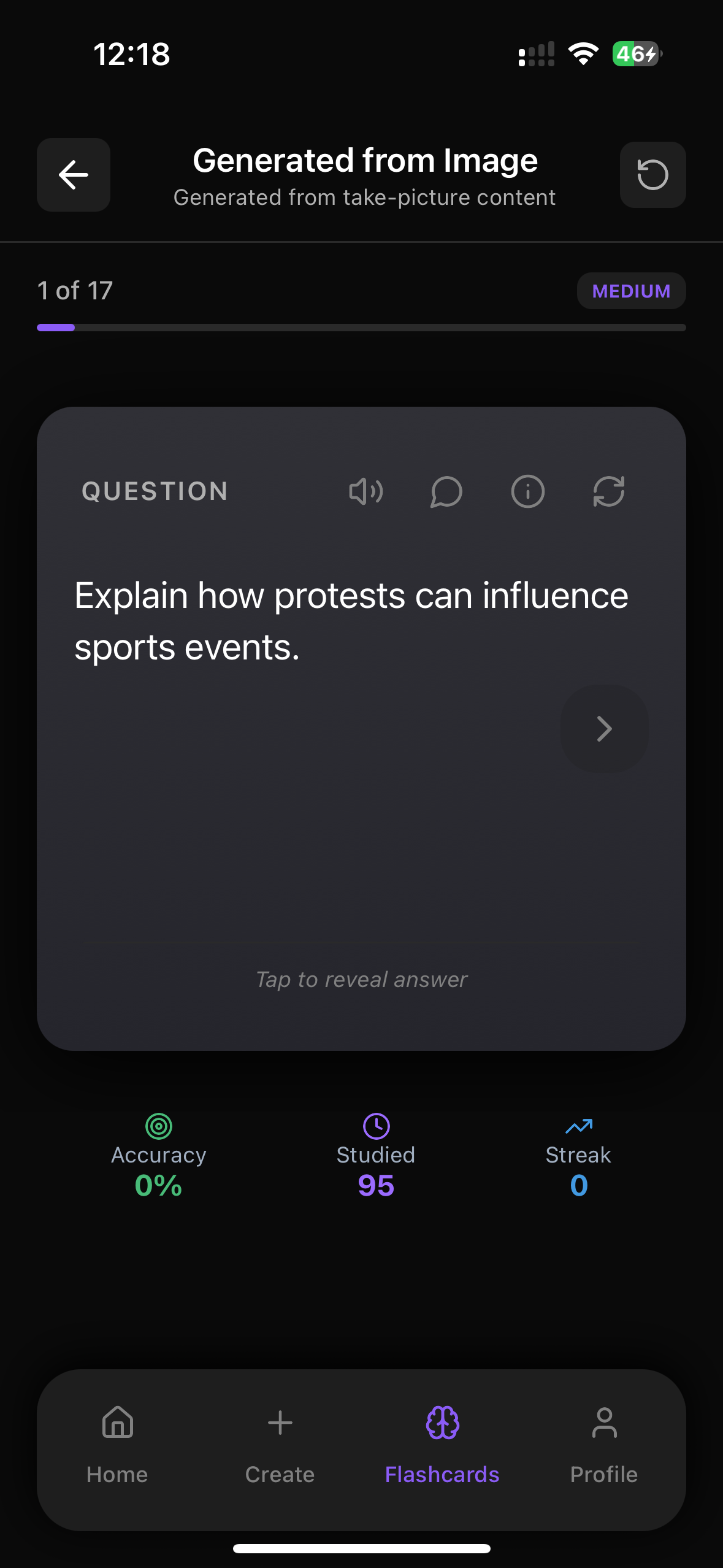
1. Create Cards Instantly From Images, Text, Or PDFs
Got a PDF worksheet with jobs vocabulary? A textbook page? A screenshot from Google Images?
- Take a photo or upload an image/PDF in Flashrecall
- The app can auto-generate flashcards from the content
- You get cards like:
- Picture of a nurse → “Nurse – works in a hospital and takes care of patients”
- Picture of a chef → “Chef – cooks food in a restaurant”
You can also:
- Paste in a vocabulary list and let Flashrecall turn it into cards
- Add YouTube links (like “jobs in English” videos) and generate cards from the transcript
No more manually typing 100 job names one by one… unless you want to, which you still can.
2. Built-In Spaced Repetition (So You Don’t Forget)
The biggest mistake people make with flashcards:
They review everything randomly or only once.
Flashrecall has built-in spaced repetition with automatic reminders. That means:
- It shows you the right card at the right time (just before you forget it)
- You don’t have to remember when to review “architect” vs “electrician”
- You simply open the app, and it tells you: “Here’s what to review today”
This is perfect for occupations because:
- Some words are easy (teacher, doctor)
- Others are rare (pharmacist, carpenter, translator, consultant)
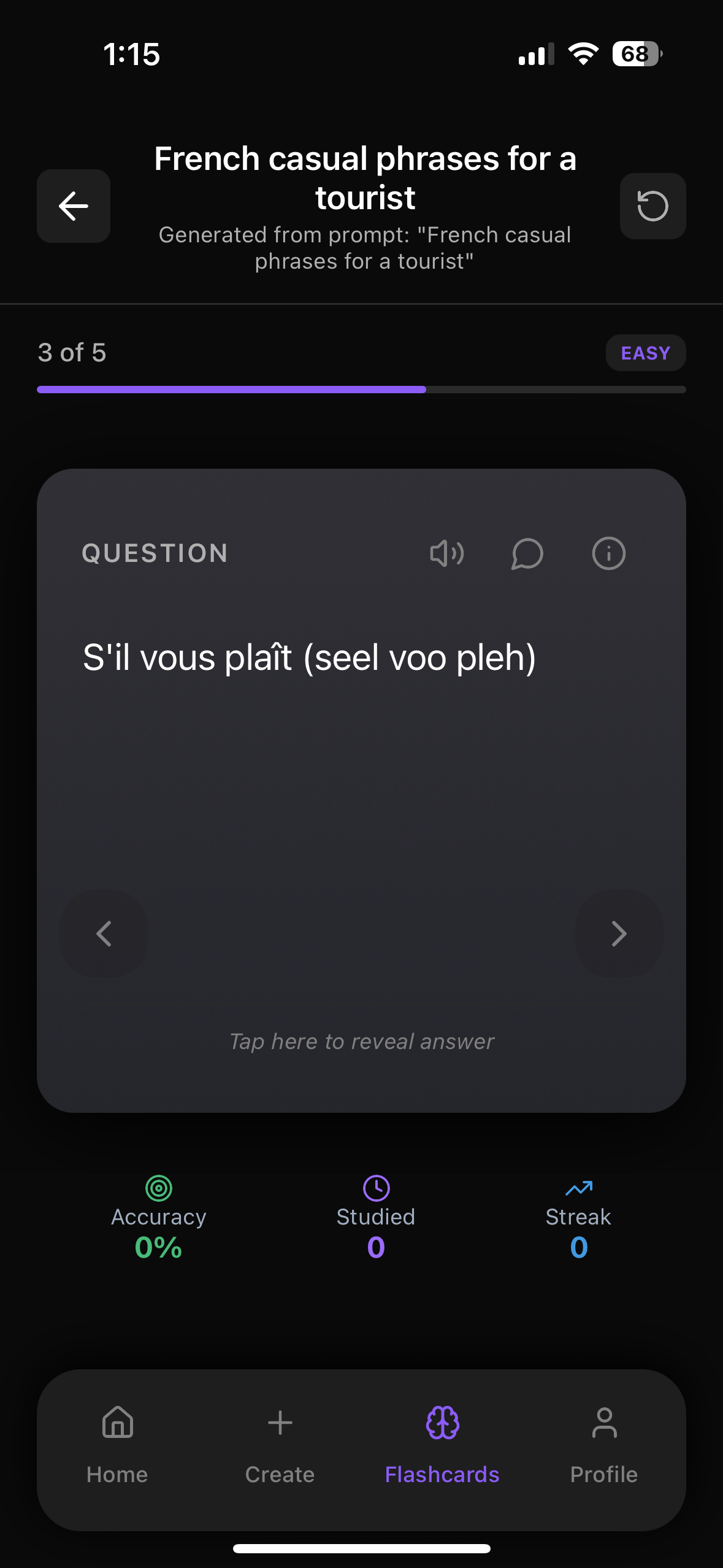
Flashrecall automatically keeps track and reminds you of the cards you don't remember well so you remember faster. Like this :
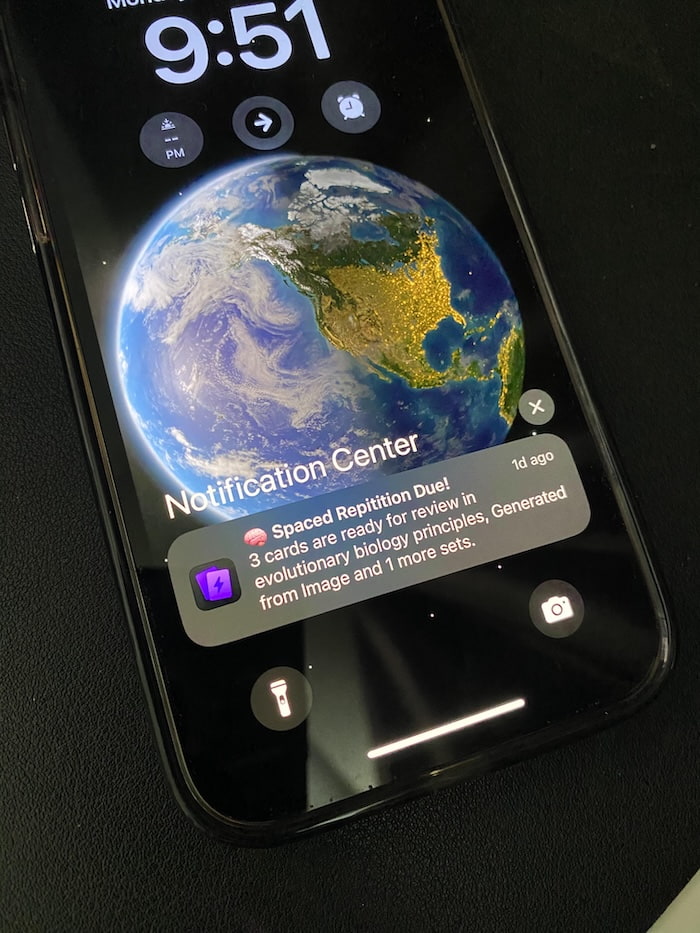
Spaced repetition automatically focuses more on the hard ones.
3. Active Recall Built In
Active recall = forcing your brain to remember instead of just recognize.
So instead of seeing “Doctor – a person who treats sick people” and just nodding…
Flashrecall will show you:
> “A person who treats sick people. What’s the job?”
You try to answer before flipping the card. That’s what actually builds memory.
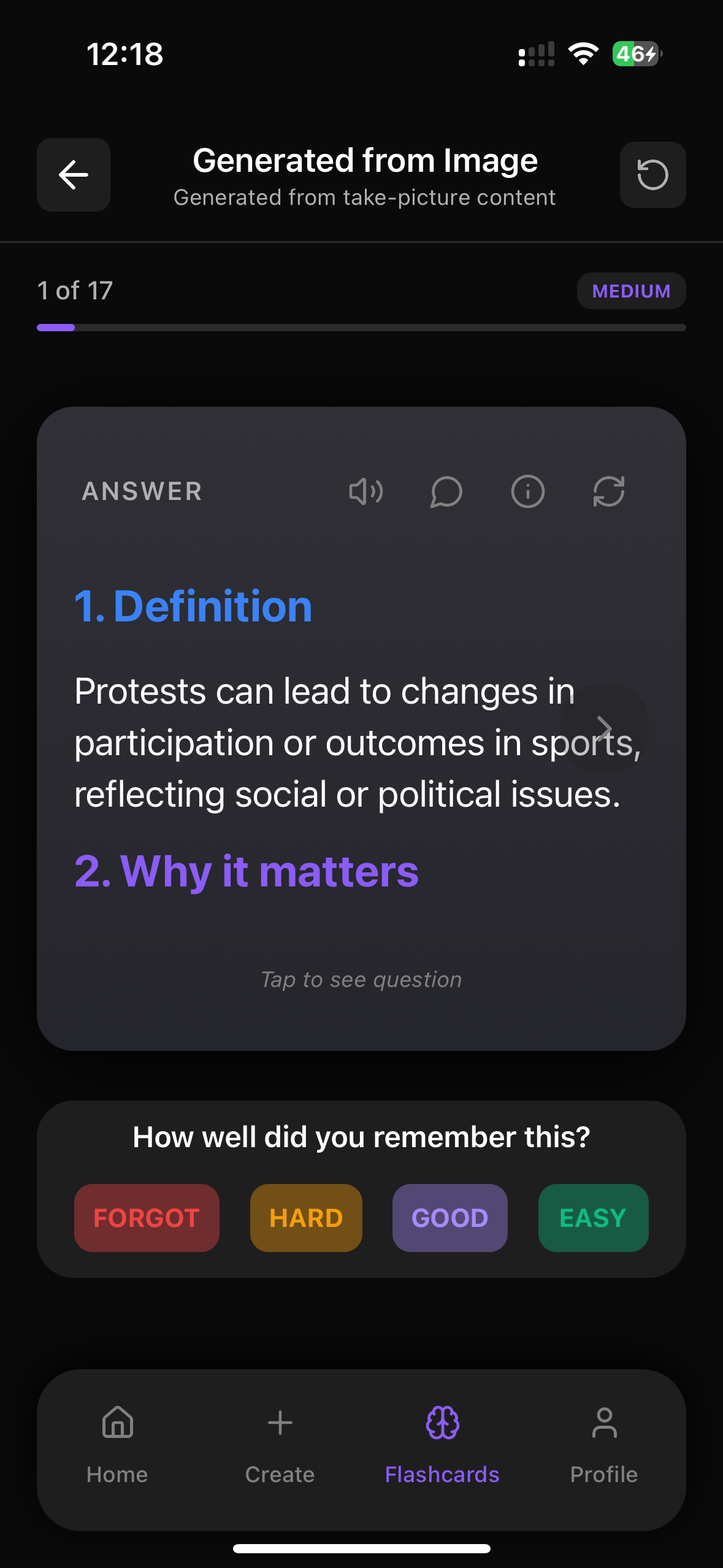
Flashrecall is designed around this:
- Question on the front
- You answer in your head
- Then you reveal the back and rate how hard it was
Fast, simple, and much more effective than reading lists.
4. You Can Chat With Your Flashcards (Seriously)
If you don’t understand a word like “consultant” or “civil engineer”, you can literally chat with the card inside Flashrecall.
Examples:
- “Explain this job in simpler English.”
- “Give me 3 example sentences using ‘architect’.”
- “What’s the difference between a nurse and a doctor?”
- “How do you say ‘teacher’ in Spanish/German/etc.?”
This is insanely useful for:
- Language learners
- Kids who need simple explanations
- Anyone who wants extra examples without Googling every time
5. Works Offline, On iPhone And iPad
Studying on the bus? In a classroom with bad Wi-Fi? On a plane?
- Flashrecall works offline, so your occupation flashcards are always with you
- It runs on both iPhone and iPad, so you can study on your phone and teach from your tablet
7 Powerful Ways To Use Occupation Flashcards
Here’s how to make occupation flashcards actually useful, not just “nice to have”.
1. Picture → Word
Example:
- Front: 👨🍳 (photo of a chef)
- Back: “Chef”
This is great for kids and beginners.
In Flashrecall:
- Upload images or grab screenshots
- Let the app help you turn them into cards in seconds
2. Word → Definition
This helps with deeper understanding, not just memorizing the word.
You can:
- Paste in a list of jobs
- Ask Flashrecall (via chat) to generate simple definitions for each
3. Translation Cards (For Language Learners)
Or reversed:
- Front: your language
- Back: English job name
You can also:
- Add example sentences on the back
- Use the chat feature to get translations or extra examples
4. Category-Based Decks
Instead of one messy “jobs” deck, try organizing:
- Medical Jobs: doctor, nurse, surgeon, dentist, pharmacist
- Office Jobs: manager, accountant, receptionist, HR specialist
- Creative Jobs: designer, photographer, writer, musician
- Technical Jobs: engineer, mechanic, programmer, electrician
In Flashrecall, just create separate decks:
- “Jobs – Medical”
- “Jobs – Office”
- etc.
This makes studying more focused and less overwhelming.
5. Example Sentence Cards
This forces you to actually use the word, not just recognize it.
You can:
- Write your own sentences
- Or ask Flashrecall’s chat: “Give me 3 simple example sentences for ‘pilot’”
6. “Who Am I?” Riddle Cards
Make it fun:
“I work in a hospital.
I help doctors and take care of patients.
Who am I?”
Great for:
- Kids
- Classroom games
- Group activities
You can generate a bunch of these quickly in Flashrecall, especially using text prompts.
7. Audio-Based Cards (Listening Practice)
For pronunciation or listening:
You can:
- Record your own audio
- Or use text-to-speech, depending on your setup
Perfect for language learners who need to hear the word.
Simple Study Routine For Occupation Flashcards
Here’s a no-stress way to use Flashrecall daily:
1. Create or import 10–20 new occupation cards
- From images, PDFs, or a word list
2. Study for 10–15 minutes
- Let spaced repetition handle what to show you
3. Rate each card honestly
- Easy / Medium / Hard
4. Come back when Flashrecall reminds you
- No need to plan your reviews manually
Do this consistently for a week or two, and you’ll be surprised how fast words like:
- “architect”
- “electrician”
- “pharmacist”
- “receptionist”
start to feel automatic.
Why Use Flashrecall Instead Of Paper Or Basic Apps?
You can use paper cards or a simple notes app, but you’ll miss out on:
- Automatic spaced repetition (no manual scheduling)
- Smart reminders so you don’t forget to study
- Instant card creation from PDFs, images, YouTube, and text
- Chat with your flashcards for explanations, examples, and translations
- Offline access on both iPhone and iPad
- A fast, modern, easy-to-use interface that doesn’t feel like homework
And it’s free to start, so you can try it with one small “Jobs & Occupations” deck and see how it feels.
Ready To Build Your Occupation Flashcards?
If you want to actually remember job vocabulary—not just recognize it once and forget it the next day—occupation flashcards are a super simple win.
Flashrecall makes the whole process:
- Faster (auto-creating cards from your materials)
- Smarter (spaced repetition + active recall)
- Easier (reminders, offline access, chat support)
Try it out with a small deck of 20–30 jobs and watch how quickly they stick.
Grab Flashrecall here and start building your occupation flashcards today:
https://apps.apple.com/us/app/flashrecall-study-flashcards/id6746757085
Frequently Asked Questions
Is Anki good for studying?
Anki is powerful but requires manual card creation and has a steep learning curve. Flashrecall offers AI-powered card generation from your notes, images, PDFs, and videos, making it faster and easier to create effective flashcards.
What's the fastest way to create flashcards?
Manually typing cards works but takes time. Many students now use AI generators that turn notes into flashcards instantly. Flashrecall does this automatically from text, images, or PDFs.
How do I start spaced repetition?
You can manually schedule your reviews, but most people use apps that automate this. Flashrecall uses built-in spaced repetition so you review cards at the perfect time.
What is active recall and how does it work?
Active recall is the process of actively retrieving information from memory rather than passively reviewing it. Flashrecall forces proper active recall by making you think before revealing answers, then uses spaced repetition to optimize your review schedule.
What's the best way to learn vocabulary?
Research shows that combining flashcards with spaced repetition and active recall is highly effective. Flashrecall automates this process, generating cards from your study materials and scheduling reviews at optimal intervals.
Related Articles
- Anki Flashcards English: 7 Powerful Ways To Learn Faster (And The Better iOS Alternative Most Students Don’t Know About)
- Audio Flashcards: The Powerful Way To Learn Faster (And Actually Remember Stuff) – Discover How To Turn Anything You Hear Into Smart, Auto-Reviewing Flashcards In Minutes
- Family And Friends Starter Flashcards: 7 Powerful Tricks To Help Kids Learn English Faster (Most Parents Don’t Know These) – Turn any picture, book page, or video into smart flashcards in seconds.
Research References
The information in this article is based on peer-reviewed research and established studies in cognitive psychology and learning science.
Cepeda, N. J., Pashler, H., Vul, E., Wixted, J. T., & Rohrer, D. (2006). Distributed practice in verbal recall tasks: A review and quantitative synthesis. Psychological Bulletin, 132(3), 354-380
Meta-analysis showing spaced repetition significantly improves long-term retention compared to massed practice
Carpenter, S. K., Cepeda, N. J., Rohrer, D., Kang, S. H., & Pashler, H. (2012). Using spacing to enhance diverse forms of learning: Review of recent research and implications for instruction. Educational Psychology Review, 24(3), 369-378
Review showing spacing effects work across different types of learning materials and contexts
Kang, S. H. (2016). Spaced repetition promotes efficient and effective learning: Policy implications for instruction. Policy Insights from the Behavioral and Brain Sciences, 3(1), 12-19
Policy review advocating for spaced repetition in educational settings based on extensive research evidence
Karpicke, J. D., & Roediger, H. L. (2008). The critical importance of retrieval for learning. Science, 319(5865), 966-968
Research demonstrating that active recall (retrieval practice) is more effective than re-reading for long-term learning
Roediger, H. L., & Butler, A. C. (2011). The critical role of retrieval practice in long-term retention. Trends in Cognitive Sciences, 15(1), 20-27
Review of research showing retrieval practice (active recall) as one of the most effective learning strategies
Dunlosky, J., Rawson, K. A., Marsh, E. J., Nathan, M. J., & Willingham, D. T. (2013). Improving students' learning with effective learning techniques: Promising directions from cognitive and educational psychology. Psychological Science in the Public Interest, 14(1), 4-58
Comprehensive review ranking learning techniques, with practice testing and distributed practice rated as highly effective

FlashRecall Team
FlashRecall Development Team
The FlashRecall Team is a group of working professionals and developers who are passionate about making effective study methods more accessible to students. We believe that evidence-based learning tec...
Credentials & Qualifications
- •Software Development
- •Product Development
- •User Experience Design
Areas of Expertise
Ready to Transform Your Learning?
Start using FlashRecall today - the AI-powered flashcard app with spaced repetition and active recall.
Download on App Store