Complete Guide To Pharm Flashcards: The Essential Guide
Pharm flashcards break down complex drug names into bite-sized info. Use spaced repetition and Flashrecall to boost your memory and study smarter.
How Flashrecall app helps you remember faster. It's free
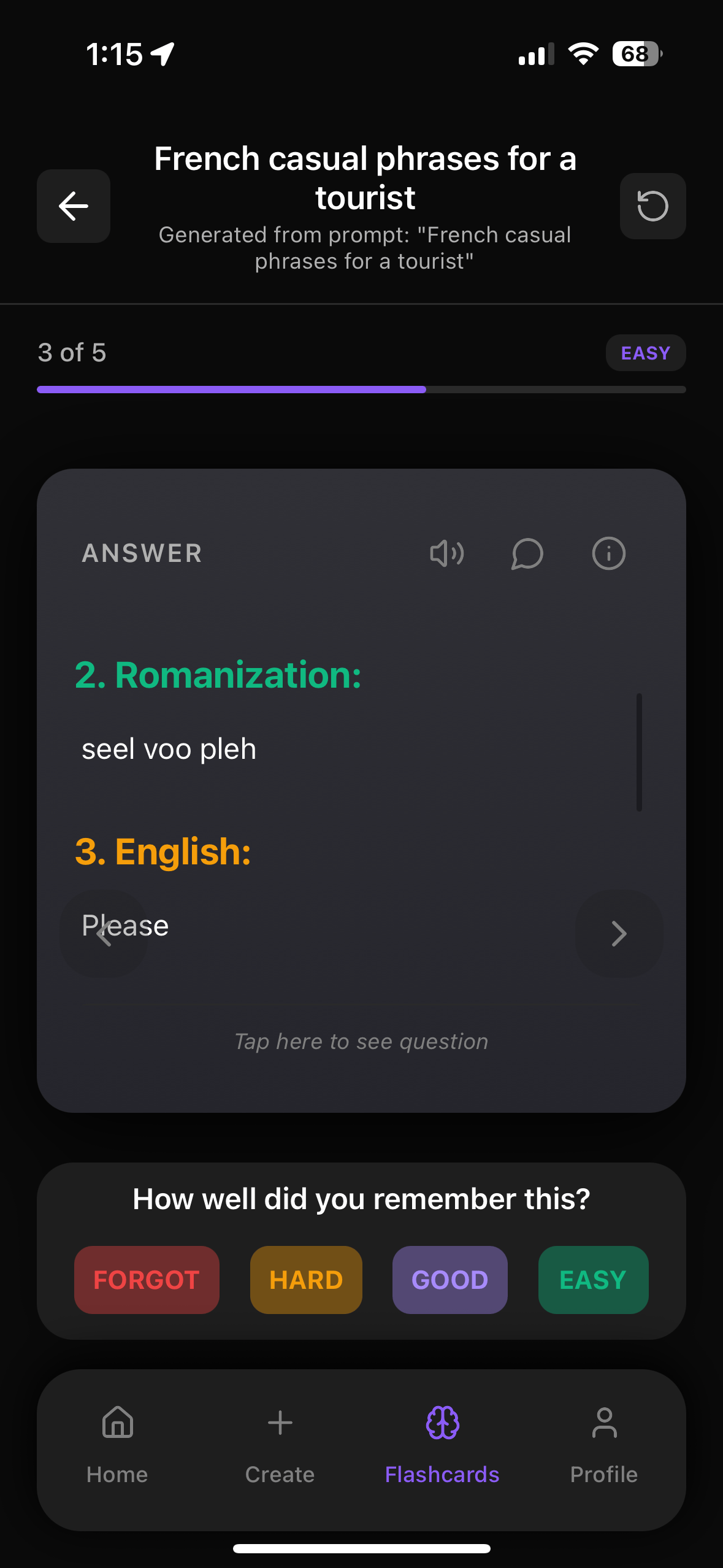
Why Pharm Flashcards Matter So Much (And Why Most People Use Them Wrong)
So here's the scoop: you know how remembering all those drug names in pharmacology can feel like trying to memorize a phone book? That's where the complete guide to pharm flashcards comes in handy. It's like your secret weapon to break down all that complex info into bite-sized chunks your brain will thank you for. And let's be real, it’s more about working smarter, not harder. The magic happens with a little active recall, spaced repetition, and sticking with it. Oh, and Flashrecall? It's like having a sidekick that does all the heavy lifting for you, whipping up flashcards from your notes and timing the reviews just right. If you're tired of drowning in drug names and want to start owning them, definitely check out our complete guide.
Flashcards are honestly one of the best ways to survive pharm — but only if you use them properly.
That’s where Flashrecall comes in:
👉 https://apps.apple.com/us/app/flashrecall-study-flashcards/id6746757085
It’s a fast, modern flashcard app that:
- Turns PDFs, lecture slides, images, YouTube links, text, or audio into cards instantly
- Has built‑in spaced repetition + active recall (no manual scheduling)
- Lets you chat with your flashcards when you’re confused about a concept
- Works offline on iPhone and iPad
Perfect for pharm, where you don’t have time to micromanage your study system.
Let’s break down how to actually build pharm flashcards that stick — and how Flashrecall makes it 10x easier.
Step 1: What Makes a Good Pharm Flashcard?
Most pharm flashcards fail because they’re either:
- A wall of text
- Or so vague they’re useless
A good pharm flashcard is:
- Specific – one clear fact or concept
- Answerable from memory – no guessing from vibes
- Clinical when possible – tied to real scenarios
Example: Bad vs Good Pharm Card
> Front: Beta blockers
> Back: Used for hypertension, angina, arrhythmias, heart failure, glaucoma, migraine prophylaxis, etc. Nonselective and selective, with different side effects and contraindications.
You’ll read it, nod, then forget 90% of it.
> Front:
> What is the main mechanism of action of beta‑1 selective blockers (e.g., metoprolol, atenolol)?
> Back:
> Block β1 receptors in the heart → ↓ heart rate and contractility → ↓ cardiac output and BP.
> Front:
> Which beta blockers are β1 selective?
> Back:
> "A BEAM": Acebutolol, Betaxolol, Esmolol, Atenolol, Metoprolol (mainly β1 selective).
> Front:
> Beta blockers – major contraindications?
> Back:
> Severe bradycardia, AV block, acute decompensated HF, severe asthma/COPD (for nonselective).
Now you’re actually training your brain to retrieve key facts — that’s active recall.
Flashrecall is built exactly around this idea: short, focused questions that force your brain to work a bit each time.
Step 2: Use Spaced Repetition So You Don’t Forget Everything Before The Exam
Pharm is the kind of subject where you feel smart today and totally blank tomorrow.
That’s why spaced repetition is non‑negotiable.
With Flashrecall, spaced repetition is built in:
- You review a card
- You tap how easy/hard it was
- The app automatically schedules the next review for the perfect time
No spreadsheets, no manual intervals, no “I’ll review this someday” piles.
You basically get:
- Frequent reviews early when you’re still learning
- Longer gaps once you’ve mastered a card
- Auto reminders so you actually open the app and study
This matters a lot in pharm because:
- You learn antibiotics one week
- Antihypertensives the next
- Psych drugs later
Without spaced repetition, the early stuff is gone by exam time.
Step 3: Turn Your Existing Pharm Material Into Flashcards Instantly
You don’t have time to hand‑type every single drug fact. That’s where Flashrecall is honestly a cheat code for pharm.
You can create flashcards from:
- PDFs and lecture slides
Upload your pharm lecture PDF or notes, and Flashrecall can pull out key points and help you turn them into cards.
- Images
Screenshot a table of side effects or drug classes → import into Flashrecall → turn it into cards.
- YouTube videos
Watching a pharm lecture on YouTube? Drop the link into Flashrecall and generate cards from the content.
- Text or typed prompts
Paste your notes, guidelines, or textbook paragraphs → create flashcards from them.
- Audio
Record yourself summarizing a topic and turn that into cards later.
You can also make cards manually if you like full control, but having all these options means you can turn any pharm resource into a flashcard deck fast.
Download it here and try it free:
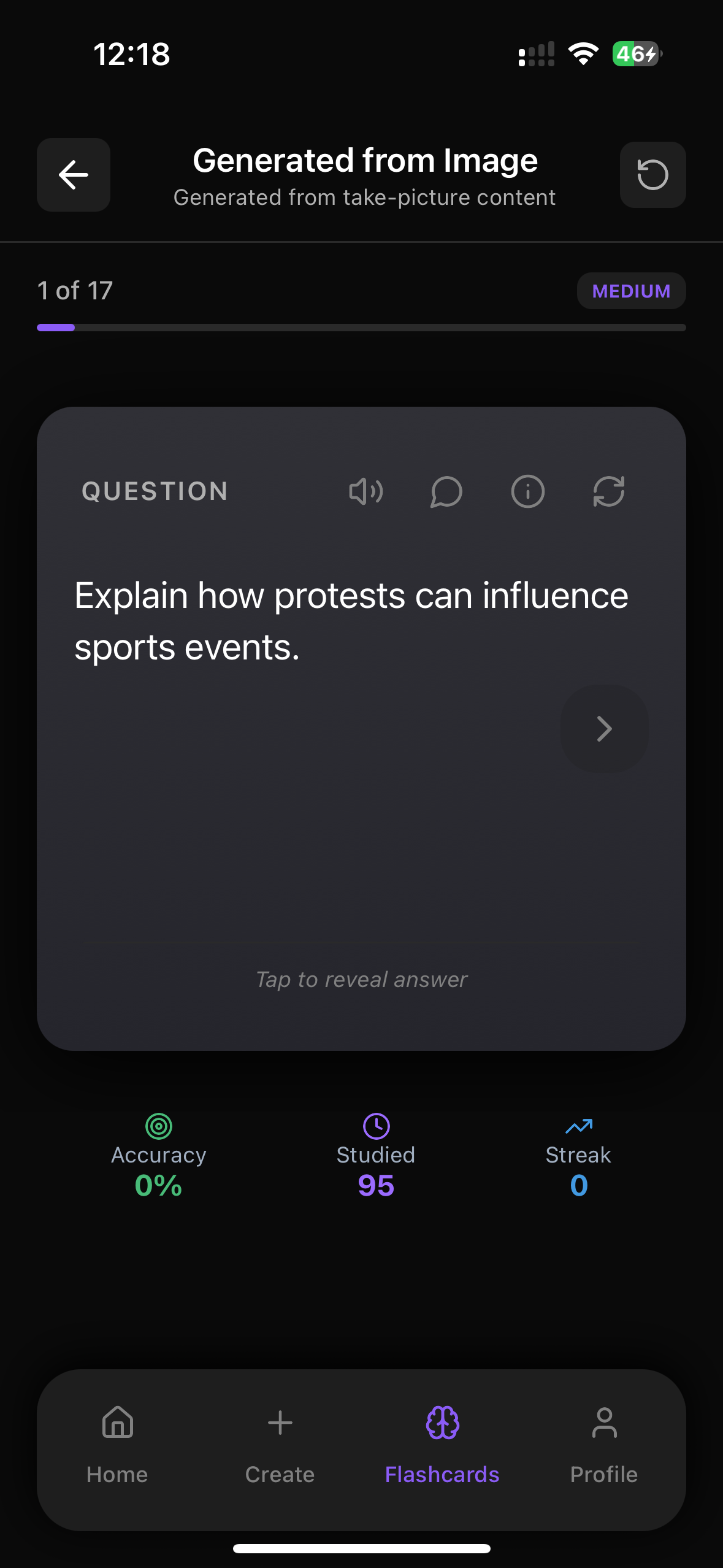
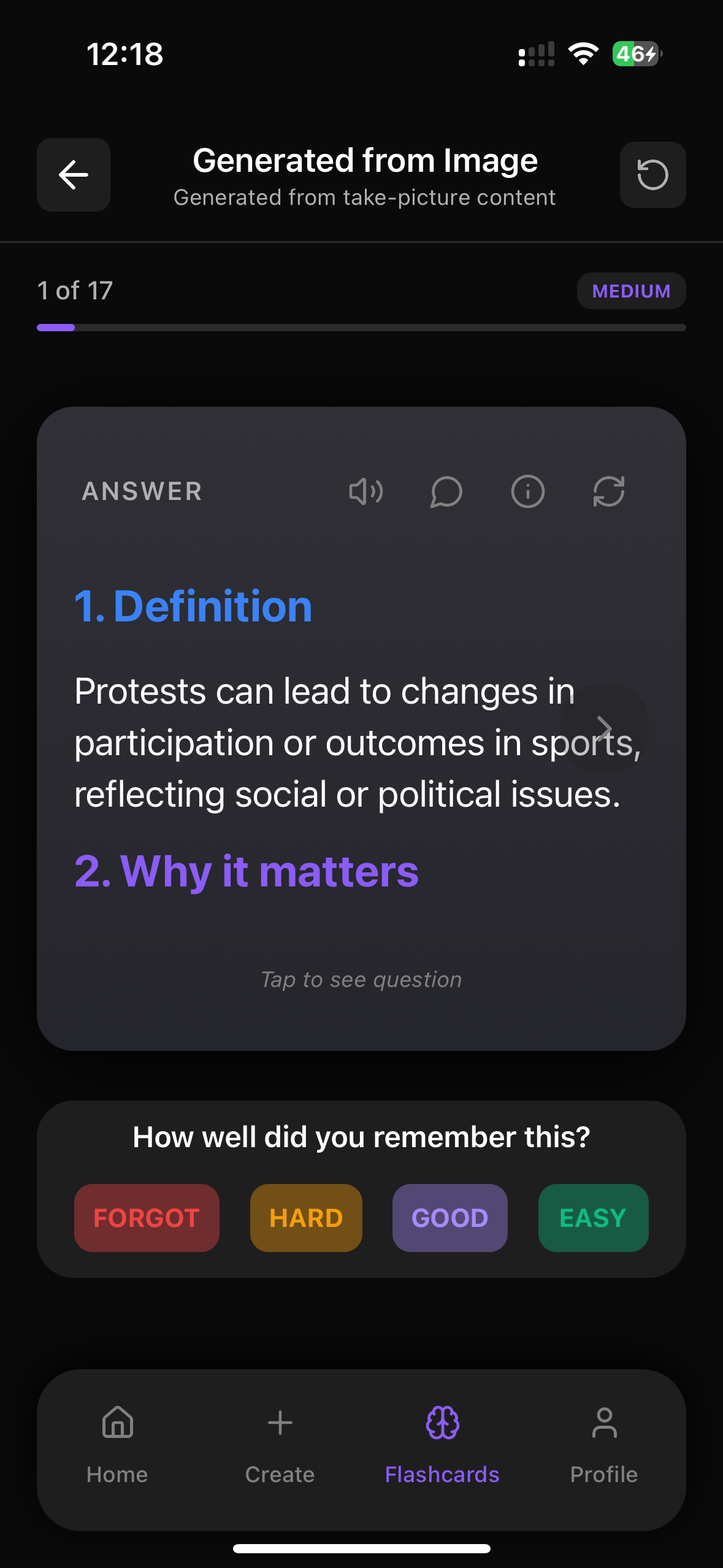
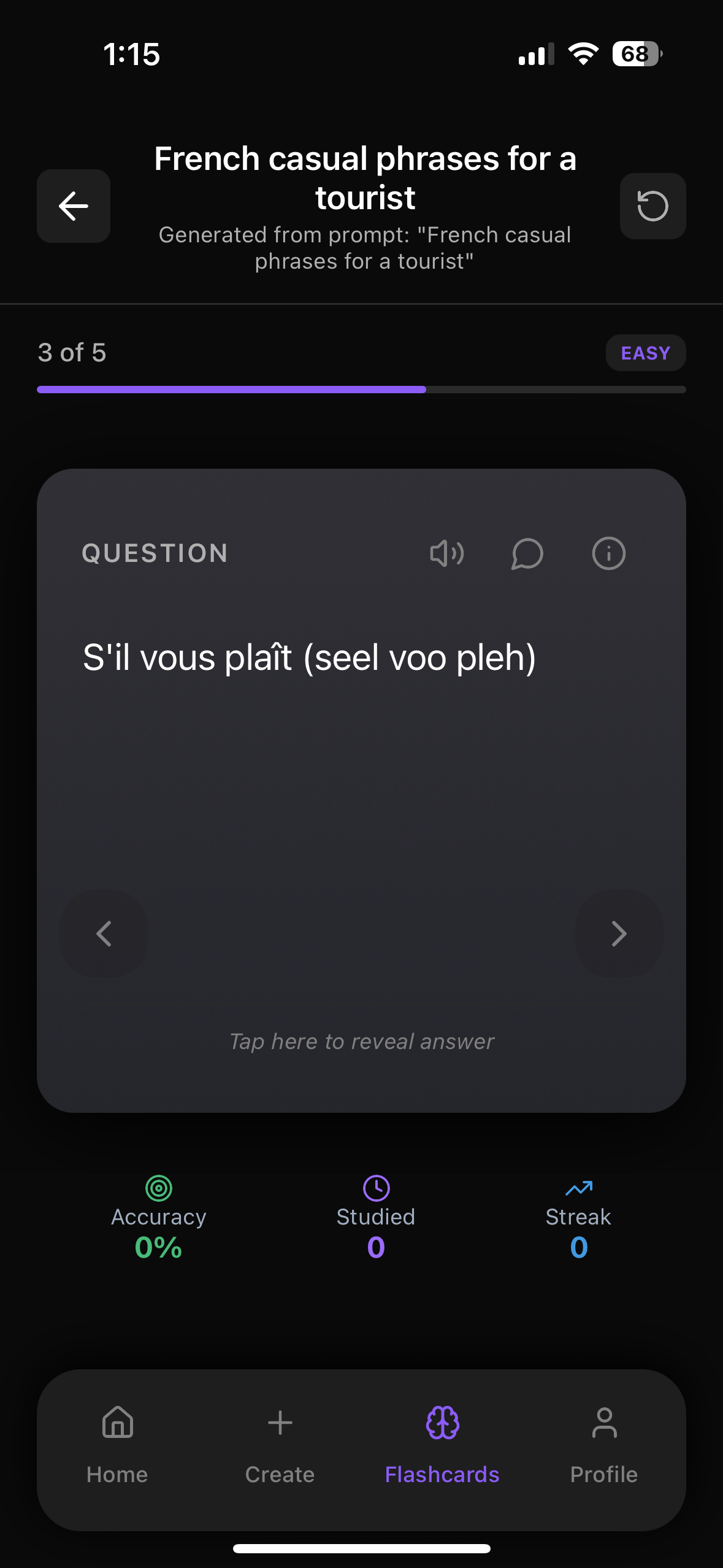
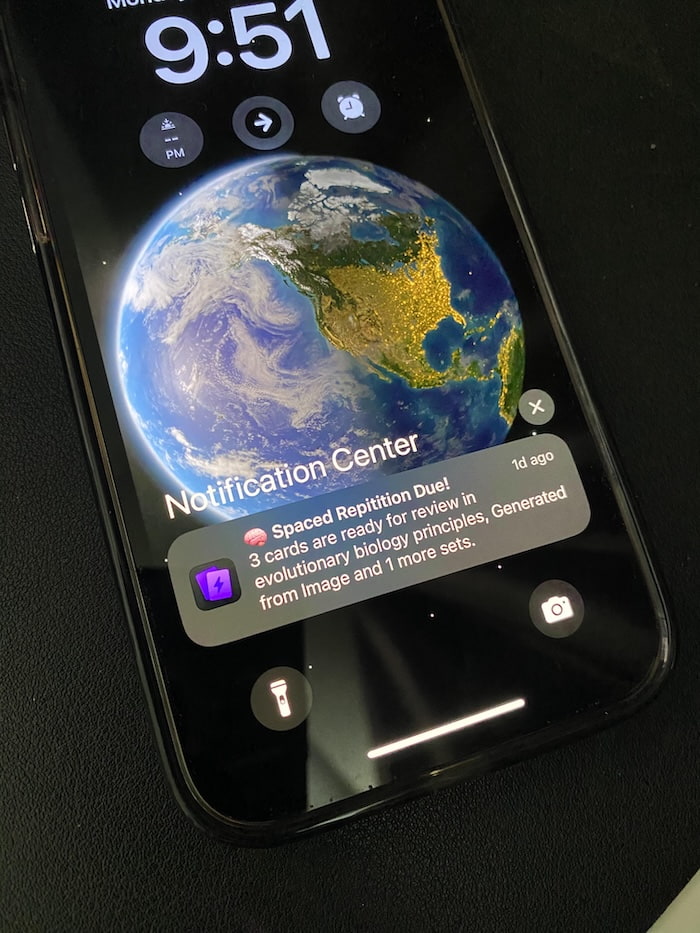
Flashrecall automatically keeps track and reminds you of the cards you don't remember well so you remember faster. Like this :
👉 https://apps.apple.com/us/app/flashrecall-study-flashcards/id6746757085
Step 4: Structure Your Pharm Decks So They Don’t Become a Mess
Instead of one giant “Pharm” deck that becomes chaos, try organizing like this:
1. By System
- Cardiovascular Pharmacology
- Respiratory Pharmacology
- CNS / Psychiatry
- Endocrine
- GI
- Renal
- Infectious Disease / Antibiotics
- Chemotherapy / Oncology
- Autonomic Nervous System (ANS)
- Toxicology / Antidotes
2. Within Each System, Use Sub‑Tags or Sub‑Decks
For example, in Cardiovascular:
- Antihypertensives
- Antiarrhythmics
- Heart failure drugs
- Antianginals
- Lipid‑lowering agents
Flashrecall makes this easy to handle because it’s fast and modern — you’re not stuck in a clunky interface. You just open a deck, review, and the spaced repetition engine handles the rest.
Step 5: What Should You Actually Make Pharm Flashcards About?
Here’s a simple formula for pharm cards that works for basically any drug:
For each drug class (and sometimes key individual drugs), make cards for:
1. Mechanism of Action (MOA)
- “How does this drug work?”
2. Clinical Uses
- “What is it used to treat?”
3. Major Side Effects
- Especially the high‑yield or dangerous ones
4. Contraindications / Warnings
5. Important Interactions
- E.g., “Don’t mix with MAOIs”, “CYP450 inducer/inhibitor”
6. Unique Facts / Mnemonics
- Anything that helps the drug stand out
Example: ACE Inhibitors
You might create cards like:
> Front:
> ACE inhibitors – mechanism of action?
> Back:
> Inhibit ACE → ↓ conversion of angiotensin I to angiotensin II → ↓ vasoconstriction and ↓ aldosterone → ↓ BP and ↓ afterload.
> Front:
> ACE inhibitors – main clinical uses?
> Back:
> Hypertension, heart failure, post‑MI, diabetic nephropathy (renal protection), CKD with proteinuria.
> Front:
> ACE inhibitors – major adverse effects?
> Back:
> Cough, angioedema, hyperkalemia, hypotension, teratogenic.
> Front:
> Why do ACE inhibitors cause cough and angioedema?
> Back:
> Increased bradykinin levels due to decreased breakdown.
You can also attach images (like a diagram of the RAAS system) into Flashrecall and build cards around that visual.
Step 6: Use Clinical Style Questions, Not Just Pure Memorization
Pharm isn’t just “what is this drug?” — exams love clinical vignettes.
So mix in cards like:
> Front:
> A 65‑year‑old man with chronic cough is taking an antihypertensive that affects the RAAS system. What drug is most likely responsible?
> Back:
> An ACE inhibitor (e.g., lisinopril) – ACE inhibitors can cause dry cough due to ↑ bradykinin.
> Front:
> Which antihypertensive is preferred in pregnancy?
> Back:
> Labetalol, methyldopa, nifedipine, hydralazine (ACE inhibitors/ARBs are contraindicated).
You can even chat with your flashcards in Flashrecall if you’re not sure why an answer is correct. That’s super helpful in pharm where you might remember the fact but not the reasoning.
Step 7: Make It a Habit With Reminders (So You Don’t Cram Everything)
Cramming pharm the night before an exam is… pain.
Flashrecall helps you avoid that by:
- Sending study reminders so you don’t forget to review
- Automatically serving you the cards that are due today based on spaced repetition
- Working offline, so you can review on the bus, in the hospital, or between lectures
You just open the app, tap into your pharm deck, and start. No planning, no “what should I study today?” paralysis.
Why Use Flashrecall For Pharm Instead Of Other Flashcard Apps?
There are plenty of flashcard apps out there, but for pharm specifically, Flashrecall hits a sweet spot:
- Way faster to create cards
You can generate cards from PDFs, screenshots, YouTube, prompts, and more — perfect for dense pharm slides.
- Built‑in spaced repetition + active recall
You don’t have to configure anything nerdy. It just works.
- Modern, clean, and easy to use
You’re already dealing with enough complexity in pharm; your study app shouldn’t add more.
- Chat with your flashcards
Stuck on a mechanism or side effect? You can ask and get clarification right inside the app.
- Great for all your other subjects too
Not just pharm — use it for pathology, physiology, anatomy, biochem, languages, business, whatever.
- Free to start
You can test it out on one pharm topic and see how it feels.
Grab it here:
👉 https://apps.apple.com/us/app/flashrecall-study-flashcards/id6746757085
A Simple Pharm Flashcard Routine You Can Steal
Here’s a realistic daily plan:
- Screenshot important tables/diagrams → import to Flashrecall
- After class, spend 15–20 minutes turning key points into cards (MOA, uses, side effects, contraindications)
- Do 10–20 minutes of Flashrecall reviews (spaced repetition handles what’s due)
- Add a few new cards if you learned something new
- Filter by topic (e.g., antibiotics, cardio drugs) and hammer those decks
- Use the chat with flashcards feature when you’re unsure why something is true
You’ll walk into your pharm exam having seen each card multiple times, at the right intervals, instead of trying to re‑learn everything from scratch.
Final Thoughts
You don’t need to be “naturally good” at memorizing to crush pharmacology.
You just need:
- Good flashcards
- Spaced repetition
- A system that doesn’t waste your time
Flashrecall gives you all three in one place, and it’s honestly perfect for pharm:
- Instant card creation from your real study materials
- Smart review scheduling
- Reminders so you don’t fall behind
- Works offline, free to start, and super easy to use
If you’re serious about mastering pharm flashcards and actually remembering drugs long‑term, try it out:
👉 https://apps.apple.com/us/app/flashrecall-study-flashcards/id6746757085
Set up your first pharm deck today and your future exam‑day self will seriously thank you.
Frequently Asked Questions
What's the fastest way to create flashcards?
Manually typing cards works but takes time. Many students now use AI generators that turn notes into flashcards instantly. Flashrecall does this automatically from text, images, or PDFs.
Is there a free flashcard app?
Yes. Flashrecall is free and lets you create flashcards from images, text, prompts, audio, PDFs, and YouTube videos.
How do I start spaced repetition?
You can manually schedule your reviews, but most people use apps that automate this. Flashrecall uses built-in spaced repetition so you review cards at the perfect time.
What is active recall and how does it work?
Active recall is the process of actively retrieving information from memory rather than passively reviewing it. Flashrecall forces proper active recall by making you think before revealing answers, then uses spaced repetition to optimize your review schedule.
How can I study more effectively for this test?
Effective exam prep combines active recall, spaced repetition, and regular practice. Flashrecall helps by automatically generating flashcards from your study materials and using spaced repetition to ensure you remember everything when exam day arrives.
Related Articles
- Pharmacology Mnemonics Flashcards: 7 Powerful Tricks To Finally Remember Every Drug Class Without Going Crazy – Stop rereading notes and use smarter flashcards that actually stick in your brain.
- Medical Terminology Flash Cards Free: 7 Powerful Ways To Finally Remember Every Term Fast – Even If You’re Overwhelmed
- Quizlet Multiplication Tables: 7 Powerful Tricks To Help Kids Remember Faster (And Actually Enjoy It) – Stop the endless drilling and discover smarter ways to master times tables that actually stick.
Research References
The information in this article is based on peer-reviewed research and established studies in cognitive psychology and learning science.
Cepeda, N. J., Pashler, H., Vul, E., Wixted, J. T., & Rohrer, D. (2006). Distributed practice in verbal recall tasks: A review and quantitative synthesis. Psychological Bulletin, 132(3), 354-380
Meta-analysis showing spaced repetition significantly improves long-term retention compared to massed practice
Carpenter, S. K., Cepeda, N. J., Rohrer, D., Kang, S. H., & Pashler, H. (2012). Using spacing to enhance diverse forms of learning: Review of recent research and implications for instruction. Educational Psychology Review, 24(3), 369-378
Review showing spacing effects work across different types of learning materials and contexts
Kang, S. H. (2016). Spaced repetition promotes efficient and effective learning: Policy implications for instruction. Policy Insights from the Behavioral and Brain Sciences, 3(1), 12-19
Policy review advocating for spaced repetition in educational settings based on extensive research evidence
Karpicke, J. D., & Roediger, H. L. (2008). The critical importance of retrieval for learning. Science, 319(5865), 966-968
Research demonstrating that active recall (retrieval practice) is more effective than re-reading for long-term learning
Roediger, H. L., & Butler, A. C. (2011). The critical role of retrieval practice in long-term retention. Trends in Cognitive Sciences, 15(1), 20-27
Review of research showing retrieval practice (active recall) as one of the most effective learning strategies
Dunlosky, J., Rawson, K. A., Marsh, E. J., Nathan, M. J., & Willingham, D. T. (2013). Improving students' learning with effective learning techniques: Promising directions from cognitive and educational psychology. Psychological Science in the Public Interest, 14(1), 4-58
Comprehensive review ranking learning techniques, with practice testing and distributed practice rated as highly effective

FlashRecall Team
FlashRecall Development Team
The FlashRecall Team is a group of working professionals and developers who are passionate about making effective study methods more accessible to students. We believe that evidence-based learning tec...
Credentials & Qualifications
- •Software Development
- •Product Development
- •User Experience Design
Areas of Expertise
Ready to Transform Your Learning?
Start using FlashRecall today - the AI-powered flashcard app with spaced repetition and active recall.
Download on App Store