Pharmacology Flashcards For Nurse Practitioners: 7 Powerful Ways To Finally Remember All Those Meds Without Burning Out – Stop drowning in drug names and start actually remembering them with a simple flashcard system that fits into your busiest shifts.
Pharmacology flashcards for nurse practitioners that actually stick: active recall, spaced repetition, real clinical examples, and why apps like Flashrecall...
How Flashrecall app helps you remember faster. It's free
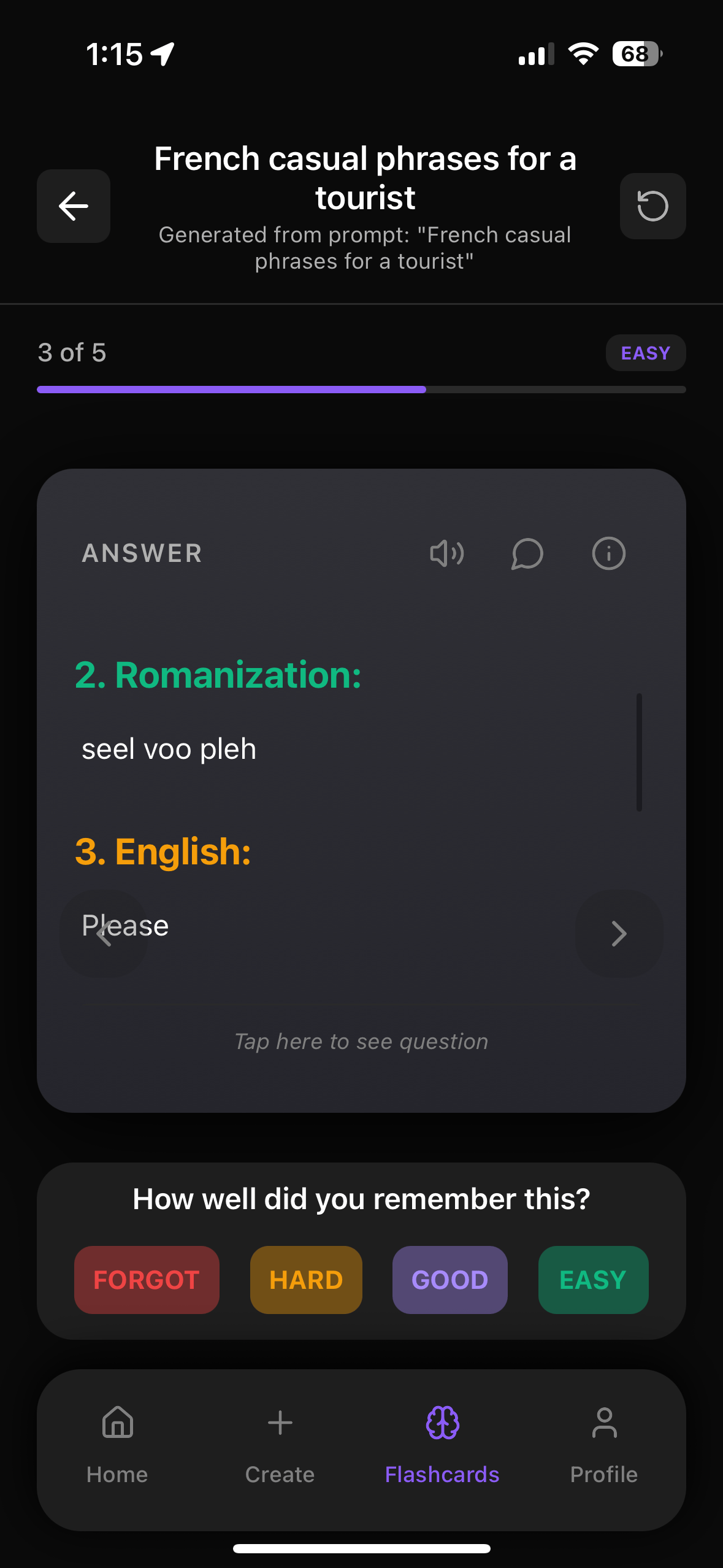
So, What Are Pharmacology Flashcards For Nurse Practitioners, Really?
Alright, let’s talk about pharmacology flashcards for nurse practitioners: they’re just quick question‑and‑answer cards that help you remember drug names, classes, mechanisms, side effects, and clinical pearls fast. Instead of rereading giant textbooks, you test yourself on tiny chunks of info so it actually sticks in your brain. For NPs, this matters because you’re constantly prescribing, adjusting meds, and catching interactions in real patients, not just on exams. A simple example: front of the card says “ACE inhibitors – main side effect?” and the back says “Cough + risk of angioedema; watch renal function and potassium.” Apps like Flashrecall make these pharmacology flashcards easy to create, organize, and review on your phone so you can study between patients, on call, or on your commute.
Why Pharmacology Is So Brutal For NPs
You already know this, but let’s say it out loud:
- Hundreds of drug names (brand + generic)
- Classes, mechanisms, indications
- Dosing ranges and renal/hepatic adjustments
- Black box warnings and serious interactions
- Different guidelines for different populations (peds, geri, pregnancy, renal, etc.)
Reading and highlighting doesn’t cut it for this kind of detail. You need active recall (forcing your brain to pull up the answer) and spaced repetition (seeing things again right before you’re about to forget them). That’s exactly what good pharmacology flashcards for nurse practitioners are built around.
Why Flashcards Work So Well For NP Pharmacology
Here’s the thing: your brain loves short, focused questions.
Flashcards are perfect for:
- Brand ↔ generic
“Lisinopril – brand?” / “Prinivil, Zestril”
- Class and mechanism
“What class is amlodipine?” / “Dihydropyridine calcium channel blocker – vasodilates arteries”
- High‑yield side effects
“What med can cause tendon rupture?” / “Fluoroquinolones (e.g., levofloxacin)”
- First‑line choices
“First‑line for uncomplicated HTN in non‑Black adult under 60?” / “Thiazide, ACEi, ARB, or CCB depending on comorbidities”
The more you quiz yourself like this, the more automatic it becomes when you’re in clinic or on rotation.
Why Use Flashrecall Instead Of Paper Cards Or Clunky Apps?
You can use paper cards or old‑school apps, but they get annoying fast when you’re busy.
Flashrecall makes pharmacology flashcards for nurse practitioners way more doable because:
- You can make flashcards instantly from:
- Text (copy/paste from guidelines, notes, PDFs)
- Images (snap a pic of lecture slides or drug charts)
- PDFs and YouTube links
- Typed prompts or manual entry if you like full control
- It has built‑in spaced repetition with auto reminders, so you don’t have to remember when to review what.
- It uses active recall by default: front = question, back = answer.
- You can chat with your flashcards if you’re unsure and want a bit more explanation.
- It works offline, so you can review on the train, in the break room, or in dead hospital Wi‑Fi zones.
- It’s fast, modern, easy to use, and free to start.
- It works on both iPhone and iPad, so you can study on whichever device you actually carry.
Grab it here if you want to build your NP pharm deck without fighting with clunky software:
👉 https://apps.apple.com/us/app/flashrecall-study-flashcards/id6746757085
What Should NP Pharmacology Flashcards Actually Include?
Don’t just throw random facts on cards. For nurse practitioners, your pharm cards should be clinical and exam‑focused.
Here’s a simple structure you can use:
1. Drug Basics
- Front: “Metoprolol – class + main use?”
- Back: “Selective beta‑1 blocker; used for HTN, angina, HF, rate control in AFib.”
Include:
- Brand + generic
- Drug class
- Main indications
2. Mechanism Of Action (Short + Simple)
- Front: “How do ACE inhibitors lower BP?”
- Back: “Block conversion of angiotensin I to II → vasodilation + ↓ aldosterone → ↓ BP.”
One or two lines max. You’re not writing a textbook.
3. Side Effects & Monitoring
- Front: “Serious adverse effect of amiodarone?”
- Back: “Pulmonary toxicity (fibrosis), hepatotoxicity, thyroid dysfunction; need PFTs, LFTs, TFTs.”
Focus on:
- High‑yield side effects
- Black box warnings
- Labs you need to check
4. Contraindications & Cautions
- Front: “Who should NOT get ACE inhibitors?”
- Back: “Pregnancy, history of angioedema with ACEi, bilateral renal artery stenosis, hyperkalemia.”
5. First‑Line / Guidelines
- Front: “First‑line for uncomplicated UTI (non‑pregnant female)?”
- Back: “Nitrofurantoin, TMP‑SMX (if local resistance low), or fosfomycin – per current guidelines.”
These are gold for boards and real‑world prescribing.
How To Build NP Pharm Flashcards Quickly (Without Losing Your Mind)
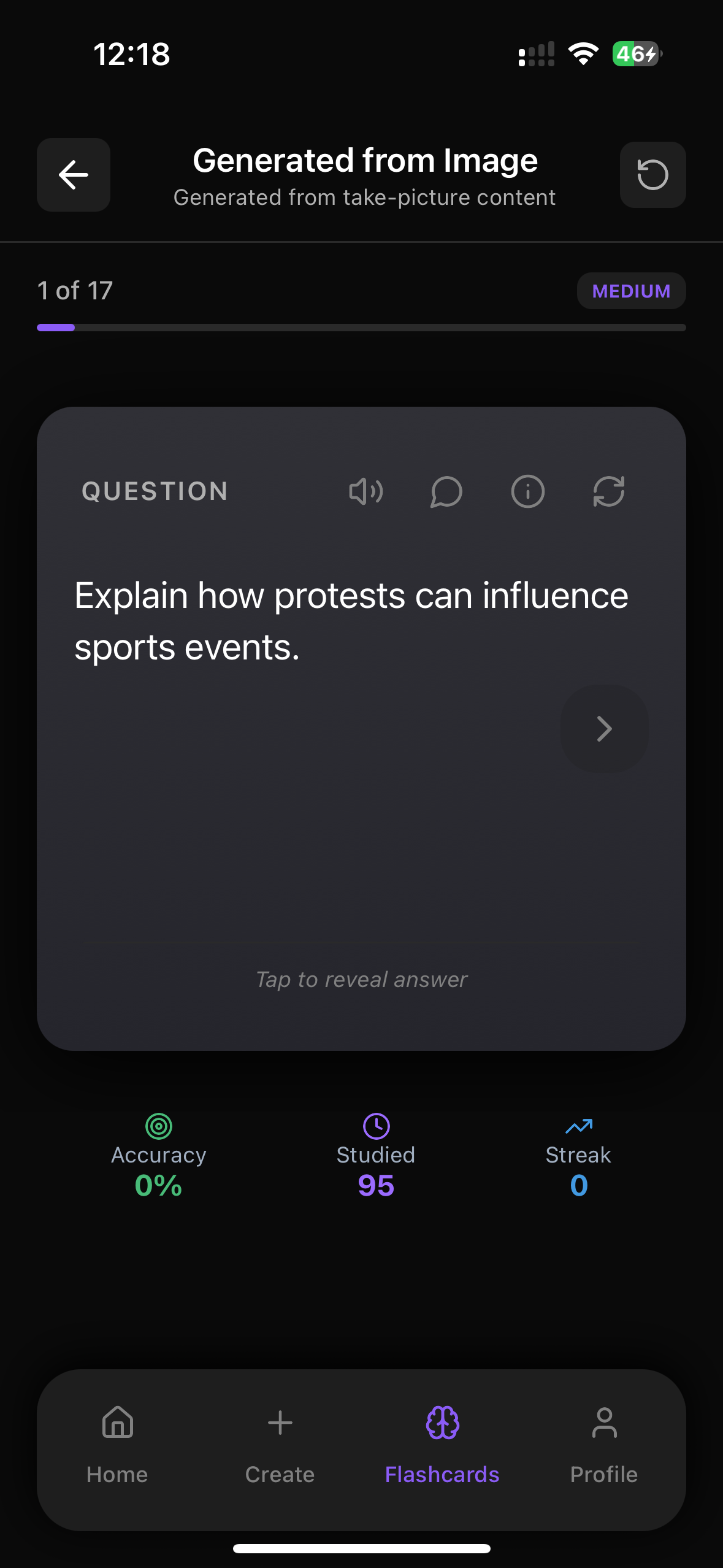
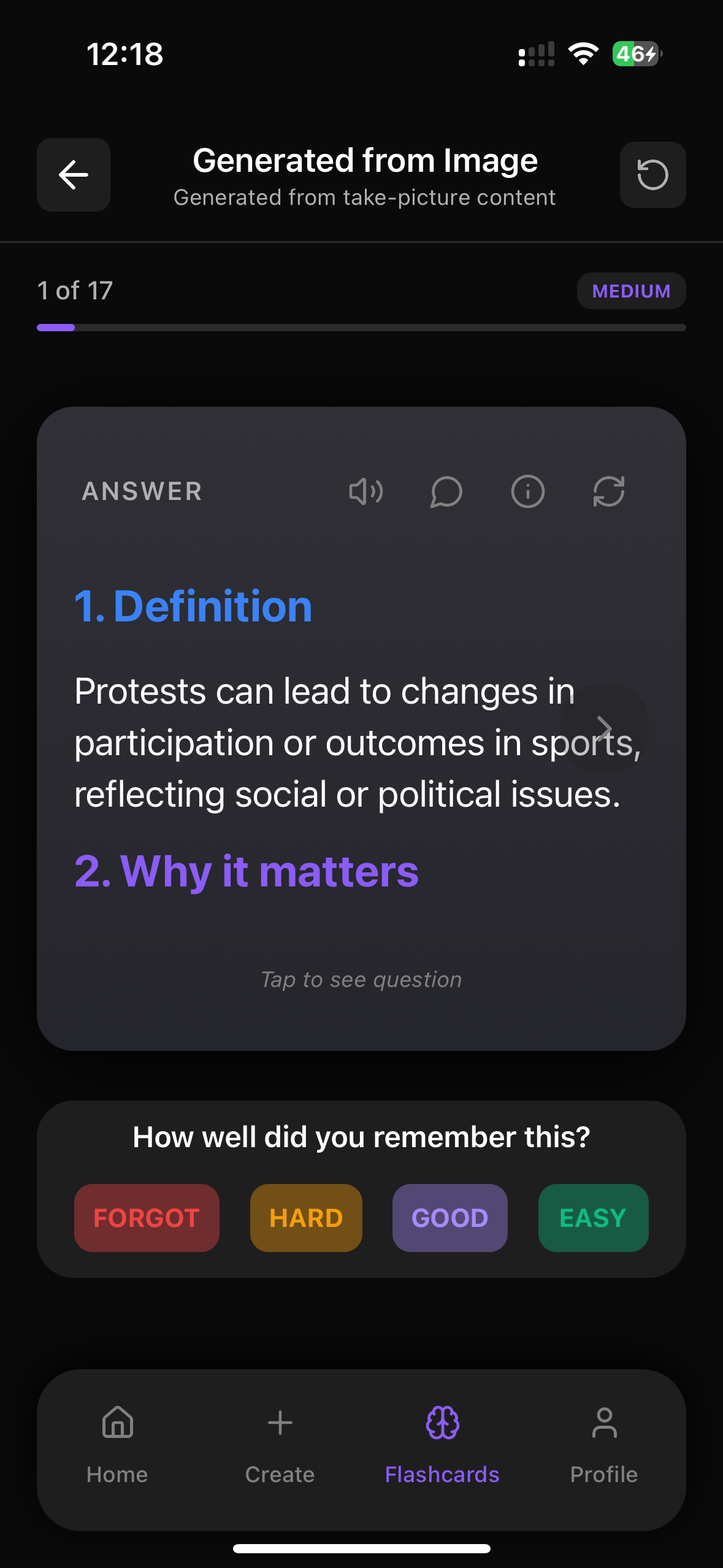
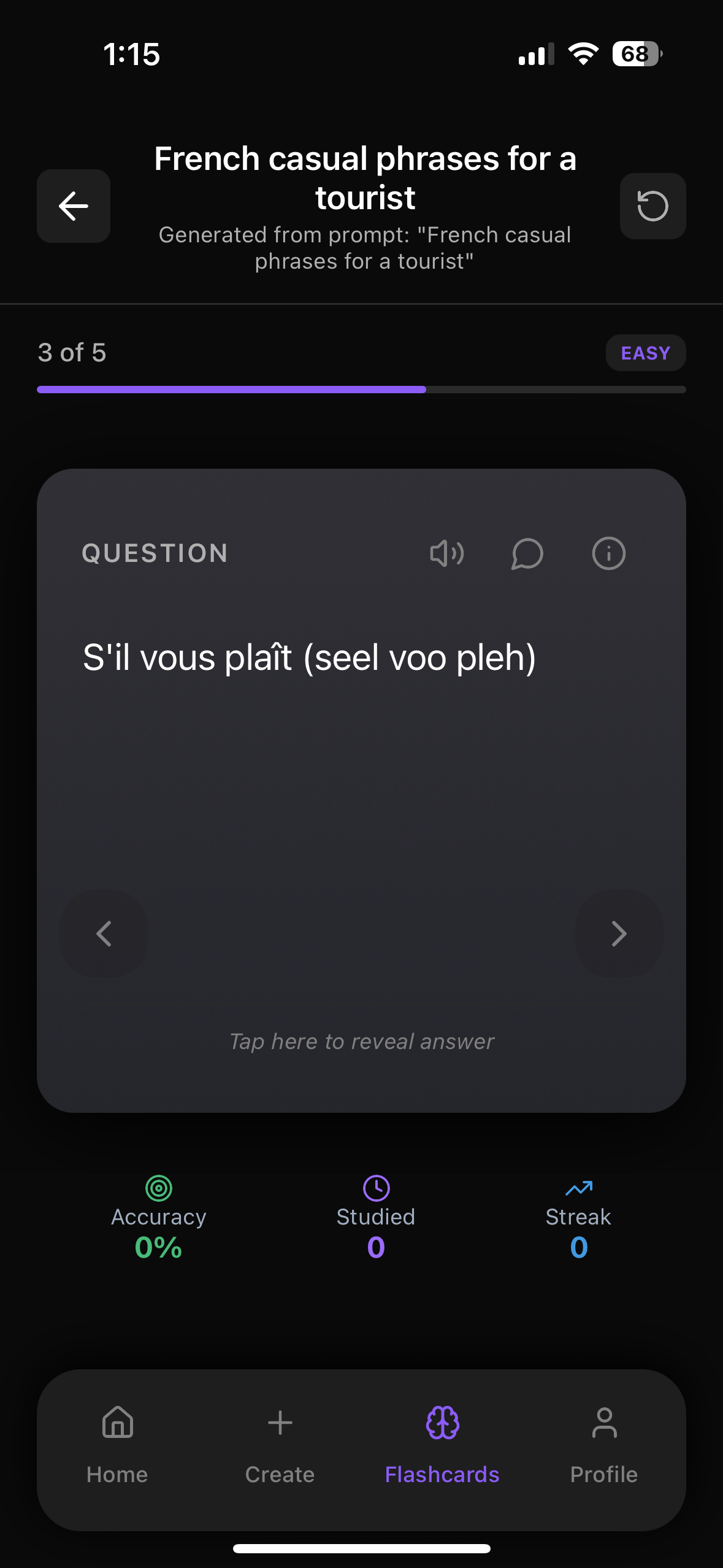
Flashrecall automatically keeps track and reminds you of the cards you don't remember well so you remember faster. Like this :
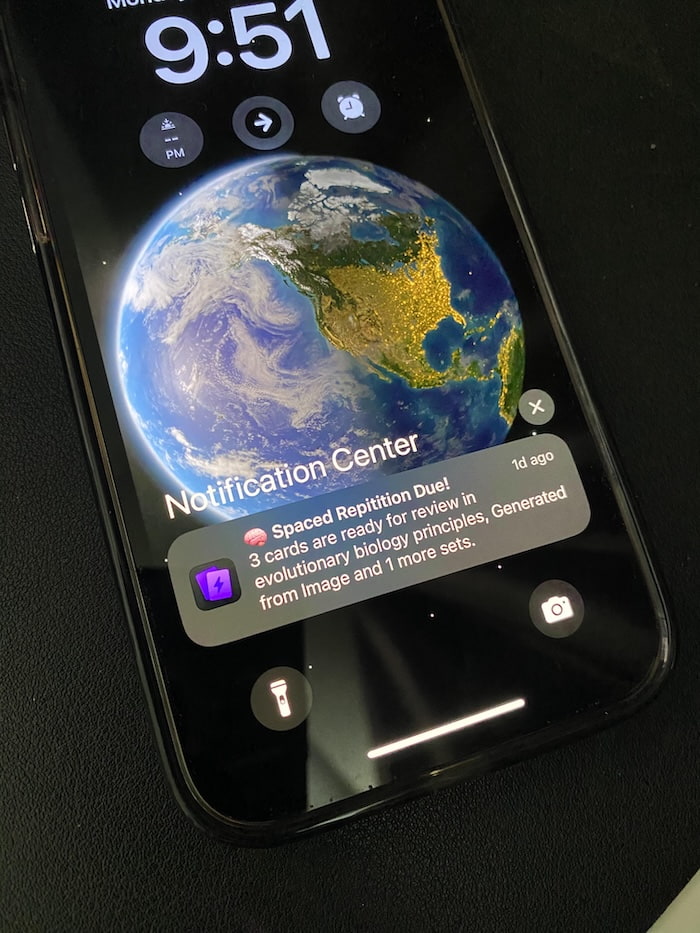
You don’t have time to hand‑type every single card perfectly. Here’s a practical flow using Flashrecall:
Step 1: Start With Your Core Sources
Use:
- Class notes
- Review books (like Fitzgerald, Hollier, etc.)
- Clinical guidelines (ACC/AHA, ADA, GOLD, etc.)
- Pharm review PDFs your program gives you
Step 2: Capture Content Fast
With Flashrecall, you can:
- Take a photo of a slide with a hypertension drug table → auto‑generate flashcards from that.
- Import a PDF of your pharm review → highlight key lines → turn them into cards.
- Paste text from guidelines or notes → split into Q&A style.
- Add YouTube links from NP pharm lectures → create cards from the transcript.
This is way faster than typing every single detail manually.
Step 3: Make Cards That Force Recall
Avoid this:
- Front: “Beta blockers”
- Back: “Used for HTN, HF, angina…”
Instead, use questions:
- “Beta blockers – 3 main indications?”
- “Which beta blocker is preferred in HF with reduced EF?”
- “Which beta blocker is nonselective and can worsen asthma?”
If the front doesn’t make you think, the card is weak.
Using Spaced Repetition So You Don’t Forget Everything In 2 Weeks
Most NP students cram, feel confident for 24 hours, then forget half of it.
Spaced repetition fixes that by showing you:
- New cards more often
- Older, well‑known cards less often
- Tricky cards again right before you’d usually forget them
Flashrecall has spaced repetition built‑in, so when you rate how hard a card was, it automatically schedules the next review. No calendars, no manual tracking. You just open the app, and it says: “Here’s what you should review today.”
You also get study reminders, which is huge when you’re juggling clinic, assignments, and life.
How To Organize Your NP Pharm Decks
Keep it simple but structured. Some ideas:
By System
- Cardio (HTN, HF, arrhythmias, lipids)
- Endocrine (DM, thyroid, adrenal)
- Psych (SSRIs, SNRIs, antipsychotics, mood stabilizers)
- ID (antibiotics, antivirals, antifungals)
- Pulm, GI, Rheum, etc.
By Priority
- High‑yield / “must know for boards”
- “Nice to know”
- Rare / niche meds (fewer cards, but still there)
In Flashrecall, you can keep these as separate decks or tags so you can focus, like:
“Today = only Cardio + Endocrine.”
How To Use Flashcards Alongside Clinical Practice
Pharmacology for nurse practitioners isn’t just exams; it’s daily life.
Here’s how to blend flashcards with real patients:
- After clinic, make 3–5 cards based on cases you saw:
- “First‑line for new DM2 with ASCVD?”
- “When to add basal insulin?”
- “Which antihypertensives are safe in pregnancy?”
- When you see a drug you’re rusty on, quickly:
- Look it up
- Make a 1–2 card mini‑set in Flashrecall
- Review it that night
Those “tiny” cards add up fast, and they’re super memorable because they’re tied to real people you saw.
Studying On The Go (Without Carrying A Textbook)
One of the best parts of using an app instead of paper:
- Waiting for preceptor? Do 10 cards.
- On the bus/train? 15 cards.
- Too tired for a full study session? 5 “review only” minutes.
Flashrecall works offline, so you don’t need Wi‑Fi to keep your streak going. And because it’s on your iPhone or iPad, you’re basically turning dead time into pharm review time.
Again, here’s the link:
👉 https://apps.apple.com/us/app/flashrecall-study-flashcards/id6746757085
Example NP Pharm Cards You Can Steal
Just to give you a feel, here are a few you could drop straight into Flashrecall:
- Front: “Metformin – main benefits + key contraindication?”
- Front: “First‑line treatment for moderate persistent asthma in adults?”
- Front: “Which antihypertensive is preferred in a patient with diabetes and albuminuria?”
- Front: “Serotonin syndrome – 3 key features?”
Build a set of 200–400 of these over time, and your pharm confidence will jump a lot.
Final Thoughts: Make Pharm Manageable, Not Miserable
Pharmacology flashcards for nurse practitioners aren’t about memorizing every obscure drug on earth—they’re about making the important stuff automatic so you can think clearly in clinic and on exams.
If you:
- Turn your notes, slides, and guidelines into flashcards
- Use active recall (questions, not notes)
- Let spaced repetition handle the review timing
- Sneak in quick sessions throughout your day
…pharm stops feeling like an endless blur and starts to feel doable.
Flashrecall just makes that whole process smoother: instant card creation from text/images/PDFs, built‑in spaced repetition, offline mode, and a clean interface that doesn’t get in your way.
If you’re serious about not blanking on meds during boards or in front of patients, try building your NP pharm deck here:
👉 https://apps.apple.com/us/app/flashrecall-study-flashcards/id6746757085
Frequently Asked Questions
What's the fastest way to create flashcards?
Manually typing cards works but takes time. Many students now use AI generators that turn notes into flashcards instantly. Flashrecall does this automatically from text, images, or PDFs.
Is there a free flashcard app?
Yes. Flashrecall is free and lets you create flashcards from images, text, prompts, audio, PDFs, and YouTube videos.
How do I start spaced repetition?
You can manually schedule your reviews, but most people use apps that automate this. Flashrecall uses built-in spaced repetition so you review cards at the perfect time.
What is active recall and how does it work?
Active recall is the process of actively retrieving information from memory rather than passively reviewing it. Flashrecall forces proper active recall by making you think before revealing answers, then uses spaced repetition to optimize your review schedule.
How can I study more effectively for this test?
Effective exam prep combines active recall, spaced repetition, and regular practice. Flashrecall helps by automatically generating flashcards from your study materials and using spaced repetition to ensure you remember everything when exam day arrives.
Related Articles
- Pharmacology Flashcards For Nursing Students: 7 Powerful Study Hacks To Master Meds Faster And Finally Feel Confident In Clinicals – Stop memorizing random drug lists and start using a system that actually sticks.
- Arabic Vocabulary Flashcards: 7 Powerful Ways To Learn Faster And Actually Remember Words – Stop Forgetting New Arabic Vocab And Turn It Into Long-Term Memory With Smart Flashcards
- Chinese Flashcard App: 7 Powerful Ways To Learn Mandarin Faster (Most Learners Miss #3) – Turn any text, video, or image into smart flashcards and finally remember your Chinese for good.
Research References
The information in this article is based on peer-reviewed research and established studies in cognitive psychology and learning science.
Cepeda, N. J., Pashler, H., Vul, E., Wixted, J. T., & Rohrer, D. (2006). Distributed practice in verbal recall tasks: A review and quantitative synthesis. Psychological Bulletin, 132(3), 354-380
Meta-analysis showing spaced repetition significantly improves long-term retention compared to massed practice
Carpenter, S. K., Cepeda, N. J., Rohrer, D., Kang, S. H., & Pashler, H. (2012). Using spacing to enhance diverse forms of learning: Review of recent research and implications for instruction. Educational Psychology Review, 24(3), 369-378
Review showing spacing effects work across different types of learning materials and contexts
Kang, S. H. (2016). Spaced repetition promotes efficient and effective learning: Policy implications for instruction. Policy Insights from the Behavioral and Brain Sciences, 3(1), 12-19
Policy review advocating for spaced repetition in educational settings based on extensive research evidence
Karpicke, J. D., & Roediger, H. L. (2008). The critical importance of retrieval for learning. Science, 319(5865), 966-968
Research demonstrating that active recall (retrieval practice) is more effective than re-reading for long-term learning
Roediger, H. L., & Butler, A. C. (2011). The critical role of retrieval practice in long-term retention. Trends in Cognitive Sciences, 15(1), 20-27
Review of research showing retrieval practice (active recall) as one of the most effective learning strategies
Dunlosky, J., Rawson, K. A., Marsh, E. J., Nathan, M. J., & Willingham, D. T. (2013). Improving students' learning with effective learning techniques: Promising directions from cognitive and educational psychology. Psychological Science in the Public Interest, 14(1), 4-58
Comprehensive review ranking learning techniques, with practice testing and distributed practice rated as highly effective

FlashRecall Team
FlashRecall Development Team
The FlashRecall Team is a group of working professionals and developers who are passionate about making effective study methods more accessible to students. We believe that evidence-based learning tec...
Credentials & Qualifications
- •Software Development
- •Product Development
- •User Experience Design
Areas of Expertise
Ready to Transform Your Learning?
Start using FlashRecall today - the AI-powered flashcard app with spaced repetition and active recall.
Download on App Store