Phase 5 Flashcards For Kids: The Powerful Guide
Phase 5 flashcards for kids use fun visuals and spaced repetition to help them learn tricky sounds and words. Create your own with the Flashrecall app!
How Flashrecall app helps you remember faster. It's free
What Are Phase 5 Flashcards (And Why Do They Feel So Hard)?
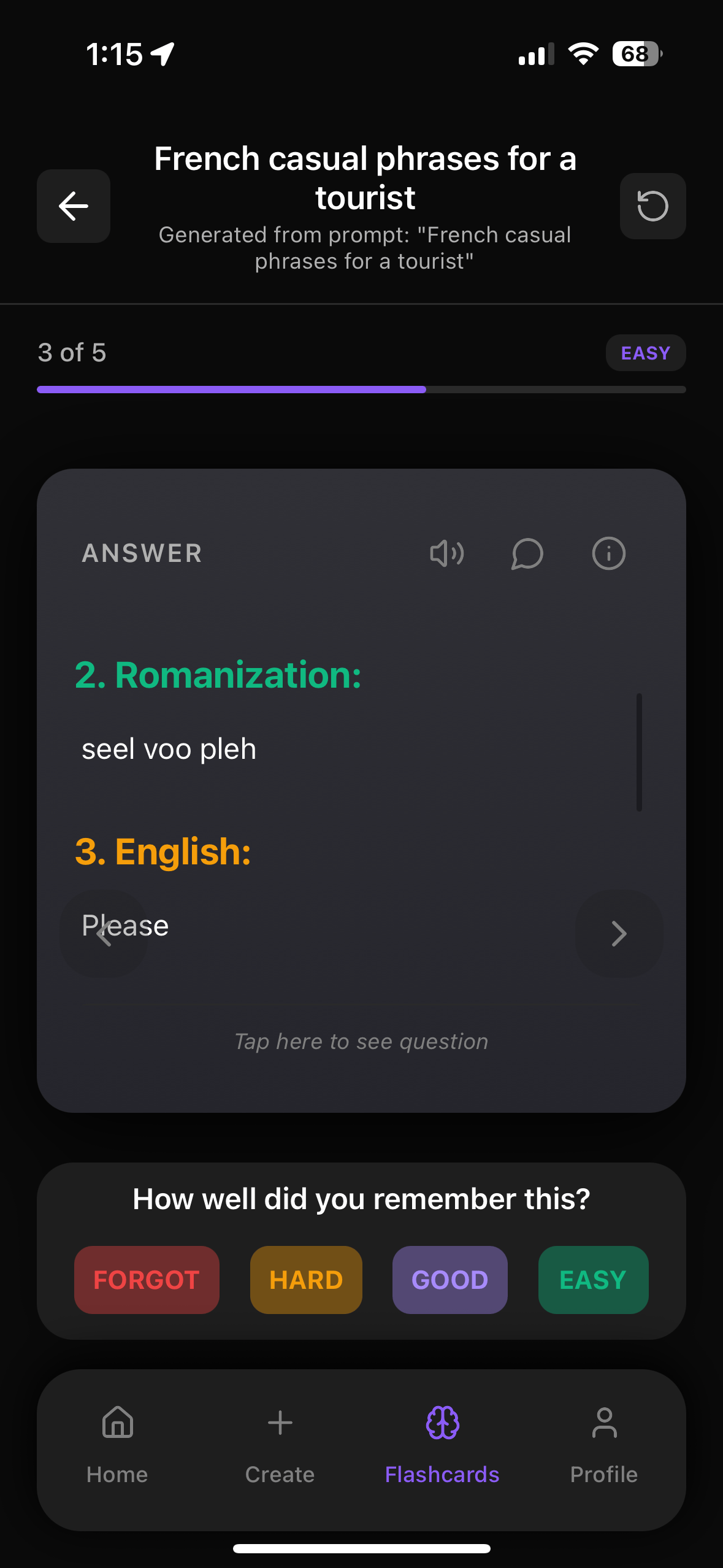
Alright, so phase 5 flashcards for kids might sound kinda fancy, but they're really just a super fun way for kids to learn stuff without even realizing it. You know how kids love anything with bright colors and pictures? These flashcards totally get that, using visuals and simple words to keep them hooked. Plus, Flashrecall makes it a breeze to whip up your own custom cards from photos, doodles, or whatever text you have lying around. It's like the secret sauce for parents and teachers who want learning to feel more like playtime. And get this, the app even spaces out the review sessions automatically, so your kid's memory game stays sharp without them getting all stressed out. If you're curious about how phase 5 works and maybe want to peek at phase 2 flashcards for some next-level exam tips, definitely check out our complete guide. It's all way simpler than it sounds, promise!
- New graphemes (ay, ou, ie, etc.)
- Alternative spellings (ai/ay/a-e, ee/ea/e-e, igh/ie/i-e, etc.)
- Tricky words (people, their, called, looked, etc.)
Instead of shuffling paper cards all over the floor, you can make this whole process way easier with a flashcard app like Flashrecall:
👉 https://apps.apple.com/us/app/flashrecall-study-flashcards/id6746757085
Flashrecall lets you create Phase 5 flashcards in seconds, reminds your child when to review, and uses spaced repetition so they actually remember the sounds instead of forgetting them by next week.
Let’s break down how to use Phase 5 flashcards properly — and how to make them work way better with Flashrecall.
Why Flashcards Work So Well For Phase 5
Phase 5 is mostly about speed + accuracy:
- Can your child see “ay” and say /ai/ without thinking?
- Can they read “phone” and not say /p-hon-e/?
- Can they spot the right spelling when sounds are the same (ai vs ay vs a-e)?
Flashcards are perfect because they force active recall:
> Your child sees “ay” → has to remember the sound → says /ai/
That “remembering” step is what builds strong memory.
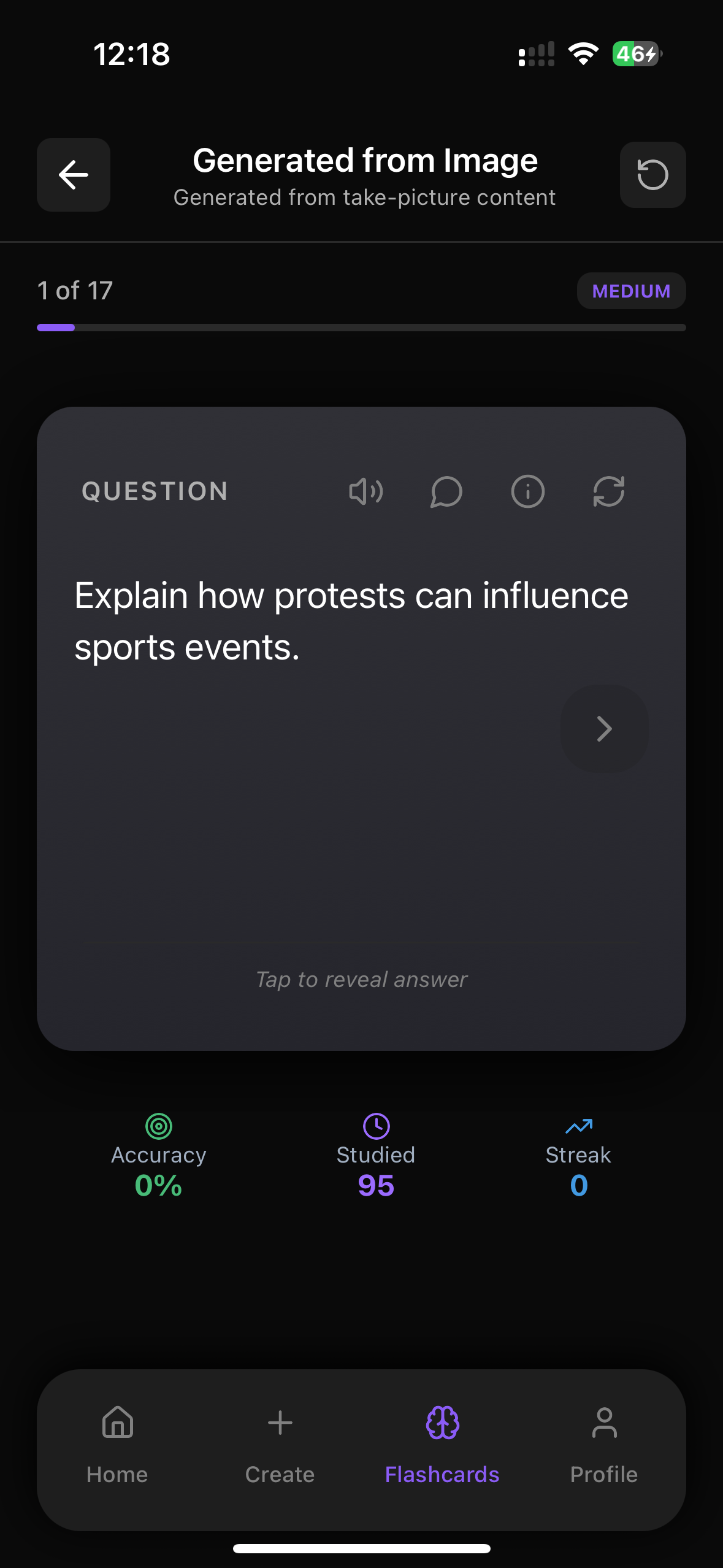
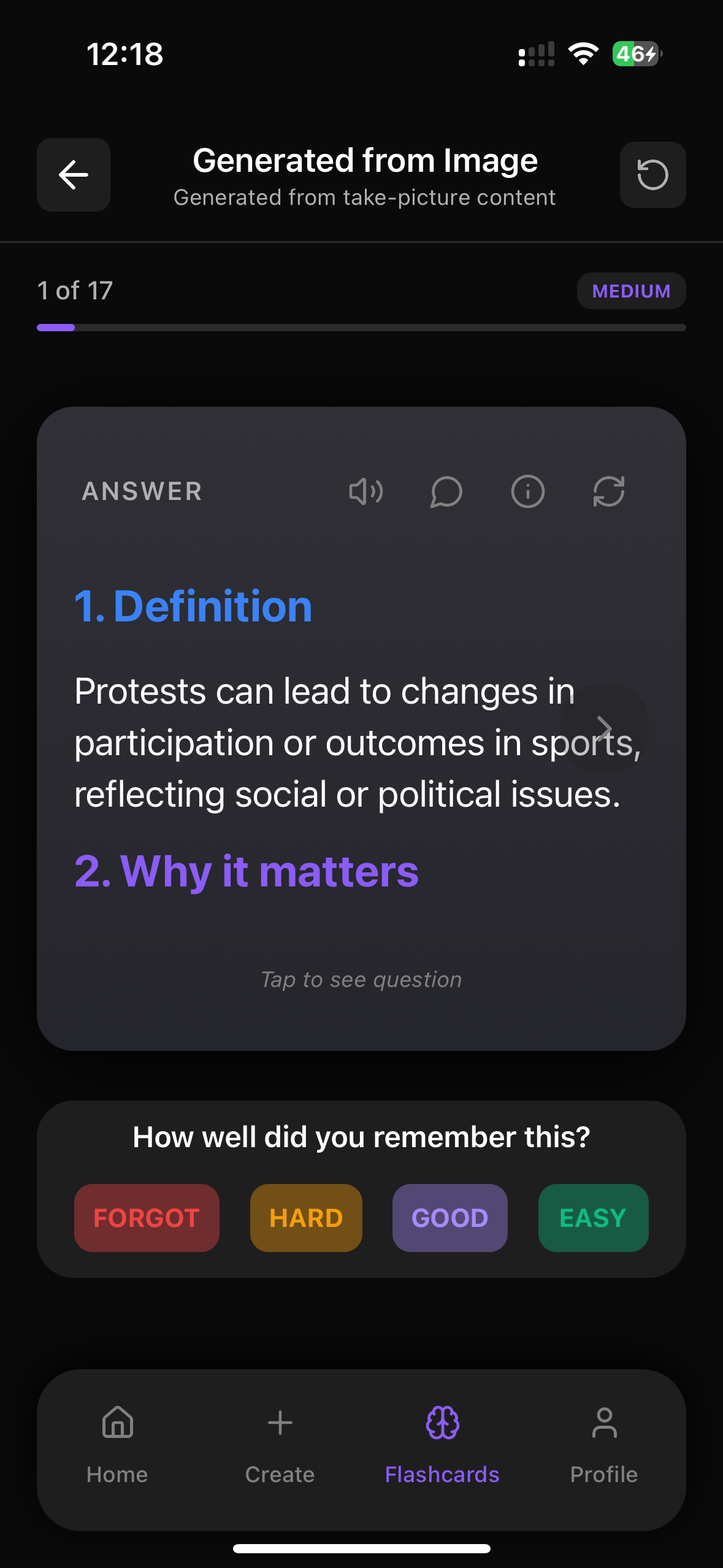
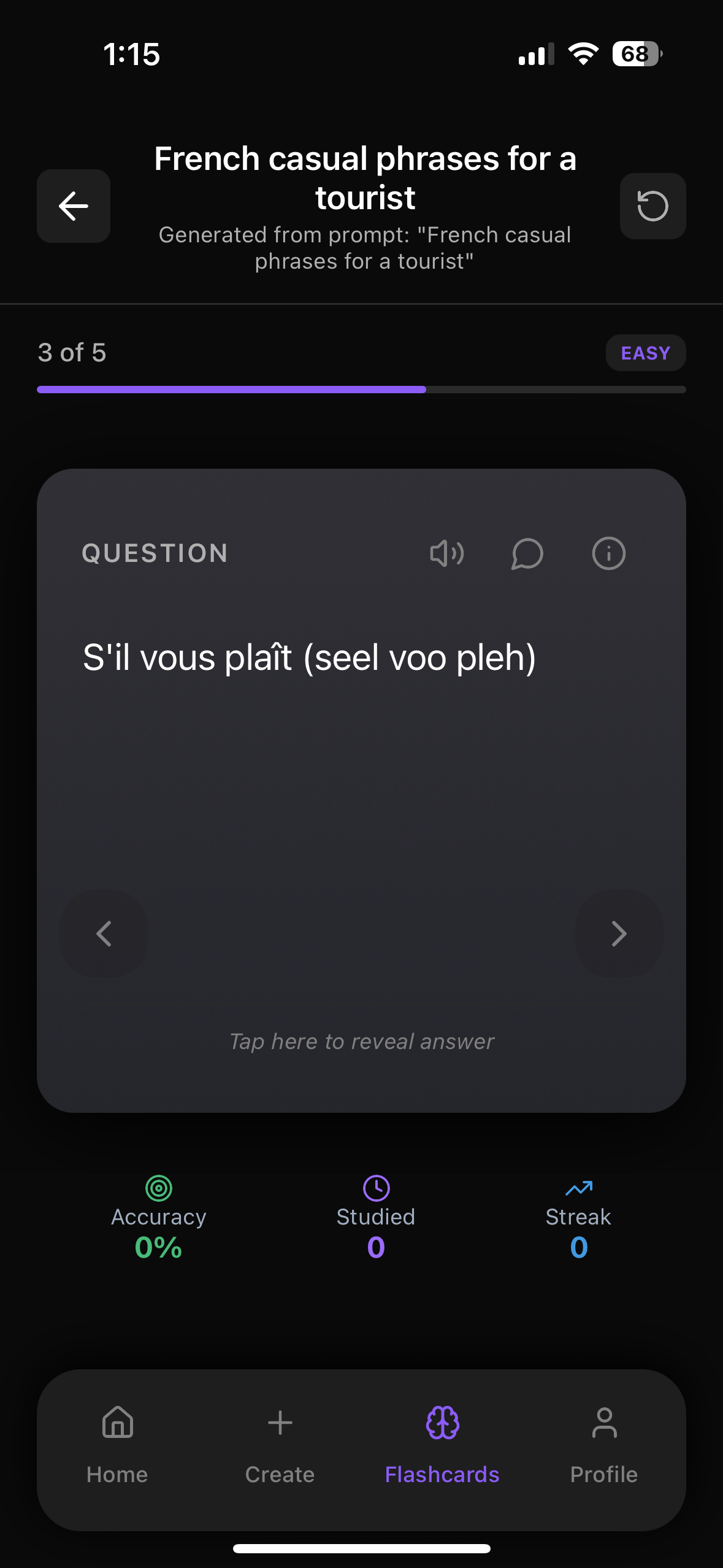
Flashrecall has active recall built in. You flip the card, try to remember, then mark how easy or hard it was. The app handles the rest and schedules the next review automatically.
No tracking. No checklists. No “Wait, did we do these yesterday?”
Just open the app and it tells you what to review.
Why Use Flashrecall For Phase 5 (Instead Of Paper Cards)?
You can totally use paper cards. But here’s why Flashrecall is honestly better for Phase 5:
- You can make cards from anything
- Snap a photo of a phonics worksheet → Flashrecall turns it into flashcards
- Paste text lists of Phase 5 graphemes → instant cards
- Use audio to record you saying the sound → great for younger kids
- Add words or sentences with the target grapheme
- Built‑in spaced repetition
- Hard sounds (like “ph” or “ew”) show up more often
- Easy ones (like “ay”) show up less
- Your child reviews just enough to remember, without burning out
- Study reminders
- You get gentle nudges to practice so you don’t forget for a week
- Offline mode
- Perfect for car rides, waiting rooms, trips — no Wi‑Fi needed
- Free to start, works on iPhone and iPad
- Easy to hand over your phone or tablet for a quick 5‑minute review
Grab it here if you want to follow along as you read:
👉 https://apps.apple.com/us/app/flashrecall-study-flashcards/id6746757085
The Key Phase 5 Sounds To Cover With Flashcards
Here’s a simple checklist of what you’ll want to include in your Phase 5 deck.
1. New Graphemes For Known Phonemes
Create flashcards for each of these:
- ay (day, play, tray)
- ou (out, shout, cloud)
- ie (tie, pie, cried)
- ea (sea, meat, read)
- oy (boy, toy, enjoy)
- ir (girl, bird, shirt)
- ue (blue, clue, true)
- aw (saw, claw, yawn)
- wh (when, what, which)
- ph (phone, photo, dolphin)
- ew (chew, new, grew)
- oe (toe, goes)
- au (author, autumn, sauce)
- ey (key, monkey, donkey)
For each one, you can make three types of cards in Flashrecall:
- Sound card
- Front: “ay”
- Back: “/ai/ as in day” + picture or example word
- Word card
- Front: “play” (child reads)
- Back: highlight “ay” and maybe add a sentence
- Sentence card
- Front: “We can play in the rain.”
- Back: Ask: “Which word has the ‘ay’ sound?”
You can type these manually or paste from a phonics list straight into Flashrecall to auto‑generate multiple cards.
2. Split Digraphs (Magic E)
These are big in Phase 5:
- a-e (cake, make, game)
- e-e (these, theme)
- i-e (time, kite, slide)
- o-e (home, bone, joke)
- u-e (cube, tune, rude)
In Flashrecall, you can:
- Make cards like:
- Front: `c _ k e`
- Back: “cake – a-e makes the long /ai/ sound”
- Or show pairs:
- Front: “cap / cape”
- Back: “Magic e changes the vowel sound”
You can even add audio of you saying “cap” vs “cape” so your child can hear the difference clearly.
3. Tricky Words In Phase 5
Words like:
- their, people, called, asked, looked, could, should, would
These don’t follow simple phonics rules, so flashcards help a lot.
Example cards in Flashrecall:
- Front: “people”
Back: “Pronounced ‘pee-pl’. The ‘eo’ is tricky.”
- Front: “could / would / should”
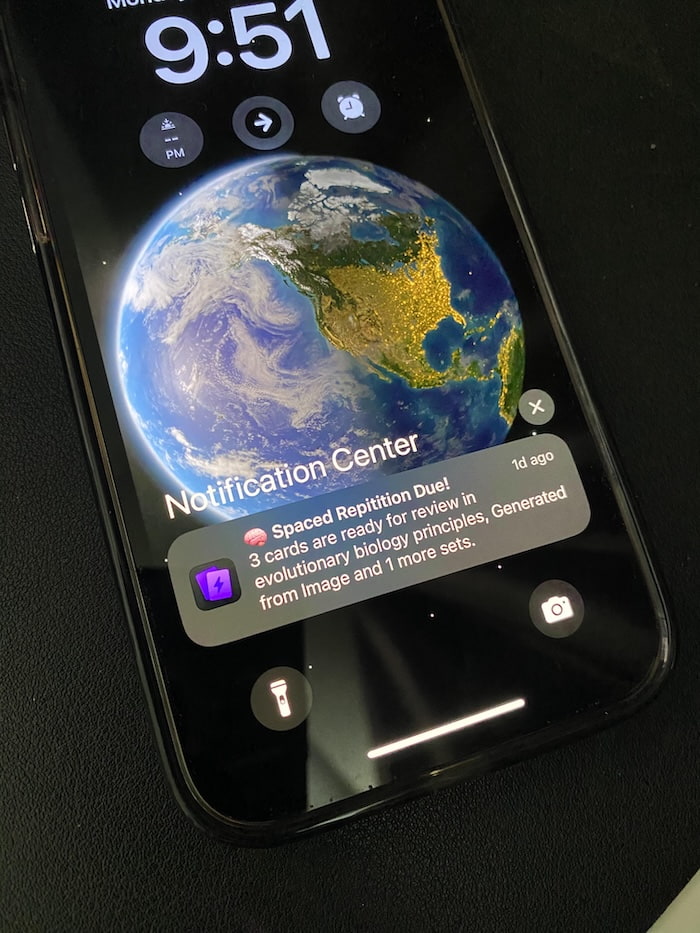
Flashrecall automatically keeps track and reminds you of the cards you don't remember well so you remember faster. Like this :
Back: Highlight the shared “ould” pattern
You can also record yourself saying the word so your child can tap to hear it again and again.
7 Powerful Ways To Use Phase 5 Flashcards (That Actually Work)
1. Keep Sessions Super Short (But Daily)
Instead of 30 minutes once a week, try:
- 5–10 minutes a day
- Just the cards Flashrecall says are “due”
- Stop while your child is still happy, not exhausted
Spaced repetition inside Flashrecall means little and often beats long and rare.
2. One Focus Sound Per Mini‑Session
Don’t throw every sound at them at once.
Example:
- Monday: focus on ay
- Tuesday: ou
- Wednesday: ie
- etc.
In Flashrecall, you can tag cards (e.g., “ay”, “ou”, “split digraphs”) and filter so that session is only about one sound. Way less overwhelming.
3. Mix Sounds And Words Together
Don’t just drill “ay” on its own forever.
A good pattern:
1. Grapheme card: “ay” → child says the sound
2. Word card: “play” → child reads it
3. Sentence card: “We play in the rain.” → child finds the “ay” word
In Flashrecall, you can shuffle all these card types together so they’re not just memorising order — they’re actually reading.
4. Turn It Into A Game
Some simple ideas:
- Speed round: “How many ‘ay’ cards can you get right in 1 minute?”
- Treasure card: Pick one “special” card. If they get it right, they earn a sticker/toy/point.
- You be the teacher: Let your child quiz you using Flashrecall. Kids love catching you “getting it wrong.”
Because Flashrecall is fast and modern, it feels more like a little game than “school work.”
5. Add Pictures, Audio, And Context
Kids remember better when more senses are involved.
With Flashrecall you can:
- Add images (e.g., a picture of a phone for “ph”)
- Use audio (you saying the word or sound)
- Add short example sentences (“The dolphin has a phone” – silly = memorable)
This is especially good for younger kids or kids learning English as an additional language.
6. Let Your Child Help Create The Cards
Memory is stronger when they help build it.
Ideas:
- Ask them to think of their own “ay” words (day, play, tray, stay, etc.)
- Type those into Flashrecall together
- Let them choose emojis or simple images for the card
Now they’re not just using flashcards — they’re making them, which makes it feel more like “their thing.”
7. Use Chat To Explain Confusing Bits
One neat bonus: in Flashrecall you can chat with the flashcard.
So if you (or your child) are unsure:
- “Why does ‘people’ sound like ‘pee-pl’?”
- “What’s the difference between ‘ue’ and ‘ew’ sounds?”
You can ask inside the app and get a simple explanation without having to go down a Google rabbit hole.
Example: A Simple Phase 5 Deck Setup In Flashrecall
Here’s a quick way to get started today:
1. Create a new deck → call it “Phase 5 Sounds”
2. Add cards for: ay, ou, ie, ea, oy, ir, ue, aw, wh, ph, ew, oe, au, ey, a-e, e-e, i-e, o-e, u-e
3. For each sound, add:
- 2–3 word cards
- 1 sentence card
4. Add a second deck: “Phase 5 Tricky Words”
5. Paste in a list of tricky words → let Flashrecall auto‑create cards
6. Turn on study reminders so you get a nudge each day
7. Do 5–10 minutes daily, then stop
That’s it. No printing. No laminating. No losing cards under the sofa.
Why Phase 5 Feels Tough (And How Flashrecall Softens The Blow)
Phase 5 isn’t hard because kids are “bad at reading”.
It’s hard because:
- There are lots of spellings for the same sound
- Some words just break the rules
- Kids need lots of repetition to make it automatic
Flashrecall helps by:
- Handling the repetition with spaced repetition
- Giving quick, focused practice instead of long boring sessions
- Making it easy to add new words as your child meets them in books or homework
- Working offline, so you can practice anywhere
- Being free to start, so you can try it without stress
If you want an easy way to keep Phase 5 practice consistent (without printing a single card), try Flashrecall here:
👉 https://apps.apple.com/us/app/flashrecall-study-flashcards/id6746757085
Set up a tiny Phase 5 deck, do 5 minutes a day, and watch those “ay / ou / ie / a-e” sounds stop being scary and start feeling simple.
Frequently Asked Questions
What's the fastest way to create flashcards?
Manually typing cards works but takes time. Many students now use AI generators that turn notes into flashcards instantly. Flashrecall does this automatically from text, images, or PDFs.
Is there a free flashcard app?
Yes. Flashrecall is free and lets you create flashcards from images, text, prompts, audio, PDFs, and YouTube videos.
How do I start spaced repetition?
You can manually schedule your reviews, but most people use apps that automate this. Flashrecall uses built-in spaced repetition so you review cards at the perfect time.
Related Articles
- Heart Words Flashcards Free: 7 Powerful Ways To Help Kids Remember Tricky Words Faster – Without Boring Drills
- Floppy Phonics Flashcards: The Essential Guide To Teaching Reading Faster (And The Smarter App Upgrade Most Parents Miss) – Discover how to turn phonics into a fun, flexible system your kid actually loves using.
- Dinosaur Flashcards Printable: 7 Powerful Ways To Turn Simple Cards Into An Epic Learning Adventure – Make Dino Facts Unforgettable With Smart Study Tricks
Research References
The information in this article is based on peer-reviewed research and established studies in cognitive psychology and learning science.
Cepeda, N. J., Pashler, H., Vul, E., Wixted, J. T., & Rohrer, D. (2006). Distributed practice in verbal recall tasks: A review and quantitative synthesis. Psychological Bulletin, 132(3), 354-380
Meta-analysis showing spaced repetition significantly improves long-term retention compared to massed practice
Carpenter, S. K., Cepeda, N. J., Rohrer, D., Kang, S. H., & Pashler, H. (2012). Using spacing to enhance diverse forms of learning: Review of recent research and implications for instruction. Educational Psychology Review, 24(3), 369-378
Review showing spacing effects work across different types of learning materials and contexts
Kang, S. H. (2016). Spaced repetition promotes efficient and effective learning: Policy implications for instruction. Policy Insights from the Behavioral and Brain Sciences, 3(1), 12-19
Policy review advocating for spaced repetition in educational settings based on extensive research evidence
Karpicke, J. D., & Roediger, H. L. (2008). The critical importance of retrieval for learning. Science, 319(5865), 966-968
Research demonstrating that active recall (retrieval practice) is more effective than re-reading for long-term learning
Roediger, H. L., & Butler, A. C. (2011). The critical role of retrieval practice in long-term retention. Trends in Cognitive Sciences, 15(1), 20-27
Review of research showing retrieval practice (active recall) as one of the most effective learning strategies
Dunlosky, J., Rawson, K. A., Marsh, E. J., Nathan, M. J., & Willingham, D. T. (2013). Improving students' learning with effective learning techniques: Promising directions from cognitive and educational psychology. Psychological Science in the Public Interest, 14(1), 4-58
Comprehensive review ranking learning techniques, with practice testing and distributed practice rated as highly effective

FlashRecall Team
FlashRecall Development Team
The FlashRecall Team is a group of working professionals and developers who are passionate about making effective study methods more accessible to students. We believe that evidence-based learning tec...
Credentials & Qualifications
- •Software Development
- •Product Development
- •User Experience Design
Areas of Expertise
Ready to Transform Your Learning?
Start using FlashRecall today - the AI-powered flashcard app with spaced repetition and active recall.
Download on App Store