Complete Guide To Quizlet To Anki: The Complete Guide
Switching from Quizlet to Anki? This complete guide shows you how to use spaced repetition effectively with Flashrecall for smarter studying and easier reviews.
How Flashrecall app helps you remember faster. It's free
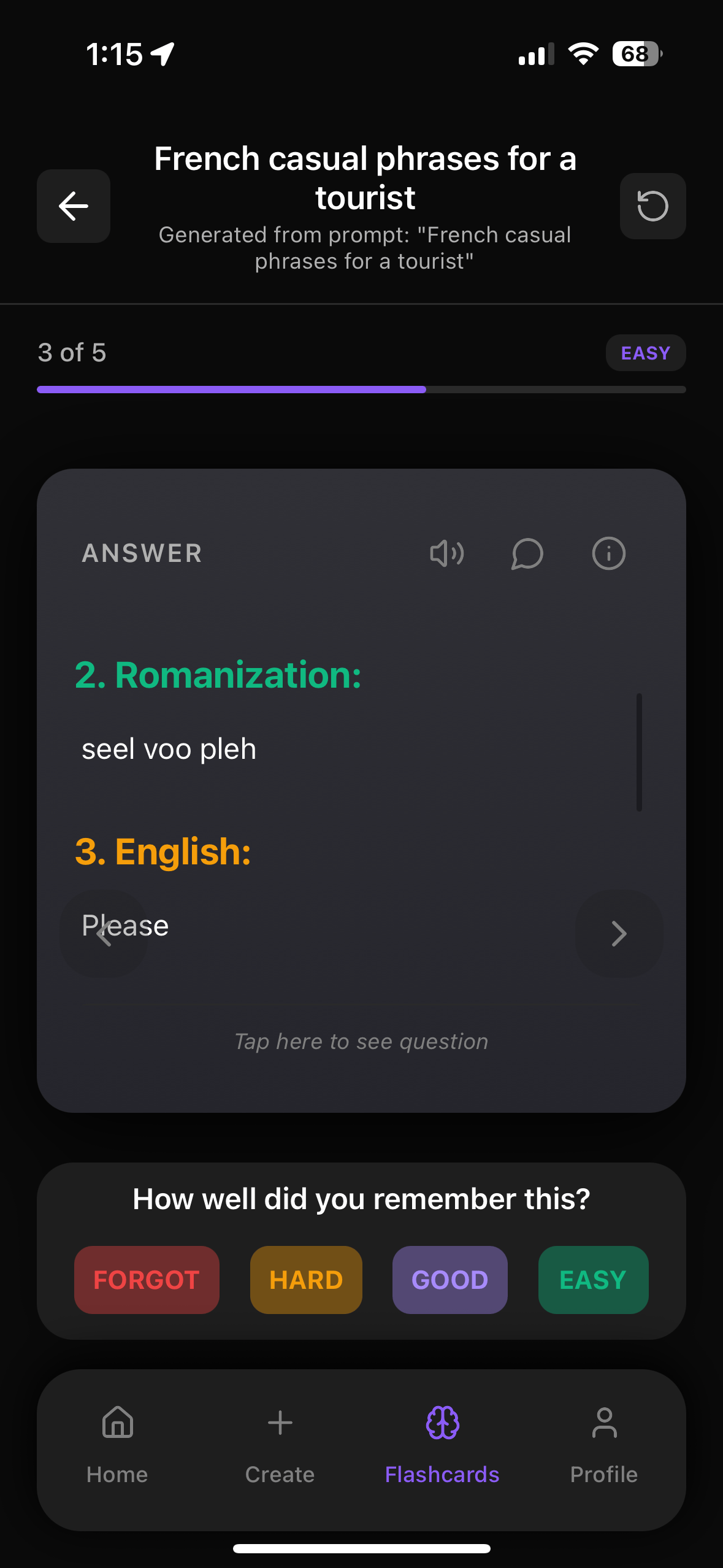
Moving From Quizlet To Anki (And Why You Might Want Something Better)
Hey there! So you’re looking to get the scoop on the complete guide to Quizlet to Anki, huh? I know, it might seem like a bit of a headache at first glance, but really, it’s not that bad. Flashcards are basically the secret sauce for learning anything, from acing that upcoming exam to nailing a new language. The real magic happens when you use them smartly, with a mix of active recall and spaced repetition. And if you haven't heard of Flashrecall yet, you’re in for a treat. It's like having a super chill study buddy who makes flashcards from your notes and reminds you when to review them. So, before you spend hours converting those Quizlet decks manually, why not
Import settings, file formats, broken images, weird tags – it adds up fast.
And honestly, if you’re already going through the trouble of switching tools, it’s the perfect time to ask:
> “Is there something easier, faster, and more modern than both Quizlet and Anki?”
That’s where Flashrecall comes in – a flashcard app that keeps the good parts of Anki (spaced repetition, active recall) but makes everything way simpler and way faster to use.
You can grab it here (free to start):
👉 https://apps.apple.com/us/app/flashrecall-study-flashcards/id6746757085
Let’s walk through:
- How to go from Quizlet → Anki
- The common problems you’ll hit
- And why many people are skipping that whole mess and going Quizlet → Flashrecall instead
Step 1: Export Your Quizlet Set Properly
First, you need to get your cards out of Quizlet.
On Quizlet (web):
1. Open the set you want to export.
2. Click the “…” (More)” or “Export” option (depends on their current UI).
3. Choose Export.
4. Make sure:
- Between term and definition: set to `Tab` or `;`
- Between rows: set to `New line`
5. Copy the exported text or download it as a file (if available).
6. Paste/save it into a file called something like:
`my-quizlet-deck.txt` or `my-quizlet-deck.csv`
That’s your raw data for Anki.
Step 2: Import Quizlet Data Into Anki
Now over to Anki on your computer.
1. Open Anki (desktop).
2. Go to File → Import.
3. Select your exported `.txt` or `.csv` file.
4. In the import dialog:
- Type: usually “Basic” (front/back) is fine.
- Field separator: match what you used in Quizlet (Tab or `;`).
- Make sure Field 1 = Front, Field 2 = Back.
5. Choose which deck to import into or create a new one.
6. Click Import.
If everything was formatted correctly, your Quizlet cards should now appear in Anki.
Common issues when importing
- Weird characters / broken accents
Usually a text encoding issue. Try saving the file as UTF-8.
- All content in one field
Your separator doesn’t match. If Quizlet used tabs, make sure Anki is set to tab, not comma.
- Images missing
Quizlet doesn’t just hand you image files. You’ll usually have to manually reattach images in Anki, or use third‑party tools/scripts (which can be flaky).
This is where a lot of people realize:
> “Wait… why is switching flashcard apps this annoying?”
Why Not Just Stay On Anki Then?
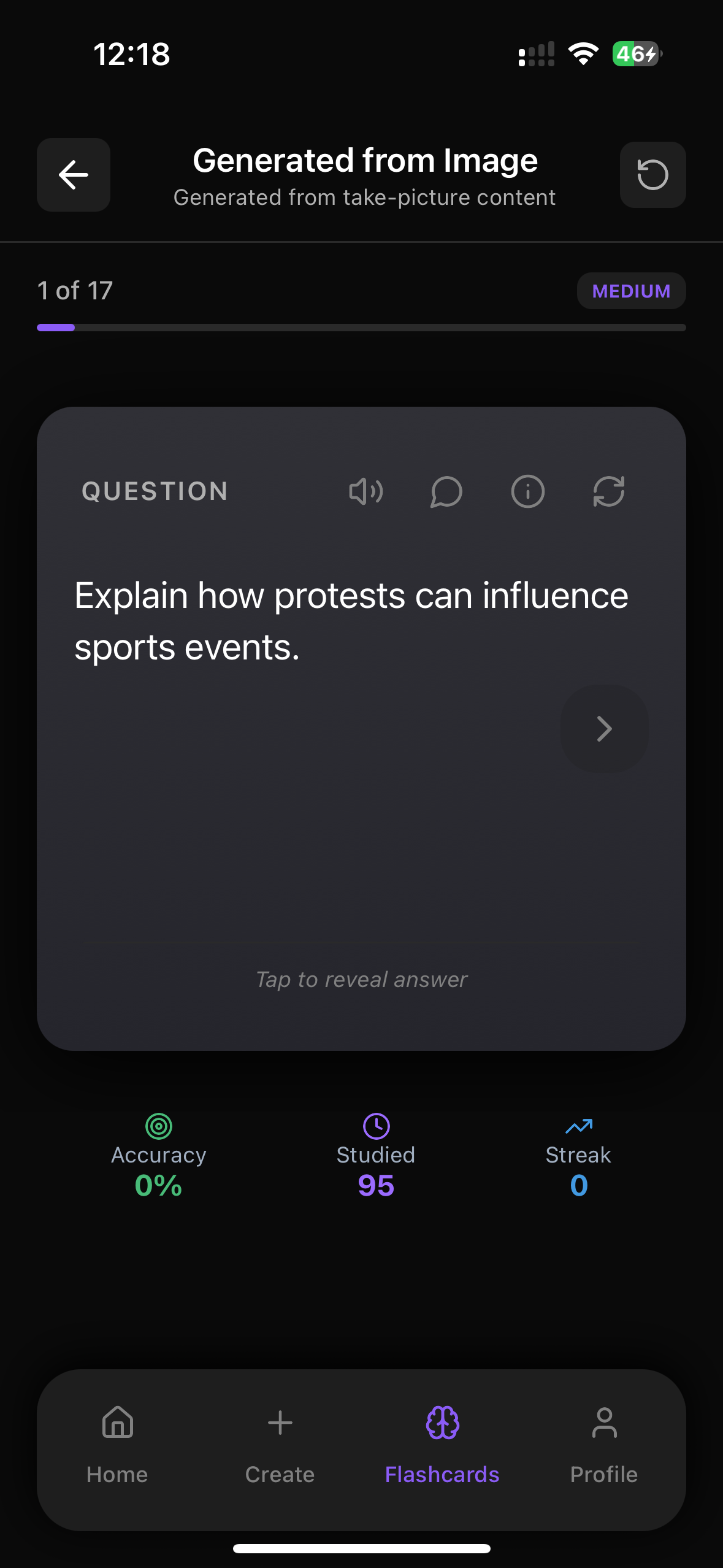
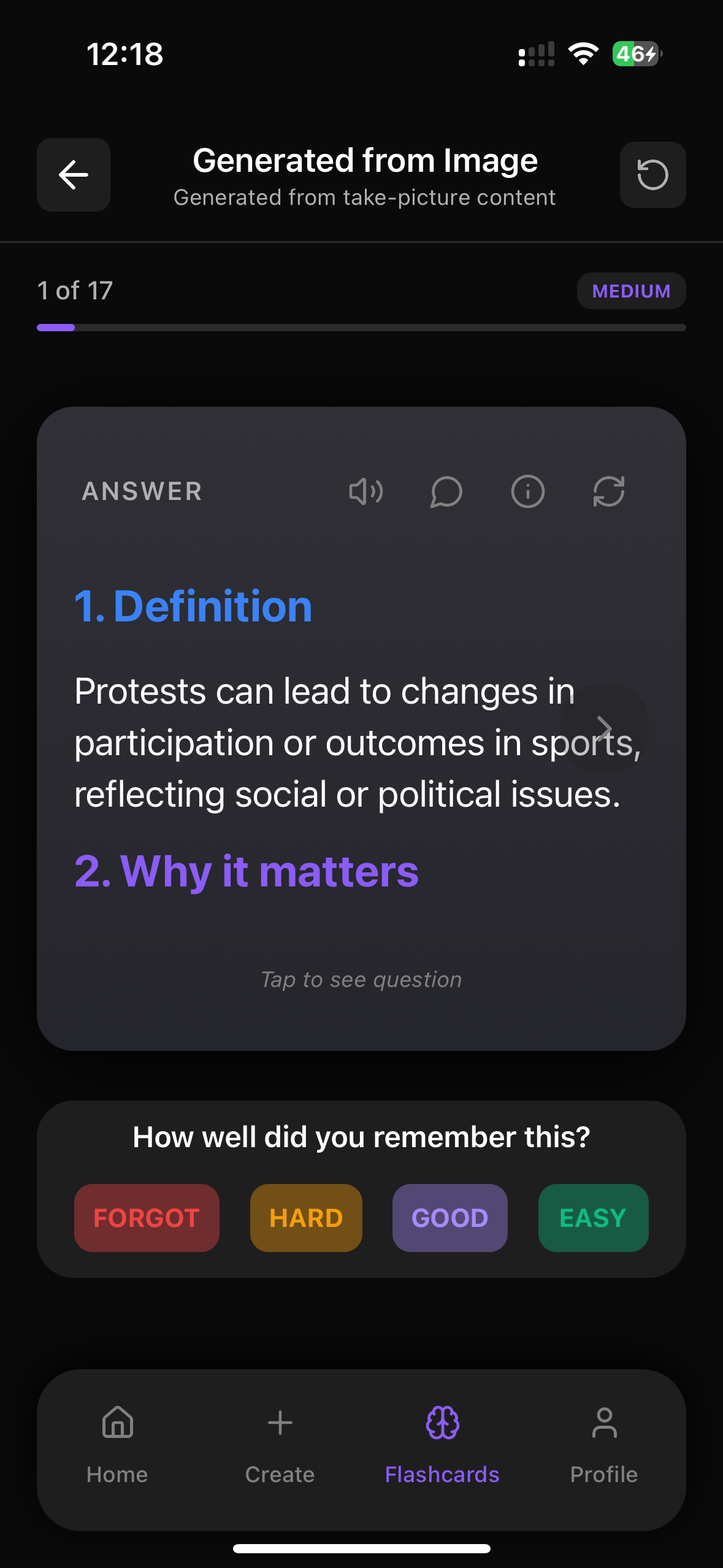
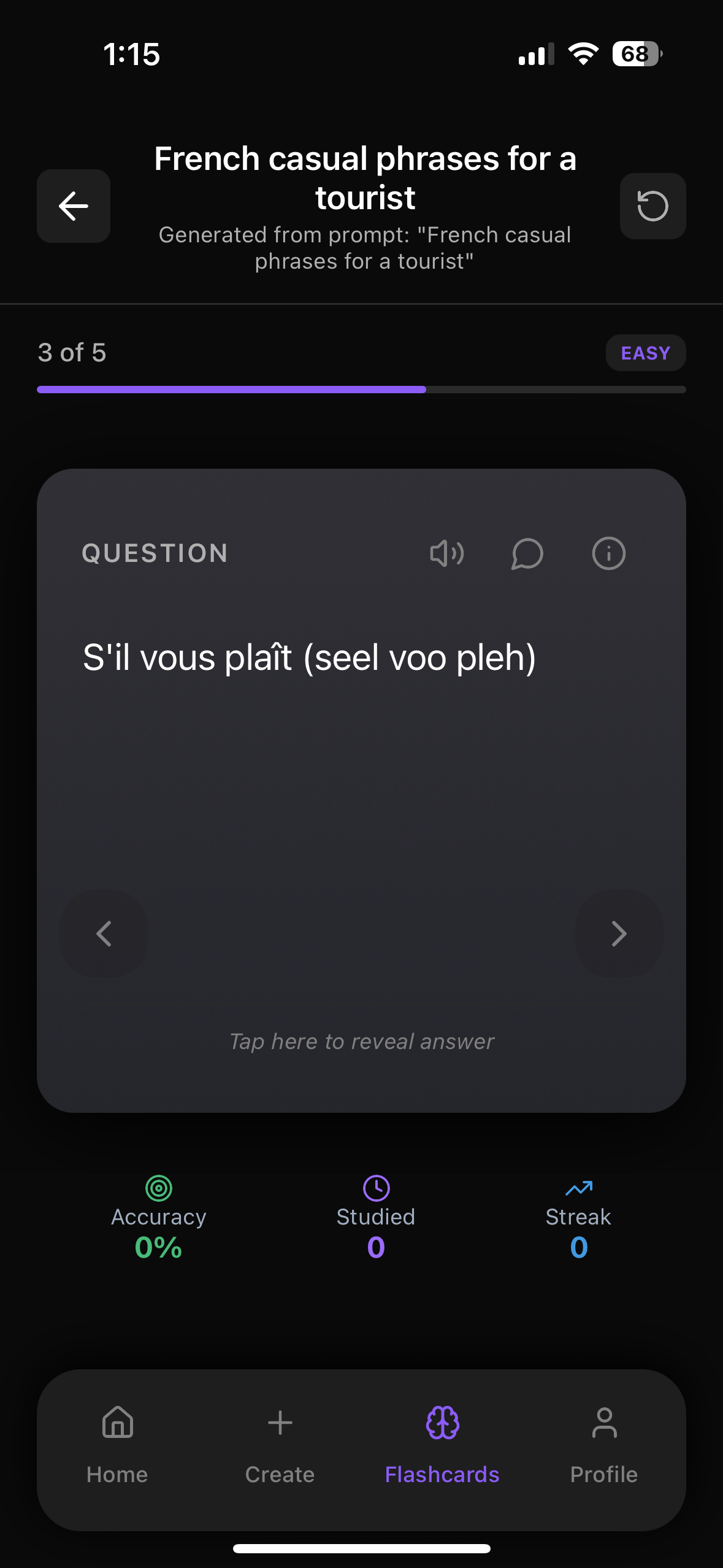
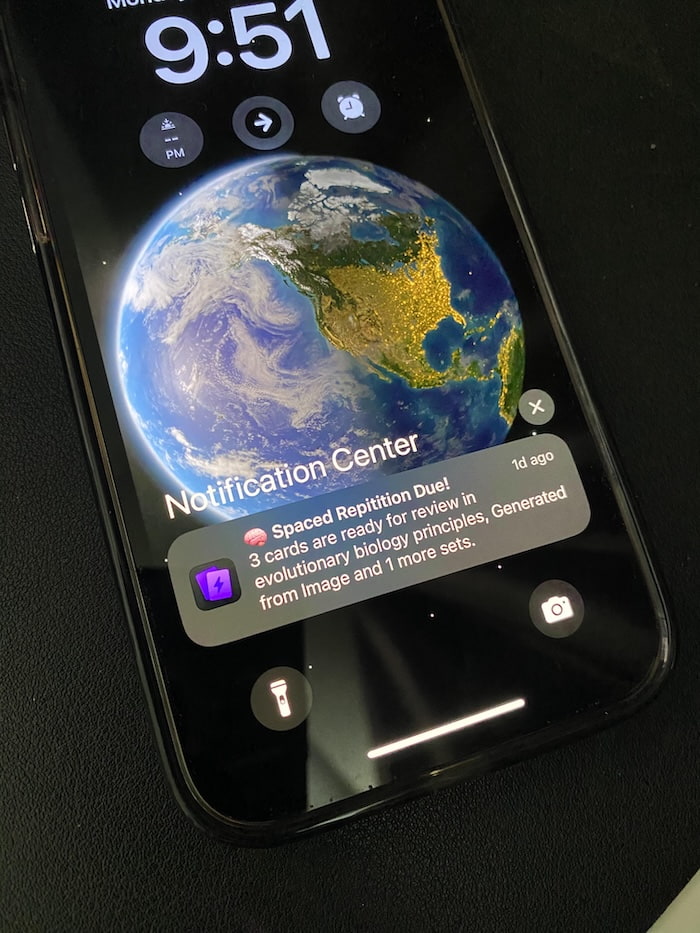
Flashrecall automatically keeps track and reminds you of the cards you don't remember well so you remember faster. Like this :
Anki is super powerful, but:
- It can feel clunky and old-school
- Syncing between devices can be slow/confusing
- Mobile apps aren’t as smooth or friendly as modern apps
- Adding cards quickly from real life (photos, PDFs, YouTube, etc.) is a hassle
If you like the idea of Anki (spaced repetition, control, serious study), but want it in a fast, modern, iPhone/iPad-friendly app, that’s exactly what Flashrecall is built for.
Quizlet vs Anki vs Flashrecall – What’s Actually Different?
Let’s break it down simply.
Quizlet
- ✅ Easy to start
- ✅ Lots of shared decks
- ❌ Limited, less powerful spaced repetition
- ❌ Can feel more like “cramming” than long-term memory
- ❌ Import/export and long-term control are meh
Anki
- ✅ Very powerful spaced repetition
- ✅ Highly customizable
- ✅ Great for med school, languages, long-term learning
- ❌ Ugly UI, steep learning curve
- ❌ Clunky on mobile
- ❌ Manual setup for everything
Flashrecall
- ✅ Built-in spaced repetition with automatic reminders
- ✅ Active recall baked into how you study
- ✅ Instant flashcards from:
- Images
- Text
- Audio
- PDFs
- YouTube links
- Typed prompts
- ✅ You can still create cards manually if you like full control
- ✅ Chat with your flashcards if you’re confused about something
- ✅ Works offline
- ✅ Fast, clean, modern design
- ✅ Great for languages, exams, school, uni, medicine, business – literally anything
- ✅ Free to start
- ✅ Works on iPhone and iPad
Link again so you don’t have to scroll:
👉 https://apps.apple.com/us/app/flashrecall-study-flashcards/id6746757085
So instead of forcing Quizlet decks into Anki and then struggling with syncing, add-ons, and plugins… you can just move your content into a simpler app and never look back.
Quizlet → Anki → Flashrecall? Or Just Quizlet → Flashrecall?
If you already have decks in Anki, you might be thinking about a chain like:
> Quizlet → Anki → [something better]
But honestly, you can just go:
> Quizlet → Flashrecall
Simple way to “migrate” to Flashrecall
There’s no painful plugin setup. You just rebuild smarter and faster:
1. Export from Quizlet (like we did before).
2. Open Flashrecall on your iPhone/iPad.
3. Use one of these super fast methods:
- Paste text into Flashrecall and let it auto-split into cards.
- Upload PDFs or notes and auto-generate flashcards from them.
- Drop in a YouTube link and generate cards from the content.
- Snap photos of your notes or textbook and turn them into flashcards.
4. Edit anything you want manually.
Because Flashrecall can generate cards from content, you don’t have to obsess over perfect Quizlet → Anki formatting. You can just bring your actual study material and let the app do the heavy lifting.
How Flashrecall Makes Studying Easier Than Both Quizlet And Anki
Here’s what really changes when you use Flashrecall instead of doing the Quizlet → Anki shuffle.
1. You Don’t Have To Remember To Review
With Anki, you need to stay on top of your reviews or the backlog explodes.
With Quizlet, you can easily forget to come back at all.
Flashrecall has:
- Built-in spaced repetition
- Automatic study reminders
So your cards show up right when you’re about to forget them. You just open the app, and it already knows what you should review today.
2. Active Recall Is Baked In
Both Anki and Flashrecall use active recall (you try to remember before seeing the answer).
But Flashrecall makes it feel smoother and less “technical”:
- Clean, swipeable interface
- Easy grading of how well you remembered
- No scary settings pages full of intervals and steps
You get the science of memory without needing a tutorial.
3. Adding Cards Takes Seconds, Not Hours
Some examples of how you might use Flashrecall in real life:
- Language learning
Take a screenshot of a paragraph in Spanish → Flashrecall turns it into vocab and phrase cards.
- Med school / nursing / pharmacy
Import a PDF of lecture slides → generate cards from key points → refine manually.
- YouTube lectures / tutorials
Paste the link → auto-generate cards from the content → study on the bus.
- Business / certifications (CFA, PMP, AWS, etc.)
Drop in notes or textbook pages → auto cards → spaced repetition does the rest.
You can still hand-make cards if you want total control, but you don’t have to. That’s the big difference.
“Chat With Your Flashcard” – The Feature Quizlet And Anki Don’t Have
This is one of the coolest parts of Flashrecall.
If you’re stuck on a concept:
- You can chat with the flashcard itself
- Ask it to explain the idea again, give examples, or simplify it
- Turn a confusing card into a mini tutor session
Instead of flipping to the answer and just hoping you get it, you can actually understand it on the spot.
Works Offline, So You Can Study Literally Anywhere
Anki can work offline, sure, but syncing and mobile can be clunky.
Flashrecall:
- Works offline by default
- Syncs cleanly when you’re back online
- Perfect for studying on the train, plane, or in classrooms with terrible Wi-Fi
When Should You Still Use Anki?
To be fair, Anki is still great if:
- You love heavy customization
- You want a big ecosystem of add-ons
- You’re okay with a more technical, old-school interface
If you’re deep into that ecosystem already, migrating everything might not be worth it.
But if you:
- Started on Quizlet
- Tried Anki and found it too clunky
- Just want something that works, looks good, and helps you remember stuff
…then Flashrecall is honestly the smoother choice.
Quick Summary: Your Best Move From Quizlet
If you’re deciding what to do with your Quizlet decks:
Option 1: Quizlet → Anki
- Good if you want max control and don’t mind complexity
- Requires manual export/import and some tinkering
- Better for serious long-term spaced repetition than staying on Quizlet
Option 2: Quizlet → Flashrecall
- Best if you want:
- Modern, fast app
- Automatic spaced repetition & reminders
- Instant flashcards from images, PDFs, YouTube, text, audio
- Ability to chat with your flashcards
- Easy studying on iPhone and iPad, online or offline
- Much less friction, more “it just works”
If you’re already going through the hassle of leaving Quizlet, might as well land somewhere that actually makes your life easier.
You can try Flashrecall for free here:
👉 https://apps.apple.com/us/app/flashrecall-study-flashcards/id6746757085
Set it up once, and let it handle the “when should I study this again?” part for you. You just show up and tap through cards.
Frequently Asked Questions
Is Quizlet good for studying?
Quizlet helps with basic reviewing, but its active recall tools are limited. If you want proper spacing and strong recall practice, tools like Flashrecall automate the memory science for you so you don't forget your notes.
Is Anki good for studying?
Anki is powerful but requires manual card creation and has a steep learning curve. Flashrecall offers AI-powered card generation from your notes, images, PDFs, and videos, making it faster and easier to create effective flashcards.
What's the fastest way to create flashcards?
Manually typing cards works but takes time. Many students now use AI generators that turn notes into flashcards instantly. Flashrecall does this automatically from text, images, or PDFs.
How do I start spaced repetition?
You can manually schedule your reviews, but most people use apps that automate this. Flashrecall uses built-in spaced repetition so you review cards at the perfect time.
What is active recall and how does it work?
Active recall is the process of actively retrieving information from memory rather than passively reviewing it. Flashrecall forces proper active recall by making you think before revealing answers, then uses spaced repetition to optimize your review schedule.
Related Articles
- Quizlet To Anki Converter: 7 Powerful Ways To Move Decks (And A Better Alternative Most Students Don’t Know About)
- Knowt Flashcards: 7 Powerful Reasons Students Are Switching to This Smarter Alternative – Most People Never Hear About the Better Option Until It’s Too Late
- Quizlet Sets: 7 Powerful Ways To Study Smarter (And A Better Alternative Most Students Don’t Know About) – Before you make your next Quizlet set, read this and see how much faster you could be learning.
Research References
The information in this article is based on peer-reviewed research and established studies in cognitive psychology and learning science.
Cepeda, N. J., Pashler, H., Vul, E., Wixted, J. T., & Rohrer, D. (2006). Distributed practice in verbal recall tasks: A review and quantitative synthesis. Psychological Bulletin, 132(3), 354-380
Meta-analysis showing spaced repetition significantly improves long-term retention compared to massed practice
Carpenter, S. K., Cepeda, N. J., Rohrer, D., Kang, S. H., & Pashler, H. (2012). Using spacing to enhance diverse forms of learning: Review of recent research and implications for instruction. Educational Psychology Review, 24(3), 369-378
Review showing spacing effects work across different types of learning materials and contexts
Kang, S. H. (2016). Spaced repetition promotes efficient and effective learning: Policy implications for instruction. Policy Insights from the Behavioral and Brain Sciences, 3(1), 12-19
Policy review advocating for spaced repetition in educational settings based on extensive research evidence
Karpicke, J. D., & Roediger, H. L. (2008). The critical importance of retrieval for learning. Science, 319(5865), 966-968
Research demonstrating that active recall (retrieval practice) is more effective than re-reading for long-term learning
Roediger, H. L., & Butler, A. C. (2011). The critical role of retrieval practice in long-term retention. Trends in Cognitive Sciences, 15(1), 20-27
Review of research showing retrieval practice (active recall) as one of the most effective learning strategies
Dunlosky, J., Rawson, K. A., Marsh, E. J., Nathan, M. J., & Willingham, D. T. (2013). Improving students' learning with effective learning techniques: Promising directions from cognitive and educational psychology. Psychological Science in the Public Interest, 14(1), 4-58
Comprehensive review ranking learning techniques, with practice testing and distributed practice rated as highly effective

FlashRecall Team
FlashRecall Development Team
The FlashRecall Team is a group of working professionals and developers who are passionate about making effective study methods more accessible to students. We believe that evidence-based learning tec...
Credentials & Qualifications
- •Software Development
- •Product Development
- •User Experience Design
Areas of Expertise
Ready to Transform Your Learning?
Start using FlashRecall today - the AI-powered flashcard app with spaced repetition and active recall.
Download on App Store