Revision Cards Ideas: 21 Genius Flashcard Hacks To Study Faster And Actually Remember Stuff – Steal these creative card ideas and turn revision from boring to weirdly satisfying.
Revision cards ideas that use active recall, cloze deletions, ELI12 prompts, diagrams and spaced repetition in Flashrecall so you remember more in less time.
How Flashrecall app helps you remember faster. It's free
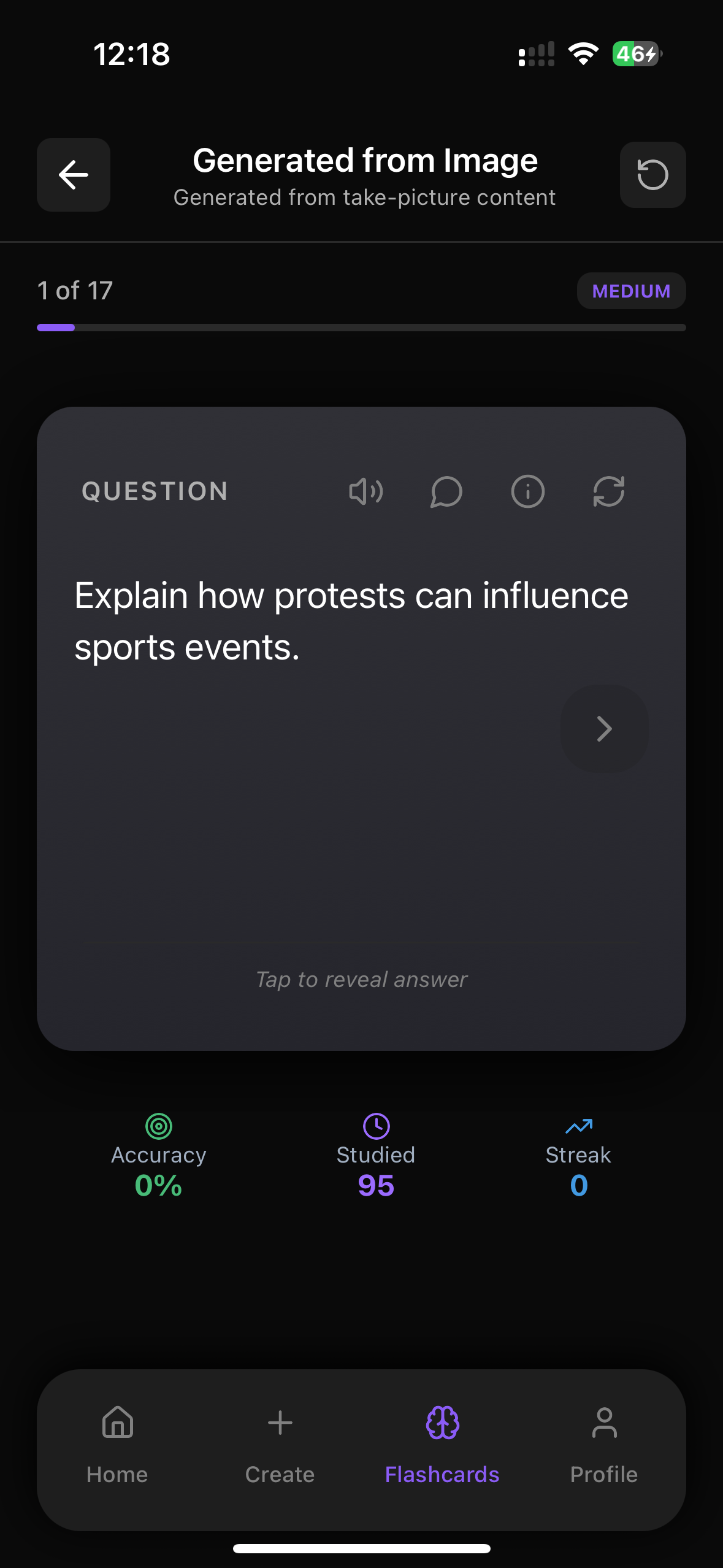
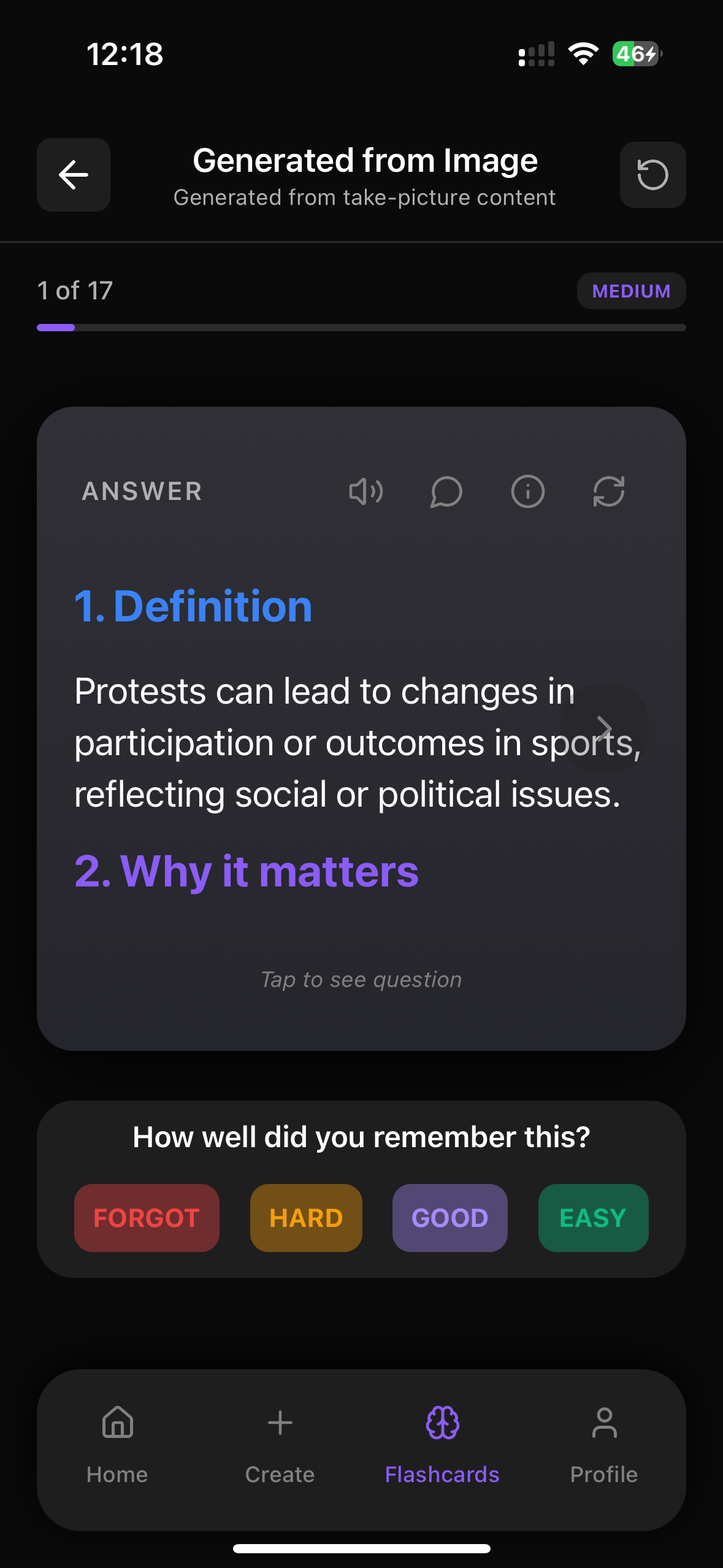
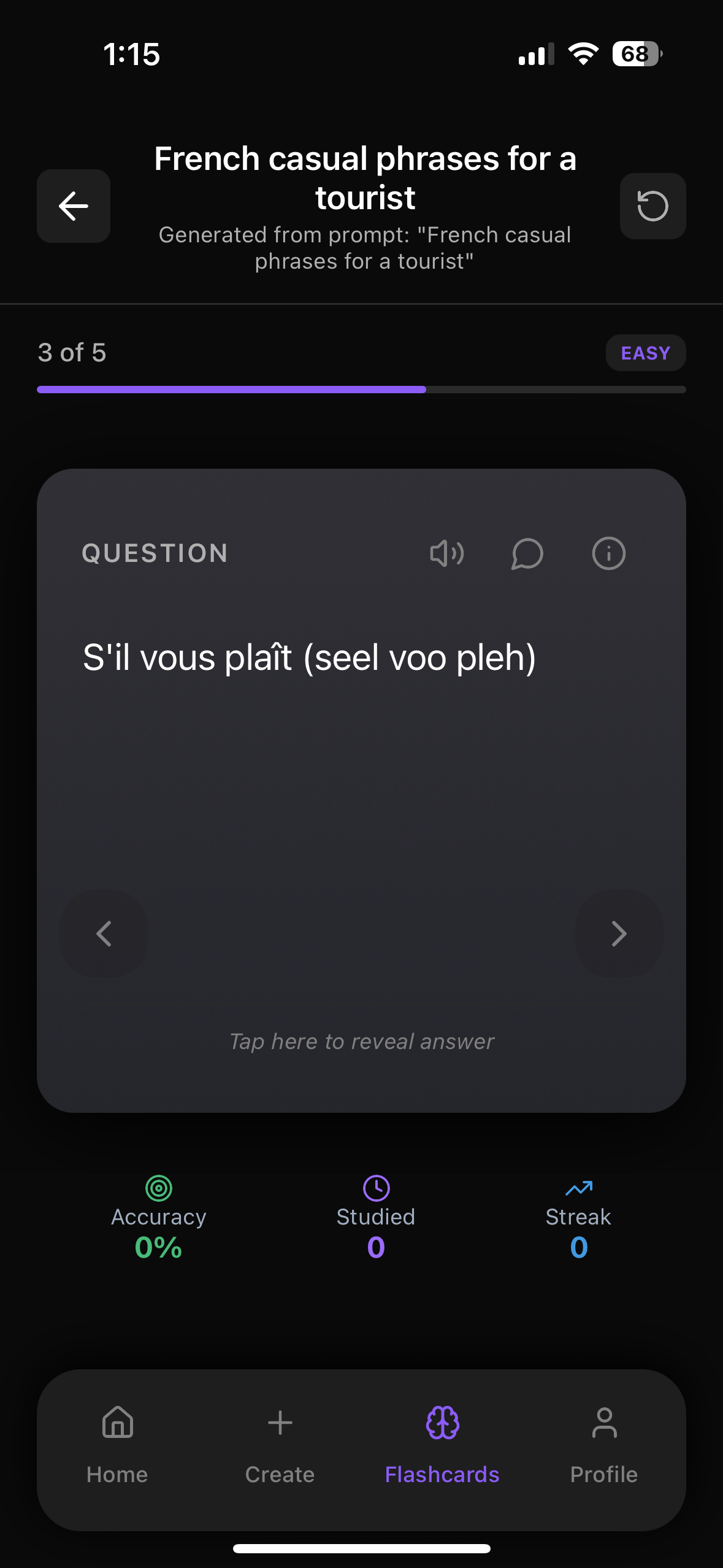
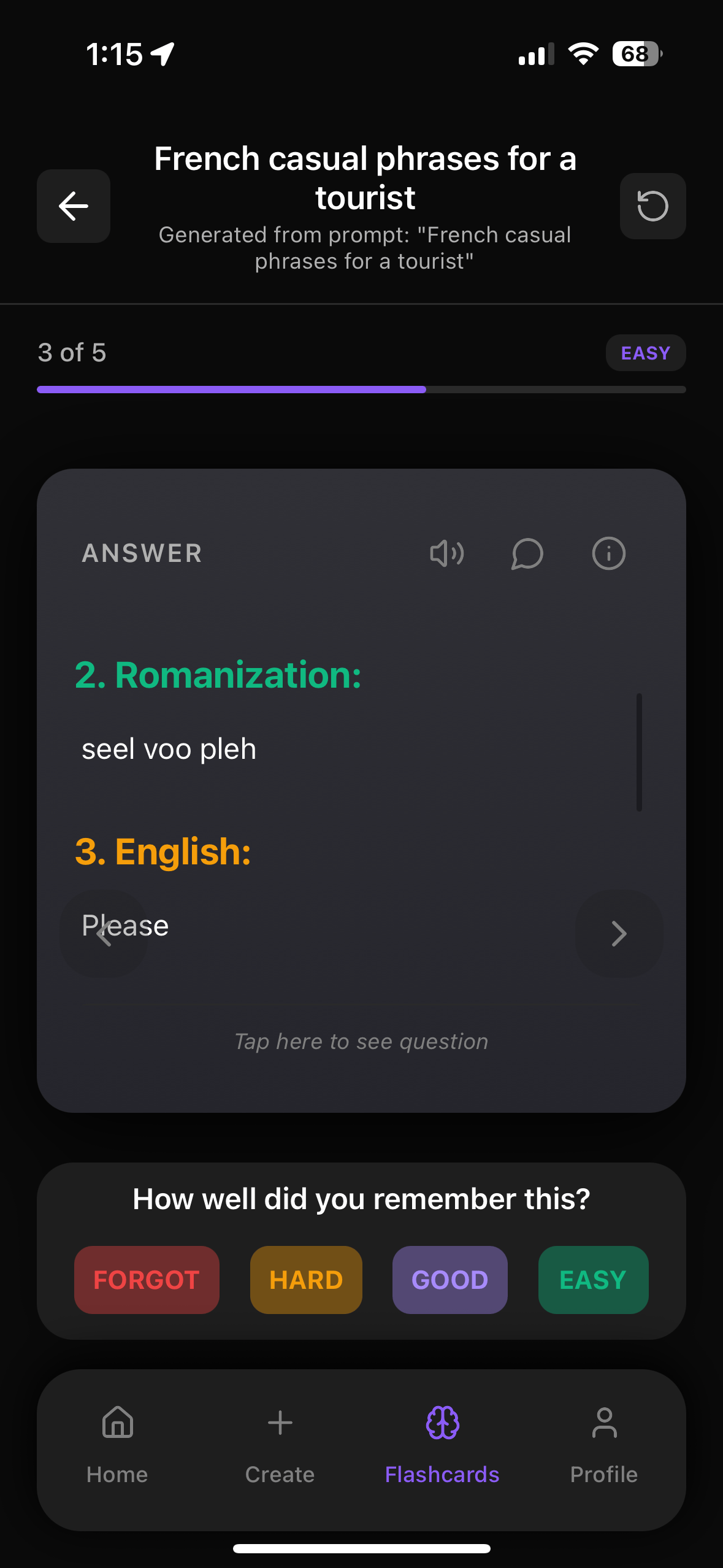
So, You Need Better Revision Card Ideas?
Alright, let’s talk about revision cards ideas that actually help you remember things, not just make pretty piles of paper on your desk. Revision cards are just small notes with questions, prompts, or diagrams that force your brain to recall info instead of just rereading it. That “mental pull” is what makes them powerful for exams, languages, or any subject. And when you combine good card ideas with spaced repetition in an app like Flashrecall, you basically give your brain cheat codes for memory.
By the way, if you want to turn all these ideas into digital cards fast, Flashrecall on iPhone/iPad does it for you:
https://apps.apple.com/us/app/flashrecall-study-flashcards/id6746757085
Let’s go through a bunch of practical, creative ways to design revision cards so they actually work.
Why Revision Cards Work (And Why Some Totally Suck)
Flashcards are powerful because of active recall (you try to remember without looking) and spaced repetition (you review just before you’re about to forget).
Good revision cards:
- Ask clear questions
- Test one thing at a time
- Make you think, not just read
- Are used regularly (not crammed once the night before)
Bad revision cards:
- Are just mini-notes with whole paragraphs
- Put 10 facts on one card
- Are never reviewed again
Flashrecall basically fixes the “never reviewed again” problem by:
- Automatically scheduling cards with spaced repetition
- Sending study reminders
- Working offline so you can study anywhere
- Letting you chat with your deck if you’re stuck on something
Now let’s get into actual revision card ideas you can steal.
1. Classic Q&A Cards (But Done Properly)
The basic one:
Examples:
- Front: “What is photosynthesis?”
Back: “Process where plants use light, CO₂, and water to make glucose and oxygen.”
- Front: “French: ‘I am going to eat’”
Back: “Je vais manger”
Tips:
- One fact per card
- Keep answers short (1–2 lines)
- Use your own words, not textbook language
In Flashrecall, you can just type these out or paste text and let the app help you turn it into cards.
2. Cloze Deletion Cards (Fill-In-The-Blank Style)
Cloze cards are amazing for definitions, formulas, and lists.
Example:
- Full sentence: “The mitochondria is the powerhouse of the cell.”
- Card front: “The mitochondria is the ______ of the cell.”
- Back: “powerhouse”
Or:
- Full: “Demand increases when price decreases, ceteris paribus.”
- Card front: “Demand ______ when price ______, ceteris paribus.”
- Back: “increases; decreases”
In Flashrecall, you can grab text from PDFs or notes, and quickly turn key parts into cloze-style cards.
3. “Explain Like I’m 12” Cards
These are great when you “kind of” get a topic but not really.
- Front: “Explain osmosis like you’re talking to a 12-year-old.”
- Back: Short, simple explanation in your own words
If you can’t explain it simply, you don’t fully understand it yet.
You can even use Flashrecall’s chat feature to ask follow-up questions to your own cards if something still feels fuzzy.
4. Image-Based Revision Cards
Visual learner? Use pictures.
Ideas:
- Label diagrams (biology, geography, engineering)
- Maps with blank labels
- Graphs and charts
- Photos of textbook pages or slides
Examples:
- Front: A heart diagram with arrows pointing at blank spots
- Back: “Left ventricle”, “Right atrium”, etc.
Flashrecall lets you:
- Snap a photo of your notes, diagrams, or textbook
- Automatically pull content and make flashcards from images
Perfect for science, medicine, or anything visual.
5. “One Concept, One Example” Cards
Don’t just memorize definitions—tie them to an example.
- Front: “What is classical conditioning? + Give one real-life example.”
- Back: Short definition + Example (e.g., dog salivating at bell)
Or:
- Front: “Give an example of an opportunity cost.”
- Back: “Choosing to study tonight instead of going out → opportunity cost = the fun / social time you gave up.”
These help you actually apply concepts in exams.
6. Timeline & Sequence Cards
Flashrecall automatically keeps track and reminds you of the cards you don't remember well so you remember faster. Like this :
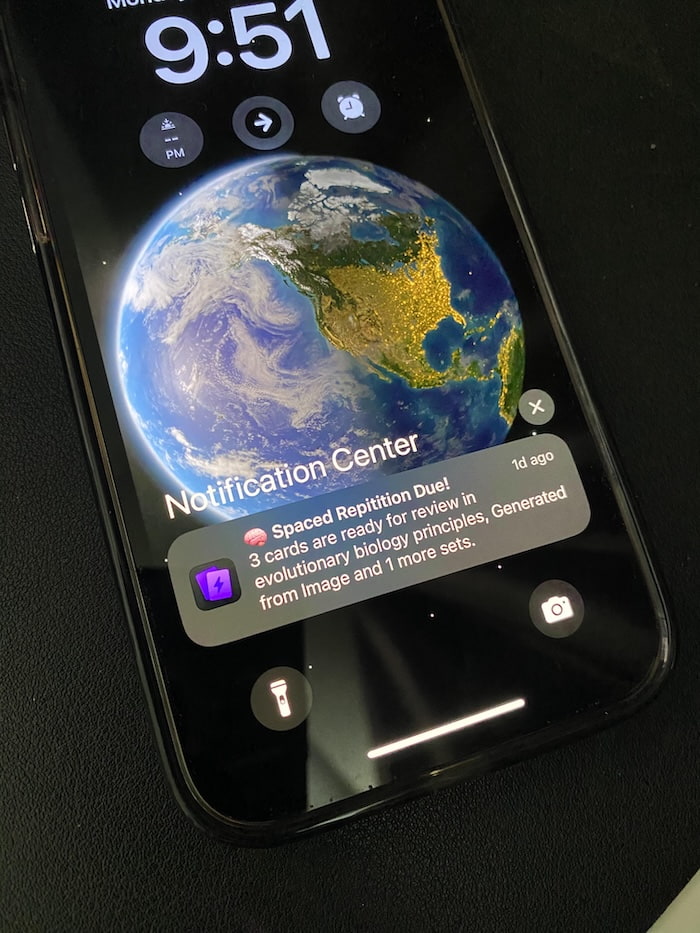
Perfect for history, processes, and pathways.
Ideas:
- “Put these in order” cards
- “What comes after…?” cards
Examples:
- Front: “Order these: Prophase, Telophase, Metaphase, Anaphase”
- Back: “Prophase, Metaphase, Anaphase, Telophase”
- Front: “What happens after glycolysis in aerobic respiration?”
- Back: “Link reaction, then Krebs cycle”
You can also turn a process diagram from a PDF or YouTube video into cards using Flashrecall’s import tools.
7. Concept vs Concept: Comparison Cards
Great for confusing pairs.
- Front: “Difference between mitosis and meiosis (2 key points)”
- Back: Bullet points comparing them
- Front: “Contrast civil law vs criminal law (1–2 sentences)”
- Back: Short explanation
These help kill “they sound the same” confusion.
8. “Why, Not Just What” Cards
Instead of just “What is X?”, ask “Why does X matter?”
- Front: “Why is random sampling important in experiments?”
- Back: “Reduces bias, makes results more representative of the population.”
- Front: “Why does increasing temperature speed up reactions?”
- Back: “Particles have more kinetic energy → more frequent successful collisions.”
These are gold for higher-level exam questions.
9. Past Paper Question → Mini Card
Take tricky past paper questions and turn them into shorter cards.
Example:
- Original: Long 8-mark question about enzyme activity
- Card front: “What happens to enzyme activity at very high temperatures?”
- Back: “Enzyme denatures; active site changes shape; substrate no longer fits.”
You can even:
- Screenshot exam questions
- Drop them into Flashrecall
- Make cards from them quickly
10. Formula & Rearranging Cards
For maths, physics, chemistry:
- Front: “Ohm’s law formula”
Back: “V = IR”
- Front: “Rearrange Ohm’s law to find R”
Back: “R = V / I”
Make separate cards for:
- Name of formula
- Formula itself
- Rearranged versions
- What each symbol stands for
11. “Common Mistakes” Cards
Turn your errors into cards.
- Front: “What mistake did I make on Q3 of the bio mock?”
- Back: “I forgot to mention control variables; only wrote about independent variable.”
- Front: “I always mix these up: affect vs effect – which is the verb?”
- Back: “Affect = verb, Effect = noun (usually).”
These are super personal and therefore super powerful.
12. Multi-Sided Language Cards
For languages, don’t just do “word → translation”.
Ideas:
- Word → translation
- Word → example sentence
- Sentence in target language → meaning in your language
- Audio → write what you hear
Example:
- Front: “French: ‘depuis’ – what does it mean + use in a sentence?”
- Back: “Since/for. E.g., ‘J’habite ici depuis cinq ans.’”
With Flashrecall, you can:
- Add audio
- Use it for listening practice
- Study offline on the bus/train
13. “Explain This Diagram” Cards
Instead of just labeling, explain the story.
- Front: Picture of supply and demand graph
- Back: “Explain what happens when supply decreases (curve shift + price + quantity).”
Or:
- Front: Neuron diagram
- Back: “Explain how an impulse travels along the neuron in 2–3 sentences.”
You can grab diagrams from PDFs or YouTube screenshots and drop them into Flashrecall.
14. Mini Case Study Cards
Good for business, psychology, sociology, medicine.
- Front: “Case study: Patient with high blood pressure – what lifestyle changes could help?”
- Back: “Reduce salt, exercise more, lose weight, reduce alcohol, stop smoking.”
- Front: “Business: New competitor enters market – what might happen to price and profit?”
- Back: “Increased competition → lower prices, lower profit margins.”
15. “Teach Me In 3 Steps” Cards
Force yourself to break a topic into steps.
- Front: “Explain how a bill becomes a law in 3 steps.”
- Back: “1) Proposed and debated; 2) Voted and approved; 3) Signed into law by head of state.”
- Front: “3 steps of DNA replication.”
- Back: “Unwinding, base pairing, joining.”
16. Mnemonic & Memory Trick Cards
If you made a silly phrase, turn it into a card.
- Front: “Mnemonic for cranial nerves?”
- Back: “Oh, Oh, Oh, To Touch And Feel Very Green Vegetables, Ah Heaven.”
- Front: “Mnemonic for taxonomical order?”
- Back: “King Philip Came Over For Good Soup.”
You can also have:
- Front: The list
- Back: The mnemonic phrase
And vice versa.
17. “Before & After” Understanding Cards
These are for tracking progress.
- Front: “What did I used to think about X that was wrong?”
- Back: “I thought mass and weight were the same; now I know weight depends on gravity.”
Helps you avoid falling back into old misunderstandings.
18. Audio-Only Cards (Great For On-The-Go)
For languages or definitions:
- Front (audio): You say a word/sentence
- Back: Meaning / spelling
You can record audio and use it in Flashrecall, then just listen and answer in your head or out loud.
19. “Trigger Question” Cards
Short prompts that trigger a whole chunk of knowledge.
- Front: “Describe the path of blood through the heart (starting at vena cava).”
- Back: Short bullet list of the path.
- Front: “Outline the stages of meiosis.”
- Back: Key points only.
These are good for essay-style exams.
20. Topic Summary Cards
Each card = one topic, not one fact.
- Front: “Summarise: Causes of World War I (3–4 key points).”
- Back: Bullets with main causes.
Use these closer to exams to quickly refresh big chunks.
21. “Confidence Check” Cards
Add a mini self-rating:
- Front: “Photosynthesis – how confident am I (1–5)?”
- Back: Short explanation, plus a note like “If under 3, watch video again.”
With Flashrecall, you basically get this built-in: when you review, you rate how well you remembered, and the app automatically schedules the next review based on that (spaced repetition).
How Flashrecall Makes All These Ideas Way Easier
You can do all this with physical cards… but they:
- Get lost
- Take ages to rewrite
- Don’t remind you to study
- Can’t auto-schedule themselves
Flashrecall fixes that by letting you:
- Create cards instantly from:
- Images (notes, slides, textbooks)
- Text
- PDFs
- YouTube links
- Audio
- Or just typing manually
- Use built-in active recall & spaced repetition so the app decides when to show you what
- Get study reminders so you don’t forget your revision plan
- Study offline on iPhone or iPad
- Chat with your flashcards if you’re unsure and want deeper explanations
- Use it for languages, exams, school, uni, medicine, business – literally anything
If you want to turn all these revision cards ideas into an actual system instead of random revision chaos, grab Flashrecall here (it’s free to start):
https://apps.apple.com/us/app/flashrecall-study-flashcards/id6746757085
Start with 10–20 cards today using a few of the ideas above, review them tomorrow, and you’ll feel the difference in how much sticks.
Frequently Asked Questions
What's the fastest way to create flashcards?
Manually typing cards works but takes time. Many students now use AI generators that turn notes into flashcards instantly. Flashrecall does this automatically from text, images, or PDFs.
Is there a free flashcard app?
Yes. Flashrecall is free and lets you create flashcards from images, text, prompts, audio, PDFs, and YouTube videos.
How do I start spaced repetition?
You can manually schedule your reviews, but most people use apps that automate this. Flashrecall uses built-in spaced repetition so you review cards at the perfect time.
What is active recall and how does it work?
Active recall is the process of actively retrieving information from memory rather than passively reviewing it. Flashrecall forces proper active recall by making you think before revealing answers, then uses spaced repetition to optimize your review schedule.
What's the best way to learn vocabulary?
Research shows that combining flashcards with spaced repetition and active recall is highly effective. Flashrecall automates this process, generating cards from your study materials and scheduling reviews at optimal intervals.
Related Articles
- Homemade Flash Cards Ideas: 15 Creative Ways To Study Smarter (Plus A Faster Digital Shortcut Most Students Miss) – Steal these fun DIY flashcard tricks and then supercharge them with Flashrecall so you can actually remember stuff long-term.
- Making Flashcards For Studying: 7 Proven Tips To Learn Faster And Actually Remember Stuff
- Cold War Flashcards: 7 Powerful Study Hacks To Finally Remember All The Key Events And Concepts – Stop rereading your notes and start actually remembering the Cold War with smarter flashcard strategies.
Research References
The information in this article is based on peer-reviewed research and established studies in cognitive psychology and learning science.
Cepeda, N. J., Pashler, H., Vul, E., Wixted, J. T., & Rohrer, D. (2006). Distributed practice in verbal recall tasks: A review and quantitative synthesis. Psychological Bulletin, 132(3), 354-380
Meta-analysis showing spaced repetition significantly improves long-term retention compared to massed practice
Carpenter, S. K., Cepeda, N. J., Rohrer, D., Kang, S. H., & Pashler, H. (2012). Using spacing to enhance diverse forms of learning: Review of recent research and implications for instruction. Educational Psychology Review, 24(3), 369-378
Review showing spacing effects work across different types of learning materials and contexts
Kang, S. H. (2016). Spaced repetition promotes efficient and effective learning: Policy implications for instruction. Policy Insights from the Behavioral and Brain Sciences, 3(1), 12-19
Policy review advocating for spaced repetition in educational settings based on extensive research evidence
Karpicke, J. D., & Roediger, H. L. (2008). The critical importance of retrieval for learning. Science, 319(5865), 966-968
Research demonstrating that active recall (retrieval practice) is more effective than re-reading for long-term learning
Roediger, H. L., & Butler, A. C. (2011). The critical role of retrieval practice in long-term retention. Trends in Cognitive Sciences, 15(1), 20-27
Review of research showing retrieval practice (active recall) as one of the most effective learning strategies
Dunlosky, J., Rawson, K. A., Marsh, E. J., Nathan, M. J., & Willingham, D. T. (2013). Improving students' learning with effective learning techniques: Promising directions from cognitive and educational psychology. Psychological Science in the Public Interest, 14(1), 4-58
Comprehensive review ranking learning techniques, with practice testing and distributed practice rated as highly effective

FlashRecall Team
FlashRecall Development Team
The FlashRecall Team is a group of working professionals and developers who are passionate about making effective study methods more accessible to students. We believe that evidence-based learning tec...
Credentials & Qualifications
- •Software Development
- •Product Development
- •User Experience Design
Areas of Expertise
Ready to Transform Your Learning?
Start using FlashRecall today - the AI-powered flashcard app with spaced repetition and active recall.
Download on App Store