Slang Flashcards Tips: The Proven Guide
Slang flashcards tips break down tricky words into bite-sized pieces, helping you remember and use real-life slang naturally in conversations.
How Flashrecall app helps you remember faster. It's free
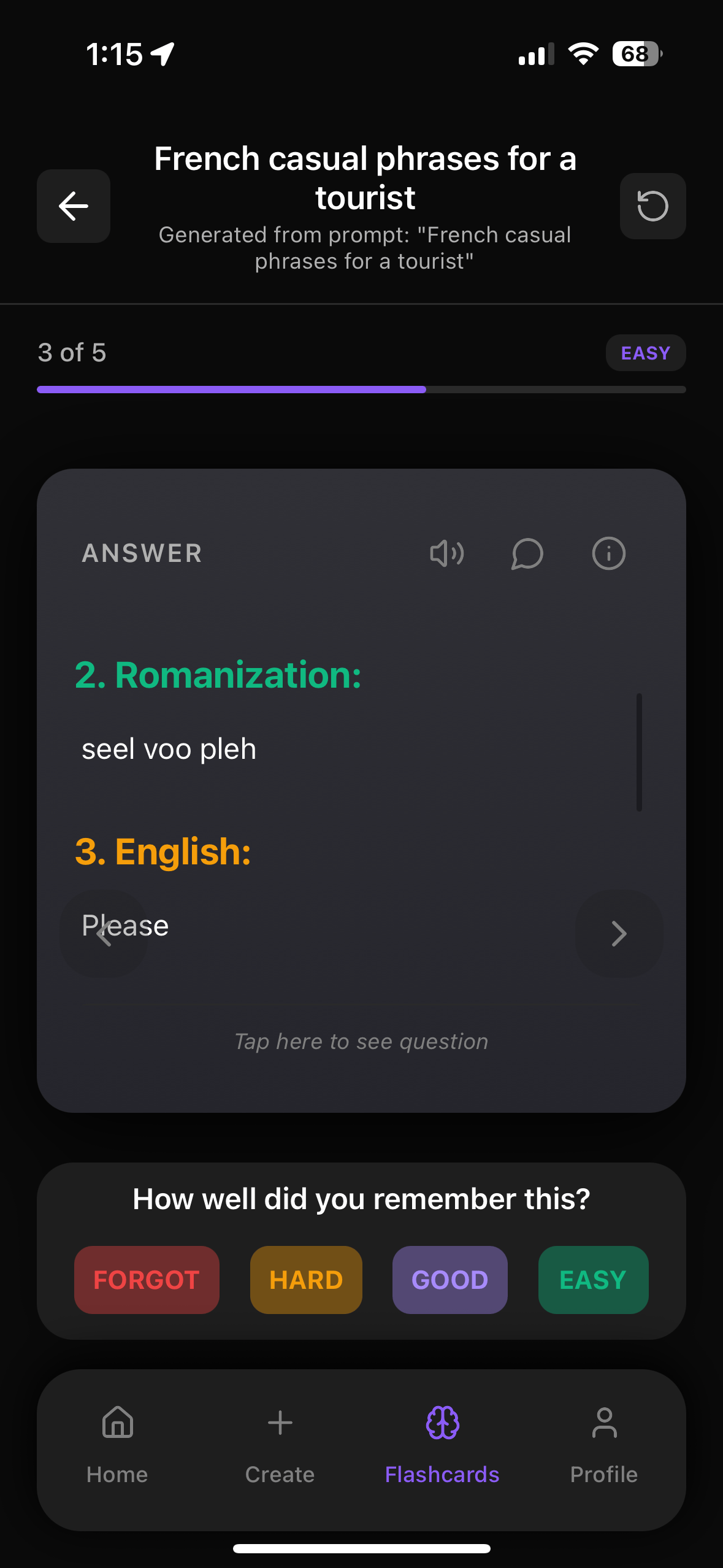
Why Slang Flashcards Might Be The Missing Piece In Your Language Learning
You ever wonder how to remember all those cool slang words you hear and actually use them without sounding awkward? Well, slang flashcards tips can really step up your game. It's like having this secret weapon that breaks down tricky words into bite-sized pieces you can actually remember. And trust me, it's not just about cramming; it's about getting that stuff to stick in your brain for real.
If you're looking for information about slang flashcards: the fun, proven way to sound native fast (most learners skip this) – learn real-life slang faster, remember it longer, and actually use it in conversations., read our complete guide to slang flashcards.
Now, here's the cool part: Flashrecall totally has your back with this. It's like your personal assistant that whips up flashcards from whatever you're studying and then nudges you to review them just when you need to. So, if you're all about nailing that real-life slang and sounding more like a native speaker, you should definitely check out our guide on slang flashcards. It's a fun way to pick up new words, hang onto them longer, and start dropping them into your conversations like a pro.
Let’s break down how to actually use slang flashcards in a smart way, not just randomly collecting phrases you’ll never remember.
Why Slang Is So Hard To Learn (And Why Flashcards Help)
Slang is tricky because:
- It changes fast
- Textbooks barely cover it
- It’s super context-dependent
- Native speakers use it constantly
Flashcards fix a lot of this because they:
- Help you see slang repeatedly until it feels natural
- Let you attach examples, images, audio, and context
- Force active recall (“What does this mean again?”) instead of just rereading
And with Flashrecall, you don’t even have to plan reviews. Its built-in spaced repetition system automatically shows you slang cards right before you’re about to forget them.
Why Flashrecall Is Perfect For Slang Flashcards
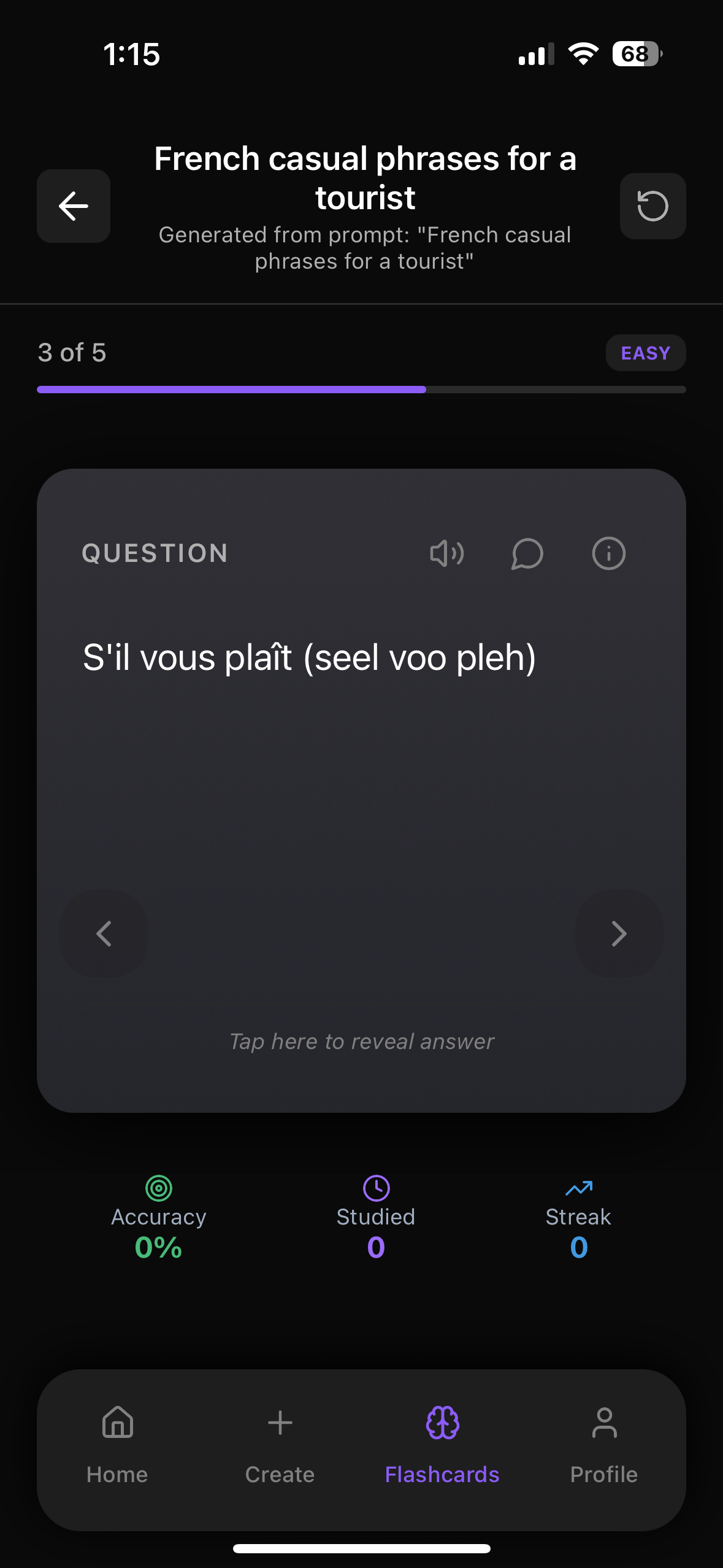
You can make slang flashcards anywhere, but Flashrecall makes it stupidly easy and actually fun:
- Create cards from almost anything
- Screenshots of chats or memes
- YouTube videos
- PDFs, text, or notes
- Typed prompts
- Audio clips
- Built-in spaced repetition + active recall
- You see cards right when your brain needs them
- You’re forced to answer before seeing the solution
- Study reminders
- The app nudges you so you don’t “forget to study” for 3 weeks
- Works offline
- Perfect for commutes, flights, or boring queues
- Chat with your flashcards
- Not sure how to actually use a slang phrase? You can chat with the card to get more examples and explanations.
- Free to start, fast, modern, and easy to use
- On iPhone and iPad
Grab it here if you want to follow along while you read:
👉 https://apps.apple.com/us/app/flashrecall-study-flashcards/id6746757085
How To Build Slang Flashcards That Actually Work
Don’t just write:
> Front: “lit”
> Back: “cool”
That’s… not very helpful. Instead, make your slang cards rich and realistic.
1. Always Include Context
For each slang word, try to include:
- A short definition
- A natural example sentence
- Who uses it (young people? online? regional?)
- A translation in your native language (if you want)
“salty” – What does this mean in slang?
- Meaning: Annoyed, bitter, upset (usually about something small)
- Example: “He’s still salty about losing that game.”
- Notes: Casual, mostly spoken / online
In Flashrecall, you can:
- Put the word and question on the front
- Put meaning, example, and notes on the back
- Add an image or even a screenshot of where you saw it
2. Use Screenshots From Real Life
This is where Flashrecall shines.
Let’s say you see this in a chat or on Twitter:
> “That movie was mid tbh.”
You can:
1. Screenshot it
2. Import the image into Flashrecall
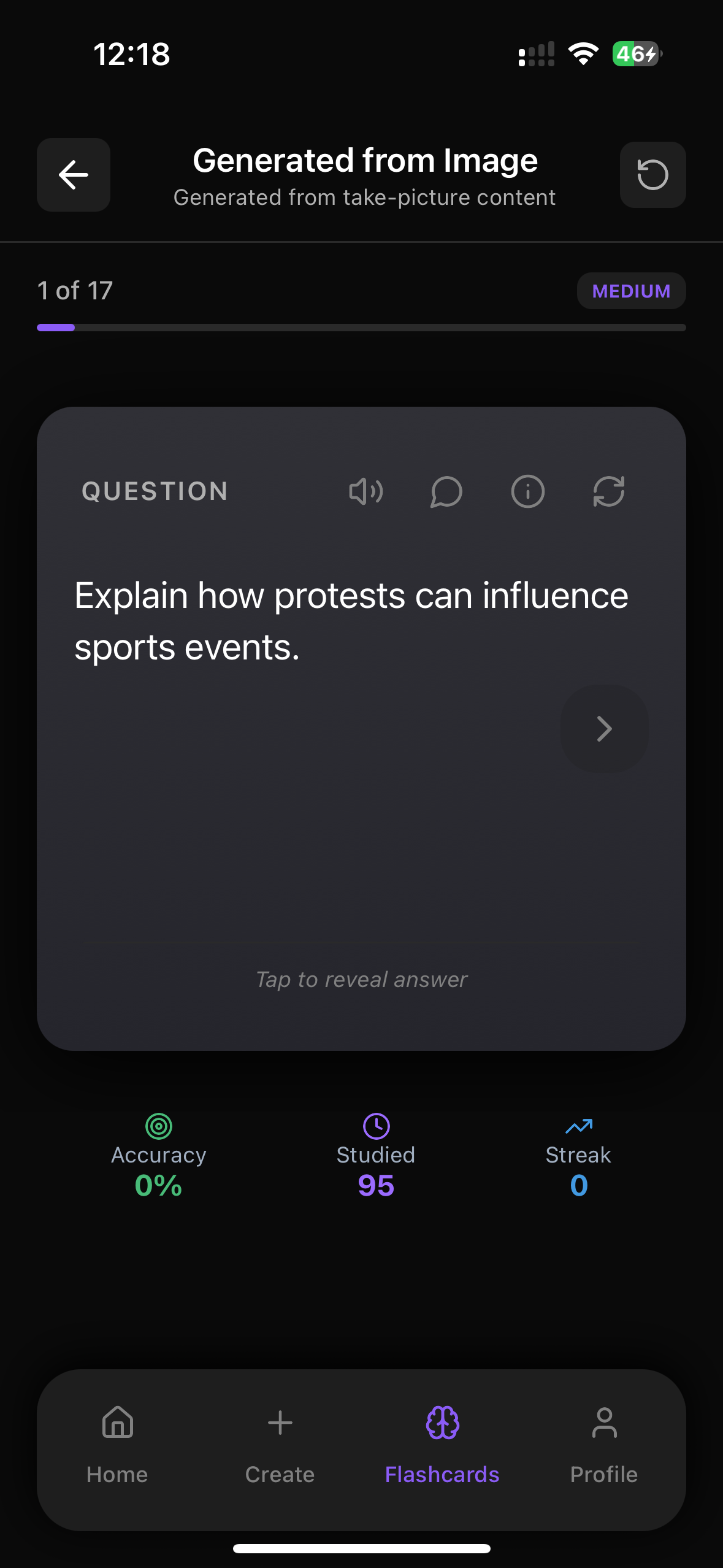
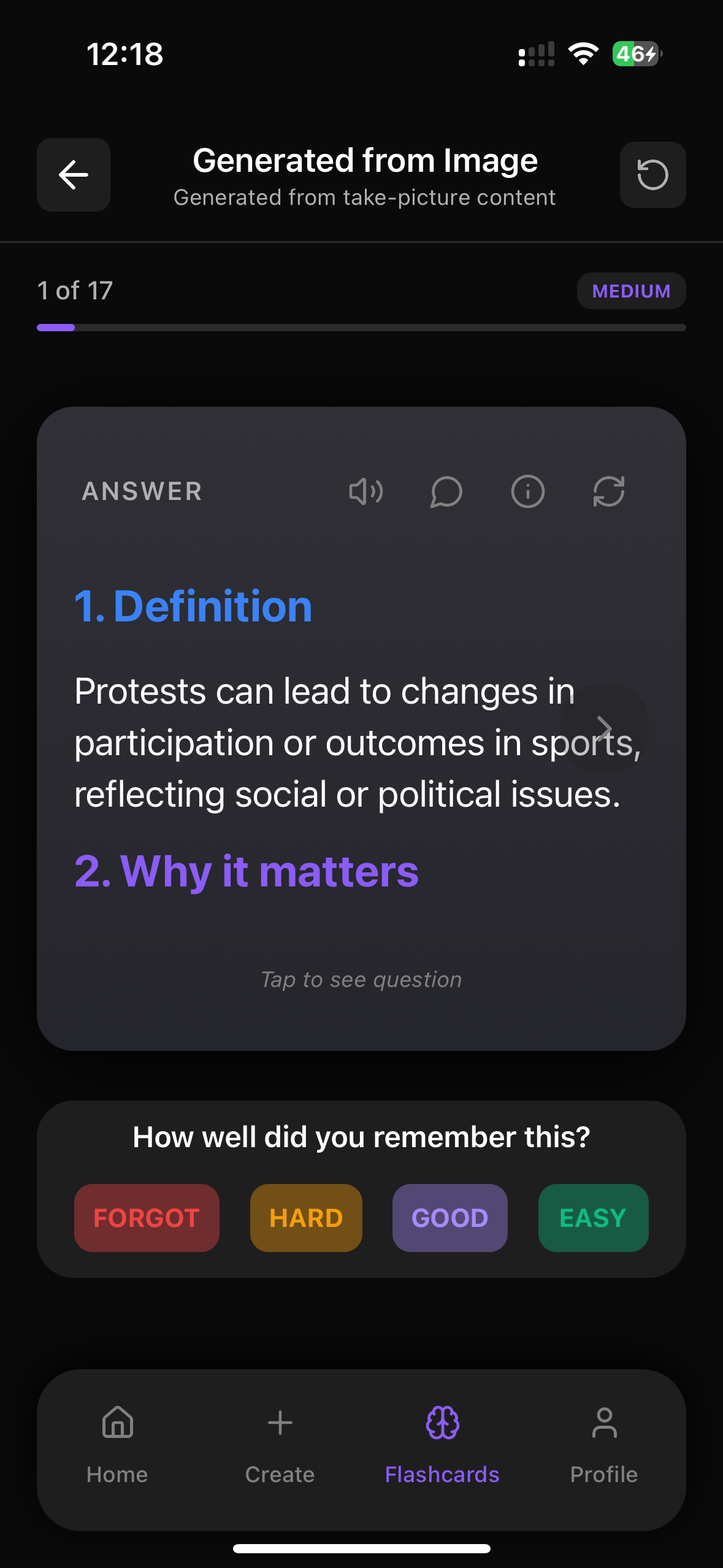
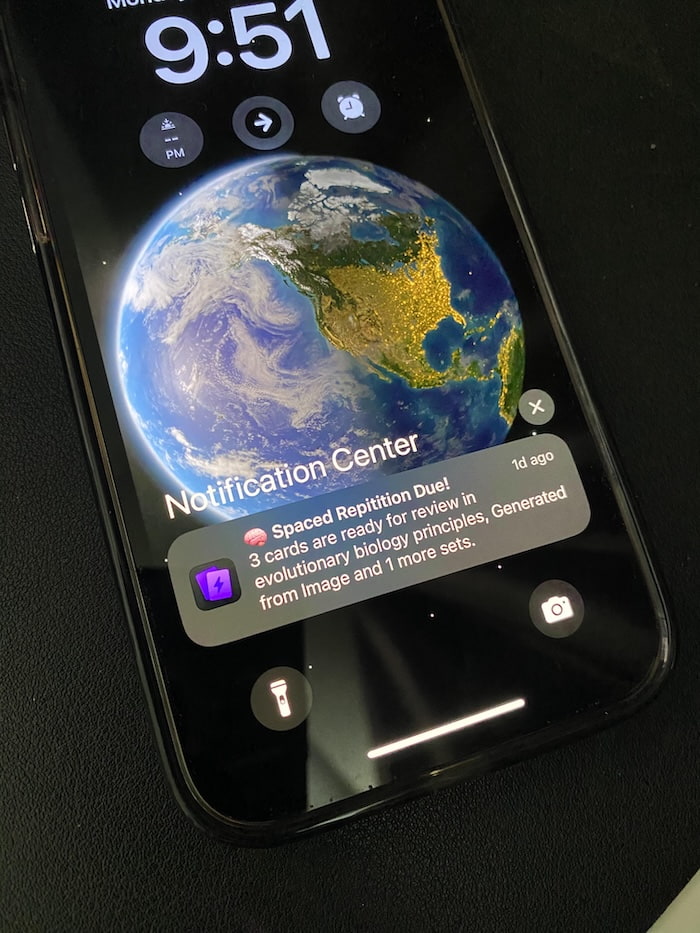
Flashrecall automatically keeps track and reminds you of the cards you don't remember well so you remember faster. Like this :
3. Let the app auto-extract text and help you turn it into a flashcard
Now your card might look like:
- “mid” = average, not good, not terrible
- Example: “The food was mid, nothing special.”
You’re not just learning a word—you’re learning it in the exact context you saw it.
3. Add Audio (So You Don’t Butcher The Pronunciation)
For languages like French, Spanish, Korean, Japanese, etc., slang pronunciation can be different from what you expect.
With Flashrecall, you can:
- Add audio of a native speaker saying the phrase
- Or record yourself and compare
Example (French slang):
“C’est ouf !” – What does this slang phrase mean?
- Meaning: “That’s crazy!” / “That’s insane!”
- Notes: “Ouf” is “fou” (crazy) in verlan (syllables reversed)
- Audio: Native pronunciation
Hearing it repeatedly makes it feel natural instead of scary.
A Simple Slang Flashcard Workflow You Can Copy
Here’s an easy system you can start using today with Flashrecall.
Step 1: Collect Slang From Real Sources
Use:
- TikTok / Reels
- YouTube vlogs or streamers
- Reddit, Twitter, Discord
- Subtitles from shows or anime
- Texts from native-speaking friends
Every time you see something you don’t understand, save it:
- Screenshot it
- Copy-paste the sentence
- Jot it in your notes app to turn into cards later
Step 2: Turn Them Into Flashcards (Fast)
Open Flashrecall and:
- Import screenshots or PDFs
- Paste text or a YouTube link
- Or just type the phrase manually
Flashrecall can instantly generate cards from:
- Images
- Text
- PDFs
- YouTube links
- Audio
- Typed prompts
So instead of spending 30 minutes formatting cards, you can do it in 2.
Step 3: Add Extra Info So Future You Isn’t Confused
For each slang card, try to add:
- Definition (short, simple)
- Example sentence (ideally real)
- Notes (who uses it, when it’s appropriate)
- Translation (optional but helpful)
You can keep it super simple:
> “Used mostly by teens, casual, not for formal situations.”
Step 4: Let Spaced Repetition Do The Heavy Lifting
Now you just:
- Open Flashrecall a few minutes a day
- Study your due cards
- Mark how easy or hard they were
The app’s spaced repetition + active recall combo:
- Shows you slang you’re about to forget
- Hides cards you already know well
- Keeps your daily load small but effective
You don’t have to plan anything. You just show up.
Example Slang Flashcard Sets (In Different Languages)
Here are some sample sets you could build in Flashrecall.
English Slang Deck
- “low-key” – secretly / a little bit
- “high-key” – very / obviously
- “I’m dead” – that’s so funny
- “no cap” – no lie / I’m serious
- “based” – respectful / admirable (online)
- “mid” – average, not great
Spanish Slang Deck
- “qué fuerte” – that’s crazy / intense
- “tío / tía” – dude / guy / girl (Spain)
- “currar” – to work (Spain, informal)
- “pasta” – money (slang)
- “estar rayado” – to be worried / overthinking
Japanese Slang Deck
- やばい (yabai) – crazy / dangerous / awesome (depends on context)
- マジで (maji de) – seriously / for real
- キモい (kimoi) – gross / creepy
- うざい (uzai) – annoying
For each of these, your Flashrecall card can include:
- The slang word
- Reading (if needed)
- Meaning
- Example sentence
- Notes on politeness level
How Often Should You Study Your Slang Flashcards?
You don’t need to grind for hours.
With Flashrecall’s reminders and spaced repetition:
- 5–15 minutes a day is enough for most people
- You’ll see old slang less often and new slang more often
- The app pings you when it’s time, so you don’t have to think about it
You can also:
- Study offline on the bus or train
- Do a quick review session before chatting with native speakers
- Review right after watching a show or scrolling social media
Using “Chat With The Flashcard” To Go Deeper
Sometimes you learn a slang word, but you’re still not sure:
- Is this rude?
- Is this only online?
- Can I say this to my teacher? (often: no.)
With Flashrecall, you can chat with your flashcard and ask:
- “Give me 3 more example sentences with this slang.”
- “Explain when this is rude vs. okay.”
- “What’s a more polite alternative to this?”
It’s like having a built-in tutor inside your deck.
Why Slang + Flashrecall = You Sound Way More Native
Putting it all together:
- You collect real slang from real life
- You turn it into rich, context-filled flashcards in Flashrecall
- The app handles spaced repetition, active recall, and reminders
- You slowly start to recognize and use slang naturally
Instead of memorizing “formal textbook phrases” forever, you’ll actually sound like the people you’re listening to.
If you want to start building your own slang deck right now, grab Flashrecall here (free to start):
👉 https://apps.apple.com/us/app/flashrecall-study-flashcards/id6746757085
Turn the slang you scroll past every day into something your brain actually remembers.
Frequently Asked Questions
What's the fastest way to create flashcards?
Manually typing cards works but takes time. Many students now use AI generators that turn notes into flashcards instantly. Flashrecall does this automatically from text, images, or PDFs.
Is there a free flashcard app?
Yes. Flashrecall is free and lets you create flashcards from images, text, prompts, audio, PDFs, and YouTube videos.
How do I start spaced repetition?
You can manually schedule your reviews, but most people use apps that automate this. Flashrecall uses built-in spaced repetition so you review cards at the perfect time.
What's the best way to learn vocabulary?
Research shows that combining flashcards with spaced repetition and active recall is highly effective. Flashrecall automates this process, generating cards from your study materials and scheduling reviews at optimal intervals.
Related Articles
- GoConqr Flashcards: Why Most Students Switch To This Powerful Alternative For Faster Learning – See The One Feature That Changes Everything
- Google Translate Flashcards: The Essential Guide To Faster Language Learning Most People Ignore – Turn Translations Into Smart Cards That Actually Stick
- Krazy Flash Cards: 7 Powerful Ways Smart Flashcards Help You Learn Faster (Without Burning Out) – Forget clunky decks and random apps; here’s how to turn “crazy” flashcards into a simple, powerful study system that actually sticks.
Research References
The information in this article is based on peer-reviewed research and established studies in cognitive psychology and learning science.
Cepeda, N. J., Pashler, H., Vul, E., Wixted, J. T., & Rohrer, D. (2006). Distributed practice in verbal recall tasks: A review and quantitative synthesis. Psychological Bulletin, 132(3), 354-380
Meta-analysis showing spaced repetition significantly improves long-term retention compared to massed practice
Carpenter, S. K., Cepeda, N. J., Rohrer, D., Kang, S. H., & Pashler, H. (2012). Using spacing to enhance diverse forms of learning: Review of recent research and implications for instruction. Educational Psychology Review, 24(3), 369-378
Review showing spacing effects work across different types of learning materials and contexts
Kang, S. H. (2016). Spaced repetition promotes efficient and effective learning: Policy implications for instruction. Policy Insights from the Behavioral and Brain Sciences, 3(1), 12-19
Policy review advocating for spaced repetition in educational settings based on extensive research evidence
Karpicke, J. D., & Roediger, H. L. (2008). The critical importance of retrieval for learning. Science, 319(5865), 966-968
Research demonstrating that active recall (retrieval practice) is more effective than re-reading for long-term learning
Roediger, H. L., & Butler, A. C. (2011). The critical role of retrieval practice in long-term retention. Trends in Cognitive Sciences, 15(1), 20-27
Review of research showing retrieval practice (active recall) as one of the most effective learning strategies
Dunlosky, J., Rawson, K. A., Marsh, E. J., Nathan, M. J., & Willingham, D. T. (2013). Improving students' learning with effective learning techniques: Promising directions from cognitive and educational psychology. Psychological Science in the Public Interest, 14(1), 4-58
Comprehensive review ranking learning techniques, with practice testing and distributed practice rated as highly effective

FlashRecall Team
FlashRecall Development Team
The FlashRecall Team is a group of working professionals and developers who are passionate about making effective study methods more accessible to students. We believe that evidence-based learning tec...
Credentials & Qualifications
- •Software Development
- •Product Development
- •User Experience Design
Areas of Expertise
Ready to Transform Your Learning?
Start using FlashRecall today - the AI-powered flashcard app with spaced repetition and active recall.
Download on App Store