Solar System Flashcards Study Method: The Powerful Guide
The solar system flashcards study method uses spaced repetition to boost memory. Flashrecall simplifies scheduling, letting you focus on learning the planets.
How Flashrecall app helps you remember faster. It's free
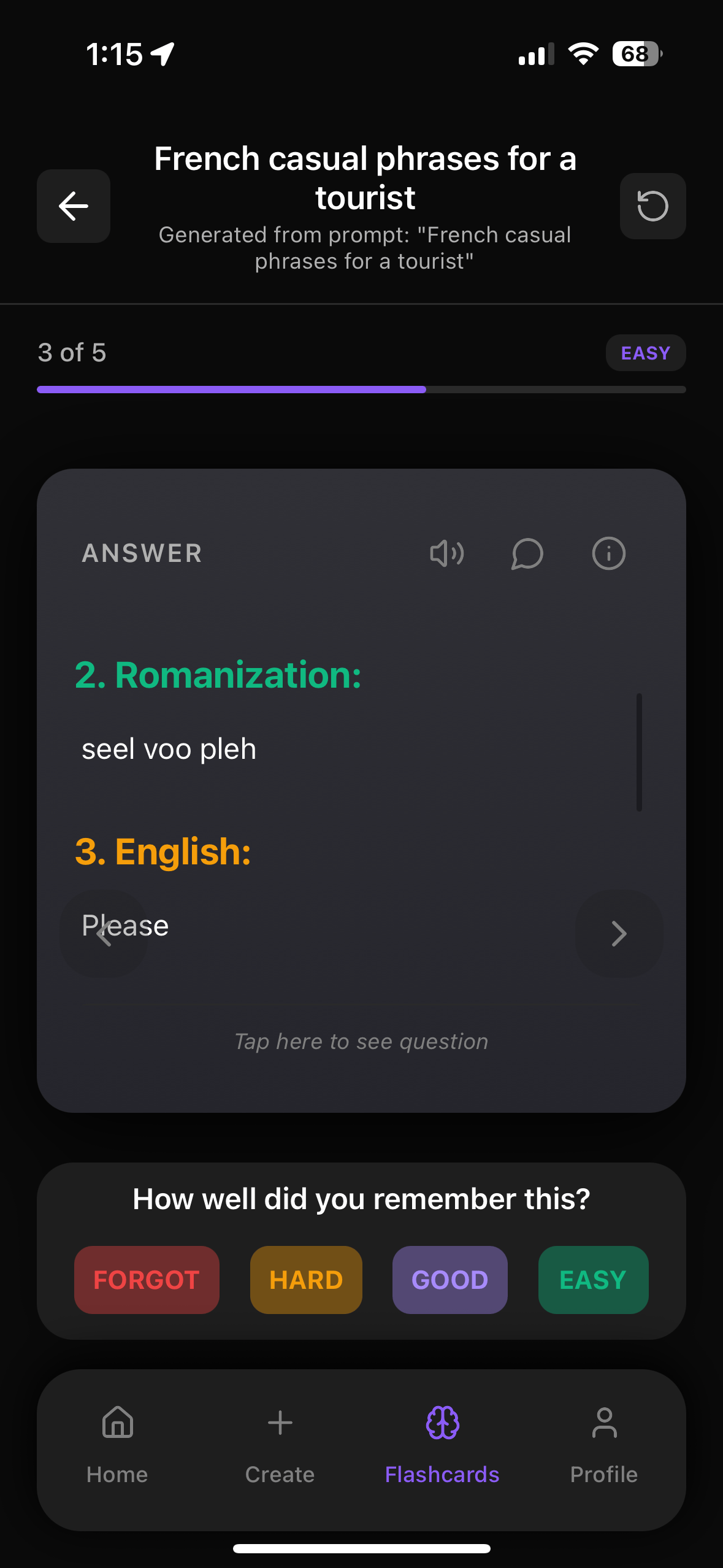
Why Solar System Flashcards Are Actually Genius
Alright, let’s dive into this solar system flashcards study method thing. Honestly, it might sound a bit fancy, but it's really just a slick way to remember a whole bunch of info without feeling overwhelmed. You know how you sometimes read pages of notes and it just doesn’t stick? Yeah, been there. Instead of cramming all night, this method is about quizzing yourself over time, which basically tricks your brain into remembering better. And here’s the cool part: Flashrecall totally takes over the boring part of scheduling when you’ll study what, so you can just focus on nailing those planets and not stress about when to do it. Seriously, if you’re tired of those thick textbooks and want a fun way to actually remember those planetary facts, you should check out our guide on using these flashcards. It's a game-changer!
If you're looking for information about solar system flashcards: 7 powerful ways to help you (or your kid) actually remember every planet – without boring textbooks, read our complete guide to solar system flashcards.
Instead of rereading the same notes, you’re testing yourself—this is active recall, and it’s way more effective for memory.
And if you want to make solar system flashcards without wasting hours designing them, Flashrecall makes it stupidly easy:
👉 https://apps.apple.com/us/app/flashrecall-study-flashcards/id6746757085
You can turn images, text, PDFs, and even YouTube videos into flashcards in seconds. Perfect for space nerds, students, teachers, or parents helping kids.
Let’s walk through how to make solar system flashcards that actually stick.
Step 1: Decide What You Want To Learn (Not Just Planet Names)
Most people stop at “Mercury, Venus, Earth…” and call it a day. That’s fine for a quiz, but if you want to really know the solar system, go a bit deeper.
Here are some ideas for what to cover in your flashcards:
- Planet order (from the Sun and from size)
- Planet types (terrestrial vs gas giants vs ice giants)
- Moons (which planets have the most?)
- Special features (rings, storms, tilt, atmosphere)
- Fun facts (hottest, coldest, windiest, longest day, etc.)
- Dwarf planets (Pluto, Ceres, Eris, etc.)
- The Sun (layers, type of star, size)
- Asteroid belt, Kuiper belt, Oort cloud
Pick what you actually need:
- Studying for school? Focus on definitions, order, and key facts.
- Teaching kids? Keep it visual and simple.
- Just love space? Go wild with deep facts.
Step 2: Use Flashrecall To Make Solar System Flashcards Fast
You can totally make paper flashcards… but let’s be honest, they get lost, messy, and you never review them on time.
With Flashrecall, you can:
- Create cards instantly from images, text, PDFs, audio, or YouTube links
- Or just type questions and answers manually if you like full control
- Study with built-in active recall and spaced repetition
- Get automatic reminders so you don’t forget to review
- Use it on iPhone and iPad, even offline
- Start free and see if it works for you
Grab it here:
👉 https://apps.apple.com/us/app/flashrecall-study-flashcards/id6746757085
Example: Building a Solar System Deck in Flashrecall
You could create separate sections like:
- Deck 1: Planets – Basic Facts
- Deck 2: Moons & Rings
- Deck 3: Fun & Weird Facts
- Deck 4: Diagrams & Images
Then quickly add cards like:
- Front: What are the four inner (terrestrial) planets?
Back: Mercury, Venus, Earth, Mars
- Front: Which planet has the Great Red Spot?
Back: Jupiter (a giant storm)
- Front: Which planet rotates on its side (extreme tilt)?
Back: Uranus
If you already have a PDF or notes from class, you can import them to Flashrecall and auto-generate flashcards instead of typing everything.
Step 3: Make Visual Solar System Flashcards (Images Work Wonders)
The solar system is super visual, so don’t just rely on text.
In Flashrecall, you can:
- Add planet images to cards
- Use diagrams of the solar system
- Turn screenshots or textbook pages into flashcards
Example Image Cards
- Front: (Image of all planets in order from the Sun)
Back: Write the planet order: Mercury, Venus, Earth, Mars, Jupiter, Saturn, Uranus, Neptune
- Front: (Close-up image of Saturn)
Back: Name this planet and one key fact about it.
- Front: (Diagram showing terrestrial vs gas giants)
Back: Which planets are terrestrial? Which are gas giants?
You can literally take a picture of a textbook page, import it into Flashrecall, and let the app help you turn it into cards. Way faster than copying everything by hand.
Step 4: Use Smart Question Types (Don’t Only Memorize Names)
If all your cards are “Q: Name this planet / A: Jupiter”, you’ll kind of get bored—and you won’t remember the deeper stuff.
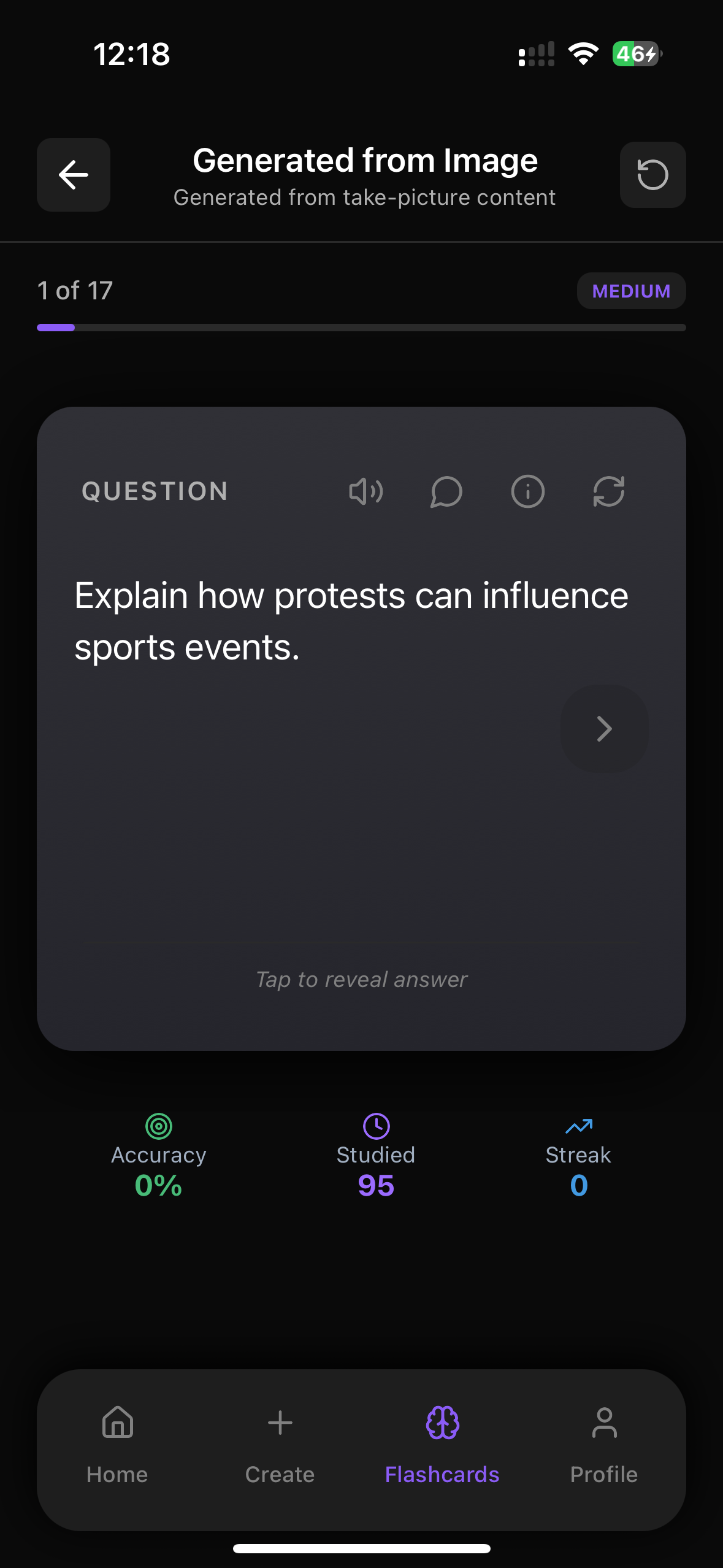
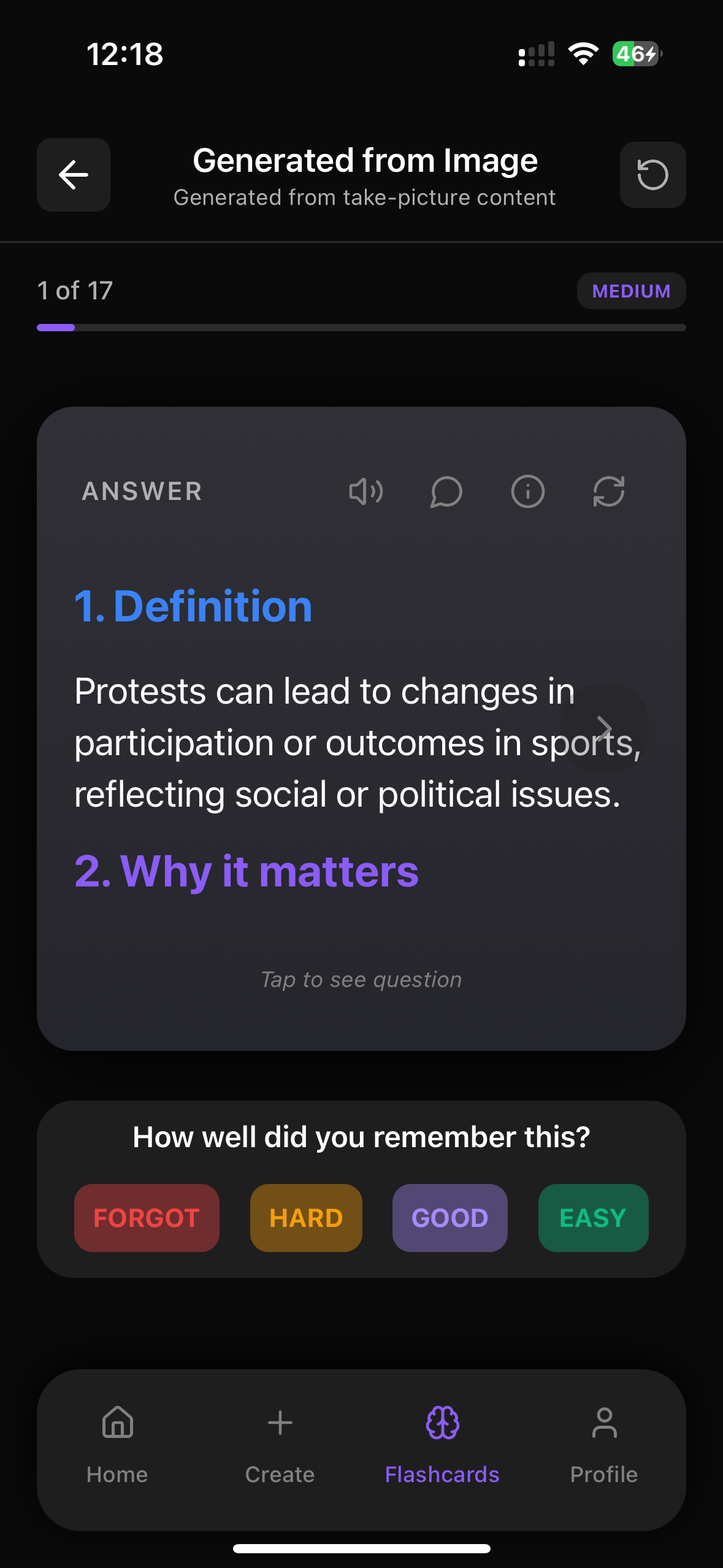
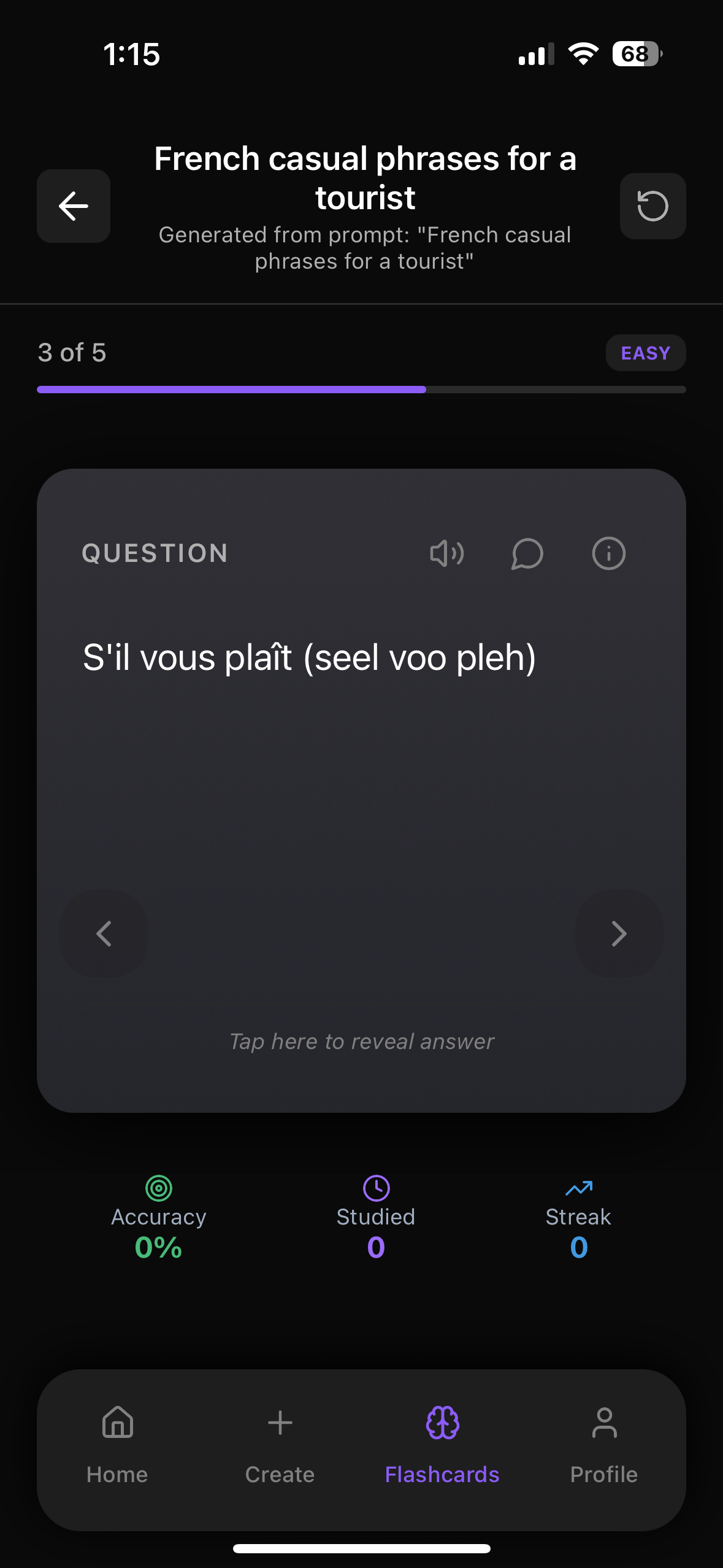
Flashrecall automatically keeps track and reminds you of the cards you don't remember well so you remember faster. Like this :
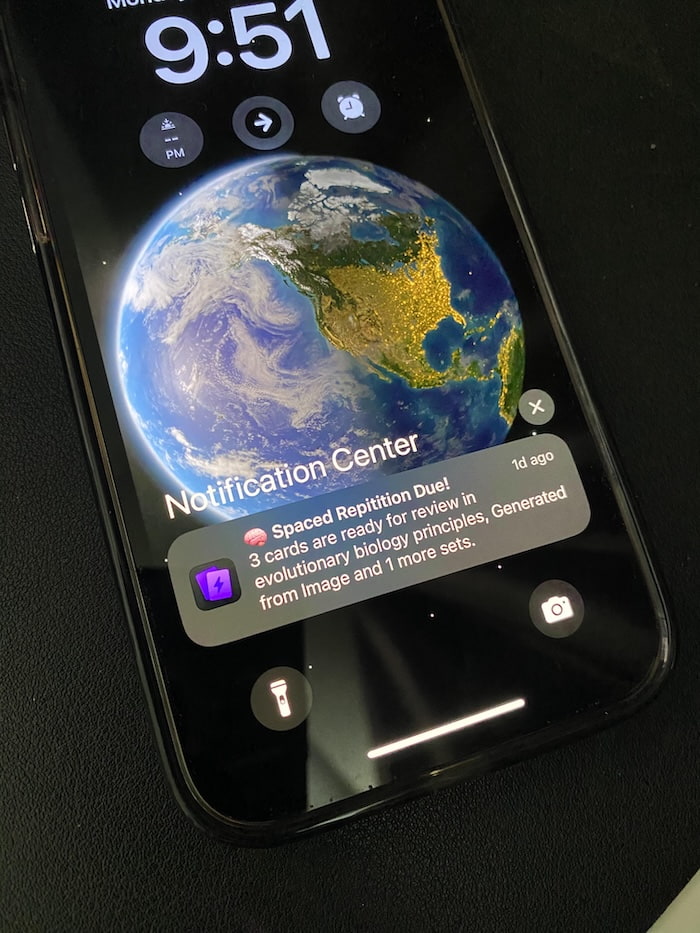
Mix in different question styles:
1. Order & Sequences
- Front: What’s the 3rd planet from the Sun?
Back: Earth
- Front: List the planets in order from smallest to largest by diameter.
Back: Mercury, Mars, Venus, Earth, Neptune, Uranus, Saturn, Jupiter
2. Comparisons
- Front: Which is hotter: Mercury or Venus? Why?
Back: Venus, because of its thick CO₂ atmosphere and runaway greenhouse effect.
- Front: Which has more moons: Earth or Mars?
Back: Mars (2 small moons: Phobos & Deimos).
3. “Why” and “How” Questions
These help you understand, not just memorize.
- Front: Why doesn’t Mercury have an atmosphere like Earth?
Back: It’s small and close to the Sun, so solar wind strips away its atmosphere.
- Front: Why do gas giants have so many moons?
Back: Their large mass and strong gravity capture more objects.
You can also chat with your flashcards inside Flashrecall if you’re unsure about something. So if you forgot why Venus is hotter than Mercury, you can ask the app directly and deepen your understanding without leaving your study session.
Step 5: Use Spaced Repetition So You Don’t Forget Everything Next Week
The real secret to remembering the solar system long-term isn’t just making flashcards—it’s reviewing them at the right times.
That’s where spaced repetition comes in.
Flashrecall has built-in spaced repetition with auto reminders, so you don’t have to think about when to review. It:
- Shows you cards right before you’re about to forget them
- Makes easy cards appear less often
- Makes hard cards appear more often
- Sends study reminders so you actually come back
So instead of cramming planets the night before a test and forgetting everything, you’ll see a few cards each day and slowly burn the info into your brain.
Perfect if you’re studying for:
- School astronomy units
- Space quizzes or exams
- General science classes
- Or you’re just a space geek who wants to really know their stuff
Step 6: Example Solar System Flashcard Sets You Can Copy
Here are some ready-made ideas you can recreate in Flashrecall.
Deck: Planet Basics
- Front: Name all the terrestrial planets.
Back: Mercury, Venus, Earth, Mars
- Front: Which planet has the longest day (slowest rotation)?
Back: Venus
- Front: Which planet has the shortest year (fastest orbit)?
Back: Mercury
- Front: Which planet is known as the Red Planet?
Back: Mars
Deck: Moons & Rings
- Front: Which planet has the most known moons?
Back: Jupiter (constantly updated, but currently the leader)
- Front: Name the planet with the most famous ring system.
Back: Saturn
- Front: Name Earth’s moon and one unique feature.
Back: The Moon – relatively large compared to its planet; stabilizes Earth’s tilt.
- Front: Which outer planets have rings besides Saturn?
Back: Jupiter, Uranus, Neptune also have ring systems.
Deck: Fun & Weird Facts
- Front: Which planet rains diamonds (theoretically)?
Back: Uranus and Neptune (under extreme pressure in their atmospheres).
- Front: Which planet has winds over 1,000 mph?
Back: Neptune.
- Front: Which dwarf planet used to be considered the 9th planet?
Back: Pluto.
You can type these into Flashrecall manually, or paste a list of facts and quickly turn them into multiple cards.
Step 7: Make It a Daily Habit (Even 5 Minutes Helps)
You don’t need to study for an hour. With spaced repetition in Flashrecall, 5–10 minutes a day is enough to remember solar system facts long-term.
A simple routine:
1. Open Flashrecall on your iPhone or iPad
2. Do your due cards (the app shows what’s ready for review)
3. Add 1–3 new cards if you want to grow your knowledge
4. Done
You can even study offline, so you can review in the car, on the bus, or anywhere without Wi‑Fi.
Why Use Flashrecall Specifically For Solar System Flashcards?
There are lots of flashcard apps, but Flashrecall is especially nice for this kind of topic because:
- You can turn images, PDFs, and YouTube space videos into cards fast
- It has built-in active recall and spaced repetition, so you’re using proven memory techniques without thinking about it
- You can chat with your flashcards if you’re confused about a concept
- It works offline, on iPhone and iPad
- It’s fast, modern, and easy to use, not clunky or old-school
- It’s free to start, so you can test it with a small solar system deck and see if it clicks
Grab it here and start building your solar system deck today:
👉 https://apps.apple.com/us/app/flashrecall-study-flashcards/id6746757085
Final Thoughts
Solar system flashcards are one of the easiest ways to go from “I sort of know the planets” to “I actually understand what’s going on out there.”
If you:
- Use good questions (not just names)
- Add images and diagrams
- Review with spaced repetition
- And keep it short but consistent
You’ll remember way more with way less effort.
Set up your first solar system deck in Flashrecall, play around with a few cards, and in a week you’ll be surprised how much space knowledge you’ve locked in.
Frequently Asked Questions
What's the fastest way to create flashcards?
Manually typing cards works but takes time. Many students now use AI generators that turn notes into flashcards instantly. Flashrecall does this automatically from text, images, or PDFs.
Is there a free flashcard app?
Yes. Flashrecall is free and lets you create flashcards from images, text, prompts, audio, PDFs, and YouTube videos.
How do I start spaced repetition?
You can manually schedule your reviews, but most people use apps that automate this. Flashrecall uses built-in spaced repetition so you review cards at the perfect time.
What is active recall and how does it work?
Active recall is the process of actively retrieving information from memory rather than passively reviewing it. Flashrecall forces proper active recall by making you think before revealing answers, then uses spaced repetition to optimize your review schedule.
Related Articles
- Super Simple Learning Flashcards: 7 Powerful Ways To Remember More In Less Time – Turn anything into easy flashcards in seconds and actually remember it.
- Lots To Spot Flashcards: 7 Powerful Ways To Turn Any Detail Into A Memory You Never Forget – Most People Overlook These Simple Visual Tricks
- Audio Flashcards: The Powerful Way To Learn Faster (And Actually Remember Stuff) – Discover How To Turn Anything You Hear Into Smart, Auto-Reviewing Flashcards In Minutes
Research References
The information in this article is based on peer-reviewed research and established studies in cognitive psychology and learning science.
Cepeda, N. J., Pashler, H., Vul, E., Wixted, J. T., & Rohrer, D. (2006). Distributed practice in verbal recall tasks: A review and quantitative synthesis. Psychological Bulletin, 132(3), 354-380
Meta-analysis showing spaced repetition significantly improves long-term retention compared to massed practice
Carpenter, S. K., Cepeda, N. J., Rohrer, D., Kang, S. H., & Pashler, H. (2012). Using spacing to enhance diverse forms of learning: Review of recent research and implications for instruction. Educational Psychology Review, 24(3), 369-378
Review showing spacing effects work across different types of learning materials and contexts
Kang, S. H. (2016). Spaced repetition promotes efficient and effective learning: Policy implications for instruction. Policy Insights from the Behavioral and Brain Sciences, 3(1), 12-19
Policy review advocating for spaced repetition in educational settings based on extensive research evidence
Karpicke, J. D., & Roediger, H. L. (2008). The critical importance of retrieval for learning. Science, 319(5865), 966-968
Research demonstrating that active recall (retrieval practice) is more effective than re-reading for long-term learning
Roediger, H. L., & Butler, A. C. (2011). The critical role of retrieval practice in long-term retention. Trends in Cognitive Sciences, 15(1), 20-27
Review of research showing retrieval practice (active recall) as one of the most effective learning strategies
Dunlosky, J., Rawson, K. A., Marsh, E. J., Nathan, M. J., & Willingham, D. T. (2013). Improving students' learning with effective learning techniques: Promising directions from cognitive and educational psychology. Psychological Science in the Public Interest, 14(1), 4-58
Comprehensive review ranking learning techniques, with practice testing and distributed practice rated as highly effective

FlashRecall Team
FlashRecall Development Team
The FlashRecall Team is a group of working professionals and developers who are passionate about making effective study methods more accessible to students. We believe that evidence-based learning tec...
Credentials & Qualifications
- •Software Development
- •Product Development
- •User Experience Design
Areas of Expertise
Ready to Transform Your Learning?
Start using FlashRecall today - the AI-powered flashcard app with spaced repetition and active recall.
Download on App Store