Spanish Verb Flashcards App: The Powerful Guide
Tired of forgetting Spanish verbs? The Spanish verb flashcards app simplifies tricky conjugations, helping you remember "ser" and "estar" with confidence.
How Flashrecall app helps you remember faster. It's free
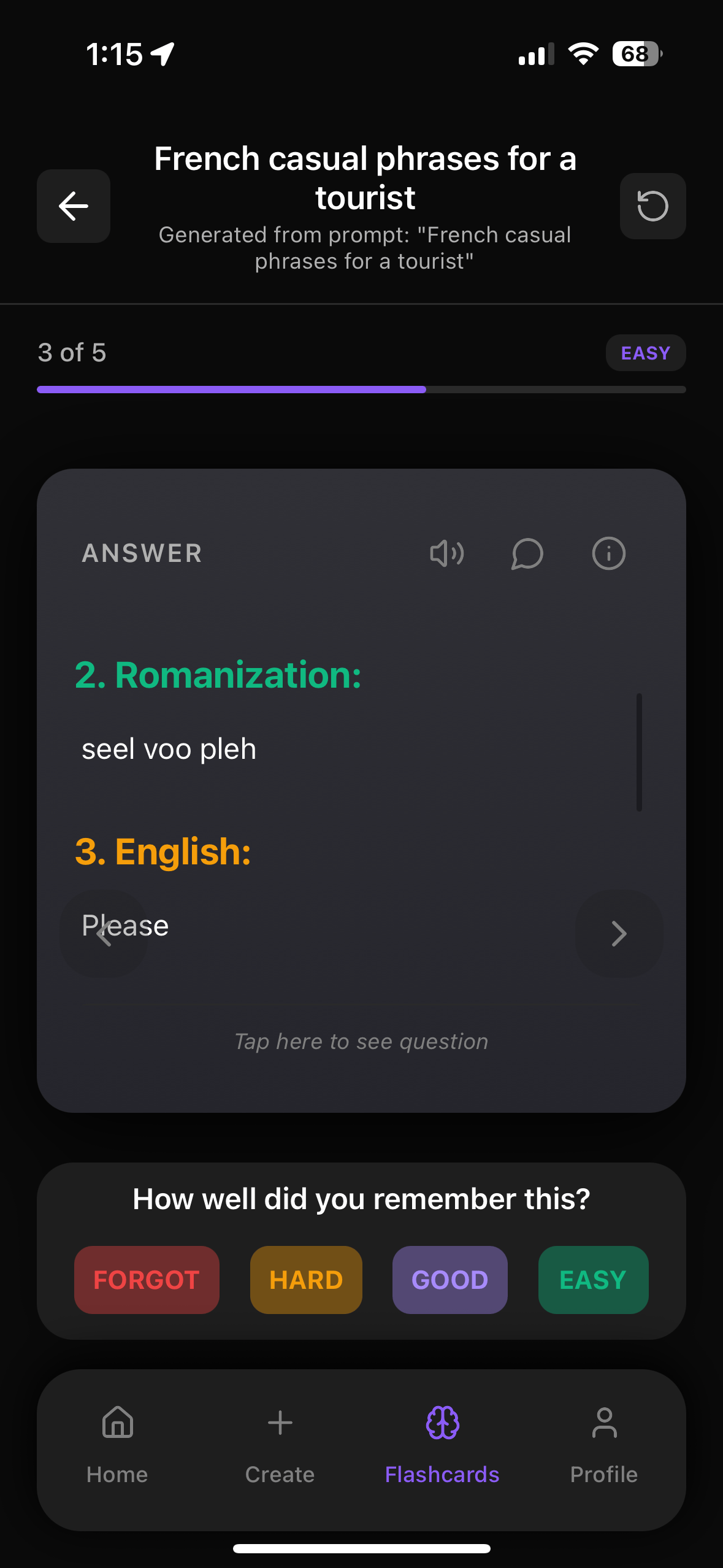
Tired Of Forgetting Spanish Verbs Every. Single. Time?
Ever feel like you’re drowning in Spanish verbs and can’t remember when to use "ser" or "estar"? I totally get it. That’s where a spanish verb flashcards app comes in handy. It’s like having a pocket-sized tutor that helps you break down all those tricky conjugations into bite-sized bits. And the best part? Flashrecall has your back by whipping up flashcards from whatever you’re studying and reminding you to review them just when you need to. It's like magic, except it's real and super helpful. So, if you’re tired of the struggle and want to nail those verbs with confidence, check out our guide. It’s got all the tricks to help you stop forgetting and start speaking.
If you're looking for information about spanish verb flashcards: 7 powerful tricks to finally remember every conjugation fast – stop forgetting ser/estar, ir, tener and start speaking with confidence today., read our complete guide to spanish verb flashcards.
That’s where Flashrecall comes in:
👉 https://apps.apple.com/us/app/flashrecall-study-flashcards/id6746757085
It’s a super fast, modern flashcard app that:
- Builds cards instantly from text, images, PDFs, YouTube links, or typed prompts
- Has built‑in spaced repetition and reminders (so you don’t forget to review)
- Lets you chat with your flashcards if you’re unsure about something
- Works great for Spanish, languages, exams, school, uni, medicine, anything
- Works offline, free to start, on iPhone and iPad
Let’s talk about how to actually use Spanish verb flashcards in a way that makes verbs stick in your brain instead of floating away after two days.
1. Stop Memorizing Lists Of Verbs (Do This Instead)
Most people start with giant lists:
- hablar – to speak
- comer – to eat
- vivir – to live
…and then try to brute-force them into memory. That’s why it feels boring and doesn’t work.
Instead, build small, focused verb decks in Flashrecall:
Suggested mini-decks
- Top 25 regular -AR verbs
- Top 25 irregular present tense verbs
- Past tense verbs you actually use in stories
- Travel verbs (llegar, salir, reservar, pagar, etc.)
- Feeling & thinking verbs (sentir, pensar, creer, parecer…)
In Flashrecall you can:
- Create each deck manually, or
- Paste in a list of verbs and let the app auto-generate flashcards from text
This keeps things manageable and way less overwhelming.
2. Make Smart Flashcards: Not Just “Verb = Translation”
A weak flashcard:
> Front: hablar
> Back: to speak
A strong flashcard forces your brain to work a bit more (that’s active recall).
Better card ideas
- Front: “I like to speak Spanish.” (English)
- Back: “Me gusta hablar español.”
- Front: “hablar – yo (presente)”
- Back: “hablo”
- Front: “Mañana yo ___ con mi jefe. (hablar, futuro)”
- Back: “Mañana yo hablaré con mi jefe.”
In Flashrecall, set these up as:
- Basic front/back cards for translations
- Cloze-style cards (fill-in-the-blank) by typing sentences and blanking out the verb form
You can literally paste a short paragraph in, highlight the verb forms, and boom — Flashrecall turns them into multiple cloze flashcards in seconds.
3. Use Spaced Repetition So Verbs Stick Long-Term
Memorizing Spanish verbs isn’t about cramming once. It’s about seeing them right before you forget them.
That’s what spaced repetition does automatically.
Flashrecall has:
- Built-in spaced repetition
- Auto reminders so you don’t have to remember when to review
- A queue that surfaces verbs right when your brain is about to lose them
So instead of:
- Day 1: Study verbs for 2 hours
- Day 10: Remember… maybe 10%?
You get:
- Day 1: 20 minutes
- Day 2: 10 minutes
- Day 4: 10 minutes
- Day 7: 5 minutes
- Day 14: 5 minutes
And suddenly “hablé / hablaba / hablaré” just feels obvious.
You don’t have to configure anything complicated; Flashrecall handles the spacing for you.
4. Build Verb Flashcards From Real Spanish (Not Just Lists)
Verbs stick way better when you meet them in real sentences.
Instead of searching random verb lists, do this:
Option A: Use YouTube
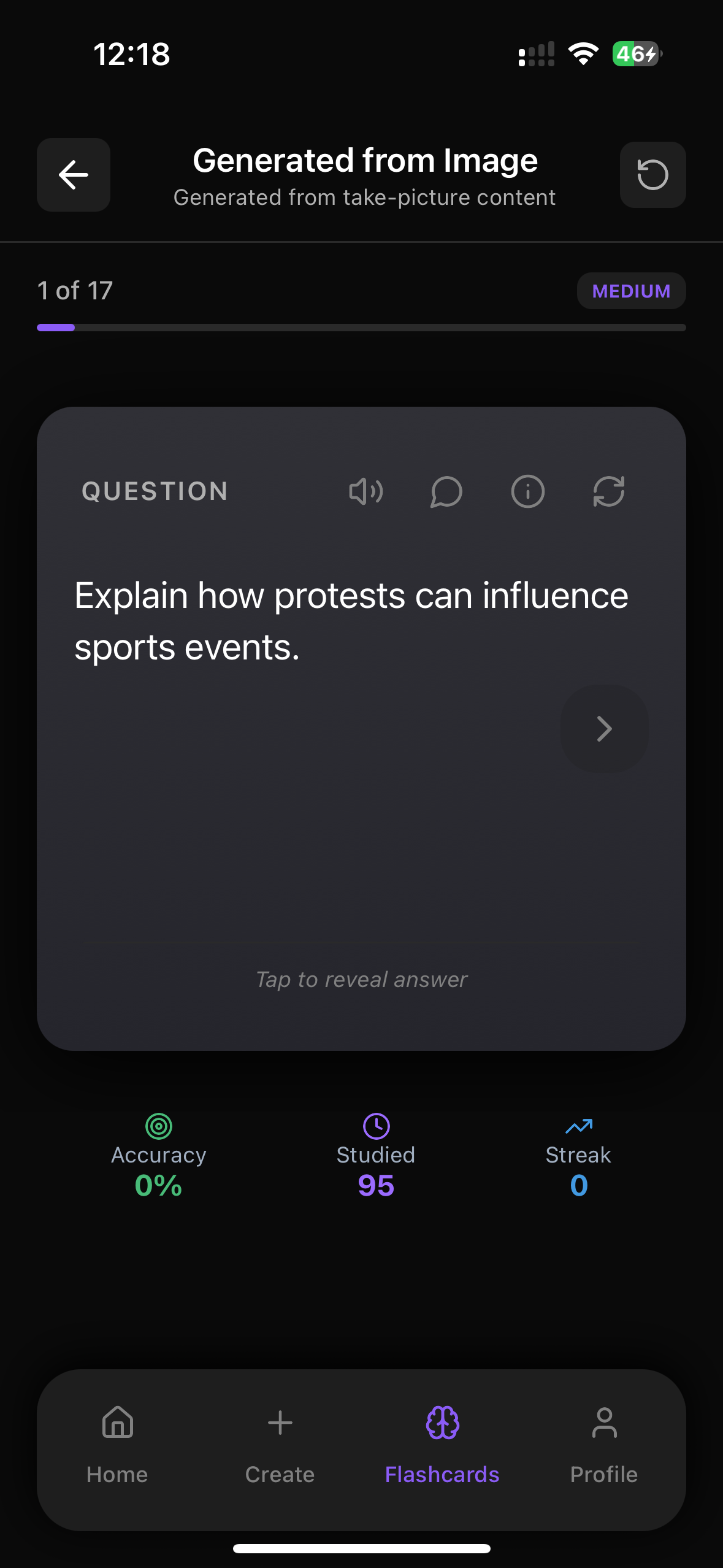
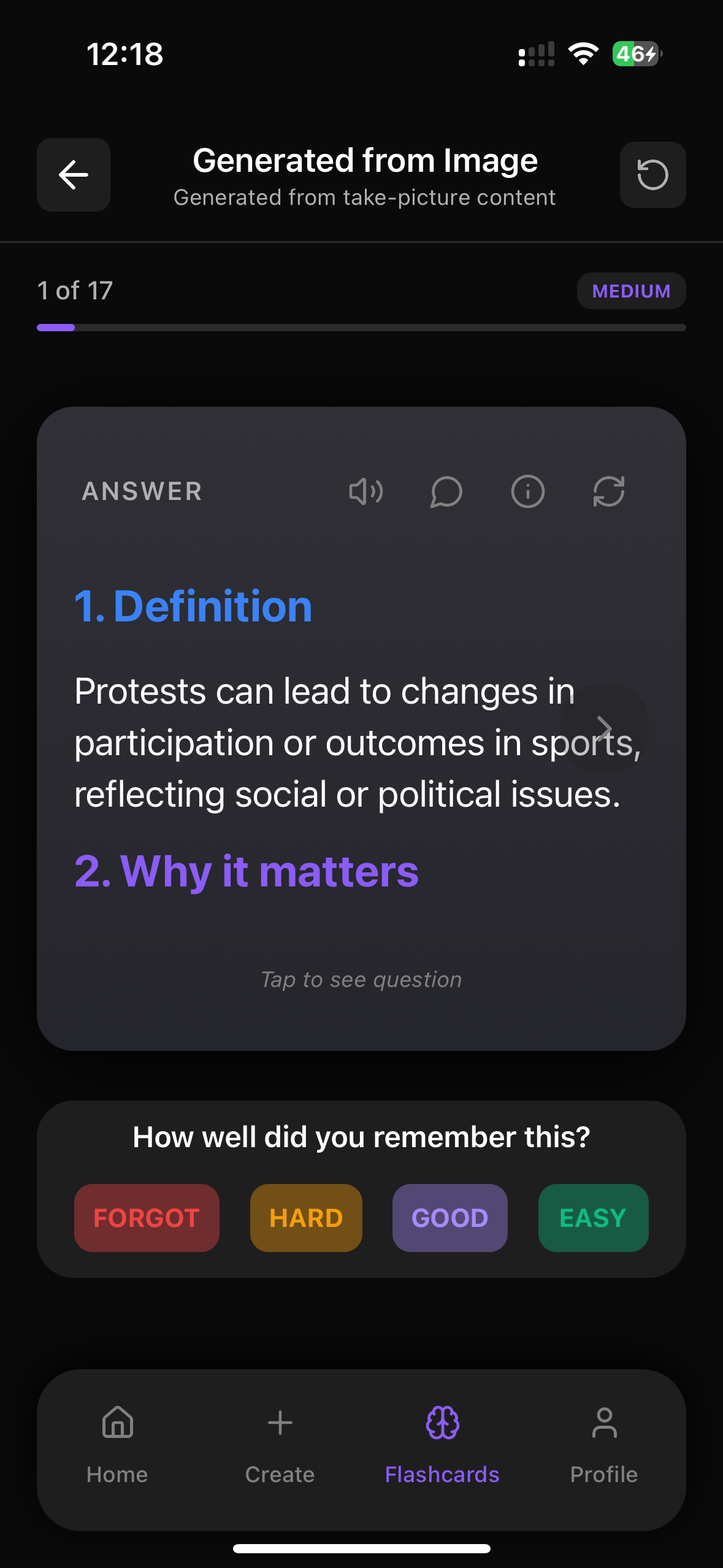
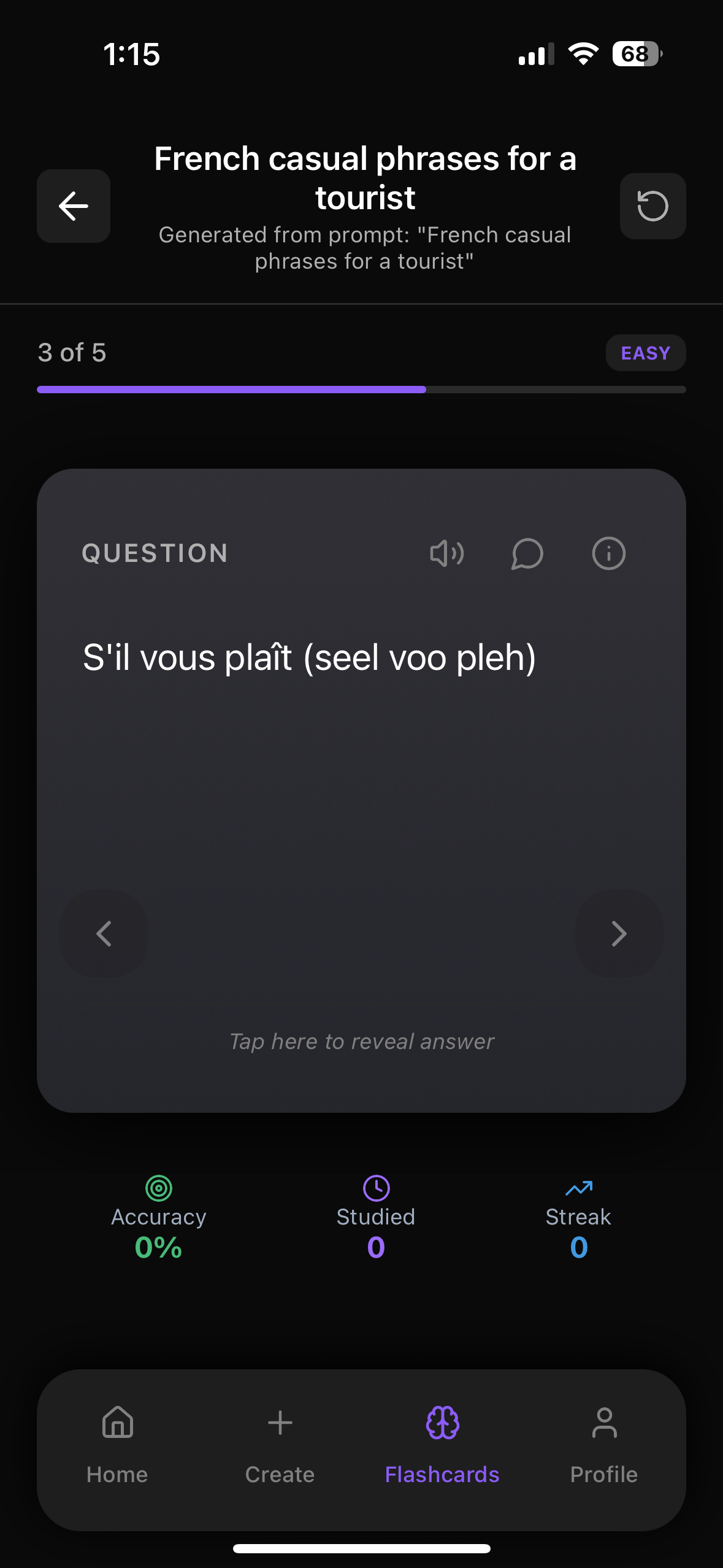
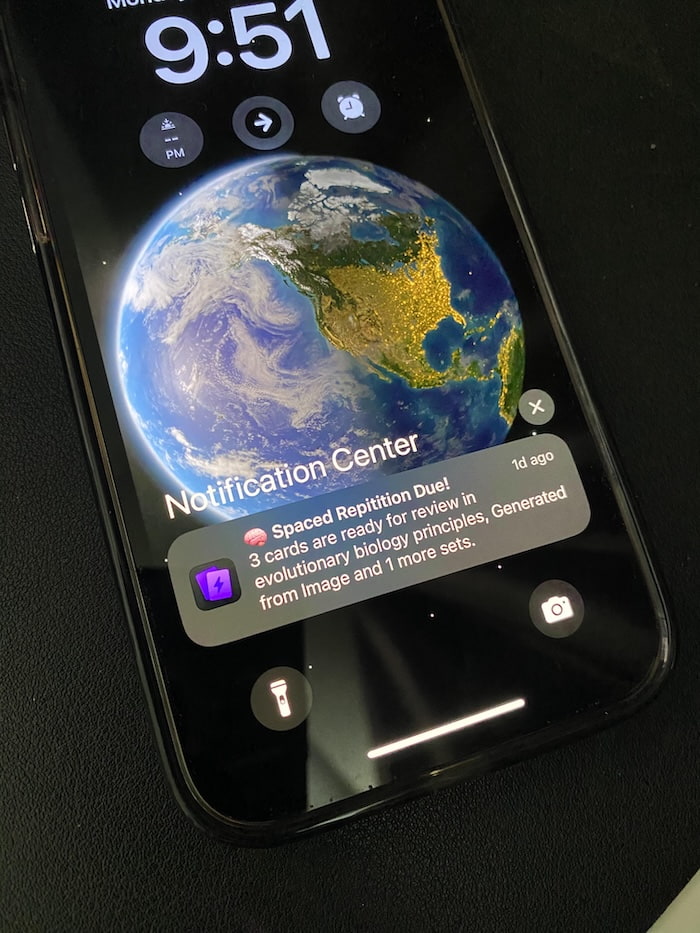
Flashrecall automatically keeps track and reminds you of the cards you don't remember well so you remember faster. Like this :
1. Find a short Spanish video (news clip, vlog, story, etc.)
2. Drop the YouTube link into Flashrecall
3. Let Flashrecall generate flashcards from the transcript
4. Turn key verb phrases into cards:
- “Estoy aprendiendo español.”
- “Voy a viajar a México.”
- “Quiero conocer gente nueva.”
You’ll get cards like:
- Front: “I am learning Spanish.”
- Back: “Estoy aprendiendo español.”
And you can create extra cards just for the verbs:
- Front: “conocer – yo (pretérito)”
- Back: “conocí”
Option B: Use PDFs or Text
Got a Spanish story PDF or textbook chapter?
- Import the PDF into Flashrecall
- Highlight sentences with verbs you want
- Turn them into flashcards instantly
This way you’re learning verbs in the exact kind of sentences you’ll hear and use.
5. Focus On The Tenses You Actually Need First
You don’t need every tense from day one. Focus on high-usage tenses:
Start with:
- Presente (present) – everyday conversations
- Pretérito indefinido (simple past) – things you did
- Futuro simple or “ir a + infinitivo” – future plans
- Presente progresivo (estoy hablando) – what’s happening now
Example flashcard sets
- Front: hablar – yo (presente)
- Back: hablo
- Front: hablar – nosotros (presente)
- Back: hablamos
- Front: comer – él (pretérito)
- Back: comió
- Front: vivir – ellos (futuro simple)
- Back: vivirán
In Flashrecall, make one deck called “Spanish Verbs – Present”, another “Spanish Verbs – Past”, etc.
Study them in short sessions with spaced repetition and let the app handle the scheduling.
6. Use Active Recall Properly (Most People Don’t)
Active recall = you try to remember before you see the answer.
It sounds obvious, but most people just flip cards too fast.
Here’s how to do it right with Flashrecall:
1. See the front of the card
2. Pause and actually say the answer out loud (or in your head)
3. Flip the card
4. Rate how easy/hard it was in your mind
5. Let spaced repetition adjust when you see it next
Flashrecall is designed around active recall + spaced repetition together — the combo that’s proven to boost memory.
And if you’re unsure about a verb or conjugation, you can chat with the flashcard inside the app:
- Ask: “When do I use ‘hablé’ vs ‘hablaba’?”
- Get a clear explanation with examples
- Turn those examples into more flashcards
You’re not just memorizing; you’re actually understanding.
7. Make Spanish Verb Flashcards That Fit Your Life
The best flashcard system is the one you’ll actually use. So make it easy on yourself.
Short, daily reviews
- 10–15 minutes a day is enough
- Use study reminders in Flashrecall so you don’t forget
- Do a quick session while commuting, waiting in line, or before bed
Use images and audio
You can:
- Add images to cards to make verbs more memorable
- Use audio so you remember pronunciation too
- Even create cards from audio snippets or voice notes
Example:
- Front: Picture of someone running + “to run (yo, presente)”
- Back: “corro” + audio saying “corro”
Learn offline, anywhere
Flashrecall works offline, so you can:
- Review verbs on the subway
- Study on flights
- Practice on trips without worrying about Wi‑Fi
No excuses — your Spanish verbs are always in your pocket.
Example Spanish Verb Flashcard Set You Can Copy
Here’s a simple starter list you could drop into Flashrecall as text and auto-convert into cards:
- hablar – to speak
- comer – to eat
- vivir – to live
- tener – to have
- hacer – to do / make
- ir – to go
- poder – to be able to / can
- querer – to want
- saber – to know (facts)
- conocer – to know / meet (people, places)
- Front: “I want to eat now.”
Back: “Quiero comer ahora.”
- Front: “We are going to live in Spain.”
Back: “Vamos a vivir en España.”
- Front: “Yesterday I did my homework.”
Back: “Ayer hice mi tarea.”
Turn each bold verb into cloze cards too:
- Front: “Ayer ___ mi tarea. (hacer, yo, pretérito)”
- Back: “Ayer hice mi tarea.”
Flashrecall makes it super quick to turn that little list into a full, smart deck.
Why Flashrecall Is Perfect For Spanish Verb Flashcards
To pull it all together:
- Create verb flashcards instantly from:
- Text, PDFs, YouTube links, images, audio, or just typing
- Use active recall + spaced repetition automatically
- Get study reminders so you don’t fall off the habit
- Chat with your flashcards when you’re confused about a verb or tense
- Study offline, on iPhone and iPad
- Keep everything fast, modern, and easy to use
- Start free, then scale up as you add more decks (Spanish, exams, uni, whatever)
If you’re serious about finally getting Spanish verbs to stick — not just for a test, but in real conversations — building proper flashcards is honestly one of the highest-ROI things you can do.
You don’t need to overcomplicate it.
You just need a good system and a tool that doesn’t get in your way.
Try Flashrecall here and start building your Spanish verb decks today:
👉 https://apps.apple.com/us/app/flashrecall-study-flashcards/id6746757085
Frequently Asked Questions
Is Anki good for studying?
Anki is powerful but requires manual card creation and has a steep learning curve. Flashrecall offers AI-powered card generation from your notes, images, PDFs, and videos, making it faster and easier to create effective flashcards.
What's the fastest way to create flashcards?
Manually typing cards works but takes time. Many students now use AI generators that turn notes into flashcards instantly. Flashrecall does this automatically from text, images, or PDFs.
How do I start spaced repetition?
You can manually schedule your reviews, but most people use apps that automate this. Flashrecall uses built-in spaced repetition so you review cards at the perfect time.
Related Articles
- European Portuguese Flashcards: 7 Powerful Ways To Finally Speak Like A Local (Most Learners Skip #3) – Stop memorizing random words and start using smart flashcards that actually make European Portuguese stick.
- Sign Language Flash Cards: 7 Powerful Ways To Learn Faster And Remember Every Sign
- Moina Flashcards: The Best Alternative Most Students Don’t Know About (Yet) – Learn Faster With Smarter, Automatic Study Tools
Research References
The information in this article is based on peer-reviewed research and established studies in cognitive psychology and learning science.
Cepeda, N. J., Pashler, H., Vul, E., Wixted, J. T., & Rohrer, D. (2006). Distributed practice in verbal recall tasks: A review and quantitative synthesis. Psychological Bulletin, 132(3), 354-380
Meta-analysis showing spaced repetition significantly improves long-term retention compared to massed practice
Carpenter, S. K., Cepeda, N. J., Rohrer, D., Kang, S. H., & Pashler, H. (2012). Using spacing to enhance diverse forms of learning: Review of recent research and implications for instruction. Educational Psychology Review, 24(3), 369-378
Review showing spacing effects work across different types of learning materials and contexts
Kang, S. H. (2016). Spaced repetition promotes efficient and effective learning: Policy implications for instruction. Policy Insights from the Behavioral and Brain Sciences, 3(1), 12-19
Policy review advocating for spaced repetition in educational settings based on extensive research evidence
Karpicke, J. D., & Roediger, H. L. (2008). The critical importance of retrieval for learning. Science, 319(5865), 966-968
Research demonstrating that active recall (retrieval practice) is more effective than re-reading for long-term learning
Roediger, H. L., & Butler, A. C. (2011). The critical role of retrieval practice in long-term retention. Trends in Cognitive Sciences, 15(1), 20-27
Review of research showing retrieval practice (active recall) as one of the most effective learning strategies
Dunlosky, J., Rawson, K. A., Marsh, E. J., Nathan, M. J., & Willingham, D. T. (2013). Improving students' learning with effective learning techniques: Promising directions from cognitive and educational psychology. Psychological Science in the Public Interest, 14(1), 4-58
Comprehensive review ranking learning techniques, with practice testing and distributed practice rated as highly effective
Ebbinghaus, H. (1885). Memory: A Contribution to Experimental Psychology. New York: Dover
Pioneering research on the forgetting curve and memory retention over time

FlashRecall Team
FlashRecall Development Team
The FlashRecall Team is a group of working professionals and developers who are passionate about making effective study methods more accessible to students. We believe that evidence-based learning tec...
Credentials & Qualifications
- •Software Development
- •Product Development
- •User Experience Design
Areas of Expertise
Ready to Transform Your Learning?
Start using FlashRecall today - the AI-powered flashcard app with spaced repetition and active recall.
Download on App Store