Speech Flashcards App: The Powerful Guide
Speech flashcards break your speech into key points for easy recall. Using active recall and spaced repetition helps you remember without overload.
How Flashrecall app helps you remember faster. It's free
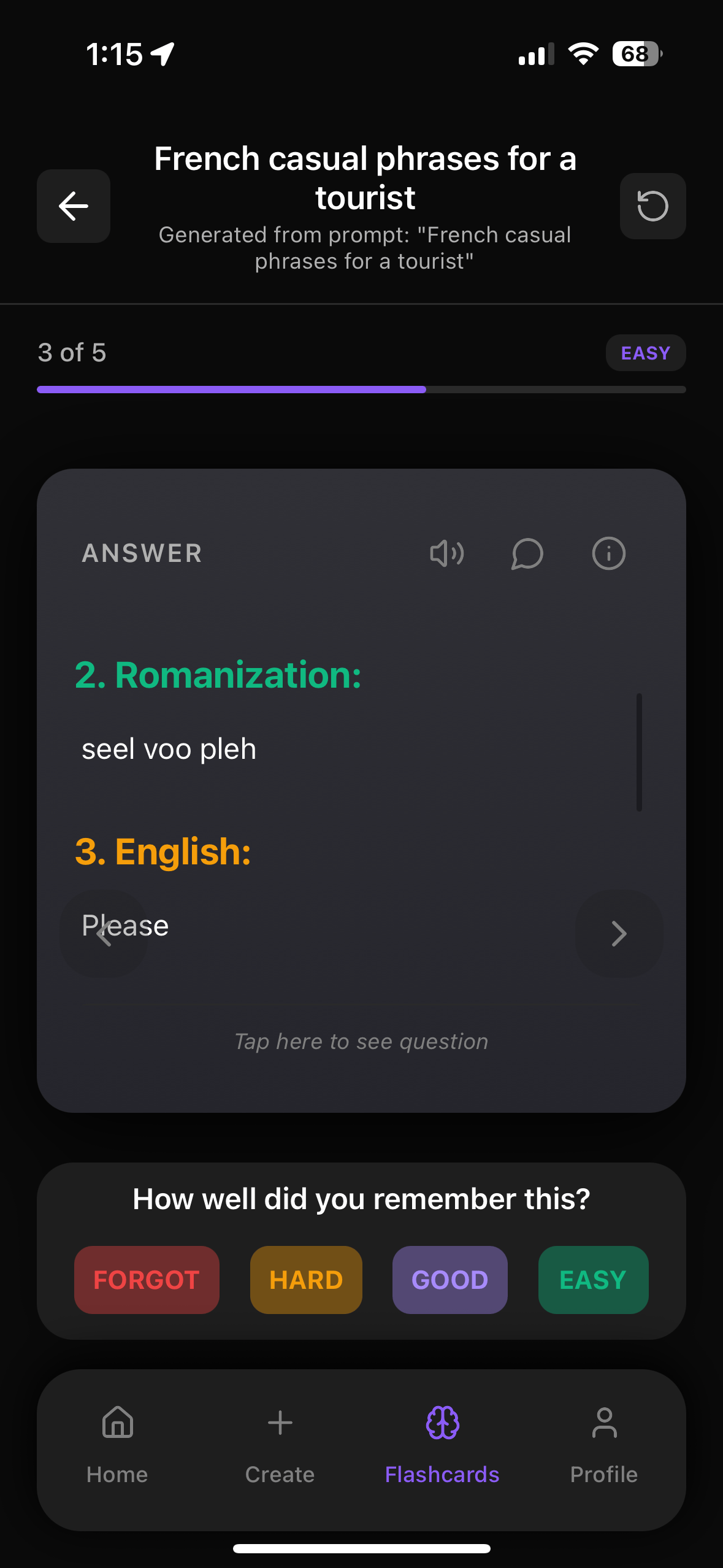
Why Speech Flashcards Are A Game-Changer (If You Actually Use Them Right)
Trying to get your head around a speech flashcards app? Let’s break it down together. You know how sometimes your brain feels overloaded with all that stuff you need to remember? That’s where these flashcards come in handy—they're like your personal memory helper. Imagine taking all that complex info and turning it into bite-sized pieces you can actually handle. The cool part is, when you use them right with stuff like active recall and spaced repetition, you’re more likely to remember stuff without your brain going into overdrive. And here’s where Flashrecall comes in. It’s like having a little sidekick that sorts through your notes and sets up your study schedule so you don’t have to! If you’re done with those awkward pauses during speeches and want to sound like you’ve got it all together, seriously, check out the full scoop in our complete guide. You’ll thank yourself later!
What Are Speech Flashcards, Really?
Speech flashcards are just small chunks of your speech turned into questions and answers.
Instead of memorizing a giant wall of text, you:
- Break it into key points, hooks, transitions, and quotes
- Turn each into a prompt (front) and answer (back)
- Practice recalling them until they feel automatic
Think of it like a script, but your brain actually remembers it instead of just reading it.
Why Flashcards Work So Well For Speeches
Three big reasons:
1. Active recall – You force your brain to pull the info out (instead of just rereading). This is one of the most proven ways to remember stuff long term.
2. Spaced repetition – Reviewing at the right time (just before you forget) makes your memory ridiculously stronger.
3. Chunking – You break a long, scary speech into tiny, manageable pieces.
Flashrecall bakes all of this in for you:
- Every flashcard session is active recall by design
- It has built-in spaced repetition and auto reminders so you don’t have to remember when to study
- You can chat with your flashcards if you’re unsure about a point and need more explanation or context
Step 1: Turn Your Speech Into Flashcards (The Smart Way)
You can use speech flashcards for:
- Class presentations
- Business pitches
- Conference talks
- Wedding speeches / toasts
- Debates
- Sermons
- Theater / acting lines
How to break your speech into cards
Here are some easy card types you can use:
Front: “What’s my opening hook?”
Back: Your first sentence or story.
Front: “Main point #1?”
Back: Short summary of that section.
Front: “How do I move from point 1 to point 2?”
Back: Your transition phrase.
Front: “What’s the quote I use to support point 2?”
Back: The exact quote or stat.
Front: “How do I close the speech?”
Back: Your final line, call to action, or summary.
With Flashrecall, you don’t even have to type everything manually if you don’t want to:
- Paste your speech text and quickly turn key lines into cards
- Import from PDFs, slides, or notes
- Use YouTube links (for speeches you’re studying or modeling)
- Or just type them manually if you like more control
All inside one app:
👉 https://apps.apple.com/us/app/flashrecall-study-flashcards/id6746757085
Step 2: Use Active Recall Instead Of Just Reading
If you’re just reading your speech over and over, you’re basically cramming.
With flashcards, you flip the process:
- Look at the front (e.g., “Main point #2?”)
- Try to say it out loud from memory
- Then flip the card and check yourself
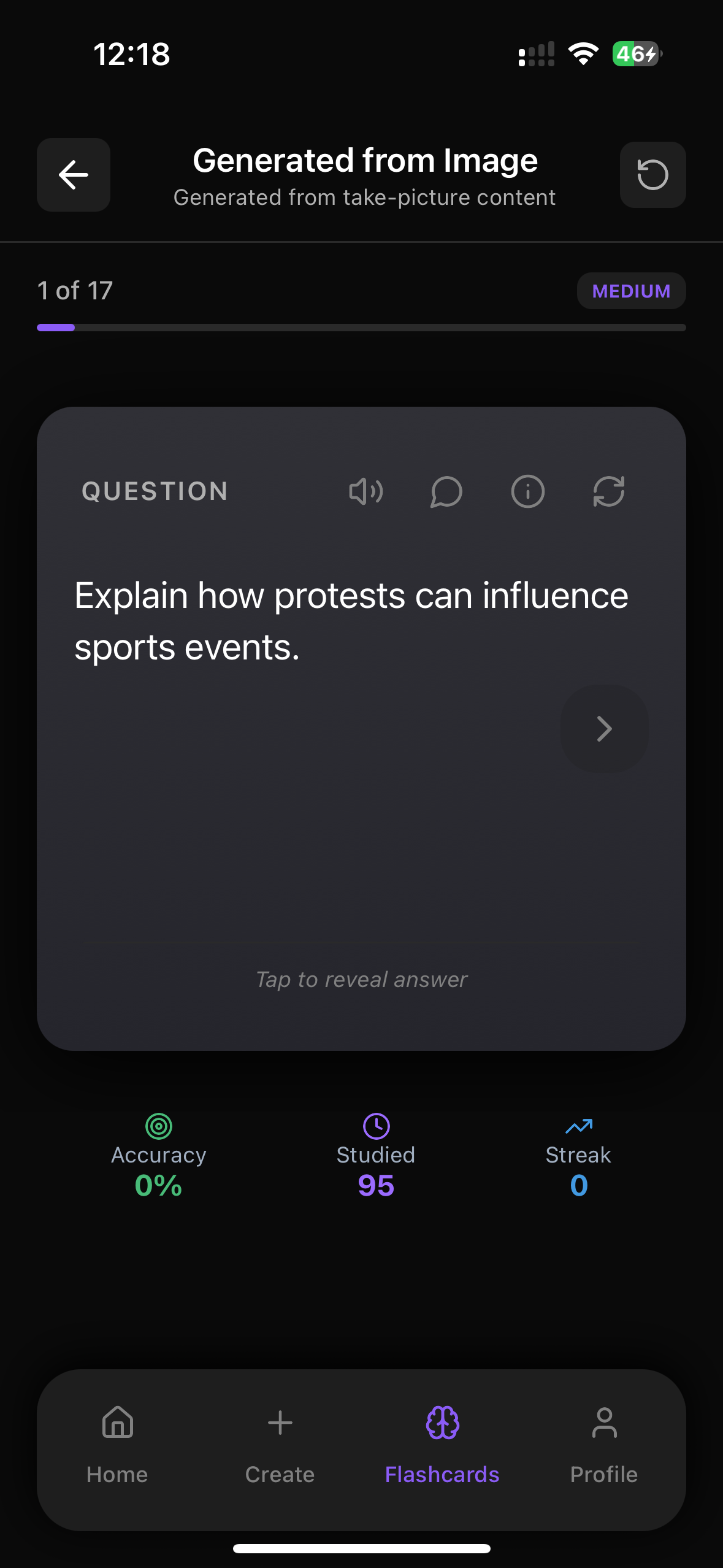
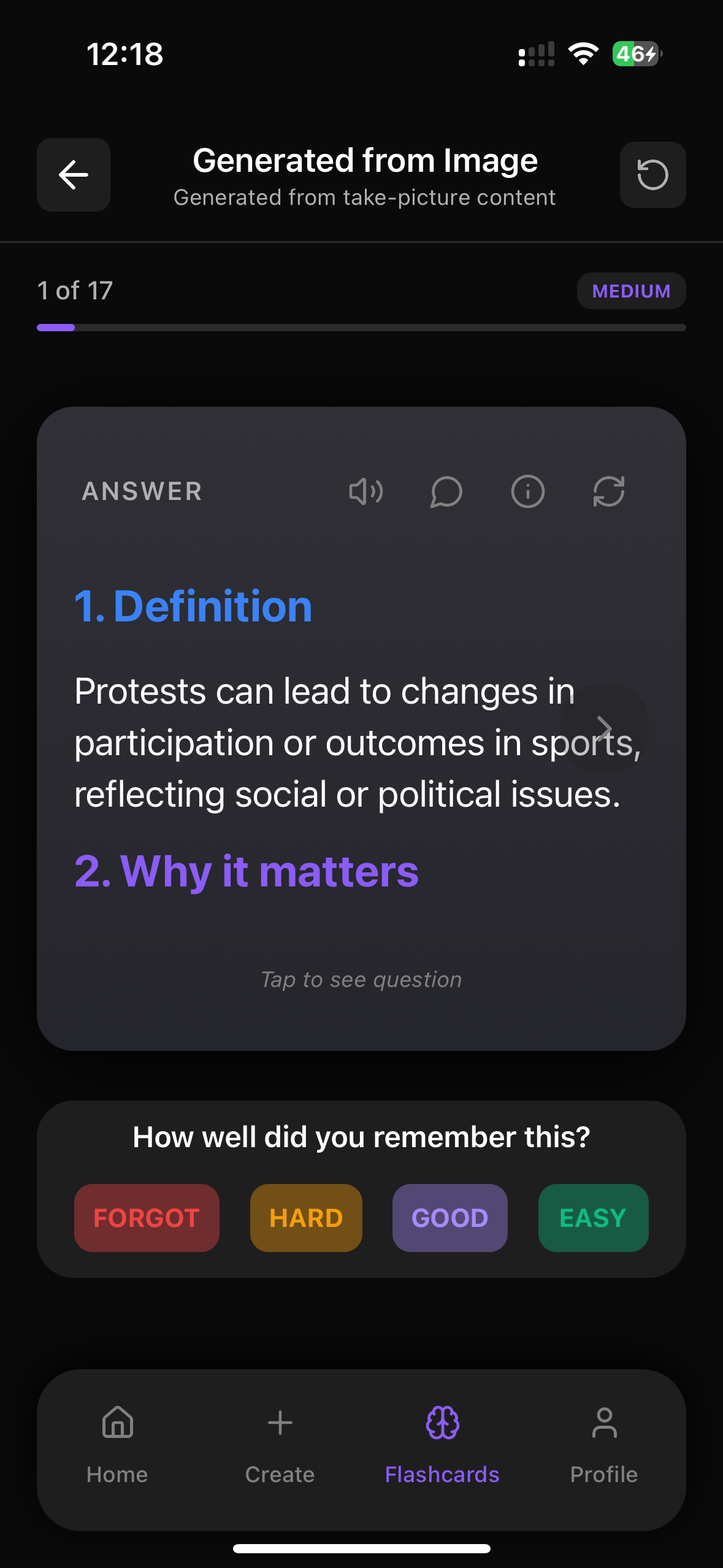
This is where Flashrecall helps:
- It shows you the prompt first, so you’re forced to think
- You tap how hard or easy it was
- It automatically schedules the next review based on that
You’re not just “going through your speech” — you’re training recall, like a muscle.
Step 3: Add Speaker Notes And Cues To Your Cards
Speeches are more than just words. You’ve also got:
- Tone
- Pauses
- Gestures
- Emphasis
You can build these into your cards.
Example:
> “Transition from problem to solution – what do I say?”
> “Now, this might sound overwhelming at first… [pause, look around] but there’s a simple way to fix it.”
Or:
> “Final line + body language”
Flashrecall automatically keeps track and reminds you of the cards you don't remember well so you remember faster. Like this :
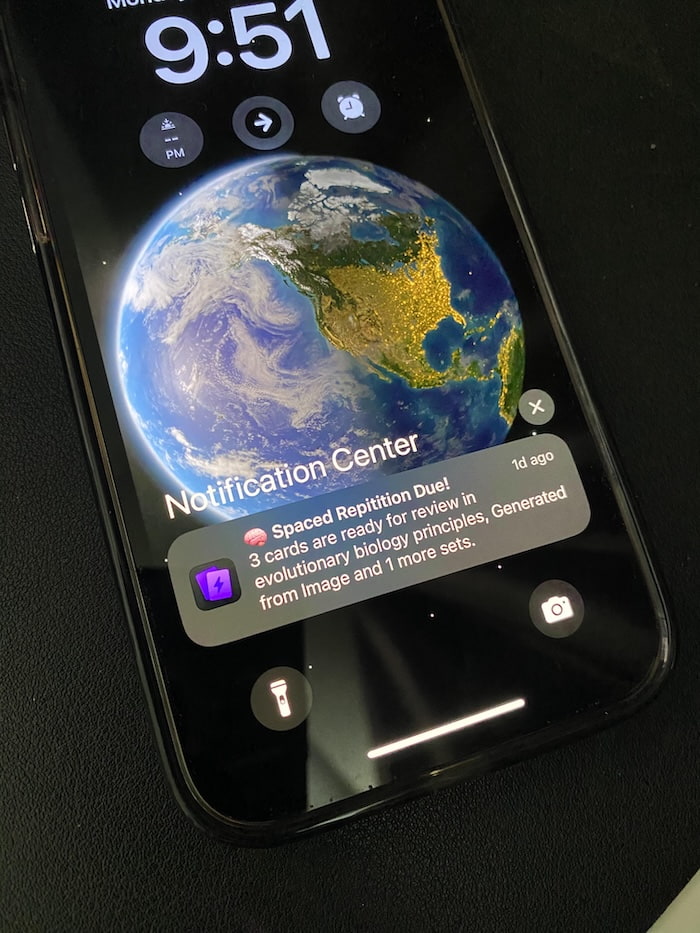
> “So the real question is… what will you do today? [step forward, open hands]”
In Flashrecall, you can:
- Add these notes to the back of the card
- Or create separate cards just for gestures and delivery cues
- Then chat with the card if you want ideas for better hooks, transitions, or examples
Step 4: Use Spaced Repetition To Lock It In (Instead Of Last-Minute Cramming)
Most people:
- Write the speech
- Ignore it
- Panic the night before
- Try to memorize everything in one sitting
That’s exactly how you forget lines on stage.
Spaced repetition flips that:
- Review a little bit each day
- Revisit cards right before you’d normally forget them
- Build super strong memory with less total time
Flashrecall does this automatically:
- Every time you review, you mark how well you remembered
- The app schedules your next review at the perfect time
- You also get study reminders, so you don’t fall off
No complicated settings, no calendars — you just open the app and it tells you what to review.
Step 5: Practice Speaking Out Loud With Your Flashcards
This part is huge for speeches.
Don’t just read the answers in your head. Do this instead:
1. Open your speech deck in Flashrecall
2. Look at the front of the card
3. Say the answer out loud like you’re on stage
4. Flip the card and check
5. Tap how well you did
This helps you:
- Get used to your own phrasing
- Smooth out awkward sentences
- Build confidence in your delivery
Because Flashrecall works offline on iPhone and iPad, you can practice literally anywhere:
- On the bus
- In bed
- In the hallway before going on stage
Step 6: Use Image, Audio, And Video For Richer Speech Practice
Some speeches aren’t just words — maybe you’ve got:
- Slides
- Diagrams
- Visual jokes
- Audio cues
Flashrecall lets you make flashcards from:
- Images – e.g., a slide screenshot as the prompt
- Audio – record yourself saying a line and quiz yourself on what comes next
- YouTube links – great if you’re studying famous speeches or learning style
- PDFs – import long scripts, notes, or lecture slides
Example card ideas:
- Front: A slide image
Back: “What story do I tell with this slide?”
- Front: Audio of your previous line
Back: “What line comes after this?”
This is insanely useful for actors, public speakers, teachers, and students who want more than just plain text.
Step 7: Fix Weak Spots With “Chat With Your Flashcards”
Sometimes you know roughly what you want to say, but it feels clumsy.
In Flashrecall, if you’re unsure about a card or want to improve it, you can:
- Chat with the flashcard to get:
- Better phrasing
- Alternative examples
- Simpler explanations
- Extra context
So if your card says:
> “Explain the main benefit of our product”
You can chat with it to get:
- Different ways to phrase it
- Shorter / longer versions
- More persuasive angles
It’s like having a tiny coach built into your speech deck.
Why Use Flashrecall Instead Of Old-School Flashcards?
You could use paper cards or random note apps, but here’s what you’d miss out on:
- ❌ No automatic spaced repetition
- ❌ No smart reminders
- ❌ No instant cards from PDFs, text, or YouTube
- ❌ No chatting with your cards for better phrasing
- ❌ Hard to manage if your speech changes
With Flashrecall, you get:
- ✅ Instant flashcards from text, images, PDFs, audio, YouTube links, or manual input
- ✅ Built-in active recall + spaced repetition
- ✅ Auto study reminders so you don’t forget to practice
- ✅ Works offline on iPhone and iPad
- ✅ Chat with your flashcards to refine your speech or understand concepts better
- ✅ Great not just for speeches but also languages, exams, school, university, medicine, business, anything
- ✅ Fast, modern, easy to use
- ✅ Free to start
Grab it here and turn your next speech into something you can deliver with zero panic:
👉 https://apps.apple.com/us/app/flashrecall-study-flashcards/id6746757085
Simple Example: Turning A Short Speech Into Flashcards
Let’s say you’re giving a 5-minute talk on “Why Sleep Matters”.
You might create cards like:
Front: “Opening hook?”
Back: “Last night, you probably lost 1–2 hours of sleep… and you have no idea what it cost you.”
Front: “Main point #1?”
Back: “Sleep is when your brain cleans itself and stores memories.”
Front: “Stat I use to shock them?”
Back: “People who sleep less than 6 hours are 13% more likely to die earlier.”
Front: “Transition to solution?”
Back: “So if sleep is this powerful, how do we actually fix it?”
Front: “Closing line?”
Back: “If you want a sharper brain, better mood, and longer life… start by going to bed 30 minutes earlier tonight.”
You put these into Flashrecall, practice daily, and let the app handle the timing.
By the time you give the talk, it feels natural — not memorized and robotic.
Final Thoughts: Speech Flashcards Are Your Secret Rehearsal Weapon
If you’re:
- Nervous about forgetting your lines
- Tired of reading off a script
- Or just want your speech to sound smooth and confident
Speech flashcards are honestly one of the easiest upgrades you can make.
And instead of juggling paper cards or clunky tools, you can just use Flashrecall to:
- Turn your speech into flashcards in minutes
- Practice with active recall and spaced repetition
- Get reminders so you actually rehearse
- Refine your wording by chatting with your cards
Try it for your next speech, presentation, or even a wedding toast:
👉 https://apps.apple.com/us/app/flashrecall-study-flashcards/id6746757085
Once you’ve done one talk this way, you’ll never want to wing it again.
Frequently Asked Questions
Is Anki good for studying?
Anki is powerful but requires manual card creation and has a steep learning curve. Flashrecall offers AI-powered card generation from your notes, images, PDFs, and videos, making it faster and easier to create effective flashcards.
What's the fastest way to create flashcards?
Manually typing cards works but takes time. Many students now use AI generators that turn notes into flashcards instantly. Flashrecall does this automatically from text, images, or PDFs.
How do I start spaced repetition?
You can manually schedule your reviews, but most people use apps that automate this. Flashrecall uses built-in spaced repetition so you review cards at the perfect time.
What is active recall and how does it work?
Active recall is the process of actively retrieving information from memory rather than passively reviewing it. Flashrecall forces proper active recall by making you think before revealing answers, then uses spaced repetition to optimize your review schedule.
Related Articles
- Voice Flashcards: The Powerful Way To Learn Hands‑Free (And Actually Remember Stuff) – Discover how to turn your voice into smart flashcards that quiz you back and boost your memory on autopilot.
- GoodNotes 5 Flashcards: Why Most Students Struggle (And the Better, Faster Alternative) – Discover a smarter way to turn notes into powerful flashcards and actually remember what you study.
- Krazy Flash Cards: 7 Powerful Ways Smart Flashcards Help You Learn Faster (Without Burning Out) – Forget clunky decks and random apps; here’s how to turn “crazy” flashcards into a simple, powerful study system that actually sticks.
Research References
The information in this article is based on peer-reviewed research and established studies in cognitive psychology and learning science.
Cepeda, N. J., Pashler, H., Vul, E., Wixted, J. T., & Rohrer, D. (2006). Distributed practice in verbal recall tasks: A review and quantitative synthesis. Psychological Bulletin, 132(3), 354-380
Meta-analysis showing spaced repetition significantly improves long-term retention compared to massed practice
Carpenter, S. K., Cepeda, N. J., Rohrer, D., Kang, S. H., & Pashler, H. (2012). Using spacing to enhance diverse forms of learning: Review of recent research and implications for instruction. Educational Psychology Review, 24(3), 369-378
Review showing spacing effects work across different types of learning materials and contexts
Kang, S. H. (2016). Spaced repetition promotes efficient and effective learning: Policy implications for instruction. Policy Insights from the Behavioral and Brain Sciences, 3(1), 12-19
Policy review advocating for spaced repetition in educational settings based on extensive research evidence
Karpicke, J. D., & Roediger, H. L. (2008). The critical importance of retrieval for learning. Science, 319(5865), 966-968
Research demonstrating that active recall (retrieval practice) is more effective than re-reading for long-term learning
Roediger, H. L., & Butler, A. C. (2011). The critical role of retrieval practice in long-term retention. Trends in Cognitive Sciences, 15(1), 20-27
Review of research showing retrieval practice (active recall) as one of the most effective learning strategies
Dunlosky, J., Rawson, K. A., Marsh, E. J., Nathan, M. J., & Willingham, D. T. (2013). Improving students' learning with effective learning techniques: Promising directions from cognitive and educational psychology. Psychological Science in the Public Interest, 14(1), 4-58
Comprehensive review ranking learning techniques, with practice testing and distributed practice rated as highly effective

FlashRecall Team
FlashRecall Development Team
The FlashRecall Team is a group of working professionals and developers who are passionate about making effective study methods more accessible to students. We believe that evidence-based learning tec...
Credentials & Qualifications
- •Software Development
- •Product Development
- •User Experience Design
Areas of Expertise
Ready to Transform Your Learning?
Start using FlashRecall today - the AI-powered flashcard app with spaced repetition and active recall.
Download on App Store