Total Quality Management Quizlet: 7 Powerful Study Hacks Most Business Students Don’t Know – Learn TQM Faster and Actually Remember It
total quality management quizlet sets feel random? Turn your own TQM notes into spaced repetition flashcards, add active recall, and actually remember Deming...
How Flashrecall app helps you remember faster. It's free
TQM Is Boring… Unless You Study It the Right Way
Total Quality Management sounds fancy, but when you’re staring at endless Quizlet sets of “Deming’s 14 points” and “Kaizen vs. Six Sigma,” your brain just checks out.
Instead of hopping between random Quizlet decks, it’s way smarter to build your own TQM system for your brain.
That’s where Flashrecall comes in:
👉 https://apps.apple.com/us/app/flashrecall-study-flashcards/id6746757085
It’s a fast, modern flashcard app that:
- Uses built-in spaced repetition (with auto reminders)
- Has active recall baked in
- Lets you instantly create cards from text, images, PDFs, YouTube, and more
- Works offline on iPhone and iPad
- And you can even chat with your flashcards when you’re stuck
If you like the idea of Quizlet for TQM, you’ll love Flashrecall because it’s basically Quizlet but actually optimized for learning deeply, not just cramming.
Let’s break down how to turn TQM from a wall of buzzwords into something you actually understand and remember.
Quizlet vs Flashrecall for TQM: What’s the Difference?
You already know how Quizlet works: search a deck, flip some cards, maybe do a quick test, move on.
That’s fine for:
- Last-minute cramming
- Memorizing a few definitions
But TQM isn’t just vocab; it’s:
- Principles (customer focus, continuous improvement, process approach…)
- Frameworks (PDCA cycle, Deming’s 14 points, ISO 9001 concepts)
- Tools (Pareto charts, cause-and-effect diagrams, control charts)
- Case studies (how companies actually apply TQM)
To really get TQM, you need:
1. Active recall – forcing your brain to pull info out, not just re-read it
2. Spaced repetition – seeing hard concepts more often, easy ones less
3. Context and examples – not just “What is TQM?” but “How would you apply it?”
Quizlet can help with flashcards, but Flashrecall is built around those learning principles from the start.
Why Flashrecall Works Better for TQM Than Just Quizlet
With Flashrecall:
- You don’t just flip cards; you review at the perfect time with spaced repetition.
- You get study reminders, so you don’t forget to review your TQM sets.
- You can turn your lecture slides, PDFs, or screenshots into cards instantly.
- You can chat with your deck to clarify concepts like “What’s the difference between TQM and Six Sigma?”
And of course, you can still create cards manually if you like full control.
Grab it here (it’s free to start):
👉 https://apps.apple.com/us/app/flashrecall-study-flashcards/id6746757085
1. Turn TQM Notes and Slides Into Flashcards Instantly
Instead of hunting for a “good TQM Quizlet deck” (and hoping it’s accurate), use your own class material.
With Flashrecall you can create cards from:
- PDFs (lecture notes, ISO 9001 summaries, TQM handouts)
- Images (photos of whiteboards, lecture slides, textbook pages)
- Text (copy-paste from your LMS or textbook)
- YouTube links (TQM explanation videos, Deming lectures)
- Typed prompts (e.g., “Make flashcards about Deming’s 14 points”)
Example:
You upload your TQM lecture PDF into Flashrecall. It auto-generates cards like:
- Q: What is the main focus of Total Quality Management (TQM)?
- Q: Name three key principles of TQM.
You can then edit, tweak, or add your own examples. Way faster than typing everything from scratch.
2. Build Smart TQM Decks (Not Just Random Definition Cards)
Here’s a simple way to structure your TQM decks inside Flashrecall:
Deck 1: TQM Basics & Definitions
- “What is Total Quality Management (TQM)?”
- “Define ‘continuous improvement’ in TQM.”
- “What is customer focus in TQM?”
Deck 2: TQM Principles & Philosophies
- “List the 8 principles of TQM.”
- “Explain the ‘process approach’ principle with an example.”
- “How does employee involvement support TQM?”
Deck 3: Deming, Juran, Crosby & Friends
- “What are Deming’s 14 points?” (break into multiple cards)
- “What is Juran’s Trilogy?”
- “What is Crosby’s concept of ‘zero defects’?”
Deck 4: Tools & Techniques
- “What is a Pareto chart used for in TQM?”
- “What is a cause-and-effect (Ishikawa) diagram?”
- “Explain the PDCA cycle (Plan-Do-Check-Act).”
Deck 5: TQM vs Other Approaches
- “TQM vs Six Sigma – key differences.”
- “How does TQM relate to ISO 9001?”
- “Why do some companies fail to implement TQM effectively?”
You can build these manually in Flashrecall, or just paste your notes in and let it help generate the first draft of cards.
3. Use Active Recall the Right Way (Not Just Mindless Flipping)
A lot of people use Quizlet like this:
Flip card → read → “Yeah I kinda know that” → move on.
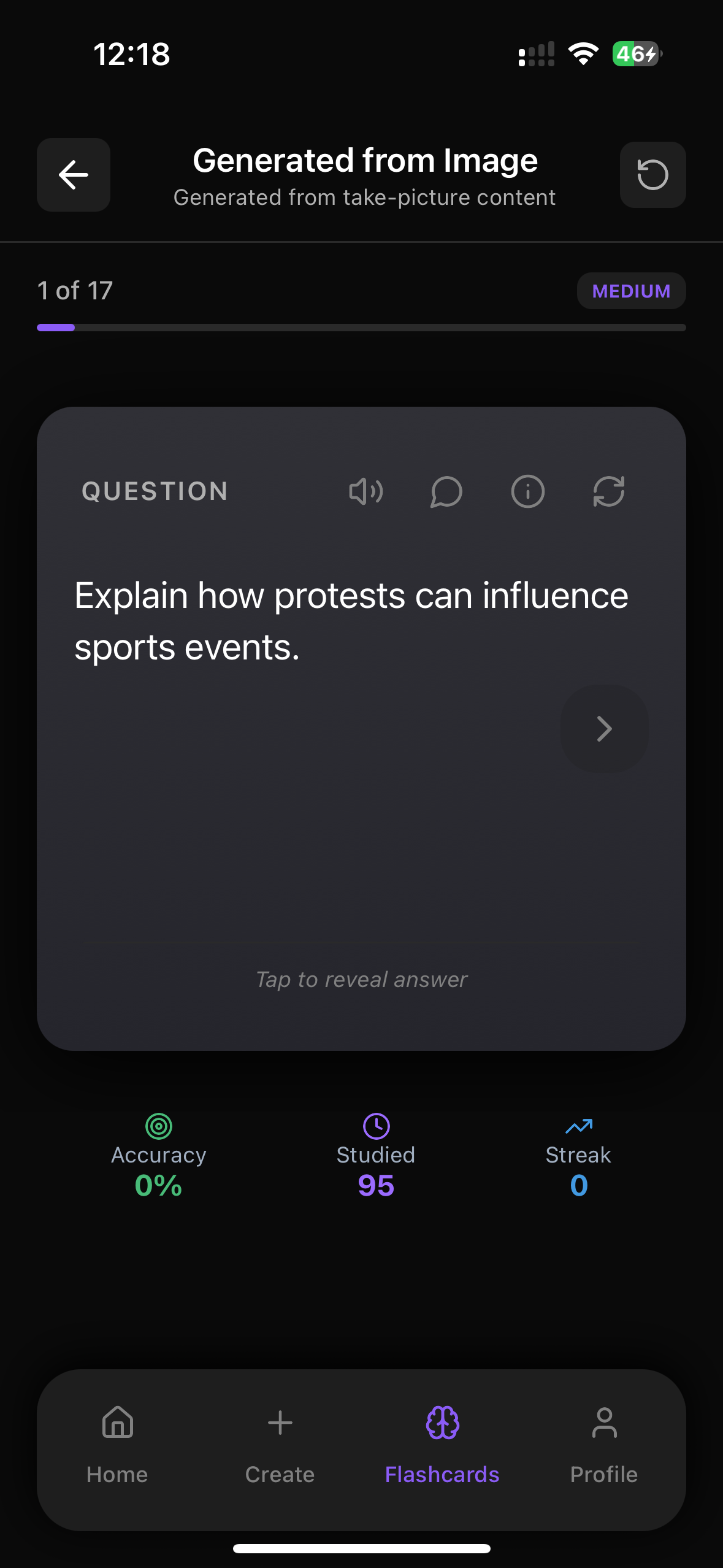
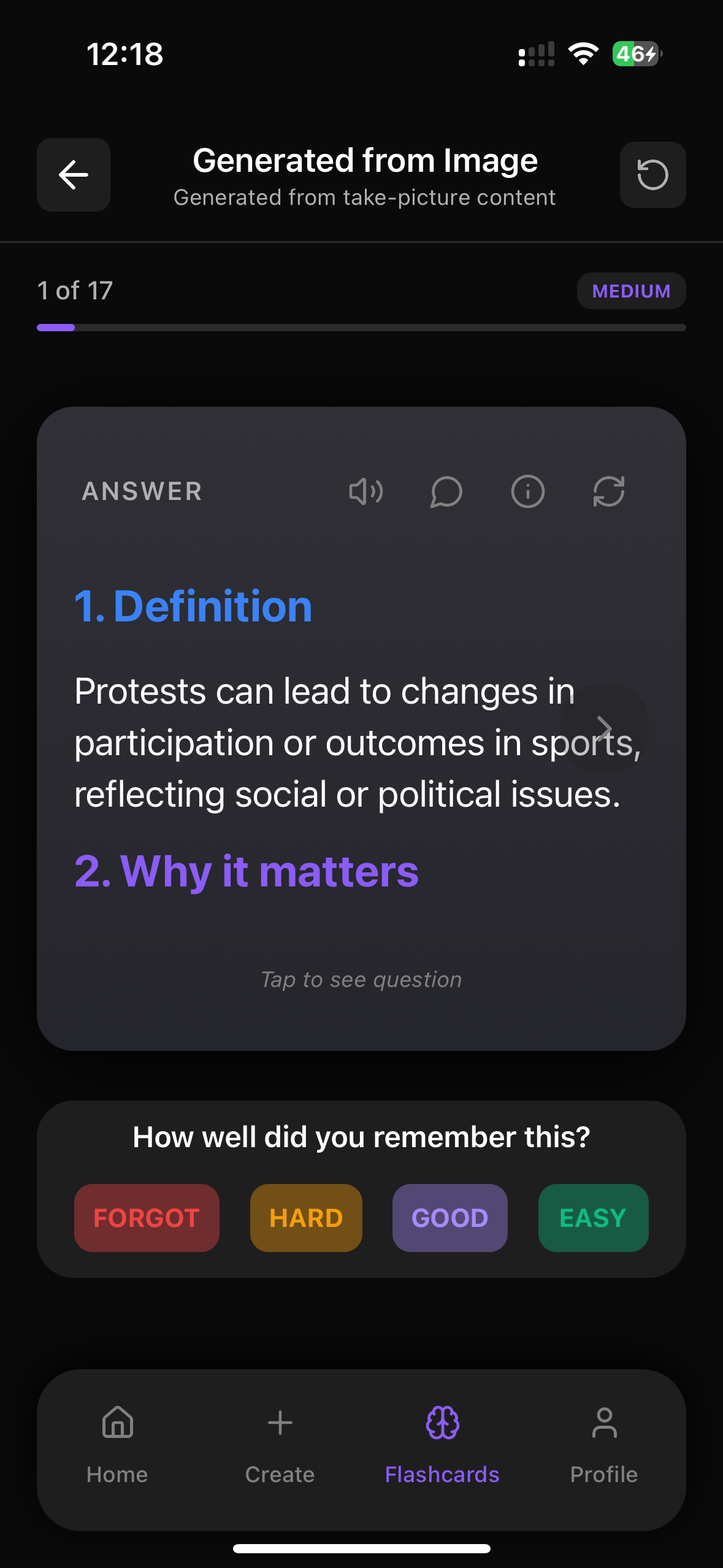
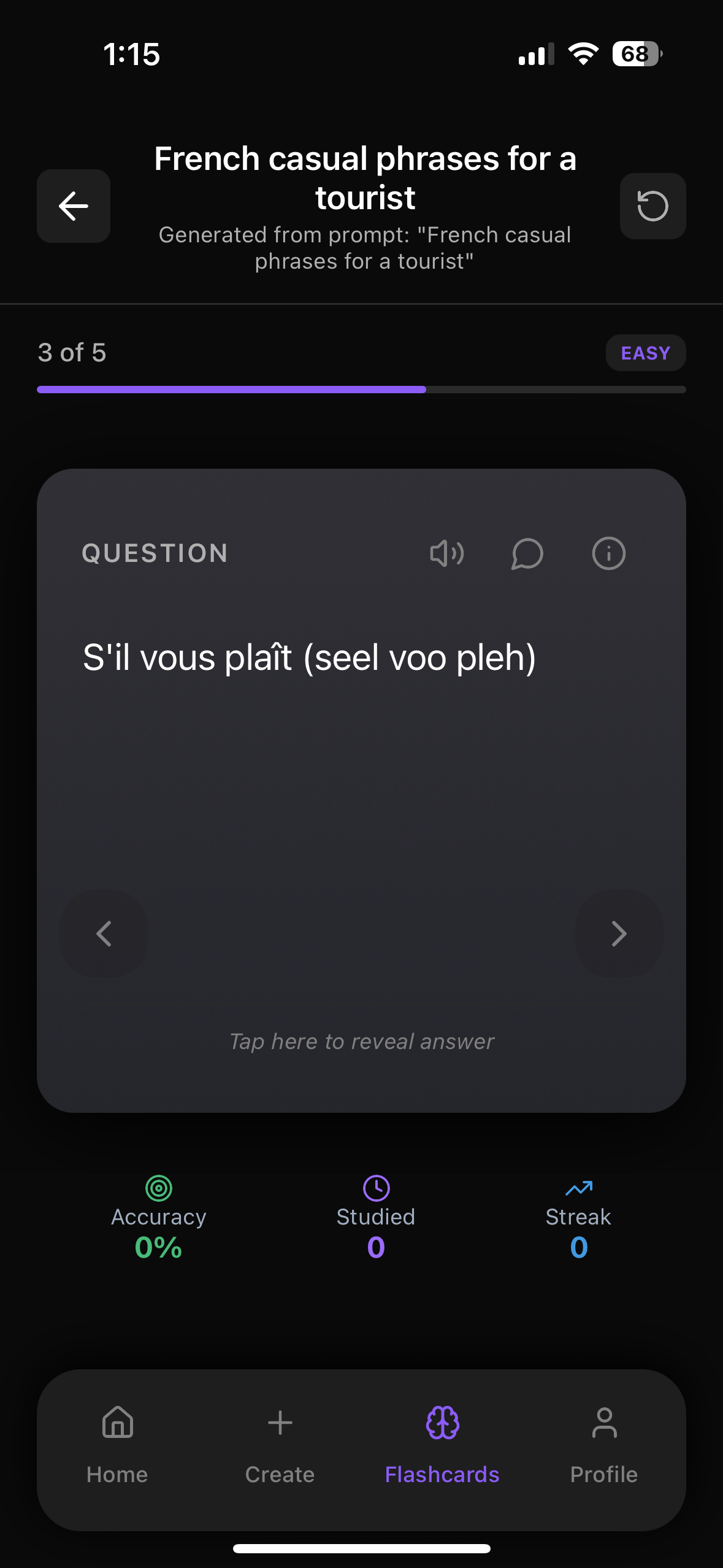
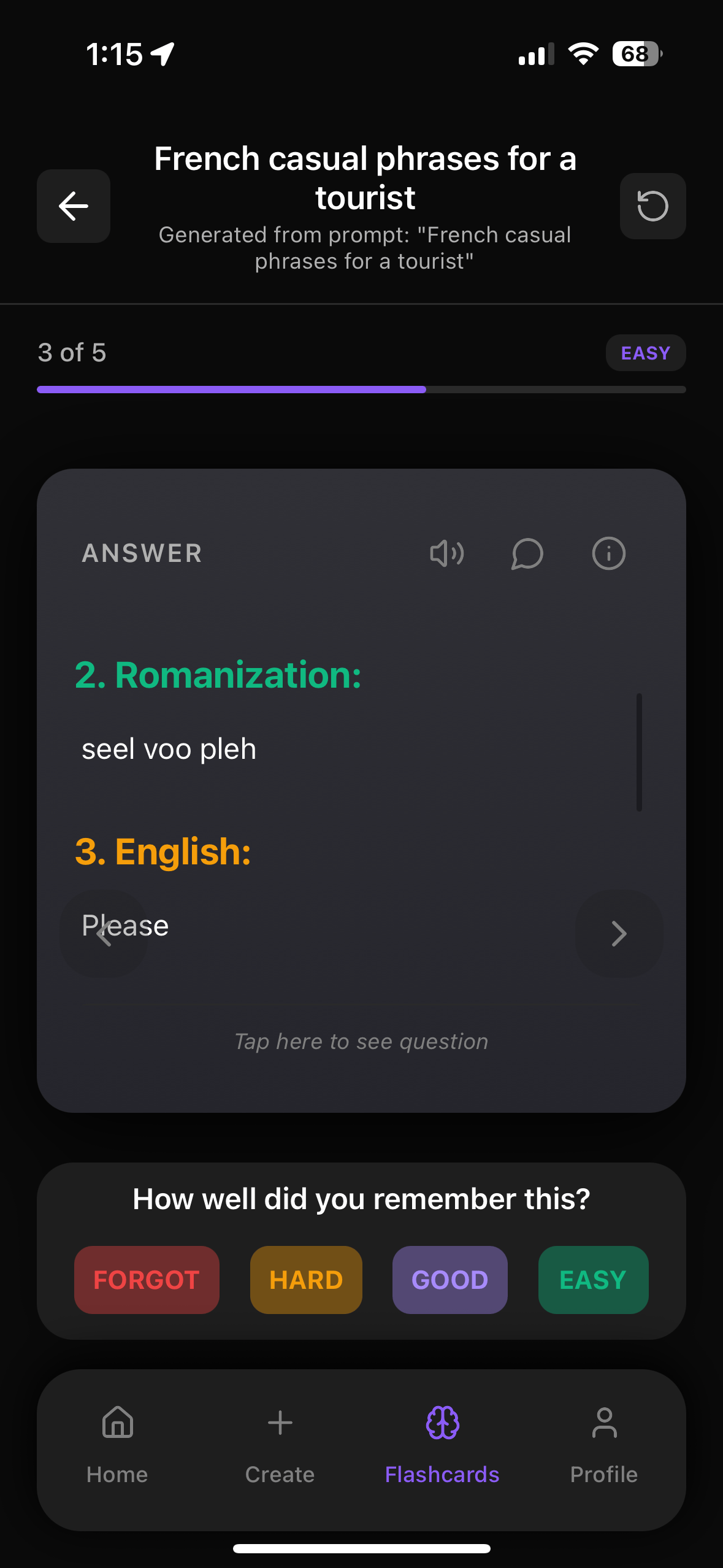
Flashrecall automatically keeps track and reminds you of the cards you don't remember well so you remember faster. Like this :
That’s not active recall. That’s just… reading.
With Flashrecall, try this instead:
1. Hide the answer with your hand or by looking away.
2. Say the answer out loud or in your head.
3. Then reveal and rate how well you knew it.
Because Flashrecall has active recall built in, it’s always pushing you to remember before showing you the answer. That’s how your brain actually builds strong memory.
Example TQM active recall question:
> Q: “Explain the PDCA cycle and give a simple example.”
Don’t just think “I know this.”
Actually say:
- Plan – identify a problem and plan a change
- Do – implement the change
- Check – measure results
- Act – standardize if successful, or adjust
Then check your card and see what you missed.
4. Let Spaced Repetition Handle the Timing for You
TQM exams usually require you to remember:
- Lists (Deming’s 14 points, TQM principles)
- Diagrams (PDCA, cause-and-effect, quality circles)
- Comparisons (TQM vs traditional management)
If you review everything randomly like on many Quizlet sets, you:
- Over-review easy stuff
- Under-review hard stuff
- Forget half of it by exam week
Flashrecall fixes that with built-in spaced repetition:
- Hard cards show up more often
- Easy cards get pushed further into the future
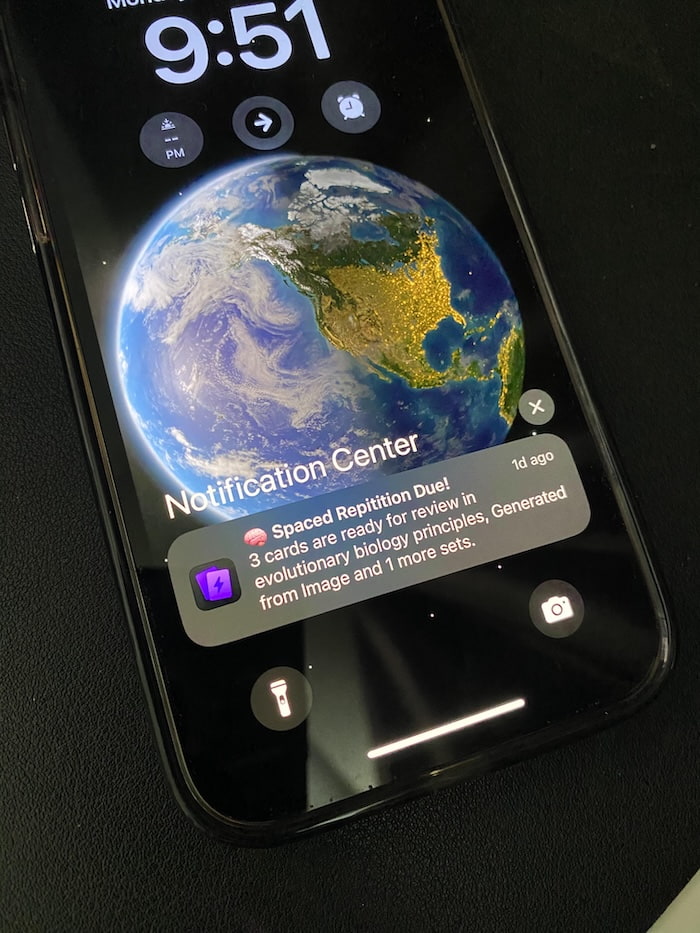
- You get automatic study reminders so you don’t fall behind
You just open the app, and it tells you exactly what to study today. No planning, no guessing.
5. Turn TQM Case Studies Into Powerful Scenario Cards
Professors love TQM case study questions like:
> “A manufacturing company is facing repeated product defects. How could TQM principles be applied to solve this problem?”
You can build scenario cards in Flashrecall to practice this.
Example card:
- Q: A call center has many customer complaints about long wait times. Using TQM principles, what steps could the company take to improve quality?
- Customer focus: gather data on customer expectations and complaints
- Process approach: map the call handling process
- Continuous improvement: identify bottlenecks and test improvements
- Employee involvement: ask agents for suggestions
- Use tools like Pareto charts to find the main causes of delay
These types of cards train you to apply TQM, not just recite definitions.
6. Use the “Chat With Your Flashcards” Trick When You’re Confused
This is where Flashrecall really leaves Quizlet behind.
If you’re stuck on something like:
- “I still don’t really get Deming’s 14 points in simple terms”
- “How is TQM different from just ‘good management’?”
You can chat with your flashcards in Flashrecall.
You might ask:
- “Explain Deming’s 14 points like I’m 15.”
- “Give me a real-world example of continuous improvement in a restaurant.”
- “How does PDCA relate to TQM in practice?”
This turns your deck into a mini tutor, not just a static set of cards.
7. Build a Quick TQM Study Routine (That You’ll Actually Stick To)
Here’s a simple, realistic routine using Flashrecall:
- Open Flashrecall
- Do your due reviews (spaced repetition)
- Add 3–5 new TQM cards from today’s lecture, slides, or textbook
- Add a few scenario/case study cards
- Use the chat feature to clarify one confusing concept
- Filter your deck to focus on:
- Deming’s 14 points
- TQM principles
- Tools (Pareto, Ishikawa, PDCA)
- Practice explaining each concept out loud as if teaching a class
That’s it. No 3-hour cramming sessions needed. Just consistent, small sessions with smart review.
How to Get Started With Flashrecall for TQM Today
Here’s a simple step-by-step plan:
1. Download Flashrecall (free to start):
👉 https://apps.apple.com/us/app/flashrecall-study-flashcards/id6746757085
2. Create a TQM deck
- Name it something like: “TQM – Exam Prep”
3. Import your existing stuff
- Upload PDFs, screenshots of slides, or copy-paste notes
- Let Flashrecall help generate cards, then edit as needed
4. Set study reminders
- Turn on notifications so you get a gentle nudge to review
5. Review a little every day
- Let spaced repetition handle the timing
- Add new cards as you cover new chapters
6. Use chat when stuck
- Ask your deck to break down tricky topics in simpler language
Final Thoughts: You Don’t Need 10 TQM Quizlet Sets
You don’t need to jump between random “Total Quality Management Quizlet” decks, hoping they match your exam.
You need:
- The right concepts (from your own course)
- In flashcards that make sense to you
- Reviewed with spaced repetition and active recall
- With a little help when you’re confused
That’s exactly what Flashrecall is built for.
If you’re serious about actually understanding TQM (and not just memorizing buzzwords the night before), try using Flashrecall for a week and see how much more sticks.
👉 Download it here and turn TQM into something you can actually remember:
https://apps.apple.com/us/app/flashrecall-study-flashcards/id6746757085
Frequently Asked Questions
Is Quizlet good for studying?
Quizlet helps with basic reviewing, but its active recall tools are limited. If you want proper spacing and strong recall practice, tools like Flashrecall automate the memory science for you so you don't forget your notes.
What's the fastest way to create flashcards?
Manually typing cards works but takes time. Many students now use AI generators that turn notes into flashcards instantly. Flashrecall does this automatically from text, images, or PDFs.
How do I start spaced repetition?
You can manually schedule your reviews, but most people use apps that automate this. Flashrecall uses built-in spaced repetition so you review cards at the perfect time.
What is active recall and how does it work?
Active recall is the process of actively retrieving information from memory rather than passively reviewing it. Flashrecall forces proper active recall by making you think before revealing answers, then uses spaced repetition to optimize your review schedule.
How can I study more effectively for this test?
Effective exam prep combines active recall, spaced repetition, and regular practice. Flashrecall helps by automatically generating flashcards from your study materials and using spaced repetition to ensure you remember everything when exam day arrives.
Related Articles
- Digital Citizenship Quizlet: 7 Powerful Study Upgrades Most Students Don’t Know About – Learn Smarter, Stay Safer Online, And Actually Remember It All
- General Psychology Final Exam Quizlet: 7 Powerful Study Hacks Most Students Don’t Know – Stop Mindless Scrolling And Actually Remember The Material
- Social Psychology Final Exam Quizlet: 7 Proven Study Tricks Most Students Don’t Know – Stop Cramming and Start Actually Remembering What You Study
Research References
The information in this article is based on peer-reviewed research and established studies in cognitive psychology and learning science.
Cepeda, N. J., Pashler, H., Vul, E., Wixted, J. T., & Rohrer, D. (2006). Distributed practice in verbal recall tasks: A review and quantitative synthesis. Psychological Bulletin, 132(3), 354-380
Meta-analysis showing spaced repetition significantly improves long-term retention compared to massed practice
Carpenter, S. K., Cepeda, N. J., Rohrer, D., Kang, S. H., & Pashler, H. (2012). Using spacing to enhance diverse forms of learning: Review of recent research and implications for instruction. Educational Psychology Review, 24(3), 369-378
Review showing spacing effects work across different types of learning materials and contexts
Kang, S. H. (2016). Spaced repetition promotes efficient and effective learning: Policy implications for instruction. Policy Insights from the Behavioral and Brain Sciences, 3(1), 12-19
Policy review advocating for spaced repetition in educational settings based on extensive research evidence
Karpicke, J. D., & Roediger, H. L. (2008). The critical importance of retrieval for learning. Science, 319(5865), 966-968
Research demonstrating that active recall (retrieval practice) is more effective than re-reading for long-term learning
Roediger, H. L., & Butler, A. C. (2011). The critical role of retrieval practice in long-term retention. Trends in Cognitive Sciences, 15(1), 20-27
Review of research showing retrieval practice (active recall) as one of the most effective learning strategies
Dunlosky, J., Rawson, K. A., Marsh, E. J., Nathan, M. J., & Willingham, D. T. (2013). Improving students' learning with effective learning techniques: Promising directions from cognitive and educational psychology. Psychological Science in the Public Interest, 14(1), 4-58
Comprehensive review ranking learning techniques, with practice testing and distributed practice rated as highly effective

FlashRecall Team
FlashRecall Development Team
The FlashRecall Team is a group of working professionals and developers who are passionate about making effective study methods more accessible to students. We believe that evidence-based learning tec...
Credentials & Qualifications
- •Software Development
- •Product Development
- •User Experience Design
Areas of Expertise
Ready to Transform Your Learning?
Start using FlashRecall today - the AI-powered flashcard app with spaced repetition and active recall.
Download on App Store