Using Anki – The Easiest Way to Study Faster
Using Anki can be tricky for beginners, but Flashrecall simplifies flashcard creation and spaced repetition, so you spend less time setting up and more time.
How Flashrecall app helps you remember faster. It's free
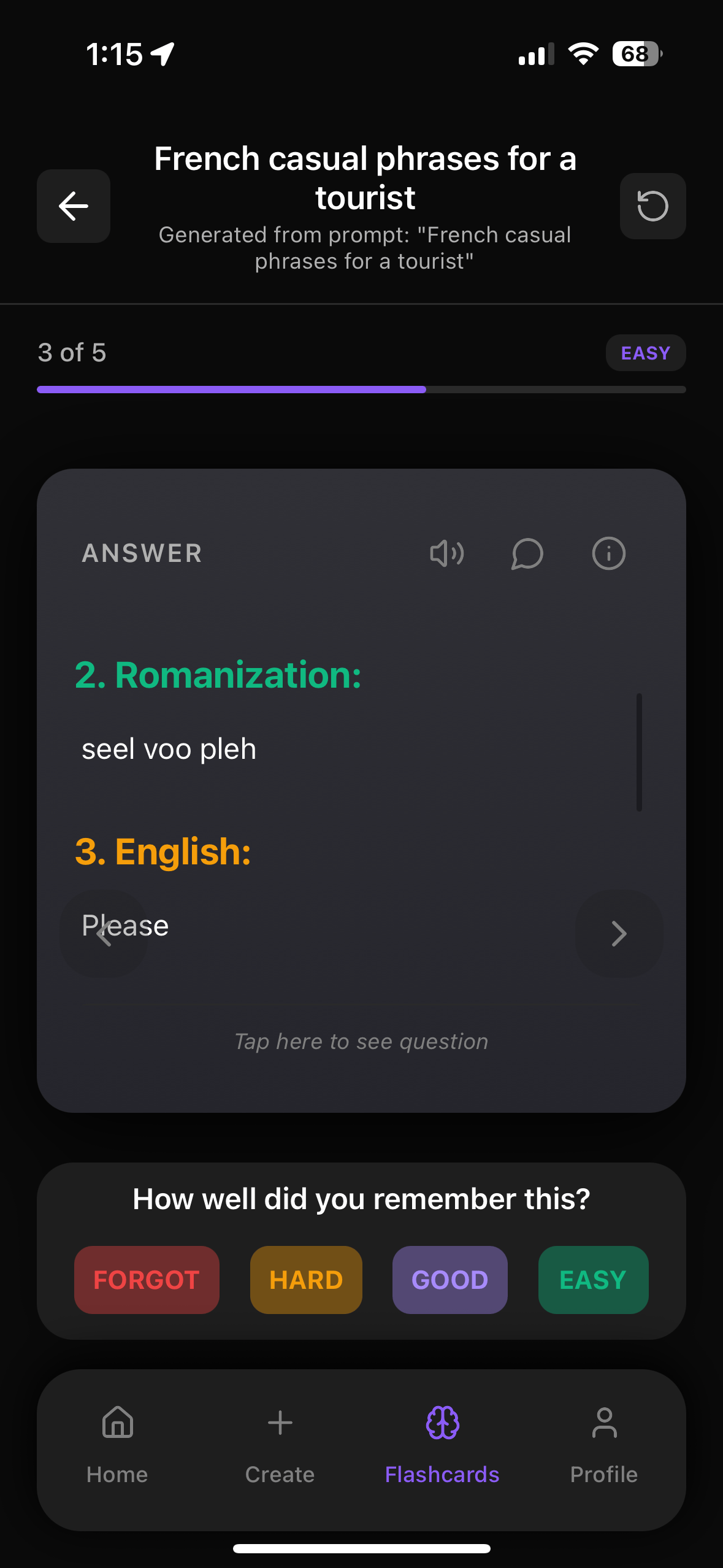
If you’ve been looking into study apps, you’ve definitely heard of Anki. It’s one of the most popular flashcard tools, especially for medical students, language learners, and anyone who wants spaced repetition.
But Anki can be confusing when you’re just starting out — lots of buttons, settings, card types, add-ons, syncing quirks… and sometimes you spend more time setting up than actually studying.
Here’s a simple breakdown of how people use Anki — and how Flashrecall gives you the same power but with a much easier workflow.
How People Usually Use Anki
Anki is based around two key ideas:
- Active recall → you try to remember before flipping the card
- Spaced repetition (SRS) → Anki shows you cards at increasing intervals
Most learners use Anki by:
1. Creating decks
2. Typing each card manually
3. Adding images, audio, or formatting
4. Reviewing cards every day
5. Rating each card (Again/Hard/Good/Easy)
6. Letting the algorithm schedule next reviews
It works, but the setup can feel slow — especially if you have a lot of material.
Where Anki Struggles for Beginners
If you're new to flashcards, here are the pain points most people bump into:
- The interface feels old-school
- Making cards takes a long time
- Add-ons are confusing
- Syncing across devices can be messy
- Reviewing can build up into very large queues
- Importing notes/slides/textbooks isn’t fast
And this is exactly why Flashrecall exists.
Flashrecall: A Simpler, Faster Alternative
Flashrecall
https://apps.apple.com/us/app/flashrecall-study-flashcards/id6746757085
gives you everything people love about Anki — active recall, spaced repetition, rating cards — but without the complicated setup.
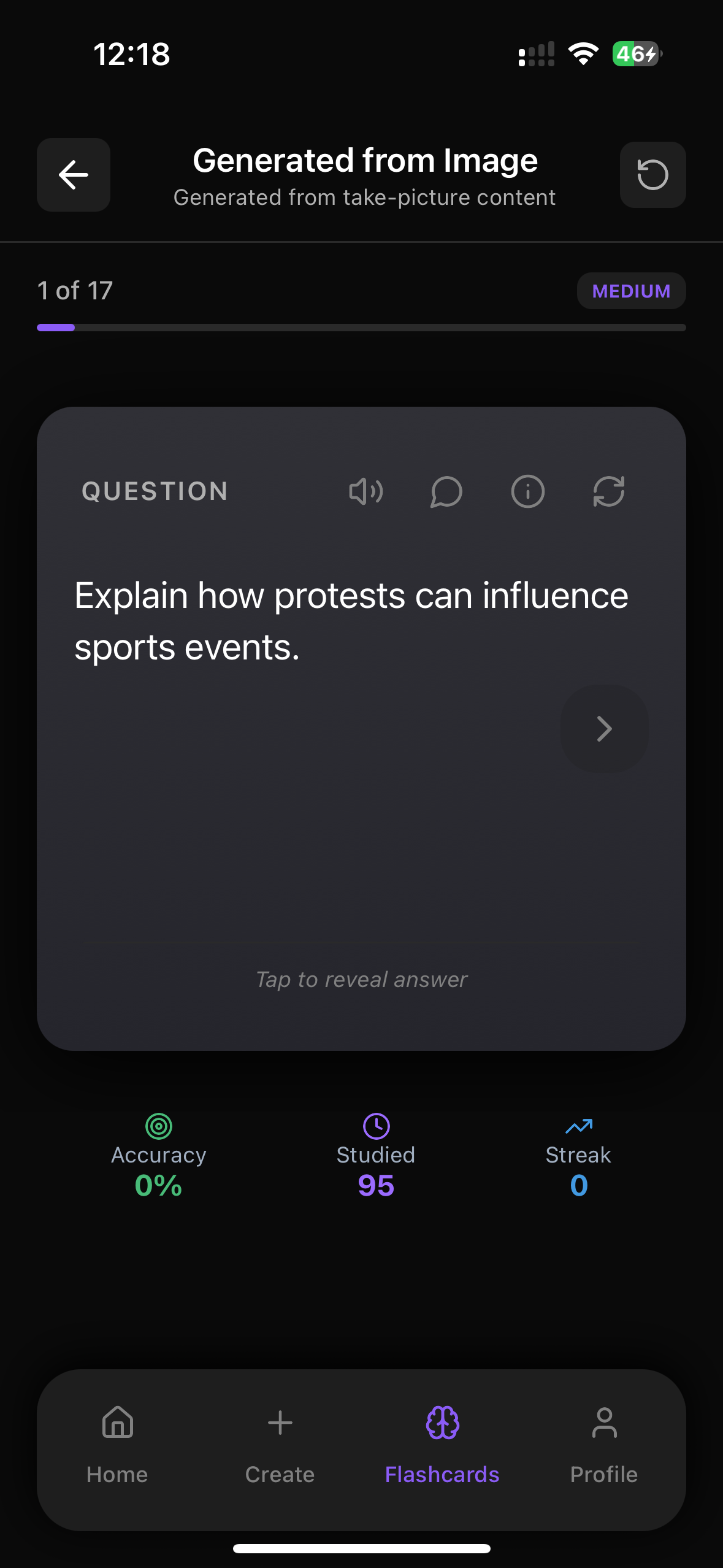
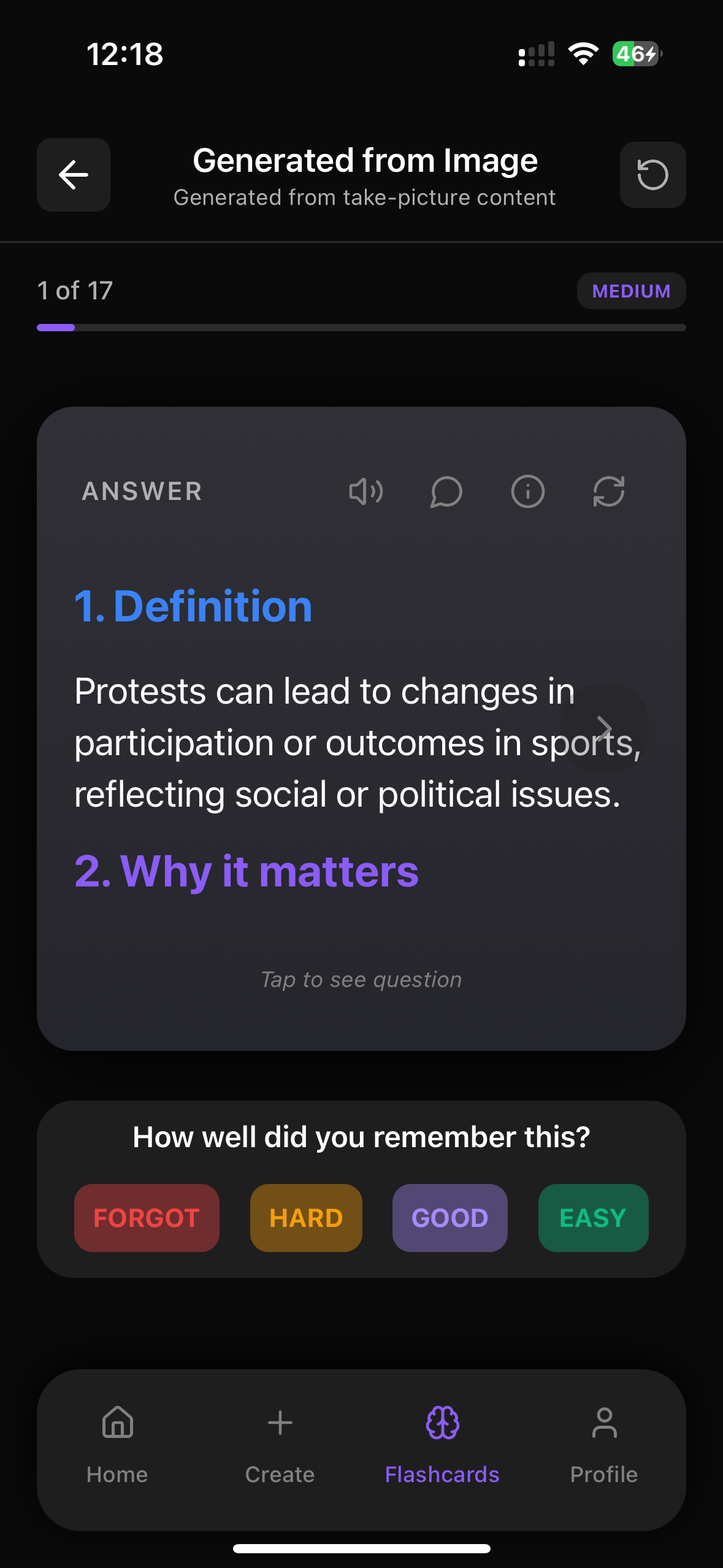
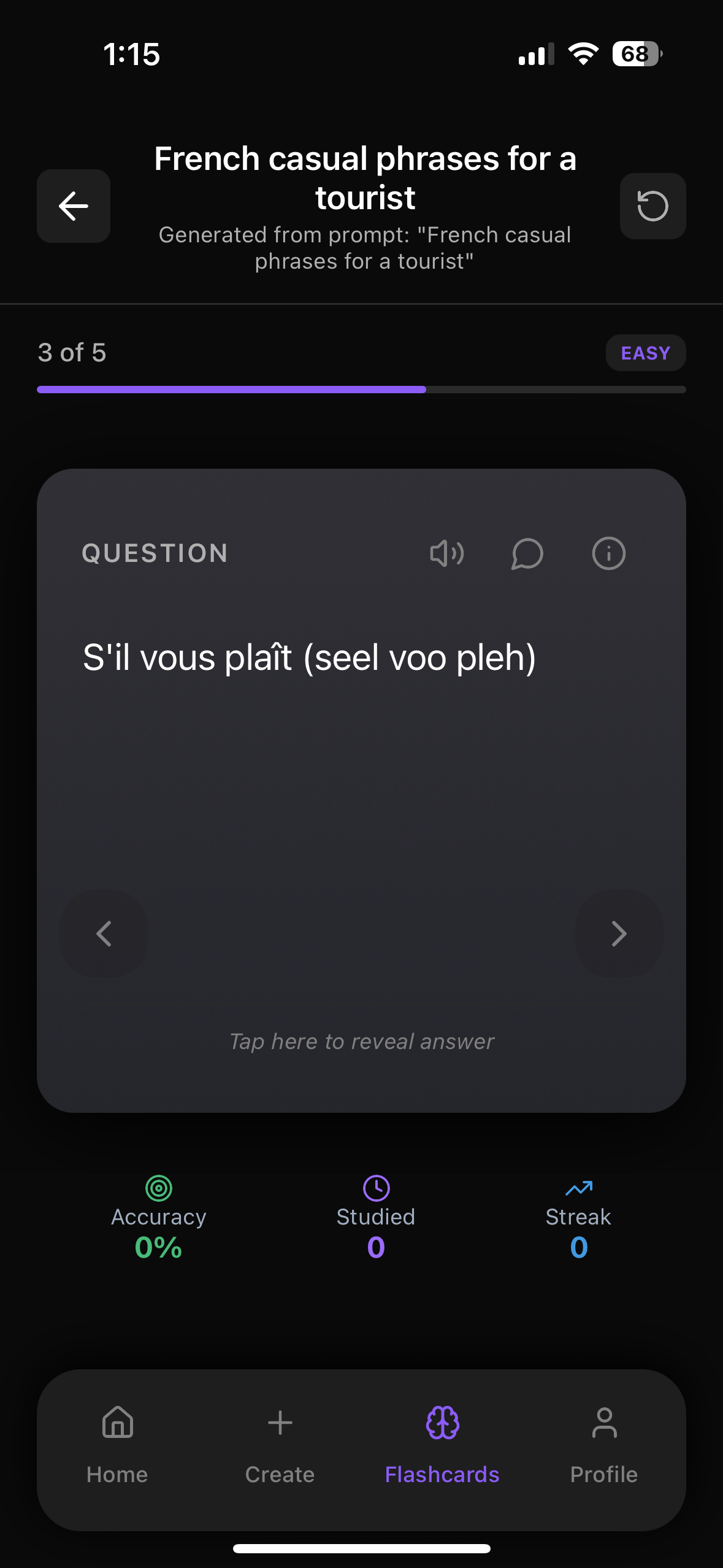
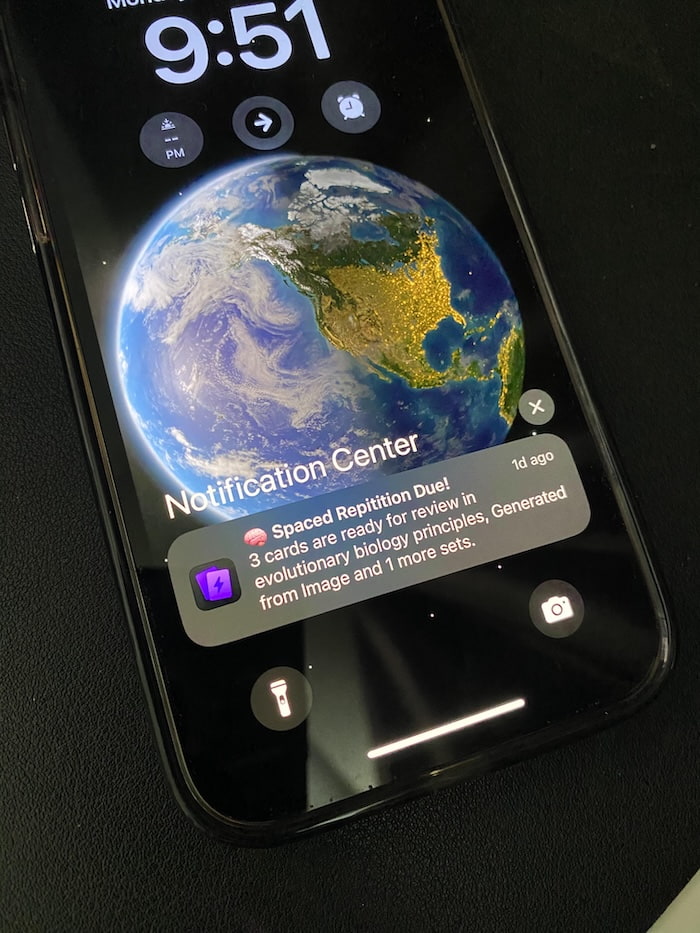
Flashrecall automatically keeps track and reminds you of the cards you don't remember well so you remember faster. Like this :
Here’s what Flashrecall does better:
You can create cards from:
- Images
- Text
- PDFs
- Audio
- YouTube links
- Typed prompts
No more typing card after card.
You don’t have to adjust settings or install add-ons.
Flashrecall automatically shows each card right before you forget it.
You open the app → tap study → you’re learning in seconds.
You’ll get notified at the perfect time to study so you stay consistent.
Perfect whether you’re studying languages, school subjects, university, medicine, business — anything.
Smooth across all Apple devices.
Example: How You’d Study Using Flashrecall
Let’s say you’re studying Psychology:
1. Upload your lecture PDF
2. Flashrecall automatically generates flashcards from it
3. You rate each card as Easy / Good / Hard
4. The app schedules your next reviews automatically
5. You get a reminder when it’s time to study
6. Memory gets stronger with every review
You don’t worry about settings.
You don’t tweak algorithms.
You just… study.
So Should You Use Anki or Flashrecall?
It depends on your style:
- Use Anki if you love customisation, add-ons, and don’t mind spending time setting things up.
- Use Flashrecall if you want something fast, simple, modern, and effortless — especially if you make flashcards from notes, slides, images, or videos.
Most students want speed and convenience.
That’s exactly where Flashrecall shines.
If you want, I can also write you a comparison article: Anki vs Flashrecall – Which One Is Better for Studying?
Related Articles
- Master Anatomy with 100 Key Concepts: Study Tips Using Anki
- Using Anki: The Easiest Way to Study Faster With Smart Flashcards & Spaced Repetition
- Anki – What It Is and How Flashrecall Anki Helps You Learn Faster With Flashcards and Spaced Repetition
- Master Active Recall with Anki and FlashRecall: Study Smarter
- Anki Learning The Easiest Way to Study Faster With Smart Flashcards & Spaced Repetition- Anki Guides Hub
Frequently Asked Questions
Is Anki good for studying?
Anki is powerful but requires manual card creation and has a steep learning curve. Flashrecall offers AI-powered card generation from your notes, images, PDFs, and videos, making it faster and easier to create effective flashcards.
What's the fastest way to create flashcards?
Manually typing cards works but takes time. Many students now use AI generators that turn notes into flashcards instantly. Flashrecall does this automatically from text, images, or PDFs.
How do I start spaced repetition?
You can manually schedule your reviews, but most people use apps that automate this. Flashrecall uses built-in spaced repetition so you review cards at the perfect time.
What is active recall and how does it work?
Active recall is the process of actively retrieving information from memory rather than passively reviewing it. Flashrecall forces proper active recall by making you think before revealing answers, then uses spaced repetition to optimize your review schedule.
What's the best way to learn vocabulary?
Research shows that combining flashcards with spaced repetition and active recall is highly effective. Flashrecall automates this process, generating cards from your study materials and scheduling reviews at optimal intervals.
Research References
The information in this article is based on peer-reviewed research and established studies in cognitive psychology and learning science.
Cepeda, N. J., Pashler, H., Vul, E., Wixted, J. T., & Rohrer, D. (2006). Distributed practice in verbal recall tasks: A review and quantitative synthesis. Psychological Bulletin, 132(3), 354-380
Meta-analysis showing spaced repetition significantly improves long-term retention compared to massed practice
Carpenter, S. K., Cepeda, N. J., Rohrer, D., Kang, S. H., & Pashler, H. (2012). Using spacing to enhance diverse forms of learning: Review of recent research and implications for instruction. Educational Psychology Review, 24(3), 369-378
Review showing spacing effects work across different types of learning materials and contexts
Kang, S. H. (2016). Spaced repetition promotes efficient and effective learning: Policy implications for instruction. Policy Insights from the Behavioral and Brain Sciences, 3(1), 12-19
Policy review advocating for spaced repetition in educational settings based on extensive research evidence

FlashRecall Team
FlashRecall Development Team
The FlashRecall Team is a group of working professionals and developers who are passionate about making effective study methods more accessible to students. We believe that evidence-based learning tec...
Credentials & Qualifications
- •Software Development
- •Product Development
- •User Experience Design
Areas of Expertise
Ready to Transform Your Learning?
Start using FlashRecall today - the AI-powered flashcard app with spaced repetition and active recall.
Download on App Store