USMLE Flashcards: The Ultimate Proven System To Remember Everything Before Exam Day – Most Med Students Ignore These Simple Flashcard Tricks
USMLE flashcards only help if they’re clinical, brutal, and built on spaced repetition. See how to turn UWorld, First Aid and videos into cards in minutes.
How Flashrecall app helps you remember faster. It's free
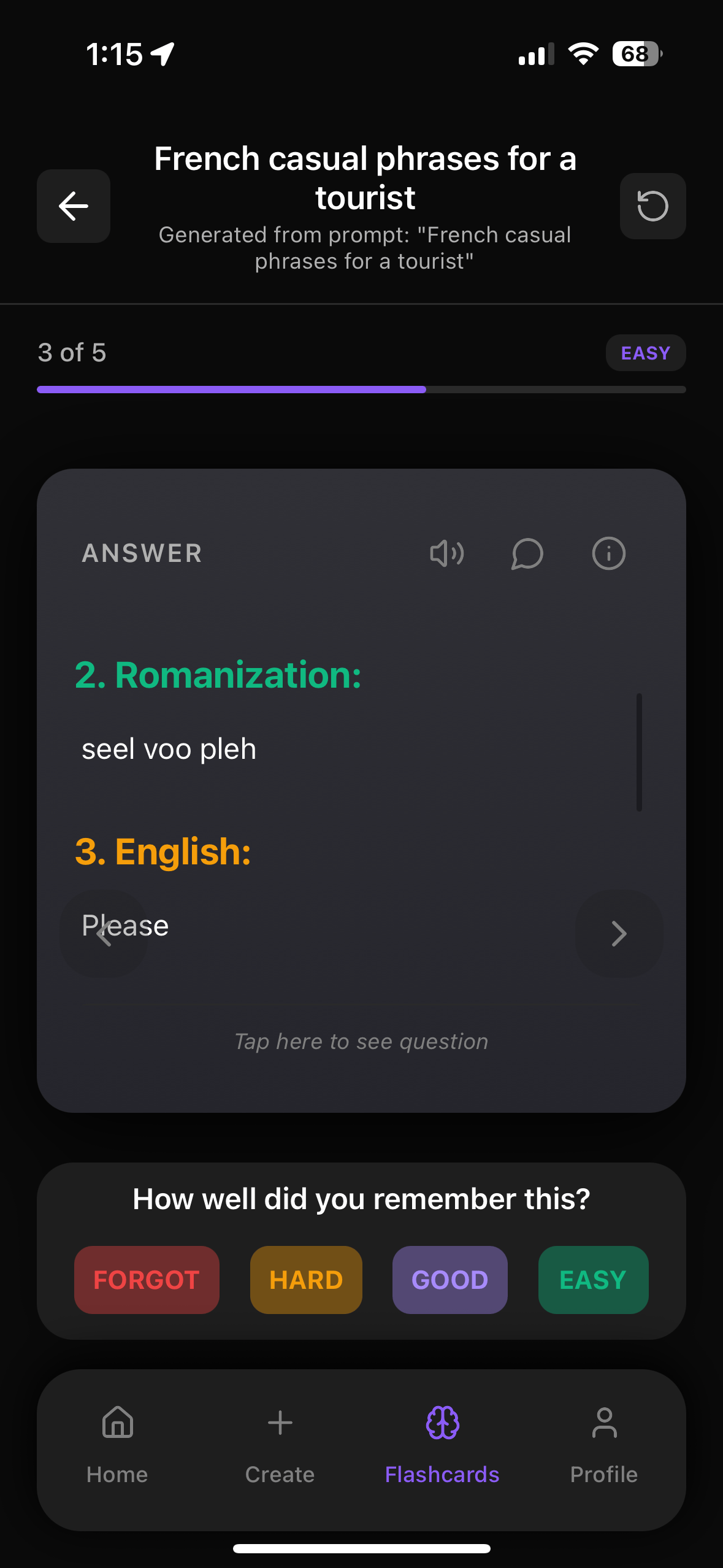
Why USMLE Flashcards Can Make Or Break Your Score
If you’re serious about crushing the USMLE, flashcards aren’t optional — they’re the backbone of actually remembering what you’ve studied.
You can read First Aid 10 times, grind question banks, watch all the videos… but if you don’t have a solid way to pull info out of your brain on demand, it just doesn’t stick.
That’s where a good flashcard system comes in — and honestly, this is exactly why I like using Flashrecall for USMLE stuff:
👉 https://apps.apple.com/us/app/flashrecall-study-flashcards/id6746757085
It’s like having an Anki-style engine, but:
- way faster to make cards
- way less clunky
- and actually built for people who don’t want to spend 2 hours “organizing decks” instead of studying.
Let’s walk through how to use flashcards properly for USMLE and how to set it up in Flashrecall so you’re not wasting time.
What Makes a “USMLE-Ready” Flashcard?
USMLE flashcards are a bit different from your basic vocab cards. They need to be:
- Clinical → not “What is hyperthyroidism?” but “23-year-old woman with weight loss, heat intolerance, and exophthalmos – what’s the most likely diagnosis?”
- One idea per card → short, focused, and brutal
- Recall-based → you should be forced to think, not recognize
In Flashrecall, this works perfectly because the app is built around active recall + spaced repetition by default. You don’t have to set that up manually — it just does it.
Why Flashrecall Works So Well For USMLE
Here’s how Flashrecall fits into a USMLE study routine without making your life harder:
1. You Can Turn Almost Anything Into Flashcards Instantly
USMLE content comes from everywhere: UWorld, Boards & Beyond, Pathoma, First Aid, random PDFs your school sends at 2am…
Flashrecall lets you create cards from almost any source:
- Images – screenshot a UWorld explanation or a First Aid table, drop it in, and generate cards from it.
- Text – paste in a long explanation and let Flashrecall turn it into multiple Q&A cards.
- PDFs – upload sections of lecture notes or review books and pull cards from them.
- YouTube links – watching a pharm or pathology video? You can generate flashcards from it.
- Typed prompts – just manually type your own cards if you like full control.
- Audio – record a quick explanation or concept and make cards from that.
This is huge because you don’t have time to handcraft every single card during dedicated. Flashrecall basically handles the boring part so you can focus on learning.
Download it here if you want to try it while you read:
👉 https://apps.apple.com/us/app/flashrecall-study-flashcards/id6746757085
2. Built-In Spaced Repetition So You Don’t Forget Anything
You already know spaced repetition is king for USMLE. The problem is remembering to actually do it.
Flashrecall has:
- Automatic spaced repetition – cards come back right before you’re about to forget them.
- Study reminders – you get nudged to review, so you don’t accidentally ghost your decks for a week.
- Works offline – you can review on the bus, in the hospital elevator, or hiding in a call room.
You just open the app, hit study, and it serves you the right cards at the right time. No settings rabbit hole, no plugins, no “did I set my intervals right?”
3. Active Recall Is Baked In
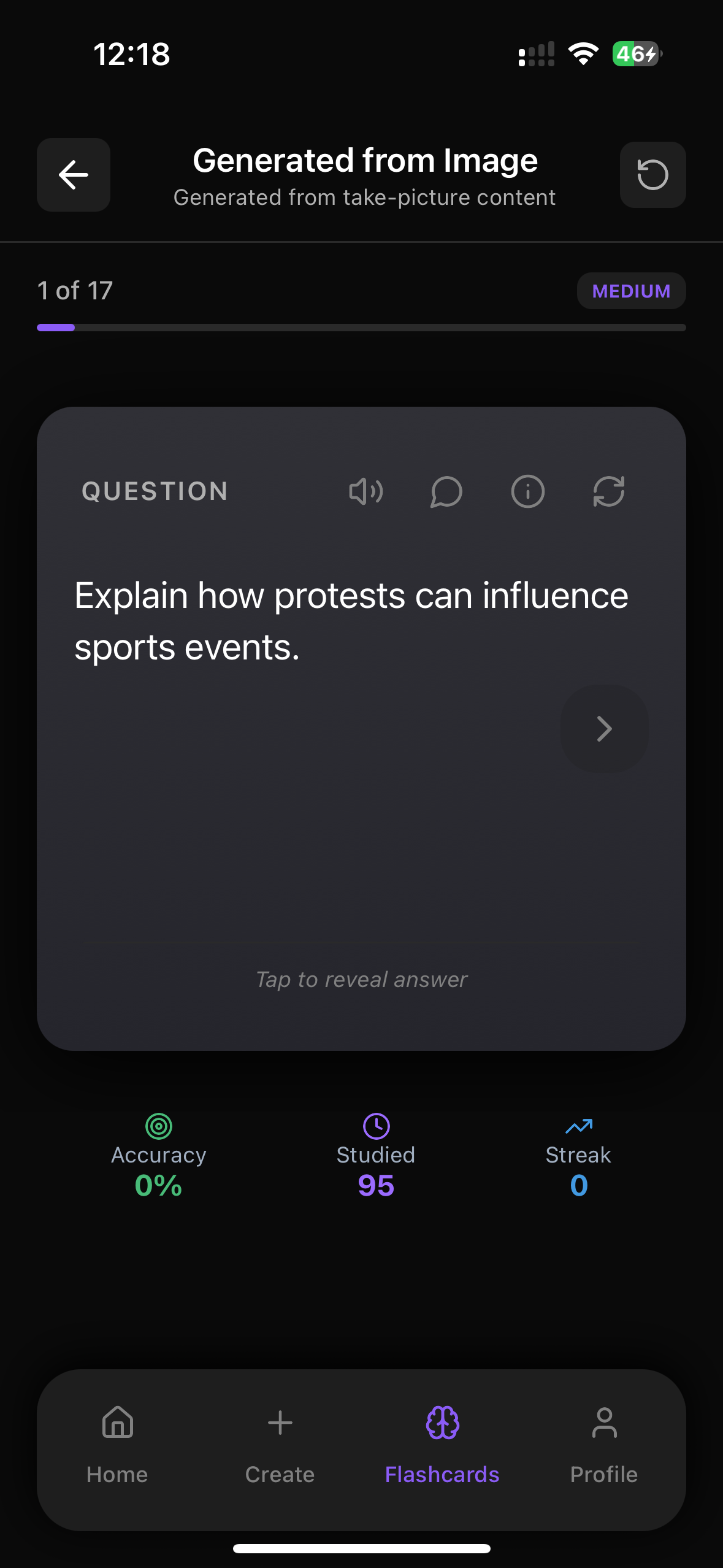
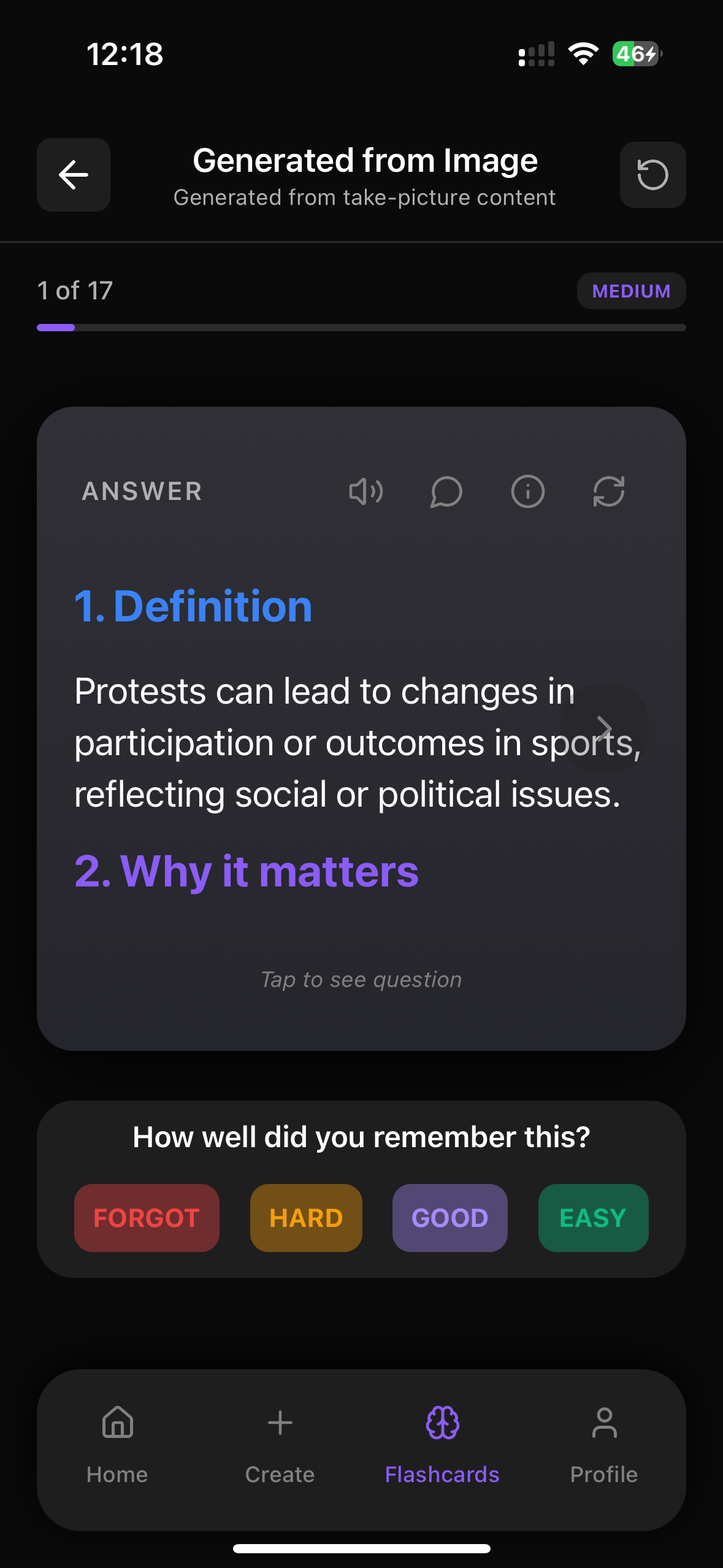
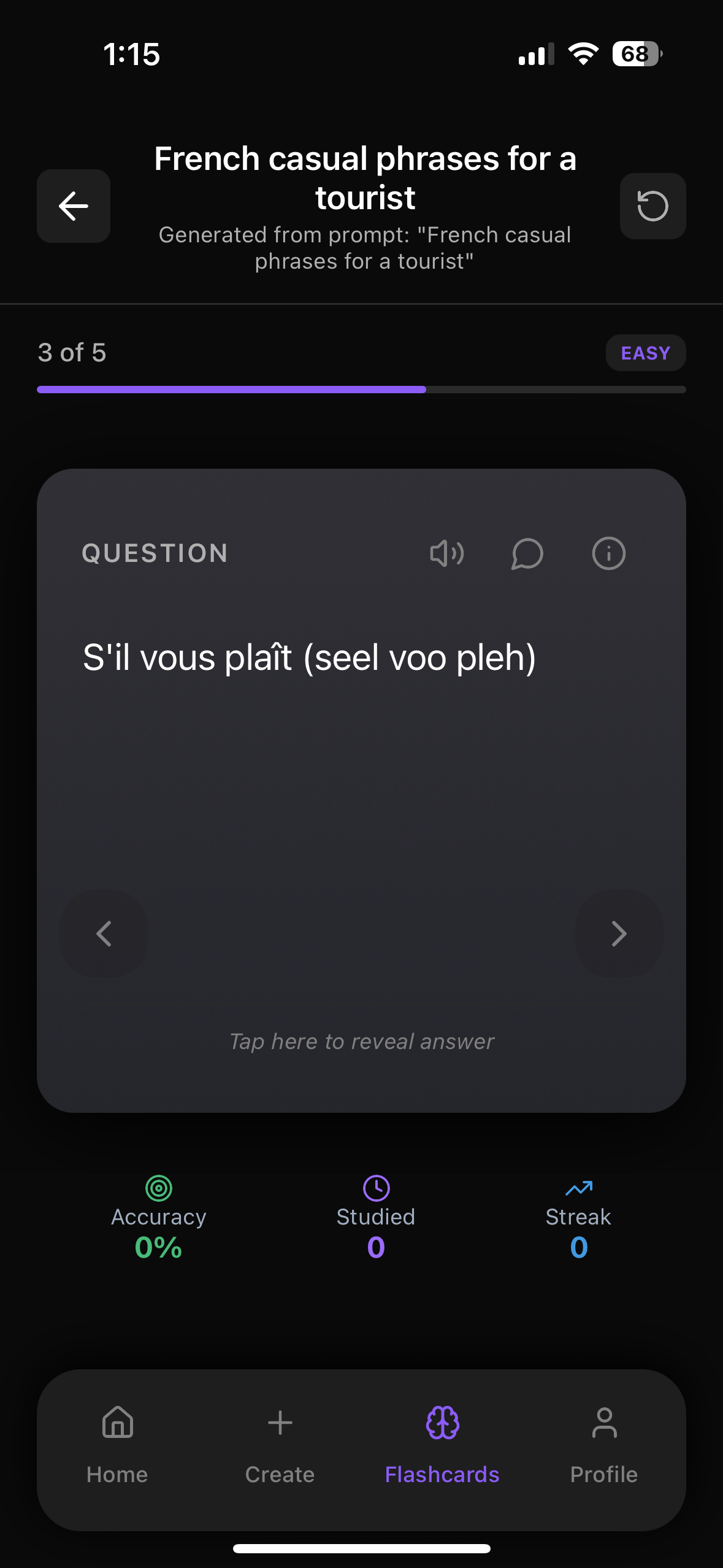
The entire study flow in Flashrecall is built around active recall:
1. You see the question or prompt.
2. You answer from memory (no hints, no MCQ choices).
3. You reveal the answer.
4. You rate how well you knew it.
The algorithm adjusts when to show it again based on your performance. That’s what makes your brain USMLE-ready — not just recognizing the right answer from a list.
You can even chat with the flashcard if you’re unsure about something. For example:
- “Explain this concept like I’m 10.”
- “Give me another example of this pathology.”
- “Why is this wrong in this context?”
It’s like having a tiny tutor inside every card.
How To Build USMLE Flashcards Without Burning Out
Here’s a simple system you can copy.
Step 1: Use Your Question Bank As Your Main Source
Every time you do UWorld, Amboss, or NBME questions:
- Miss a question?
- Guess and get lucky?
- Read an explanation that makes you go “ohhhh”?
→ That’s flashcard material.
In Flashrecall you can:
- Screenshot the question/explanation.
- Import it as an image.
- Let the app help you generate cards from it.
- Or quickly type the key points yourself.
- Front:
65-year-old man with chronic smoking history, hypercalcemia, low PTH. Most likely lung cancer subtype?
- Back:
Squamous cell carcinoma of the lung – produces PTHrP → hypercalcemia, low PTH.
Flashrecall automatically keeps track and reminds you of the cards you don't remember well so you remember faster. Like this :
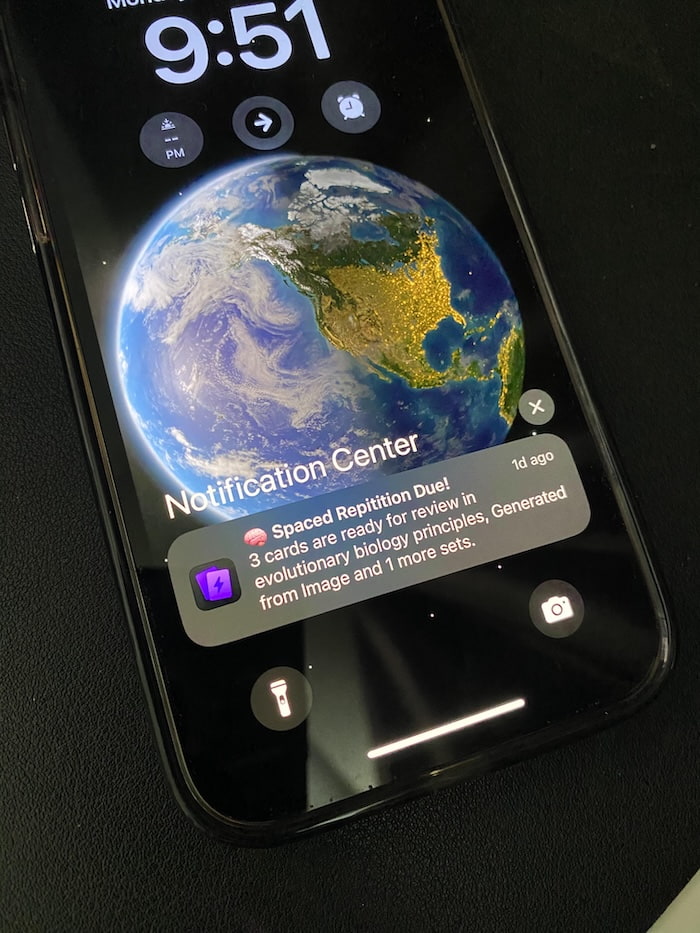
One concept. One pattern. USMLE loves this.
Step 2: Turn High-Yield Tables Into Cards
First Aid tables and pharm charts are gold but impossible to memorize by just staring at them.
In Flashrecall you can:
1. Screenshot the table.
2. Import it as an image.
3. Generate flashcards from it or manually build them.
- Front:
Side effects of aminoglycosides? (Think mnemonic)
- Back:
“NNOT”: Nephrotoxicity, Neuromuscular blockade, Ototoxicity, Teratogenic.
Then maybe a second card:
- Front:
Mechanism of action of aminoglycosides?
- Back:
Bactericidal; inhibit formation of initiation complex and cause misreading of mRNA; require O₂ for uptake.
Short. Clean. USMLE-style.
Step 3: Use Videos and Lectures Without Taking 10 Pages of Notes
Say you’re watching a cardio path video on YouTube or a school lecture.
With Flashrecall you can:
- Drop the YouTube link into the app.
- Or paste your notes / transcript text.
- Generate cards from it instead of rewriting everything.
Then you refine:
- Delete weak cards.
- Edit important ones.
- Add your own clinical twist.
This saves a ton of time, especially during dedicated when every hour matters.
How Many Flashcards Should You Aim For?
You don’t need 20,000 cards to score well. What you actually need is:
- High-yield coverage of the big systems (cardio, neuro, renal, endocrine, micro, pharm).
- Consistent daily review so you don’t forget what you already learned.
- Targeted cards for your weak areas.
A realistic approach:
- During pre-clinicals: slowly build up decks as you go through systems.
- During dedicated: focus on:
- missed QBank questions
- NBME concepts you keep forgetting
- core high-yield facts (bugs, drugs, path buzzwords)
Flashrecall’s spaced repetition makes this manageable. Even if you end up with a few thousand cards, it schedules them so you review a chunk each day instead of drowning.
Example: Turning a USMLE-Style Vignette Into Cards
Take a classic Step-style scenario:
> A 45-year-old woman presents with fatigue and pruritus. Labs show elevated ALP, positive antimitochondrial antibodies. Diagnosis?
You could make multiple cards from this:
1. Front:
Middle-aged woman, fatigue, pruritus, ↑ALP, antimitochondrial antibodies – diagnosis?
Primary biliary cholangitis (PBC).
2. Front:
Primary biliary cholangitis – what part of the biliary tree is affected?
Autoimmune destruction of intrahepatic bile ducts.
3. Front:
Primary biliary cholangitis – associated symptoms/conditions?
Pruritus, xanthomas, fatigue, other autoimmune diseases (e.g., Sjögren, RA).
In Flashrecall, you can either:
- Type these manually, or
- Paste the whole vignette/explanation and break it into cards using AI help, then clean them up.
How Flashrecall Compares To Traditional Flashcard Tools
If you’ve tried other flashcard apps, you’ve probably hit at least one of these:
- Takes forever to make cards.
- Interface feels like it’s from 2005.
- Sync issues between devices.
- Constant tweaking instead of actual studying.
Flashrecall is basically:
- Fast, modern, and easy to use – no steep learning curve.
- Free to start – you can try it without committing to anything.
- Works on iPhone and iPad, and offline, so you can review anywhere.
- Not just for USMLE – also great for:
- med school courses
- shelf exams
- residency board prep
- other stuff like languages, business, or random hobbies.
You can build decks for:
- Micro (bugs, toxins, treatments)
- Pharm (MOA, side effects, contraindications)
- Path (classic presentations + buzzwords)
- Biochem (enzymes, pathways, deficiencies)
- Ethics/biostats (definitions, formulas, scenarios)
All in one place, with automatic reminders to keep you on track.
Grab it here if you haven’t already:
👉 https://apps.apple.com/us/app/flashrecall-study-flashcards/id6746757085
Simple Daily USMLE Flashcard Routine (You Can Actually Stick To)
Here’s a routine that fits into most study schedules:
- 20–40 minutes: create or auto-generate new cards from what you studied (lectures, First Aid, QBank).
- 30–45 minutes: review your scheduled Flashrecall cards.
- Do your blocks.
- Only make cards from:
- questions you missed
- concepts that felt shaky
- Review your scheduled cards in Flashrecall (even if just 20 minutes).
The key is consistency. Flashrecall helps by:
- sending study reminders
- surfacing the most important cards each day
- adjusting intervals based on how well you remember things
You just show up and tap through.
Final Thoughts: Use Flashcards As Your Memory Engine, Not Your Entire Life
USMLE flashcards aren’t the whole game — you still need QBank, practice exams, and content review — but they are the engine that makes sure your knowledge doesn’t leak out of your brain before test day.
If you set it up right:
- Your QBank feeds your flashcards.
- Your flashcards keep your knowledge alive.
- Spaced repetition stops you from cramming the same thing 10 times.
Flashrecall just makes this loop painless:
- turn anything into cards (text, images, PDFs, YouTube, audio)
- built-in active recall + spaced repetition
- reminders so you don’t fall off
- works offline on iPhone and iPad
- free to start
If you want a cleaner, faster way to handle USMLE flashcards without living inside a spreadsheet of decks, try Flashrecall here:
👉 https://apps.apple.com/us/app/flashrecall-study-flashcards/id6746757085
Set it up once, stick with it daily, and let your future Step score thank you.
Frequently Asked Questions
Is Anki good for studying?
Anki is powerful but requires manual card creation and has a steep learning curve. Flashrecall offers AI-powered card generation from your notes, images, PDFs, and videos, making it faster and easier to create effective flashcards.
What's the fastest way to create flashcards?
Manually typing cards works but takes time. Many students now use AI generators that turn notes into flashcards instantly. Flashrecall does this automatically from text, images, or PDFs.
How do I start spaced repetition?
You can manually schedule your reviews, but most people use apps that automate this. Flashrecall uses built-in spaced repetition so you review cards at the perfect time.
How can I study more effectively for exams?
Effective exam prep combines active recall, spaced repetition, and regular practice. Flashrecall helps by automatically generating flashcards from your study materials and using spaced repetition to ensure you remember everything when exam day arrives.
Related Articles
- USMLE Flashcards: 7 Powerful Study Secrets Most Med Students Don’t Use (But Should) – Learn Faster, Remember Longer, and Finally Feel Ready for Exam Day
- Human Anatomy And Physiology Flashcards: 7 Powerful Study Hacks To Finally Remember Every System And Structure – Most Med And Nursing Students Don’t Know These Tricks
- Anatomi Flashcards: The Ultimate Way To Master Every Muscle And Nerve Faster Than Your Classmates – Learn Smarter, Not Longer With These Proven Study Tricks
Research References
The information in this article is based on peer-reviewed research and established studies in cognitive psychology and learning science.
Cepeda, N. J., Pashler, H., Vul, E., Wixted, J. T., & Rohrer, D. (2006). Distributed practice in verbal recall tasks: A review and quantitative synthesis. Psychological Bulletin, 132(3), 354-380
Meta-analysis showing spaced repetition significantly improves long-term retention compared to massed practice
Carpenter, S. K., Cepeda, N. J., Rohrer, D., Kang, S. H., & Pashler, H. (2012). Using spacing to enhance diverse forms of learning: Review of recent research and implications for instruction. Educational Psychology Review, 24(3), 369-378
Review showing spacing effects work across different types of learning materials and contexts
Kang, S. H. (2016). Spaced repetition promotes efficient and effective learning: Policy implications for instruction. Policy Insights from the Behavioral and Brain Sciences, 3(1), 12-19
Policy review advocating for spaced repetition in educational settings based on extensive research evidence
Karpicke, J. D., & Roediger, H. L. (2008). The critical importance of retrieval for learning. Science, 319(5865), 966-968
Research demonstrating that active recall (retrieval practice) is more effective than re-reading for long-term learning
Roediger, H. L., & Butler, A. C. (2011). The critical role of retrieval practice in long-term retention. Trends in Cognitive Sciences, 15(1), 20-27
Review of research showing retrieval practice (active recall) as one of the most effective learning strategies
Dunlosky, J., Rawson, K. A., Marsh, E. J., Nathan, M. J., & Willingham, D. T. (2013). Improving students' learning with effective learning techniques: Promising directions from cognitive and educational psychology. Psychological Science in the Public Interest, 14(1), 4-58
Comprehensive review ranking learning techniques, with practice testing and distributed practice rated as highly effective

FlashRecall Team
FlashRecall Development Team
The FlashRecall Team is a group of working professionals and developers who are passionate about making effective study methods more accessible to students. We believe that evidence-based learning tec...
Credentials & Qualifications
- •Software Development
- •Product Development
- •User Experience Design
Areas of Expertise
Ready to Transform Your Learning?
Start using FlashRecall today - the AI-powered flashcard app with spaced repetition and active recall.
Download on App Store