Varsity Tutors MCAT Flashcards: Why Most People Outgrow Them And The Better Way To Study Faster For Test Day – Stop wasting time on random cards and learn how to actually remember MCAT content.
Varsity Tutors MCAT flashcards feel random? See why serious scorers switch to custom spaced-repetition decks, tie cards to AAMC mistakes, and actually fix we...
How Flashrecall app helps you remember faster. It's free
So… Are Varsity Tutors MCAT Flashcards Actually Good?
Alright, let's talk about varsity tutors mcat flashcards: they’re basically pre-made online flashcards that cover MCAT topics like bio, chem, psych/soc, and CARS vocab, but they’re pretty generic and not tailored to how you learn. They can help you drill some facts, but they’re not super optimized for spaced repetition, active recall, or your personal weak spots. Most people end up clicking through random cards instead of following a smart review schedule, which wastes time. That’s why a lot of students switch to their own flashcards in an app like Flashrecall (https://apps.apple.com/us/app/flashrecall-study-flashcards/id6746757085), where you control the content and the timing and let the app handle spaced repetition automatically.
Quick Breakdown: What Are Varsity Tutors MCAT Flashcards?
Varsity Tutors has a big bank of MCAT flashcards online:
- Topics: bio, biochem, gen chem, orgo, physics, psych/soc, CARS-related stuff
- Format: mostly simple Q&A or definition-style cards
- Access: usually through their site or app
- Goal: give you quick practice on common concepts
They’re nice if you just want to click and drill without setting anything up. But here’s the issue:
- You don’t control which cards show up that much
- There’s no deep personalization
- Spaced repetition is limited or manual
- You might review easy stuff too often and hard stuff not enough
For something as intense as the MCAT, “random flashcards” isn’t really a strategy — you need a system.
The Big Problem With Generic MCAT Flashcards
Using only varsity tutors mcat flashcards is kind of like trying to train for a marathon by just “jogging around” with no plan. You’re doing something, but not necessarily what moves the needle.
Typical issues:
- No tight link to your practice exams
You miss 10 psych/soc questions on a full-length? Those exact ideas might not exist in their deck, or you can’t easily add them.
- Weak spaced repetition
MCAT content is massive. If your app isn’t telling you when to review each card, you’ll either cram or forget.
- You’re not forced to think deeply
A lot of premade decks encourage shallow recognition, not true recall under time pressure.
That’s why so many high scorers eventually move to custom flashcards + spaced repetition instead of relying on just one premade source.
Why Making Your Own MCAT Cards Works Better
Here’s the thing: the act of making your own MCAT flashcards is already studying. You’re:
- Rephrasing content in your own words
- Connecting it to passages you’ve seen
- Focusing on your mistakes, not some generic list
Plus, you can:
- Turn AAMC practice mistakes directly into cards
- Capture specific equations, graphs, or weird passage twists
- Add “Why did I miss this?” notes right on the card
This is where an app like Flashrecall becomes way more powerful than just scrolling varsity tutors mcat flashcards.
How Flashrecall Beats Varsity Tutors MCAT Flashcards For Serious Prep
Flashrecall is a flashcard app built for actually remembering stuff long-term, not just clicking through random decks. You can grab it here:
👉 https://apps.apple.com/us/app/flashrecall-study-flashcards/id6746757085
Here’s how it compares:
1. You Control The Content (But It’s Still Fast)
With Varsity Tutors, you’re stuck with their cards. With Flashrecall, you can build your own MCAT deck fast:
- Make flashcards manually for specific AAMC questions you missed
- Turn screenshots or PDFs (Kaplan, TPR, class notes) into cards instantly
- Paste text or YouTube links and auto-generate flashcards from them
- Even use typed prompts like “Make 10 flashcards on cardiac physiology”
Instead of wasting time hunting for the “perfect premade deck,” you just turn what you’re already studying into cards in a few taps.
2. Built-In Spaced Repetition (So You Don’t Forget)
MCAT is a long game — you might study for months. Flashrecall has automatic spaced repetition built in:
- It shows you cards right before you’re about to forget them
- You rate how hard a card was, and it adjusts the interval
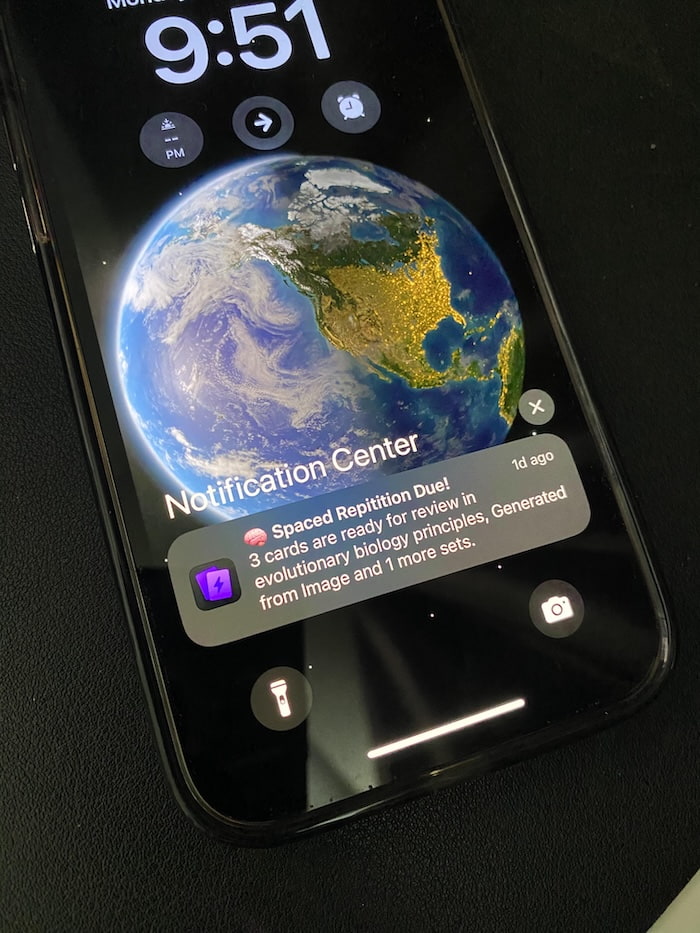
- The app sends study reminders, so you don’t have to remember to review
Varsity Tutors mcat flashcards don’t really guide your long-term schedule like this. Flashrecall basically runs the memory science in the background while you just answer cards.
3. Active Recall Done Right
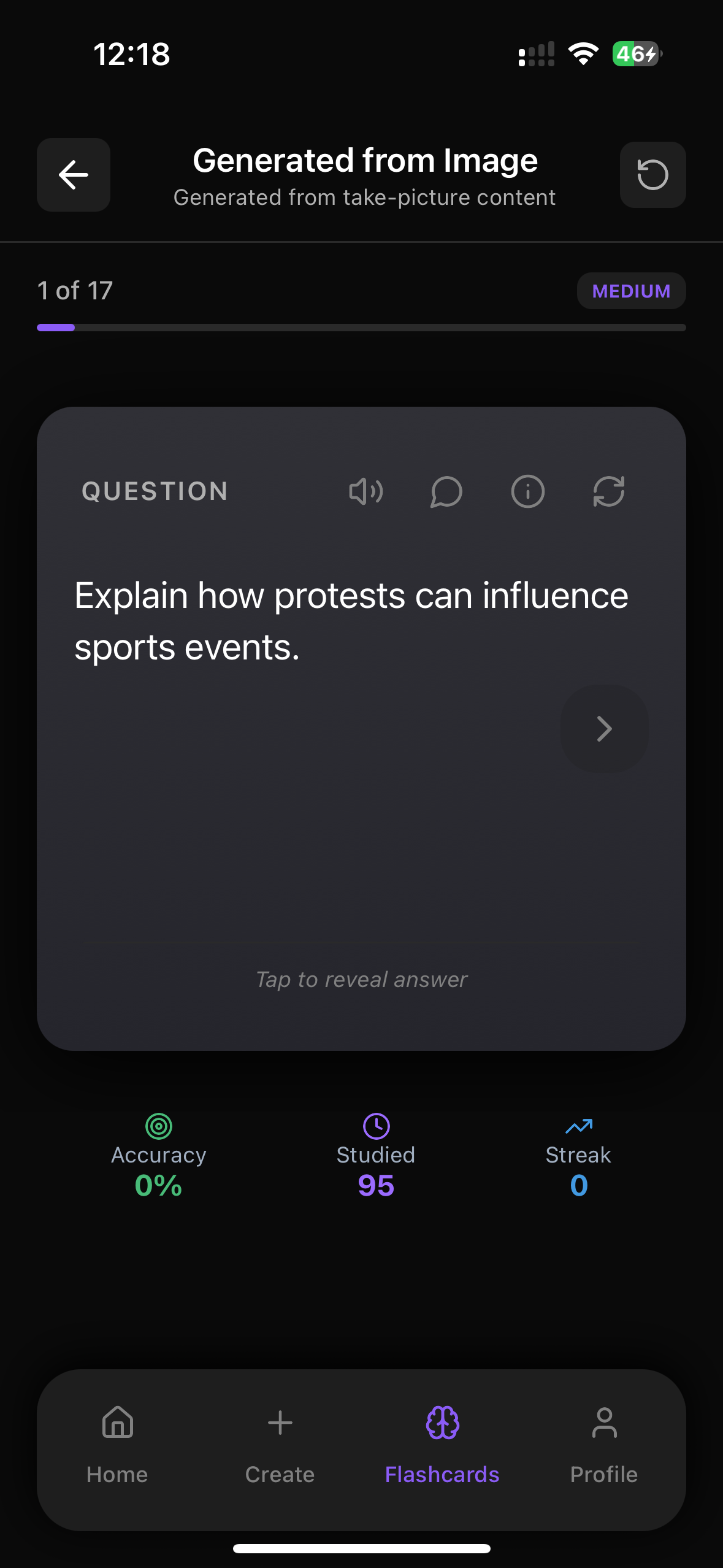
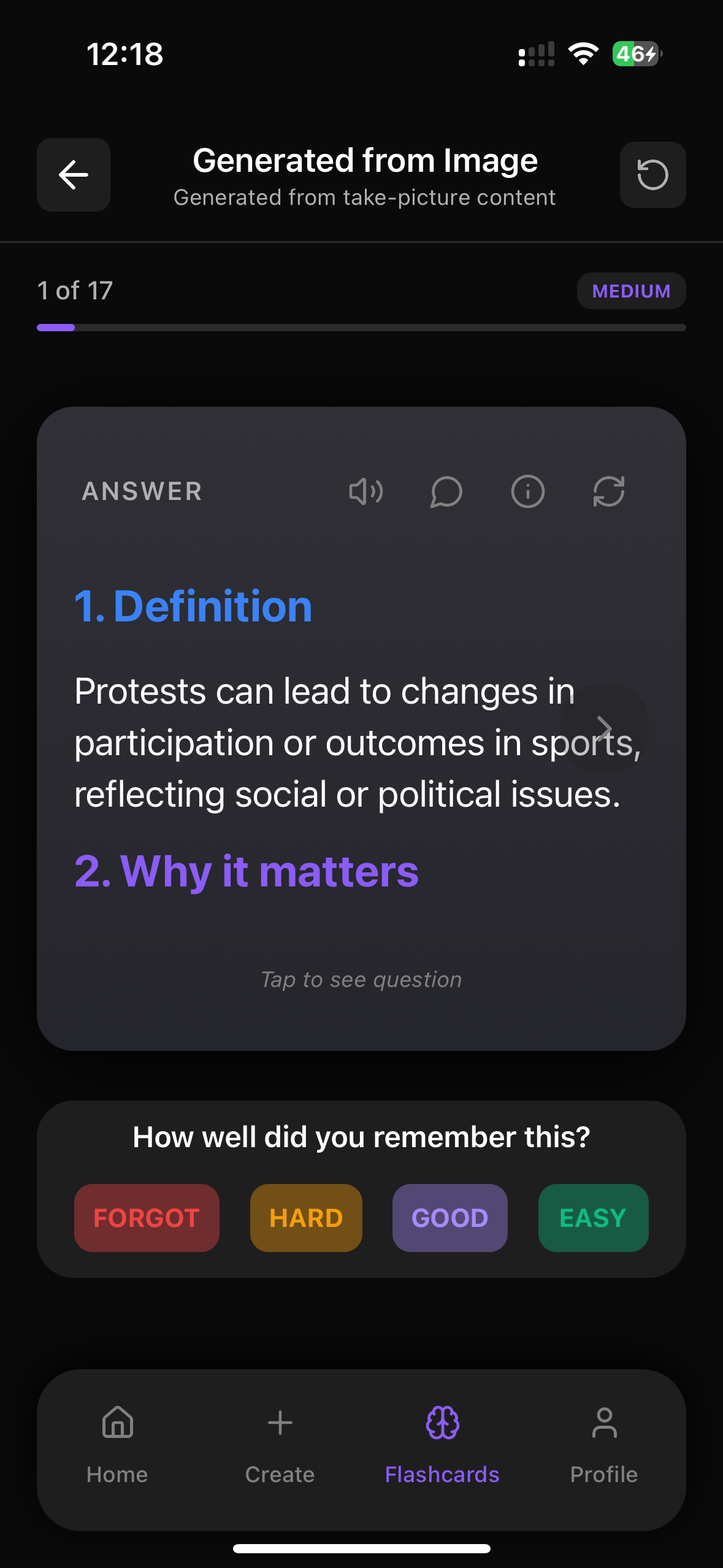
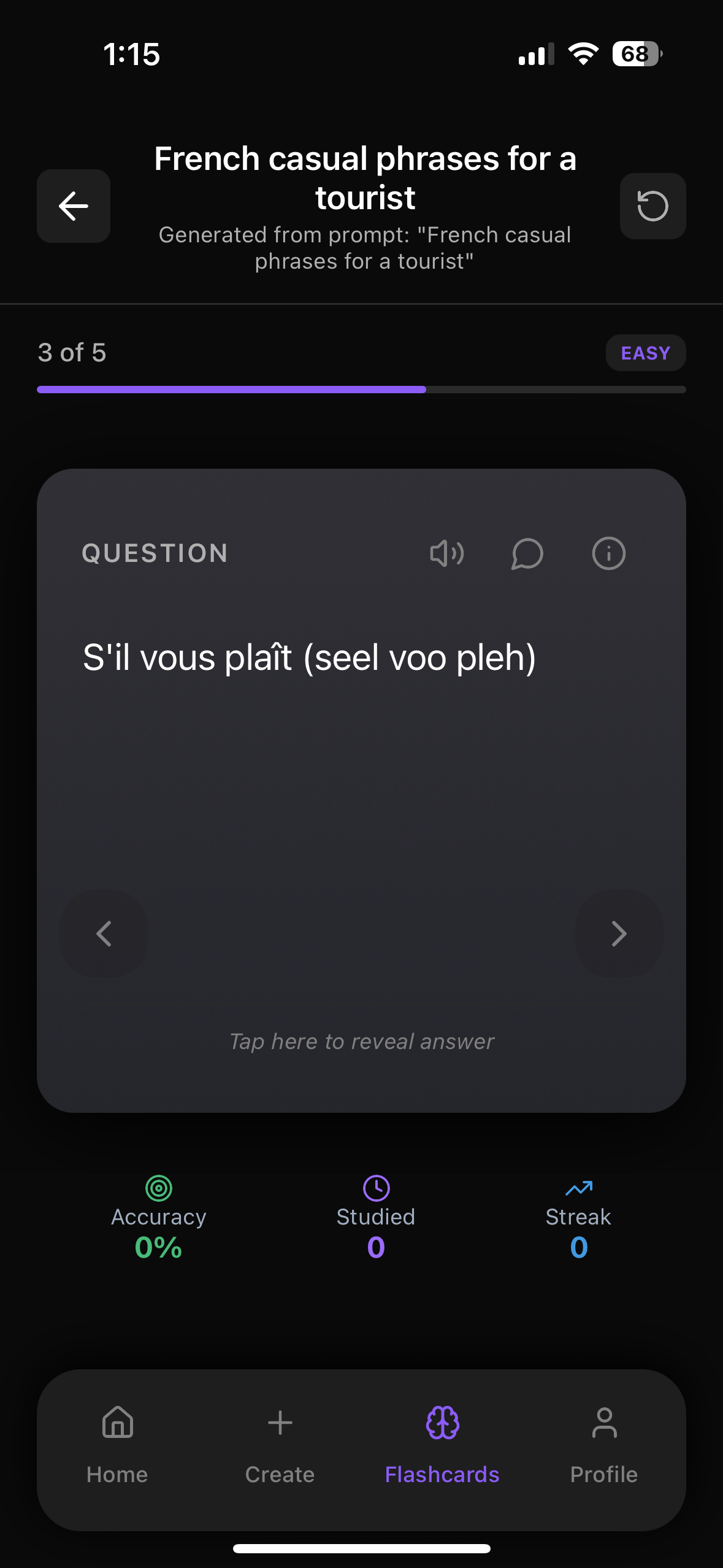
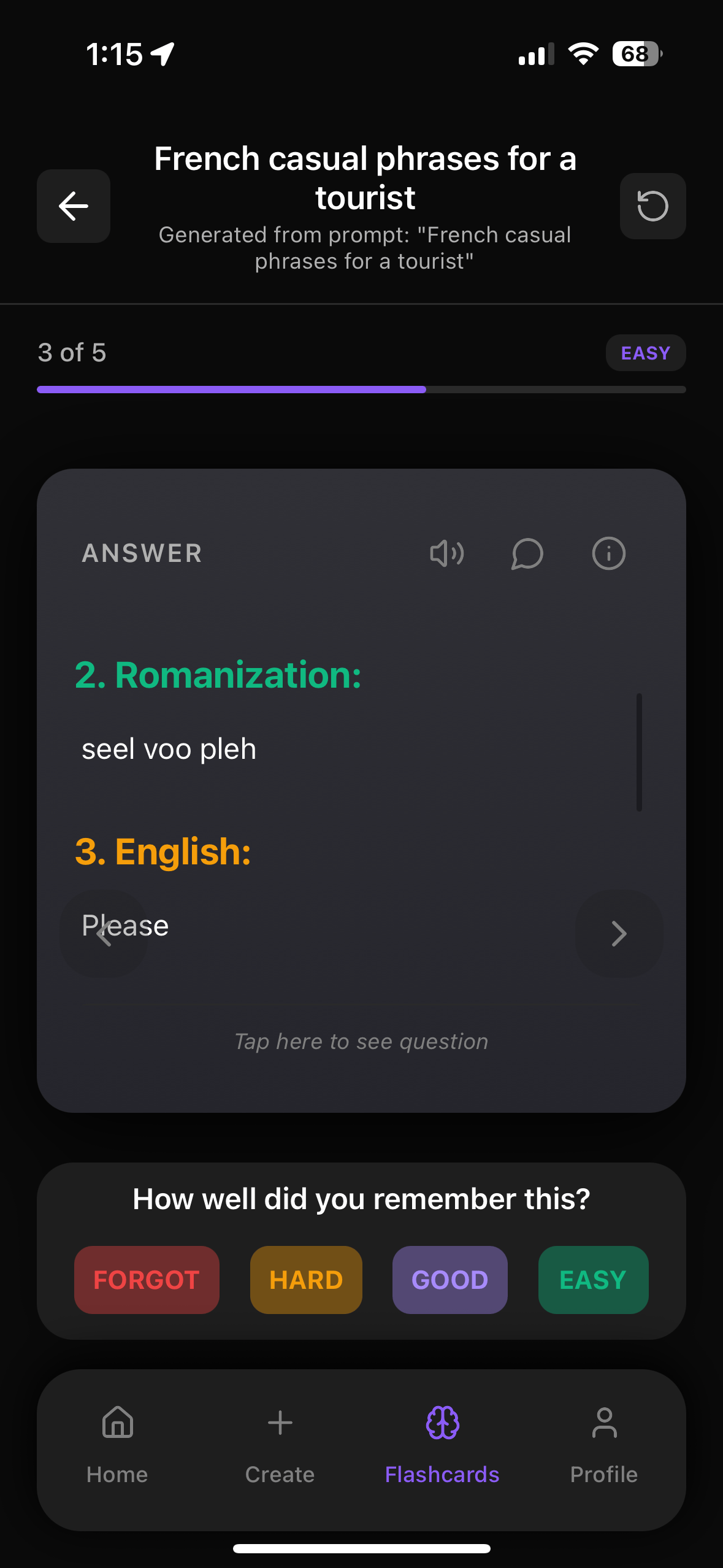
Flashrecall automatically keeps track and reminds you of the cards you don't remember well so you remember faster. Like this :
MCAT is all about pulling info out of your brain under pressure. Flashrecall is designed for that:
- Question on the front, no hints until you flip
- You self-grade how well you knew it (again, feeding spaced repetition)
- You can add images, diagrams, or equations to help with visual memory
So instead of half-guessing from multiple choice, you’re training pure recall — which is exactly what you need on test day.
4. You Can Chat With Your Flashcards (Seriously)
This is where it gets cool: if you’re unsure about a concept on a card, you can chat with the flashcard inside Flashrecall.
Examples:
- “Explain this glycolysis step like I’m 10.”
- “Give me one more example of this psych concept.”
- “How could this show up in a passage?”
So you’re not just memorizing; you’re actually learning and clarifying inside the same app. Varsity Tutors cards are static — what’s on the card is all you get.
5. Works Offline, On The Go
Flashrecall works on iPhone and iPad, and it works offline.
So you can:
- Review cards on the train
- Do a 10-minute session in line for coffee
- Hit a quick psych/soc review before bed
MCAT studying becomes lots of small, efficient sessions instead of only giant 3-hour blocks.
How To Upgrade From Varsity Tutors To Your Own MCAT System
You don’t have to totally ditch varsity tutors mcat flashcards right away. You can use them as a starting point, then build a better system around Flashrecall. Here’s a simple plan:
Step 1: Use VT Cards To Spot Weak Areas
- Do a few sets of Varsity Tutors MCAT flashcards in each section
- Notice what keeps tripping you up (e.g., endocrine, optics, sociology theories)
Write those topics down — this is your “make flashcards on this” list.
Step 2: Turn Your Real Mistakes Into Flashrecall Cards
Every time you review:
- AAMC section bank
- Full-length exams
- Kaplan/UWorld questions
Do this inside Flashrecall:
- Make 1–3 cards for each question you missed
- Add the concept, not the exact question wording
- Include why your original reasoning was wrong
You can do this manually or snap a photo / screenshot and let Flashrecall help turn it into cards.
Step 3: Let Spaced Repetition Handle The Schedule
Once your cards are in Flashrecall:
- Do your daily review session (even 20–30 minutes is huge)
- Rate each card (easy / medium / hard)
- Trust the app to reschedule them automatically
No more “What should I review today?” panic. You just open the app and do what’s due.
Step 4: Use Chat To Go Deeper On Confusing Stuff
If a card keeps coming back as “hard”:
- Open the chat on that card
- Ask for another explanation, analogy, or mini-quiz
- Refine the card if needed (simpler wording, better example)
You’re basically building your own adaptive MCAT tutor deck over time.
Example: Turning A Weak Topic Into Powerful Flashcards
Say Varsity Tutors keeps exposing a weakness in fluid dynamics. Here’s how you’d handle that with Flashrecall:
1. You miss a question on Poiseuille’s law in a practice exam
2. You add a card:
- Front: “State Poiseuille’s Law and the relationship between radius and flow.”
- Back: The full equation + explanation that flow ∝ r⁴ with a quick example
3. Add another card:
- Front: “If radius doubles, what happens to flow (Poiseuille’s)?”
- Back: Flow increases by 16x, with a short reasoning
4. Flashrecall schedules these cards over weeks, so by test day, this concept is burned into your brain
That’s way more powerful than just hoping a premade VT card happens to cover that exact nuance.
Why Most Serious MCAT Students Outgrow Premade Decks
Premade things like varsity tutors mcat flashcards are fine for day one when you’re just getting a feel for the content. But as you get closer to test day, you need:
- Cards that match your exact mistakes
- Smart scheduling via spaced repetition
- A way to clarify confusing concepts instantly
- Flexibility to add from PDFs, notes, YouTube, practice exams
That’s exactly what Flashrecall gives you, without being clunky or slow. It’s fast, modern, easy to use, and free to start:
👉 https://apps.apple.com/us/app/flashrecall-study-flashcards/id6746757085
Final Thoughts: Use VT As a Starter, Flashrecall As Your Main Weapon
If you like varsity tutors mcat flashcards, keep them as a light warm-up or quick drill tool. But for serious score gains, build your real system in Flashrecall:
- Turn all your weak points into targeted cards
- Let spaced repetition and reminders run in the background
- Study anywhere, even offline
- Chat with your flashcards when something doesn’t click
That’s how you go from “I’ve seen this before” to “I own this concept” — and that’s the difference between an okay score and the one that gets you into the school you actually want.
Frequently Asked Questions
What's the fastest way to create flashcards?
Manually typing cards works but takes time. Many students now use AI generators that turn notes into flashcards instantly. Flashrecall does this automatically from text, images, or PDFs.
Is there a free flashcard app?
Yes. Flashrecall is free and lets you create flashcards from images, text, prompts, audio, PDFs, and YouTube videos.
How do I start spaced repetition?
You can manually schedule your reviews, but most people use apps that automate this. Flashrecall uses built-in spaced repetition so you review cards at the perfect time.
What is active recall and how does it work?
Active recall is the process of actively retrieving information from memory rather than passively reviewing it. Flashrecall forces proper active recall by making you think before revealing answers, then uses spaced repetition to optimize your review schedule.
How can I study more effectively for this test?
Effective exam prep combines active recall, spaced repetition, and regular practice. Flashrecall helps by automatically generating flashcards from your study materials and using spaced repetition to ensure you remember everything when exam day arrives.
Related Articles
- MCAT Quizlet: Why Most Pre-Meds Are Studying Wrong (And The Better Flashcard Strategy) – Stop wasting hours on random decks and learn how to actually remember MCAT content faster.
- Anki Cards MCAT: 7 Powerful Flashcard Strategies Top Scorers Use (And a Faster Alternative) – Stop wasting hours tweaking decks and start studying smarter for a higher MCAT score.
- Anki MCAT Flashcards: 7 Powerful Study Tricks Most Pre-Meds Don’t Know About Yet – Boost Your Score Faster With Smarter Flashcard Strategies
Research References
The information in this article is based on peer-reviewed research and established studies in cognitive psychology and learning science.
Cepeda, N. J., Pashler, H., Vul, E., Wixted, J. T., & Rohrer, D. (2006). Distributed practice in verbal recall tasks: A review and quantitative synthesis. Psychological Bulletin, 132(3), 354-380
Meta-analysis showing spaced repetition significantly improves long-term retention compared to massed practice
Carpenter, S. K., Cepeda, N. J., Rohrer, D., Kang, S. H., & Pashler, H. (2012). Using spacing to enhance diverse forms of learning: Review of recent research and implications for instruction. Educational Psychology Review, 24(3), 369-378
Review showing spacing effects work across different types of learning materials and contexts
Kang, S. H. (2016). Spaced repetition promotes efficient and effective learning: Policy implications for instruction. Policy Insights from the Behavioral and Brain Sciences, 3(1), 12-19
Policy review advocating for spaced repetition in educational settings based on extensive research evidence
Karpicke, J. D., & Roediger, H. L. (2008). The critical importance of retrieval for learning. Science, 319(5865), 966-968
Research demonstrating that active recall (retrieval practice) is more effective than re-reading for long-term learning
Roediger, H. L., & Butler, A. C. (2011). The critical role of retrieval practice in long-term retention. Trends in Cognitive Sciences, 15(1), 20-27
Review of research showing retrieval practice (active recall) as one of the most effective learning strategies
Dunlosky, J., Rawson, K. A., Marsh, E. J., Nathan, M. J., & Willingham, D. T. (2013). Improving students' learning with effective learning techniques: Promising directions from cognitive and educational psychology. Psychological Science in the Public Interest, 14(1), 4-58
Comprehensive review ranking learning techniques, with practice testing and distributed practice rated as highly effective

FlashRecall Team
FlashRecall Development Team
The FlashRecall Team is a group of working professionals and developers who are passionate about making effective study methods more accessible to students. We believe that evidence-based learning tec...
Credentials & Qualifications
- •Software Development
- •Product Development
- •User Experience Design
Areas of Expertise
Ready to Transform Your Learning?
Start using FlashRecall today - the AI-powered flashcard app with spaced repetition and active recall.
Download on App Store