
Veterinary Terminology Flash Cards: 7 Powerful Study Hacks To Master Vet Med Terms Faster Than Your Classmates – Learn smarter, remember longer, and stop blanking on those impossible words.
Veterinary terminology flash cards plus spaced repetition, active recall, and AI in Flashrecall so you stop rereading notes and finally remember brutal vet t...
How Flashrecall app helps you remember faster. It's free
Stop Forgetting Vet Terms: Flashcards Are Your Best Friend
Vet med terminology is brutal.
One minute you’re fine, the next you’re staring at osteochondrosis dissecans wondering if it’s a spell from Harry Potter.
This is exactly where flashcards shine — they’re perfect for memorizing tons of similar, confusing words. And if you use the right app, it becomes way easier and way faster.
That’s where Flashrecall comes in:
👉 https://apps.apple.com/us/app/flashrecall-study-flashcards/id6746757085
It’s a fast, modern flashcard app that:
- Makes cards instantly from PDFs, images, YouTube, text, or audio
- Has built‑in spaced repetition + active recall
- Sends study reminders so you don’t forget to review
- Lets you chat with your flashcards if you’re unsure about something
- Works great for vet school, tech programs, anatomy, pharmacology, anything
Let’s walk through how to actually use veterinary terminology flash cards in a way that sticks — and how to set it up in Flashrecall so you’re not just “studying”, you’re actually remembering.
Why Flashcards Work So Well For Veterinary Terminology
Vet terms are:
- Long
- Latin/Greek based
- Very similar to each other
- Packed with prefixes/suffixes that actually mean something
Flashcards are perfect because they force active recall — your brain has to pull the answer out instead of just recognizing it on a page. That “mental effort” is what builds real memory.
Flashrecall has active recall baked in:
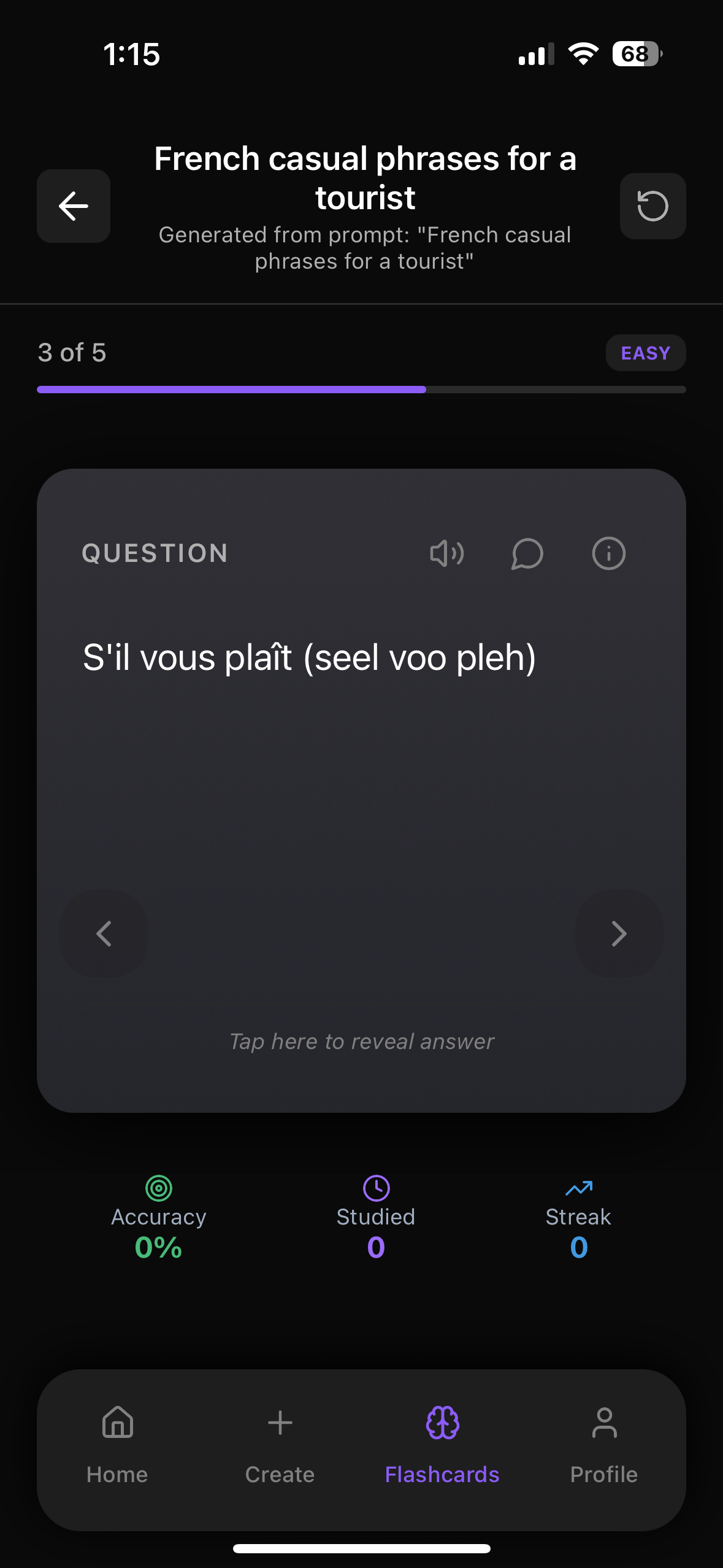
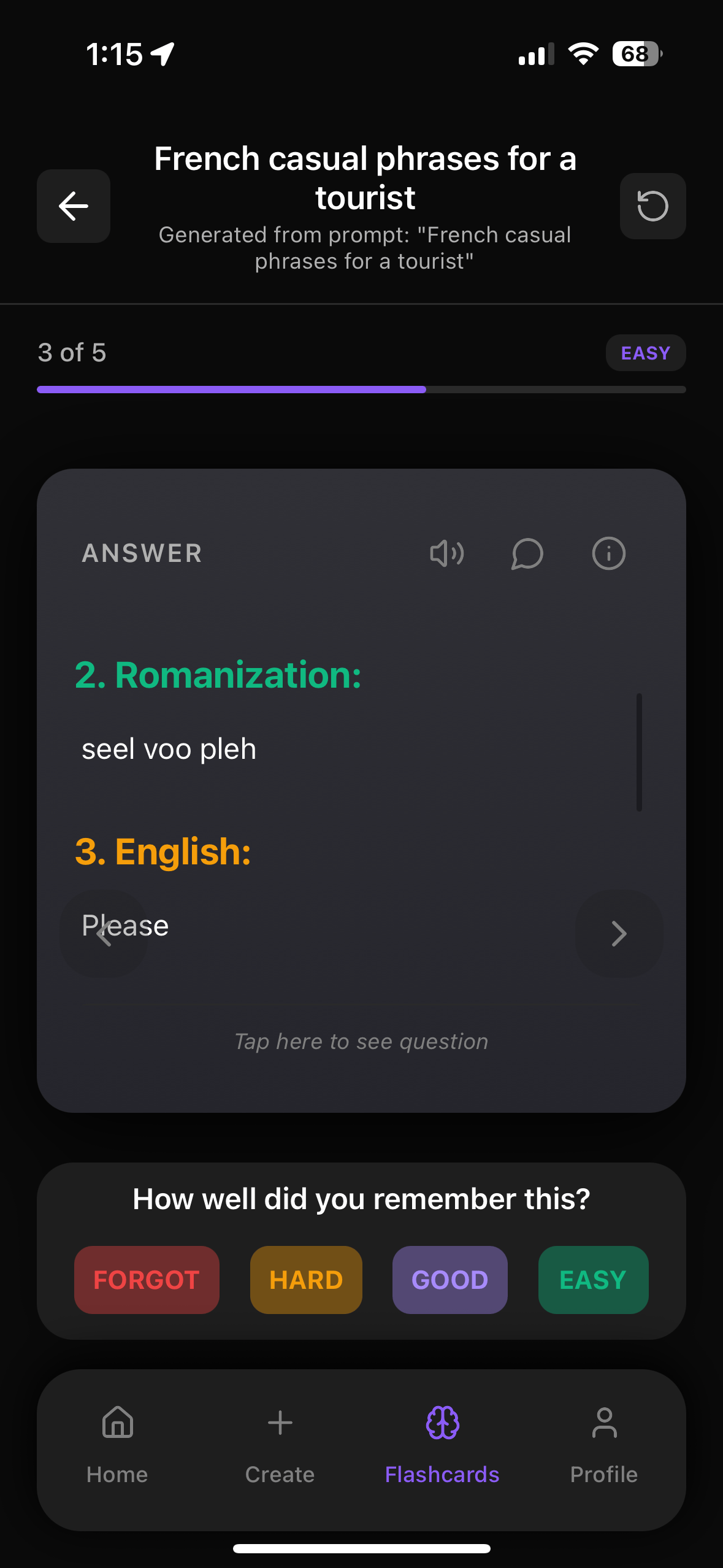
- You see the term or definition
- You try to recall it
- Then you rate how well you remembered it
- The app adjusts when to show it again using spaced repetition
So instead of rereading notes and hoping for the best, you’re training your brain like a muscle.
Step 1: Decide What Kind Of Vet Terminology Cards You Need
Different classes = different style of cards. Here are some ideas you can set up in Flashrecall:
1. Basic Term → Definition
Presence of blood in the urine.
Good for: intro terminology, vet tech programs, first-year vet students.
2. Definition → Term (Reverse Cards)
Presence of blood in the urine
Hematuria
This is what exams often test: “Can you name the condition?”
In Flashrecall, you can add both directions easily or duplicate cards and flip the sides.
3. Prefixes, Roots, and Suffixes
These are insanely powerful. Once you know the pieces, long words stop being scary.
What does the suffix -itis mean?
Inflammation.
What does hepat- refer to?
Liver.
Flashrecall lets you group these into their own deck, so you can drill them quickly and then apply them to new terms.
4. System-Based Decks
Make separate decks in Flashrecall like:
- Cardiovascular Terms
- Musculoskeletal Terms
- Dermatology Terms
- Pharmacology & Drug Classes
- Diagnostic Terms & Imaging
This helps your brain connect related concepts instead of seeing random, isolated words.
Step 2: Use Flashrecall To Create Vet Terminology Cards Fast (Not Manually One By One)
You’re in vet school / vet tech school — you don’t have time to make every card from scratch.
Flashrecall helps you turn your existing study materials into flashcards automatically:
From PDFs (lecture slides, notes, handouts)
Got a PDF with terminology tables?
1. Import the PDF into Flashrecall
2. Let the app extract key info and generate cards
3. Edit or tweak any card if needed
Perfect for those huge terminology handouts professors love.
From Images (screenshots, textbook pages)
Take a pic or screenshot of:
- Textbook glossary pages
- Whiteboard notes
- Printed term lists
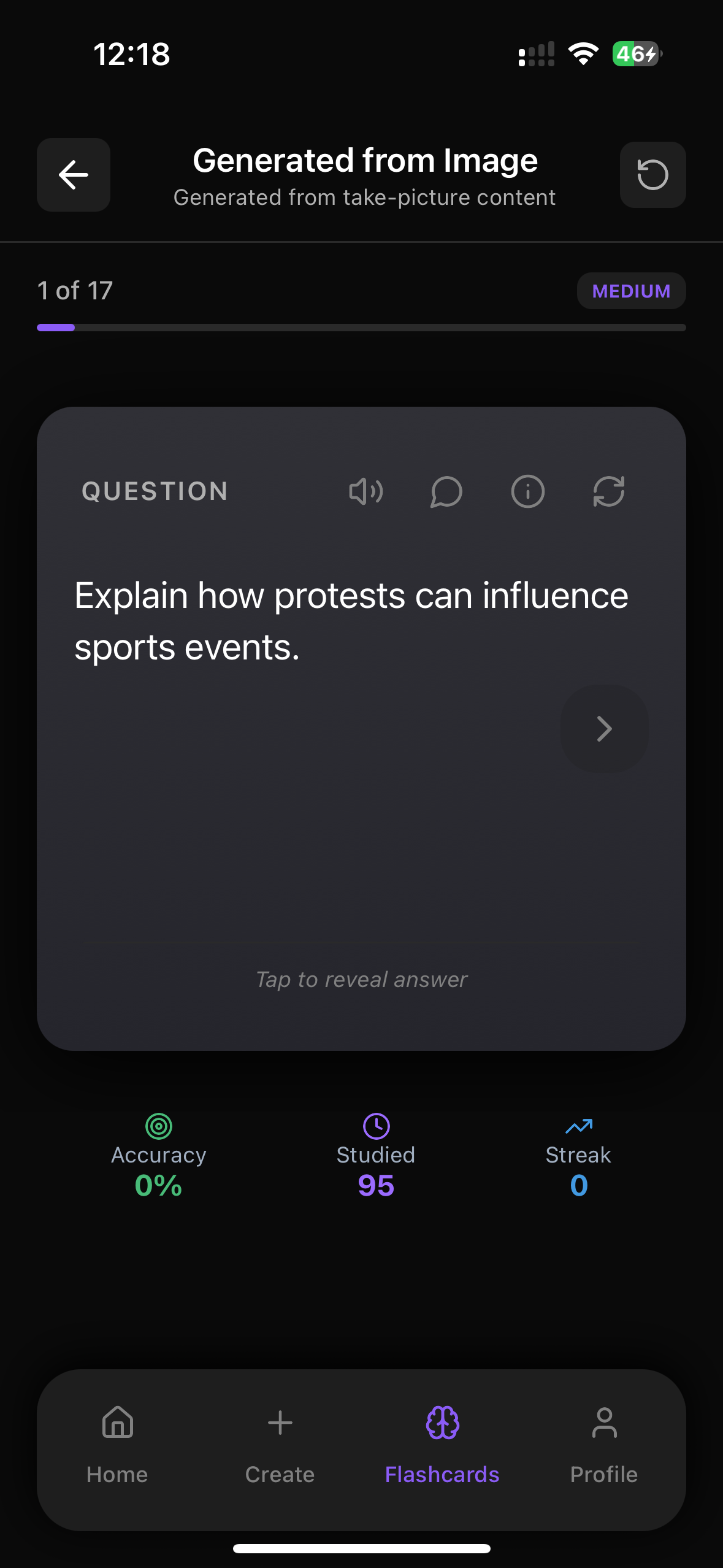
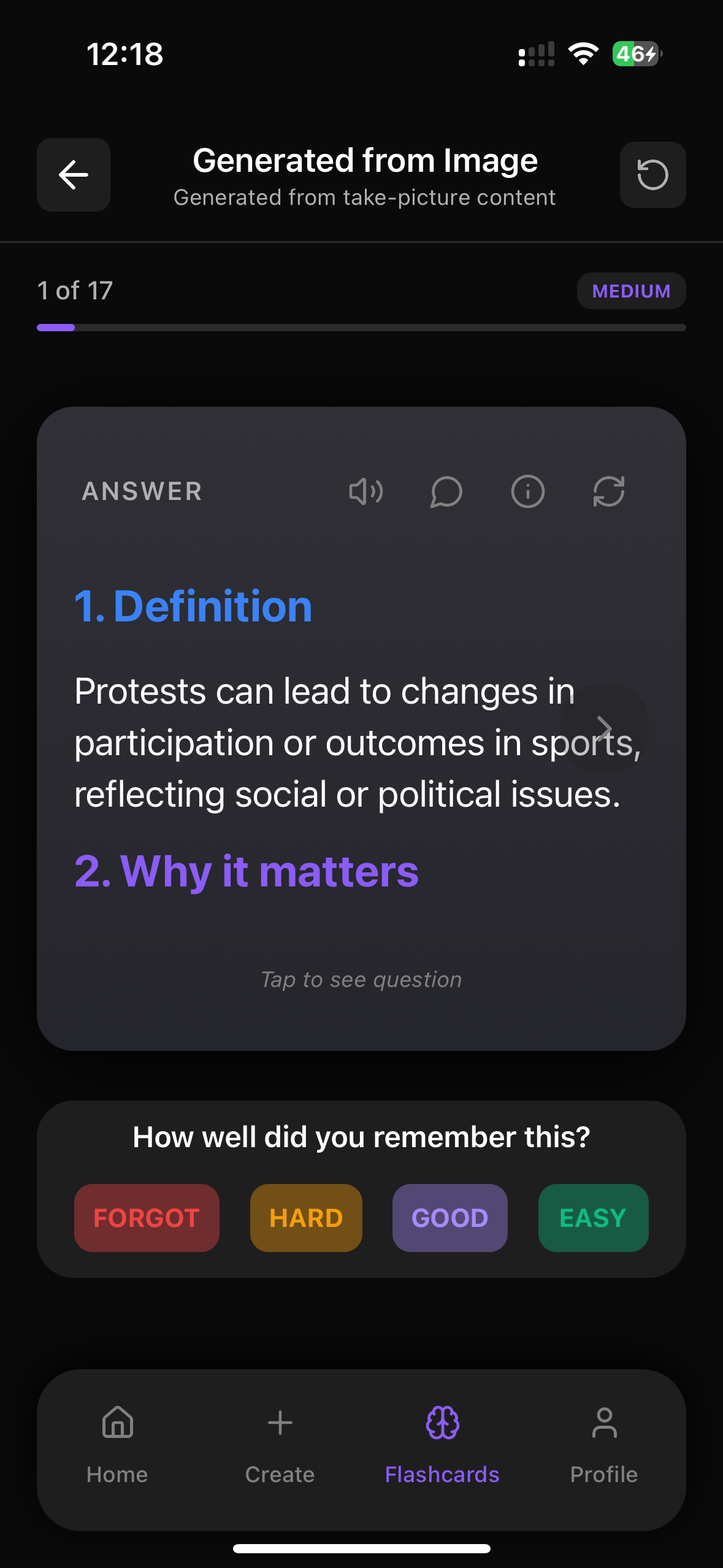
Flashrecall automatically keeps track and reminds you of the cards you don't remember well so you remember faster. Like this :
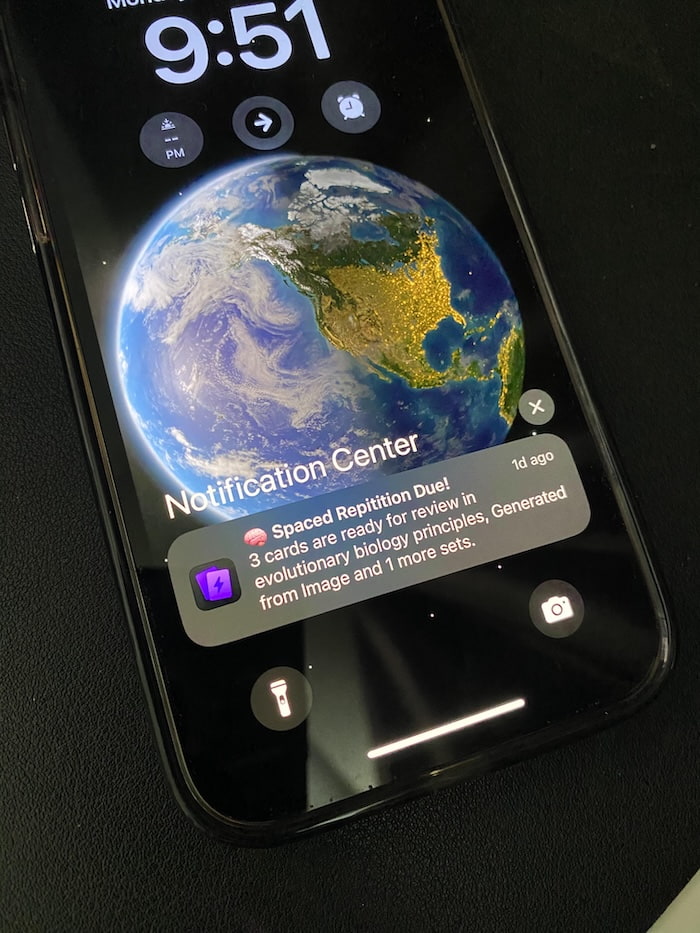
Flashrecall can read the text and auto-generate flashcards from it. No more typing every term.
From YouTube Lectures
Watching a vet med terminology or anatomy lecture?
Drop the YouTube link into Flashrecall and:
- It pulls the content
- Helps you create cards from key points
Great if you like learning from videos but still want solid recall practice.
From Typed Prompts (Manual But Fast)
Of course, you can still make cards manually:
- Type the term on the front
- Add definition, species-specific notes, or clinical example on the back
Because Flashrecall is fast and modern, it doesn’t feel like wrestling with clunky old software.
Step 3: Add Context So You Actually Understand The Terms
Memorizing words is good.
Understanding them in real clinical context is way better.
When you create cards in Flashrecall, don’t just write the definition. Add:
1. Species Examples
Abdominal pain, commonly used in horses; can be due to gas, impaction, torsion, etc.
2. Clinical Situations
Difficulty breathing; e.g., seen in dogs with congestive heart failure or cats with asthma.
3. Imaging / Lab Context
You can even add images to cards:
- Radiographs with labels
- Blood smear pictures
- Skin lesions
Flashrecall supports image-based flashcards, so you can train yourself to recognize patterns visually, not just memorize words.
Step 4: Let Spaced Repetition Handle The “When” For You
The biggest mistake:
People make flashcards… and then never review them at the right time.
Flashrecall fixes that with built-in spaced repetition and auto reminders:
- Cards you struggle with = shown more often
- Cards you know well = spaced out more
- You get study reminders so you don’t fall behind
You don’t have to manage anything. Just:
1. Open the app
2. Do your due cards
3. Watch your recall get sharper
This is gold during exam season when your brain is fried and organization is non-existent.
Step 5: Use Active Recall Properly (Don’t Just Flip Cards Mindlessly)
To get the most out of your vet terminology flash cards:
1. Look away before answering
Force yourself to say or think the answer before flipping.
2. Rate your recall honestly
In Flashrecall, after each card you can mark how well you knew it. Don’t lie to yourself — the algorithm uses this to schedule reviews.
3. Say terms out loud
Especially for pronunciation: pharyngitis, osteochondrosis, cholecystectomy — your future self in clinics will thank you.
4. Mix old and new cards
Flashrecall naturally mixes them using spaced repetition, so you’re not just reviewing yesterday’s stuff.
Step 6: Use “Chat With Your Flashcard” When You’re Confused
This is one of the coolest things about Flashrecall.
If you have a card like:
Increased blood urea nitrogen (BUN) and creatinine levels.
But you’re thinking, “Okay… but pre-renal vs renal vs post-renal?”
You can chat with the flashcard inside Flashrecall and ask:
- “Explain pre-renal vs renal azotemia in simple terms.”
- “Give me a clinical example of post-renal azotemia in a cat.”
So your flashcard stops being a static definition and becomes a mini tutor that can go deeper when you need it.
Step 7: Make It A Habit (Even 10 Minutes A Day Helps)
You don’t need 3-hour study marathons.
You just need consistent, short sessions.
Flashrecall makes this easy because:
- It works offline — perfect for reviewing on the bus, between labs, or in a clinic break room
- It runs on iPhone and iPad, so you can study anywhere
- It’s free to start, so you can try it without committing to anything
Try this routine:
- Morning (5–10 min): Review due cards
- Between classes (5 min): Quick session on a specific deck (e.g., pharmacology terms)
- Evening (10–15 min): Add new terms from today’s lectures, then review
That’s 20–30 minutes total, but with spaced repetition you’ll feel like you studied for hours.
Example Deck Setup For Vet Terminology In Flashrecall
Here’s a simple structure you can copy:
Deck 1: Core Medical Terms
- Inflammation, necrosis, edema, effusion, lesion, neoplasia, etc.
- Both directions: term → definition and definition → term
Deck 2: Body Systems
- Sub-decks: Cardio, Respiratory, GI, Neuro, Musculoskeletal, Repro, Urinary
- Each card with species examples and clinical notes
Deck 3: Prefixes, Roots, Suffixes
- Cards like:
- -emia → condition of the blood
- -pathy → disease
- tachy- → fast
- Super quick to review, huge payoff
Deck 4: Pharmacology & Drug Classes
- Terms like: NSAID, corticosteroid, bactericidal vs bacteriostatic, etc.
- Add mechanism + common use + key side effect on the back
Deck 5: Diagnostics & Lab Terms
- Azotemia, leukocytosis, anemia, hyperkalemia, etc.
- Add “seen in…” clinical context
You can build all of this in Flashrecall using:
- PDFs and images from your notes
- YouTube links from vet med channels
- Manual cards for tricky terms your professor loves to test
Why Use Flashrecall Instead Of Old-School Index Cards?
Paper cards work… but:
- You can’t get spaced repetition scheduling
- No study reminders
- No instant cards from PDFs, images, or YouTube
- No chat to clarify confusing terms
- Hard to carry hundreds of cards everywhere
Flashrecall gives you:
- A fast, modern interface that doesn’t feel like a chore
- Offline access so you can study anywhere
- Free to start, so there’s no risk in trying it
Grab it here and turn your vet terminology into something you actually remember:
👉 https://apps.apple.com/us/app/flashrecall-study-flashcards/id6746757085
Final Thoughts
Veterinary terminology doesn’t have to feel like drowning in Latin.
If you:
- Break terms into small flashcards
- Add real clinical context
- Use spaced repetition + active recall
- Study a little bit every day
You’ll be miles ahead of your classmates who are still rereading notes the night before the exam.
Set up your first vet terminology deck in Flashrecall today, and let the app handle the hard part — what to review, and when — so you can focus on actually becoming a better vet or vet tech.
Frequently Asked Questions
Is Anki good for studying?
Anki is powerful but requires manual card creation and has a steep learning curve. Flashrecall offers AI-powered card generation from your notes, images, PDFs, and videos, making it faster and easier to create effective flashcards.
What's the fastest way to create flashcards?
Manually typing cards works but takes time. Many students now use AI generators that turn notes into flashcards instantly. Flashrecall does this automatically from text, images, or PDFs.
How do I start spaced repetition?
You can manually schedule your reviews, but most people use apps that automate this. Flashrecall uses built-in spaced repetition so you review cards at the perfect time.
What is active recall and how does it work?
Active recall is the process of actively retrieving information from memory rather than passively reviewing it. Flashrecall forces proper active recall by making you think before revealing answers, then uses spaced repetition to optimize your review schedule.
Related Articles
- Anatomy Flashcards Online: The Ultimate Way To Learn Faster, Remember Longer, And Finally Make It Stick – Most Med Students Don’t Know This Simple Upgrade
- Best Multiplication Flash Cards: 7 Powerful Ways To Help Kids Master Times Tables Fast – Without Boring Drills
- Best Anatomy And Physiology Flashcards: 7 Powerful Ways To Actually Remember What You Study – Most Students Don’t Know These Simple Tricks
Research References
The information in this article is based on peer-reviewed research and established studies in cognitive psychology and learning science.
Cepeda, N. J., Pashler, H., Vul, E., Wixted, J. T., & Rohrer, D. (2006). Distributed practice in verbal recall tasks: A review and quantitative synthesis. Psychological Bulletin, 132(3), 354-380
Meta-analysis showing spaced repetition significantly improves long-term retention compared to massed practice
Carpenter, S. K., Cepeda, N. J., Rohrer, D., Kang, S. H., & Pashler, H. (2012). Using spacing to enhance diverse forms of learning: Review of recent research and implications for instruction. Educational Psychology Review, 24(3), 369-378
Review showing spacing effects work across different types of learning materials and contexts
Kang, S. H. (2016). Spaced repetition promotes efficient and effective learning: Policy implications for instruction. Policy Insights from the Behavioral and Brain Sciences, 3(1), 12-19
Policy review advocating for spaced repetition in educational settings based on extensive research evidence
Karpicke, J. D., & Roediger, H. L. (2008). The critical importance of retrieval for learning. Science, 319(5865), 966-968
Research demonstrating that active recall (retrieval practice) is more effective than re-reading for long-term learning
Roediger, H. L., & Butler, A. C. (2011). The critical role of retrieval practice in long-term retention. Trends in Cognitive Sciences, 15(1), 20-27
Review of research showing retrieval practice (active recall) as one of the most effective learning strategies
Dunlosky, J., Rawson, K. A., Marsh, E. J., Nathan, M. J., & Willingham, D. T. (2013). Improving students' learning with effective learning techniques: Promising directions from cognitive and educational psychology. Psychological Science in the Public Interest, 14(1), 4-58
Comprehensive review ranking learning techniques, with practice testing and distributed practice rated as highly effective

FlashRecall Team
FlashRecall Development Team
The FlashRecall Team is a group of working professionals and developers who are passionate about making effective study methods more accessible to students. We believe that evidence-based learning tec...
Credentials & Qualifications
- •Software Development
- •Product Development
- •User Experience Design
Areas of Expertise
Ready to Transform Your Learning?
Start using FlashRecall today - the AI-powered flashcard app with spaced repetition and active recall.
Download on App Store