Abeka Alphabet Cards Tips: The Powerful Guide
Abeka alphabet cards tips help you use spaced repetition and active recall to boost learning. Flashrecall turns your cards into smart flashcards on your phone.
How Flashrecall app helps you remember faster. It's free
Turning Abeka Alphabet Cards Into a Superpower (Not Just Wall Decor)
You ever feel like your brain's just too full to cram in more info? I totally get that! So, abeka alphabet cards tips are basically your new best friend when it comes to learning new things without the headache. Whether you’re brushing up on phonics or diving into something new, breaking stuff down into bite-sized bits is super helpful. The trick? Use them with active recall and spaced repetition—fancy terms that just mean going over stuff at the right time to actually remember it. Lucky for us, Flashrecall does the heavy lifting by whipping up flashcards from your notes and timing reviews perfectly. If abeka alphabet cards tips have you curious about making phonics practice a breeze, check out our complete guide. It's like having a study buddy who’s got your back!
That’s where a flashcard app like Flashrecall quietly becomes your secret weapon.
👉 Grab it here (free to start):
https://apps.apple.com/us/app/flashrecall-study-flashcards/id6746757085
You can turn your Abeka alphabet cards into interactive, smart flashcards on your phone or iPad, with:
- Automatic spaced repetition (so your child reviews at the perfect time)
- Active recall built in (they have to think, not just look)
- Study reminders (so you don’t have to remember to remember)
- Works offline (perfect for car rides, waiting rooms, and travel)
Let’s walk through how to use Abeka alphabet cards in a more powerful way—and how to upgrade them with Flashrecall so the sounds actually stick.
What Are Abeka Alphabet Cards (And Why They’re Good… But Not Enough)
Abeka alphabet cards are those large phonics cards with:
- A letter (or phonics sound)
- A picture
- A keyword (“A – apple – /ă/”)
- Often used in Christian or homeschool curricula
They’re great because:
- They link letter → picture → sound
- They give consistency (same keywords repeated)
- They’re visual and simple
The problem is:
- Kids forget if you don’t review often
- It’s hard to track which letters they know and which they’re guessing
- You can’t easily practice on the go
- You, as the parent or teacher, have to remember to pull out the right cards every day
That’s where a digital companion like Flashrecall makes everything easier and way more effective.
Step 1: Turn Your Abeka Alphabet Cards Into Digital “Smart Cards”
You don’t have to abandon your physical cards. Just upgrade them.
With Flashrecall, you can literally snap a photo of each Abeka card and the app will turn it into a flashcard automatically.
Flashrecall can create cards from:
- Images (photos of your Abeka cards)
- Text
- Audio
- PDFs
- YouTube links
- Or just typed prompts
Simple way to do it
For each Abeka alphabet card, create something like:
- Front:
Picture of the card (or just the letter)
“What sound does this make?”
- Back:
The sound (e.g. “/ă/ as in apple”)
Optional: audio of you saying the sound
You can do this quickly:
1. Open Flashrecall
2. Take a picture of the card
3. Add a prompt like “What sound?” or “Say the sound”
4. Add the answer on the back (text + audio if you want)
Now your Abeka deck is:
- On your phone / iPad
- Always with you
- Smart enough to remind you when to review
Step 2: Use Spaced Repetition So Sounds Don’t Get Forgotten
This is the part most parents and teachers miss.
Kids don’t just need repetition. They need the right spacing of repetition.
- If your child remembers a sound easily, that card shows up less often
- If they struggle, that card shows up more often
- The app schedules reviews automatically using proven memory science
You don’t have to:
- Track which letters they keep missing
- Plan review schedules
- Guess how often to go over “short e” vs “long a”
Flashrecall does it for you.
You just open the app and start the session it suggests.
This is exactly what makes the difference between:
- “We did the Abeka cards last month, but she forgot half of them”
vs
- “We review a few minutes a day and she actually remembers everything.”
Step 3: Make It Active Recall, Not Passive Staring
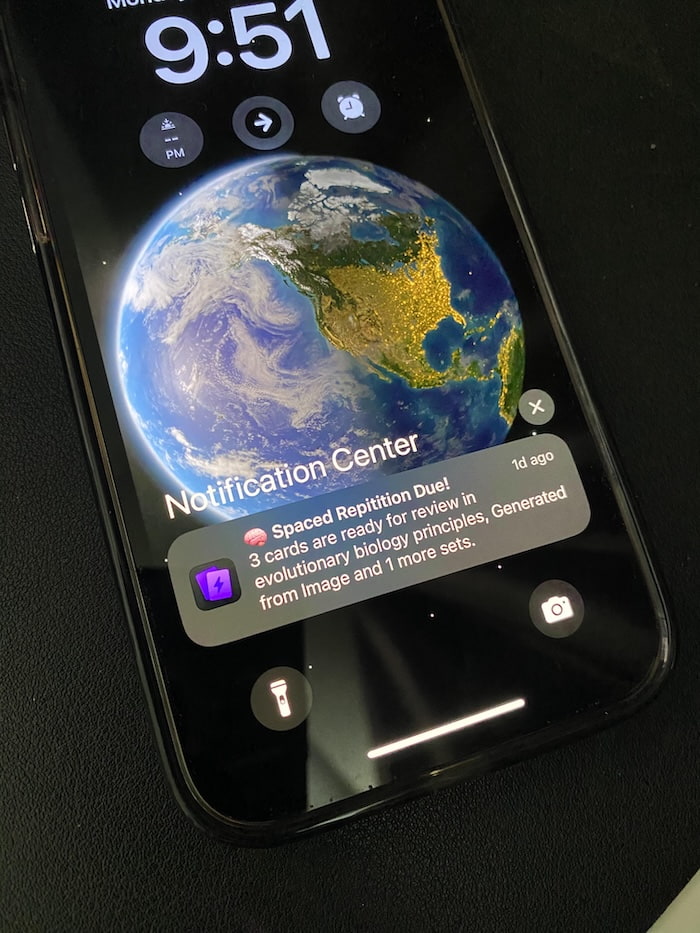
Flashrecall automatically keeps track and reminds you of the cards you don't remember well so you remember faster. Like this :
Just holding up a card and saying “This is B, /b/” is mostly passive for the child.
You want active recall:
> They have to think of the sound before they see or hear the answer.
Flashrecall is literally built around this:
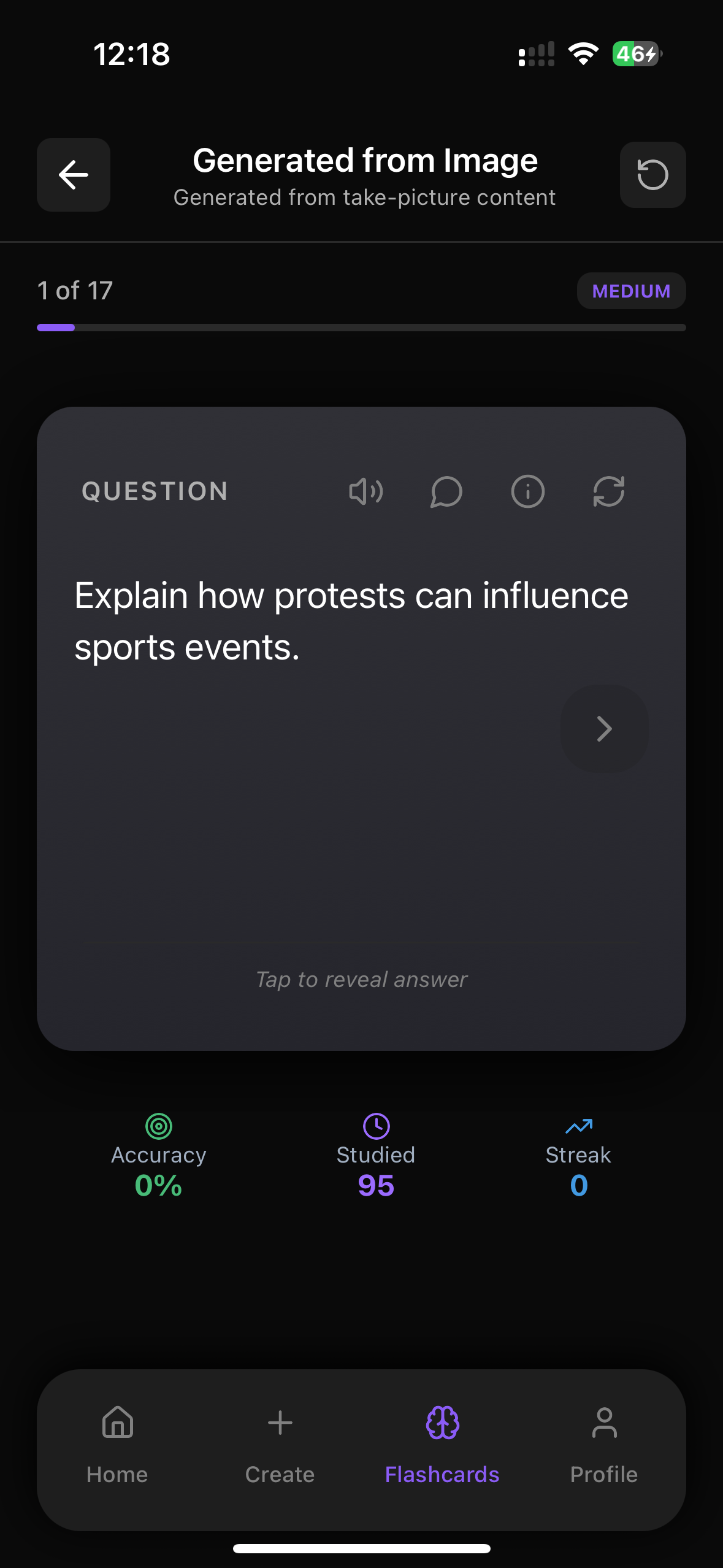
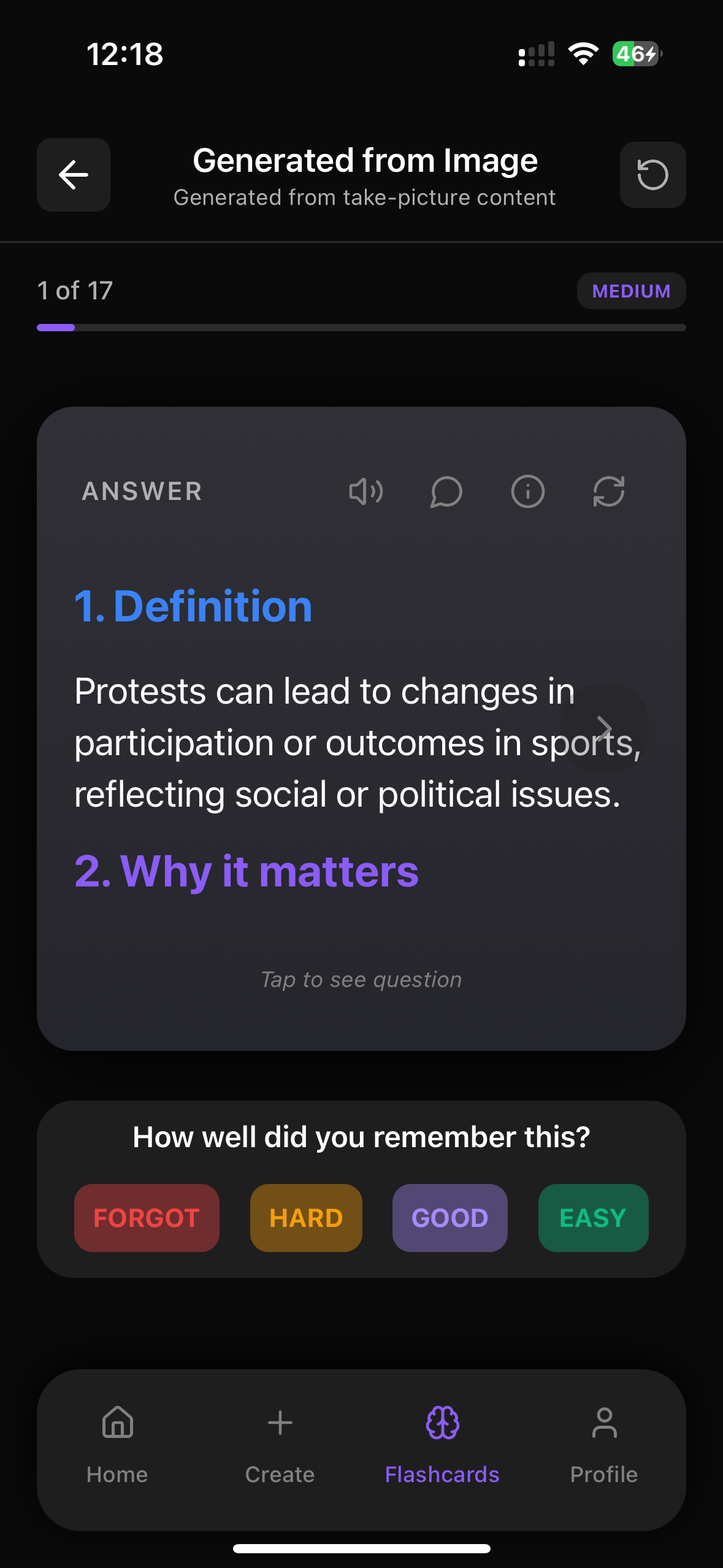
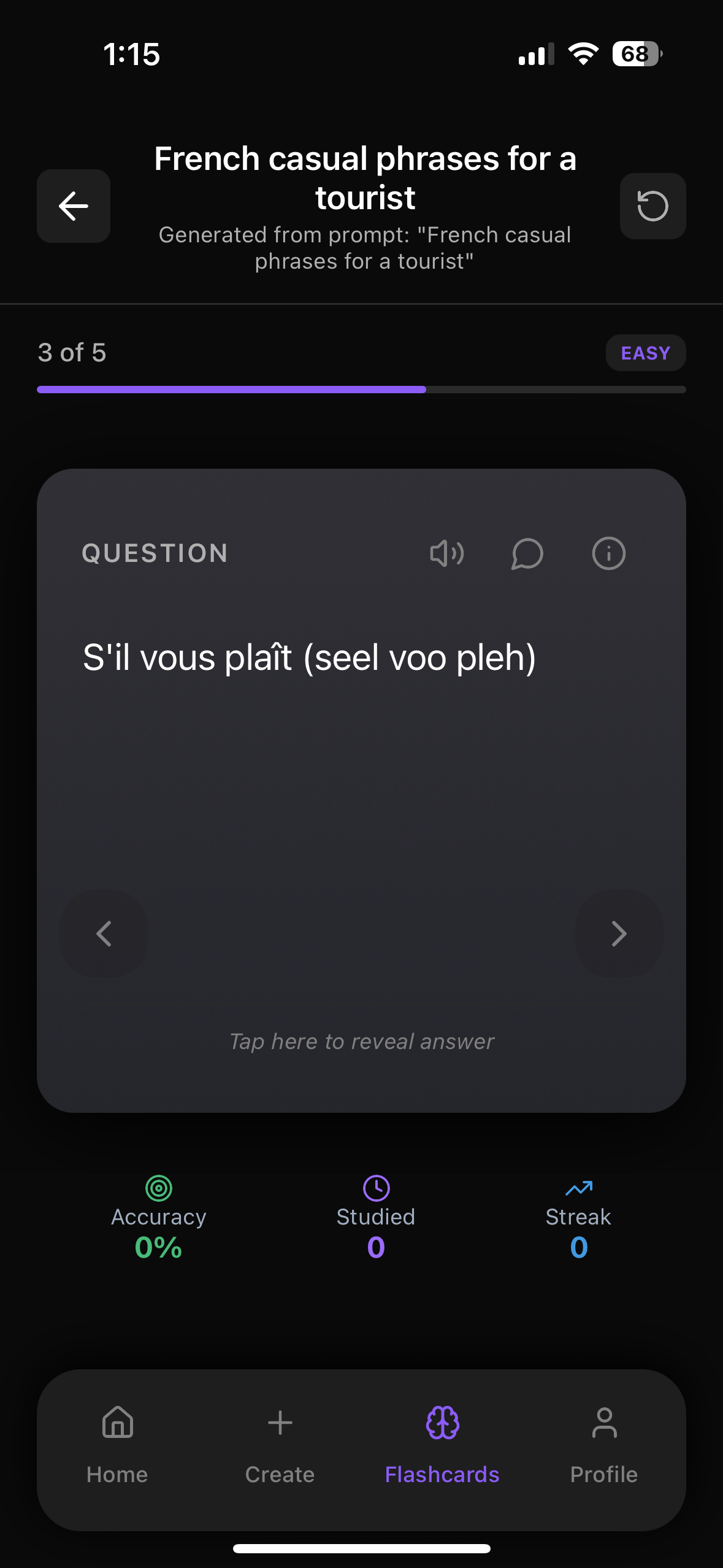
- It shows the front of the card
- Your child tries to say the sound
- Then you tap to show the answer
- You mark whether they got it right or wrong
That “try → check → rate” loop is what wires the sound into long-term memory.
You can even:
- Add multiple prompts:
- “What sound?”
- “Say a word that starts with this sound”
- Or create a second deck: “Hear the sound → pick the letter”
Step 4: Add Audio So Kids Hear and Repeat Correctly
Phonics is about sound, not just letters.
With Flashrecall, you can record your own voice for each card:
- Front: “What letter makes this sound?” (and play the sound)
- Back: Show the letter and keyword
Or:
- Front: Show the letter
- Back: “/ă/ as in apple” (your voice recording)
This helps with:
- Proper pronunciation
- Auditory learners
- Younger kids who can’t read the instructions yet
And because Flashrecall works offline, your child can practice sounds with headphones anywhere—no internet, no fuss.
Step 5: Turn Review Time Into Quick, Daily Routines
The biggest killer of progress? Inconsistency.
You intend to do Abeka cards daily… then life happens.
Flashrecall fixes that with:
- Study reminders (you set them once, the app pings you)
- Short, bite-sized sessions (even 5 minutes helps)
- Progress that’s saved and tracked automatically
Ideas:
- 5 minutes after breakfast
- 5 minutes in the car (you hold the phone, they answer)
- 5 minutes before bed
Because the app is fast and modern, there’s almost no friction:
- Open it
- Tap your Abeka deck
- Start the suggested review
No digging through boxes, no sorting stacks of cards.
Step 6: Go Beyond Just Letters – Build Early Reading Skills
Once your child knows the basic alphabet sounds, you can keep stacking skills in Flashrecall:
Examples of decks you can add
- Blends and Digraphs
- Front: “sh” – “What sound?”
- Back: “/sh/ as in ship”
- CVC Words (cat, dog, hat, etc.)
- Front: “c–a–t” (with or without picture)
- Back: “cat” + audio
- Common Sight Words
- Front: “the”
- Back: “the” + sentence or picture
Abeka already gives you a strong phonics structure. Flashrecall helps you:
- Digitize it
- Organize it
- Review it in the most efficient way
And because Flashrecall lets you:
- Make cards manually
- Or auto-generate from text, images, PDFs, YouTube, etc.
You can mix Abeka content with:
- Other phonics sheets
- Reading passages
- Bible verses
- Vocabulary for older siblings
All in one place.
Step 7: Use “Chat With Your Flashcards” When Your Child Has Questions
One really cool feature in Flashrecall:
You can chat with the flashcard if you’re unsure about something or want to go deeper.
So if you’ve got a card about:
- A specific word
- A phonics rule
- A tricky sound
You can ask the app things like:
- “Give me more example words with this sound.”
- “Explain this phonics rule more simply.”
- “Use this word in a sentence.”
This is especially handy when:
- You’re not a phonics expert
- Your child asks, “Why does this say /f/ when it’s spelled with ‘ph’?”
- You want quick, on-the-spot explanations without Googling everything
Why Use Flashrecall With Abeka Instead of Just Sticking to Paper?
Abeka alphabet cards are solid.
But pairing them with Flashrecall gives you:
- ✅ Smarter review – spaced repetition and active recall built in
- ✅ Less mental load – the app tracks what to review and when
- ✅ Anytime, anywhere practice – works offline on iPhone and iPad
- ✅ More engagement – pictures, audio, and quick sessions feel like a game
- ✅ Scales with your child – from letters to words to full subjects later
And unlike a lot of clunky education apps, Flashrecall is:
- Fast
- Modern
- Easy to use
- Free to start
You’re basically taking a good traditional resource (Abeka) and giving it a 21st-century brain boost.
How to Get Started in 10 Minutes
1. Download Flashrecall
https://apps.apple.com/us/app/flashrecall-study-flashcards/id6746757085
2. Create a deck called “Abeka Alphabet”
- Add a few letters to start (you don’t need all 26 on day one)
3. Snap photos of your Abeka cards
- Add simple prompts: “What sound does this letter make?”
- Add answers with sound + keyword
4. Turn on study reminders
- Pick one or two times a day
5. Do a quick 5-minute session with your child
- Let them say the sound
- Flip the card
- Mark right/wrong honestly
6. Keep adding more cards as they learn
- Blends, digraphs, words, sight words, etc.
In a week or two, you’ll notice:
- Fewer “I forgot that one” moments
- More confidence saying sounds
- Less stress for you trying to remember what to review
Final Thoughts
You don’t have to choose between:
- Traditional phonics with Abeka
- Or a modern learning app
You can combine them.
Use Abeka alphabet cards as your solid foundation.
Use Flashrecall to make that foundation stick for life with smart review, active recall, and easy daily practice.
Try it free here and turn those Abeka cards into a powerful, portable learning system:
https://apps.apple.com/us/app/flashrecall-study-flashcards/id6746757085
Frequently Asked Questions
What's the fastest way to create flashcards?
Manually typing cards works but takes time. Many students now use AI generators that turn notes into flashcards instantly. Flashrecall does this automatically from text, images, or PDFs.
Is there a free flashcard app?
Yes. Flashrecall is free and lets you create flashcards from images, text, prompts, audio, PDFs, and YouTube videos.
What's the most effective study method?
Research consistently shows that active recall combined with spaced repetition is the most effective study method. Flashrecall automates both techniques, making it easy to study effectively without the manual work.
What should I know about Abeka?
Abeka Alphabet Cards: 7 Powerful Ways to Make Phonics Fun, Interactive, and Stick for Life – Most Parents Miss Trick #4 covers essential information about Abeka. To master this topic, use Flashrecall to create flashcards from your notes and study them with spaced repetition.
Related Articles
- Phase 5 Flashcards: 7 Powerful Ways To Help Kids Read Faster (Most Parents Miss #3)
- Addition And Subtraction Flash Cards: 7 Powerful Ways To Make Math Practice Fun, Fast, And Actually Stick – Especially With One Smart App Most Parents Don’t Know About
- Essential Letters And Sounds Flashcards: 7 Powerful Ways To Teach Reading Faster (Most Parents Don’t Know These) – Turn simple flashcards into a complete reading system your kid will actually enjoy.
Research References
The information in this article is based on peer-reviewed research and established studies in cognitive psychology and learning science.
Cepeda, N. J., Pashler, H., Vul, E., Wixted, J. T., & Rohrer, D. (2006). Distributed practice in verbal recall tasks: A review and quantitative synthesis. Psychological Bulletin, 132(3), 354-380
Meta-analysis showing spaced repetition significantly improves long-term retention compared to massed practice
Carpenter, S. K., Cepeda, N. J., Rohrer, D., Kang, S. H., & Pashler, H. (2012). Using spacing to enhance diverse forms of learning: Review of recent research and implications for instruction. Educational Psychology Review, 24(3), 369-378
Review showing spacing effects work across different types of learning materials and contexts
Kang, S. H. (2016). Spaced repetition promotes efficient and effective learning: Policy implications for instruction. Policy Insights from the Behavioral and Brain Sciences, 3(1), 12-19
Policy review advocating for spaced repetition in educational settings based on extensive research evidence
Karpicke, J. D., & Roediger, H. L. (2008). The critical importance of retrieval for learning. Science, 319(5865), 966-968
Research demonstrating that active recall (retrieval practice) is more effective than re-reading for long-term learning
Roediger, H. L., & Butler, A. C. (2011). The critical role of retrieval practice in long-term retention. Trends in Cognitive Sciences, 15(1), 20-27
Review of research showing retrieval practice (active recall) as one of the most effective learning strategies
Dunlosky, J., Rawson, K. A., Marsh, E. J., Nathan, M. J., & Willingham, D. T. (2013). Improving students' learning with effective learning techniques: Promising directions from cognitive and educational psychology. Psychological Science in the Public Interest, 14(1), 4-58
Comprehensive review ranking learning techniques, with practice testing and distributed practice rated as highly effective

FlashRecall Team
FlashRecall Development Team
The FlashRecall Team is a group of working professionals and developers who are passionate about making effective study methods more accessible to students. We believe that evidence-based learning tec...
Credentials & Qualifications
- •Software Development
- •Product Development
- •User Experience Design
Areas of Expertise
Ready to Transform Your Learning?
Start using FlashRecall today - the AI-powered flashcard app with spaced repetition and active recall.
Download on App Store