Active Recall Spaced Repetition Guide: The Essential Guide
The Active Recall Spaced Repetition guide shows how to use flashcards effectively for memory retention. Flashrecall helps you time your reviews perfectly.
How Flashrecall app helps you remember faster. It's free
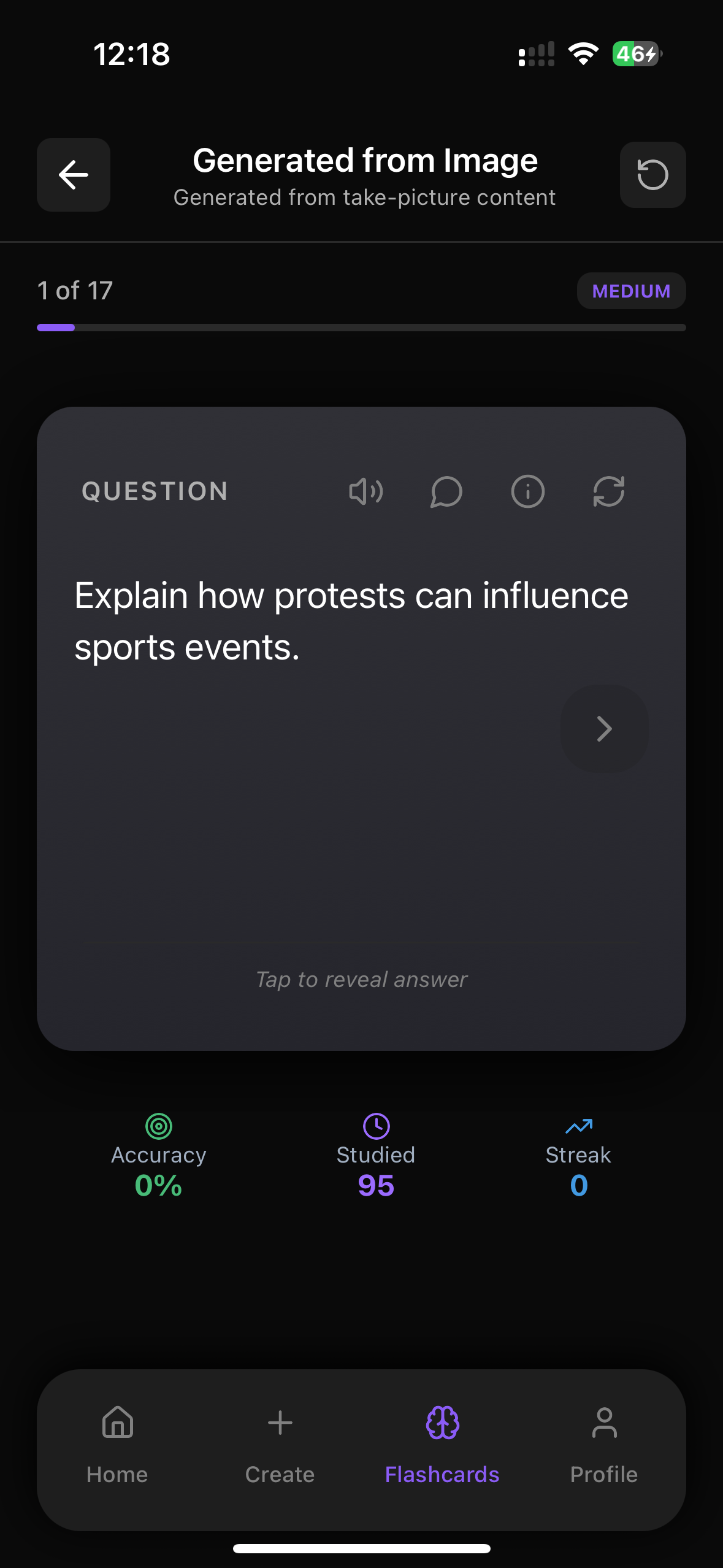
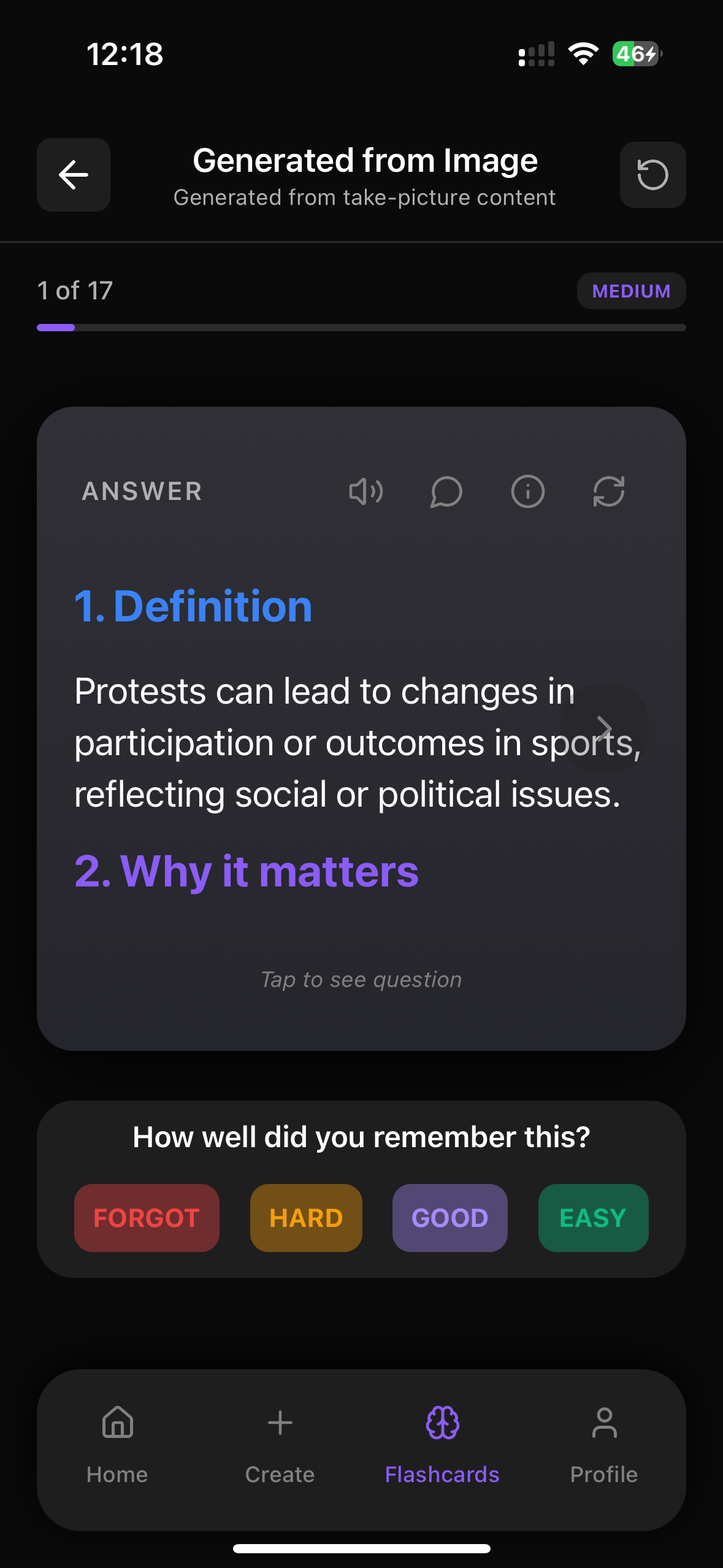
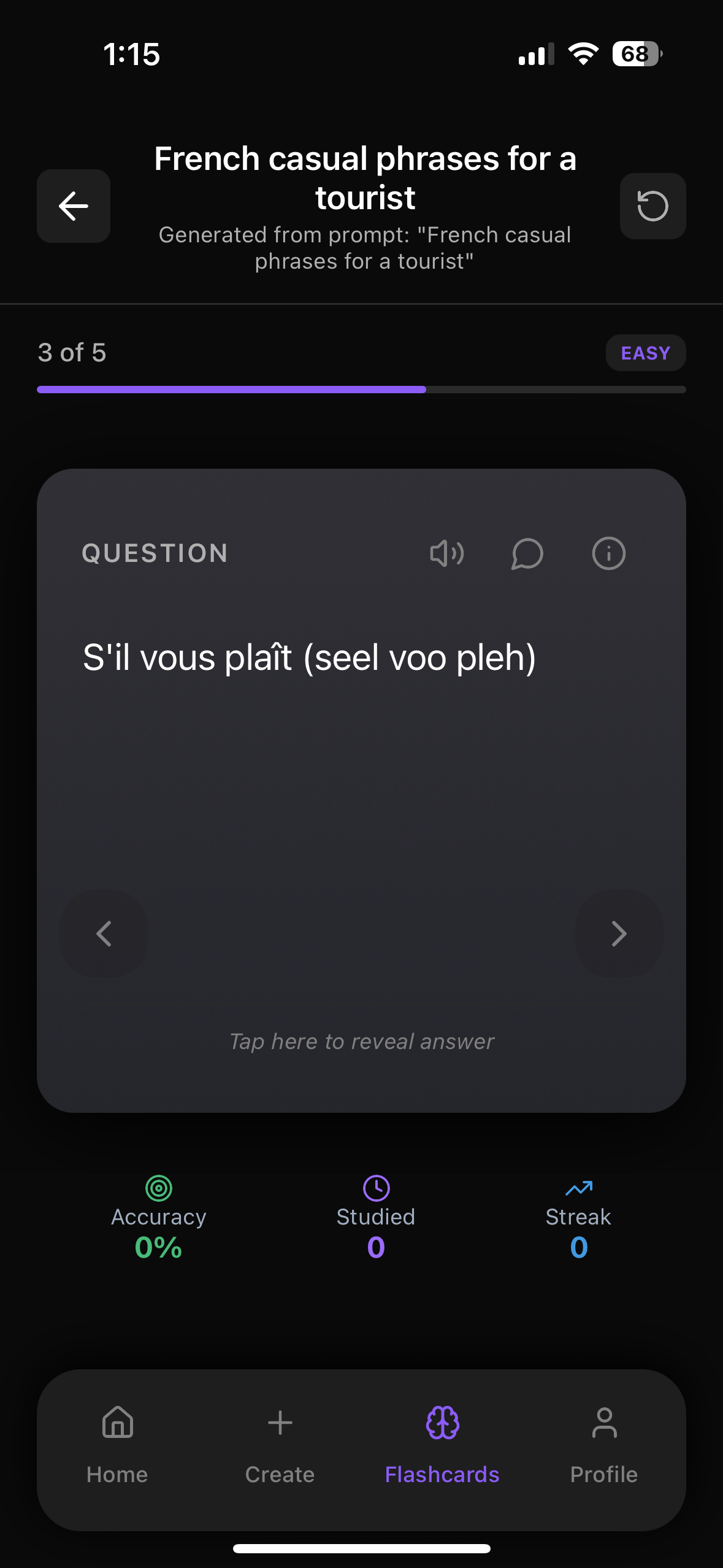
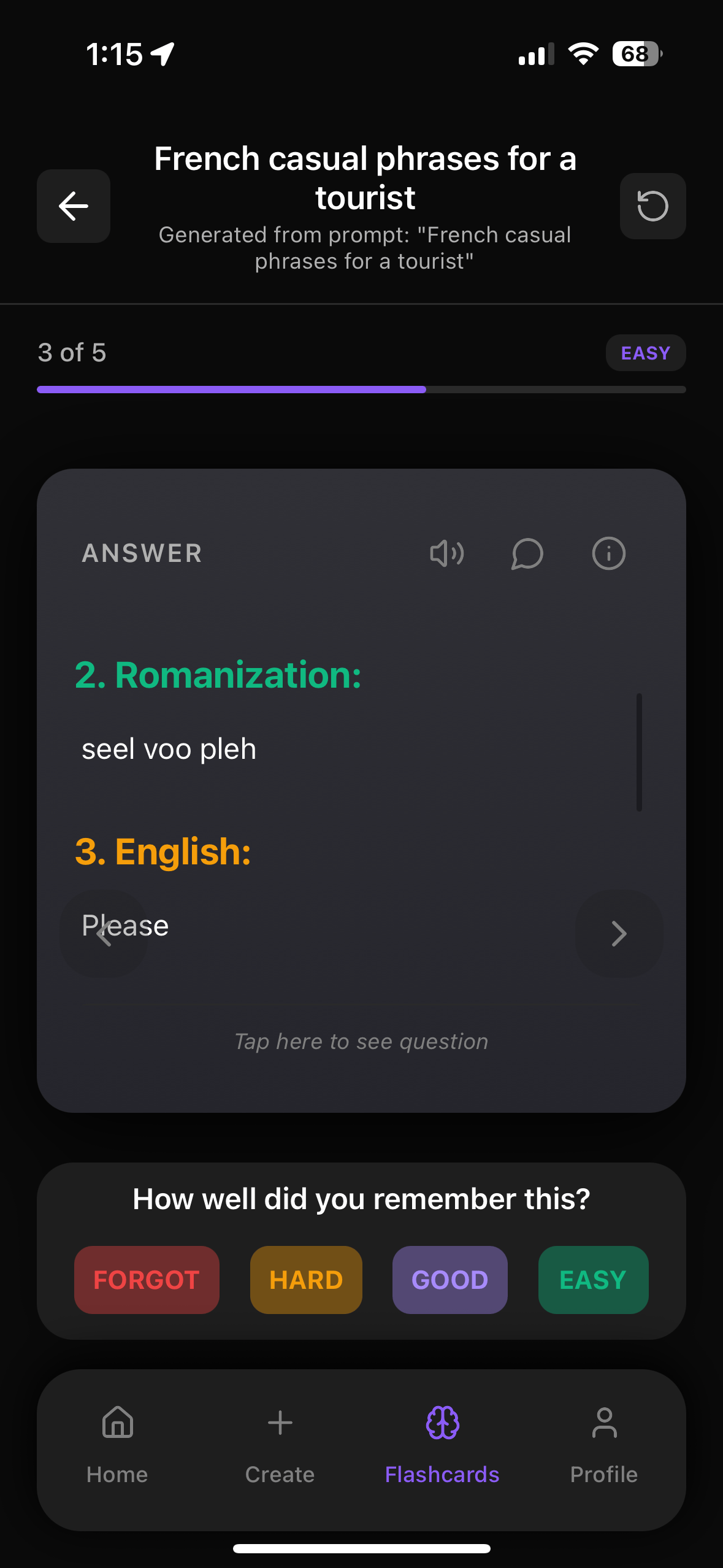
Hey, you ever find yourself drowning in study materials and wish there was an easier way to remember everything? Well, here's the thing: the Active Recall Spaced Repetition guide is a total game-changer for cutting through the noise and really locking that info into your brain. It's like your brain's best friend when you're trying to ace an exam or pick up a new skill. Now, I know it might sound a bit fancy, but don't sweat it. It's all about breaking your study stuff into bite-sized pieces and then reviewing them at just the right times. That's where Flashrecall comes in handy. It takes all the guesswork out by turning your notes into flashcards and timing your reviews perfectly. So if you're curious and want to dive deeper into how this all works, definitely check out our complete guide. It'll make everything a whole lot easier!
🧠 What Is Active Recall?
Active recall = testing yourself BEFORE checking the answer.
That “retrieval” process strengthens your memory far more than rereading or highlighting.
Examples of active recall:
- using flashcards properly
- doing past-year questions
- explaining a concept out loud
- writing everything you remember on a blank page
If you don’t think before checking, it’s NOT active recall.
This is why Flashrecall is so effective — every card makes you pause, think, answer, and only then reveal.
🔁 What Is Spaced Repetition?
Spaced repetition = reviewing information right before you forget it.
Each time you remember successfully, the review interval gets longer.
Example timeline:
Day 1 → Day 3 → Day 7 → Day 14 → Day 30
Your brain stores the memory deeper each time.
Flashrecall does this automatically.
You just rate each card (Easy / Good / Hard), and the app schedules your next review perfectly.
⚡ Why Combining Them Works SO Well
Active recall = strengthens memory
Spaced repetition = keeps memory long-term
Together, they create the fastest and most efficient study system known.
No more forgetting everything a week later.
No more cramming.
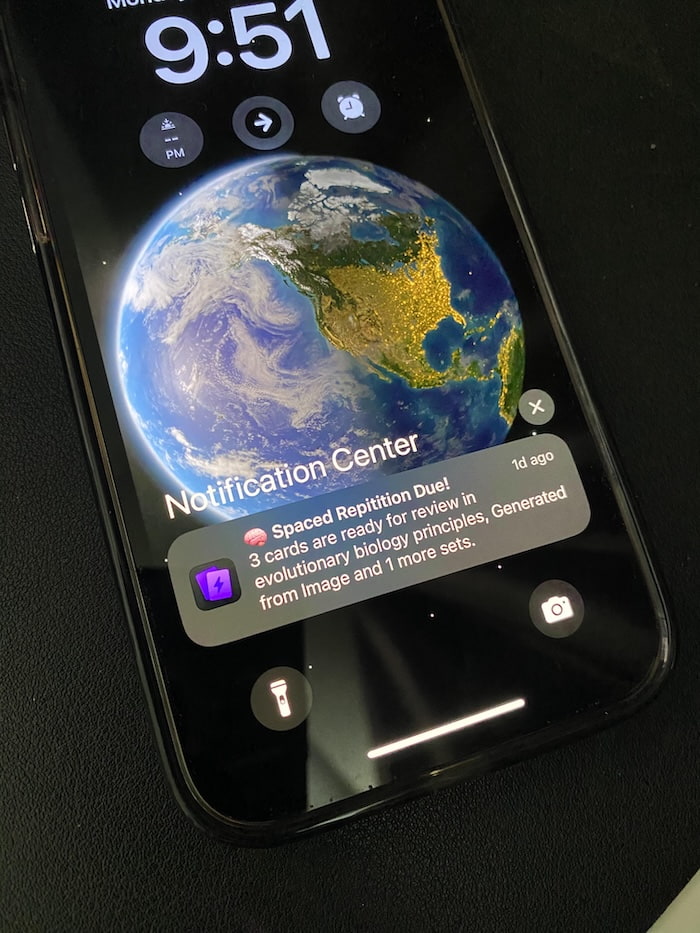
Flashrecall automatically keeps track and reminds you of the cards you don't remember well so you remember faster. Like this :
No more endless rereading.
📌 How To Do Active Recall PROPERLY
Here’s the correct method:
1. Look at the question.
2. Pause for 3–5 seconds.
3. Try to recall the answer.
4. Only then flip or check.
5. Rate difficulty.
6. Repeat consistently.
If you flip instantly, you’re not learning — you’re scanning.
Flashrecall makes this flow automatic.
📅 How To Do Spaced Repetition PROPERLY
The proper way is simple:
1. Review cards when the system tells you.
2. Mark easy cards as Easy.
3. Mark tough cards as Hard so they return sooner.
4. Keep reviews short (5–10 minutes).
5. Repeat daily.
If you try to guess the spacing yourself, you’ll either over-review or forget things.
Flashrecall prevents both.
🚀 Why Flashrecall Is the FASTEST Way to Use Both Methods
Most students fail at active recall + spaced repetition because they:
- don’t know how to create good flashcards
- flip too fast
- forget review timing
- get overwhelmed by manual card creation
✔ Auto-generates flashcards
From images, text, prompts, PDFs, YouTube videos, and audio.
✔ Forces proper active recall
Think → answer → reveal → rate.
✔ Perfect spaced repetition
You never need to plan — the app times every review perfectly.
✔ Fast, low-stress study sessions
Just 5–10 minutes a day.
🎯 Final Takeaway
Active recall + spaced repetition is the fastest, most reliable, and most scientifically proven way to study.
And the quickest way to do it properly — without guessing, planning, or manually building everything — is by using Flashrecall.
Use it daily and you’ll remember more, forget less, and study way more efficiently than before.
Frequently Asked Questions
What's the fastest way to create flashcards?
Manually typing cards works but takes time. Many students now use AI generators that turn notes into flashcards instantly. Flashrecall does this automatically from text, images, or PDFs.
Is there a free flashcard app?
Yes. Flashrecall is free and lets you create flashcards from images, text, prompts, audio, PDFs, and YouTube videos.
How do I start spaced repetition?
You can manually schedule your reviews, but most people use apps that automate this. Flashrecall uses built-in spaced repetition so you review cards at the perfect time.
What is active recall and how does it work?
Active recall is the process of actively retrieving information from memory rather than passively reviewing it. Flashrecall forces proper active recall by making you think before revealing answers, then uses spaced repetition to optimize your review schedule.
Related Articles
Research References
The information in this article is based on peer-reviewed research and established studies in cognitive psychology and learning science.
Cepeda, N. J., Pashler, H., Vul, E., Wixted, J. T., & Rohrer, D. (2006). Distributed practice in verbal recall tasks: A review and quantitative synthesis. Psychological Bulletin, 132(3), 354-380
Meta-analysis showing spaced repetition significantly improves long-term retention compared to massed practice
Carpenter, S. K., Cepeda, N. J., Rohrer, D., Kang, S. H., & Pashler, H. (2012). Using spacing to enhance diverse forms of learning: Review of recent research and implications for instruction. Educational Psychology Review, 24(3), 369-378
Review showing spacing effects work across different types of learning materials and contexts
Kang, S. H. (2016). Spaced repetition promotes efficient and effective learning: Policy implications for instruction. Policy Insights from the Behavioral and Brain Sciences, 3(1), 12-19
Policy review advocating for spaced repetition in educational settings based on extensive research evidence
Karpicke, J. D., & Roediger, H. L. (2008). The critical importance of retrieval for learning. Science, 319(5865), 966-968
Research demonstrating that active recall (retrieval practice) is more effective than re-reading for long-term learning
Roediger, H. L., & Butler, A. C. (2011). The critical role of retrieval practice in long-term retention. Trends in Cognitive Sciences, 15(1), 20-27
Review of research showing retrieval practice (active recall) as one of the most effective learning strategies
Dunlosky, J., Rawson, K. A., Marsh, E. J., Nathan, M. J., & Willingham, D. T. (2013). Improving students' learning with effective learning techniques: Promising directions from cognitive and educational psychology. Psychological Science in the Public Interest, 14(1), 4-58
Comprehensive review ranking learning techniques, with practice testing and distributed practice rated as highly effective
Ebbinghaus, H. (1885). Memory: A Contribution to Experimental Psychology. New York: Dover
Pioneering research on the forgetting curve and memory retention over time

FlashRecall Team
FlashRecall Development Team
The FlashRecall Team is a group of working professionals and developers who are passionate about making effective study methods more accessible to students. We believe that evidence-based learning tec...
Credentials & Qualifications
- •Software Development
- •Product Development
- •User Experience Design
Areas of Expertise
Ready to Transform Your Learning?
Start using FlashRecall today - the AI-powered flashcard app with spaced repetition and active recall.
Download on App Store