Anki Flashcards Biology: 7 Powerful Tips To Learn Faster (And A Better App Most Students Miss) – If you’re grinding through bio with Anki flashcards, this guide will show you how to do it smarter, not harder.
anki flashcards biology can actually stick when you stop memorizing sentences, use diagrams, and let spaced repetition + Flashrecall’s auto cards do the heav...
How Flashrecall app helps you remember faster. It's free
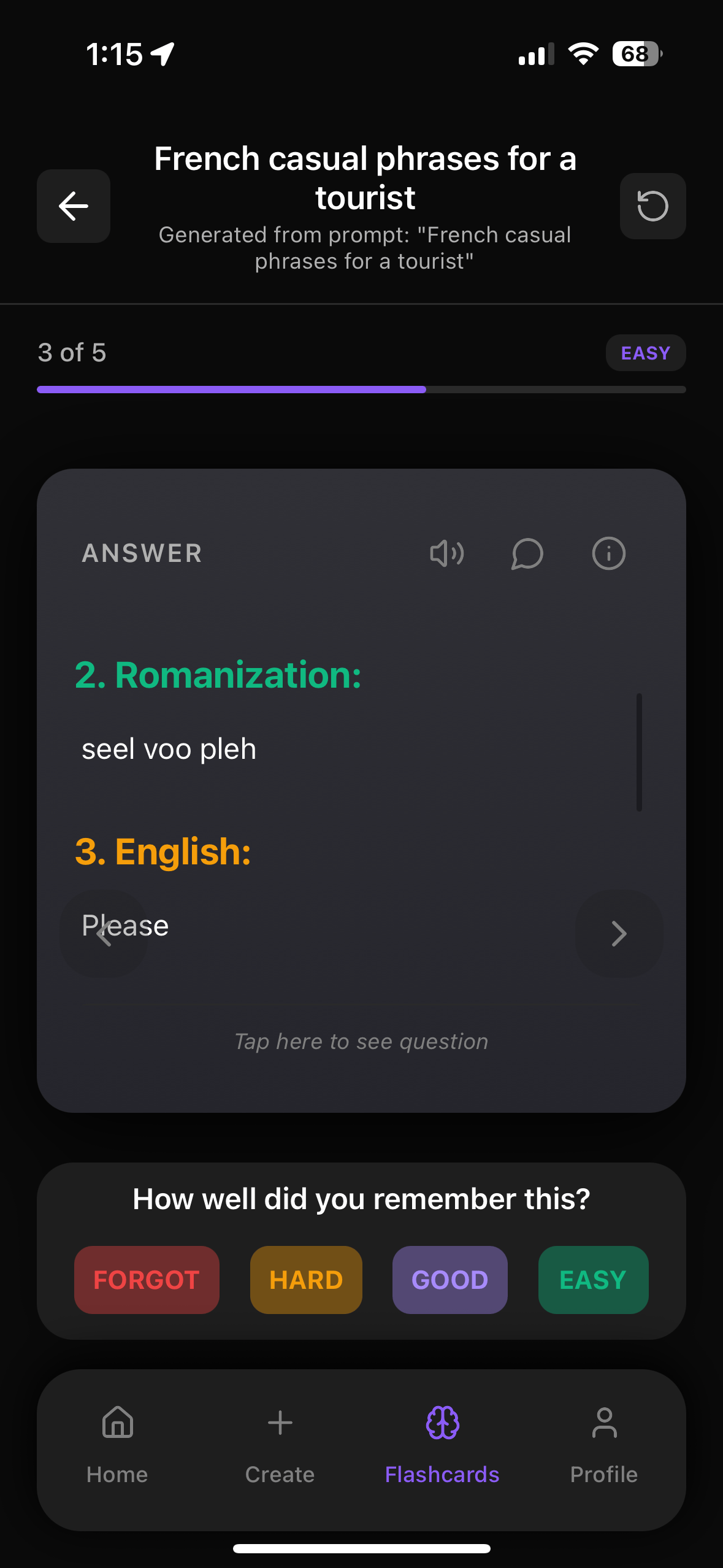
So, You’re Using Anki Flashcards For Biology… Let’s Make Them Actually Work
Alright, let’s talk about anki flashcards biology because, yeah, they can be amazing for bio, but only if you set them up right. Anki flashcards for biology basically mean using spaced repetition cards to memorize stuff like pathways, definitions, diagrams, and exam-style questions. It matters because biology is packed with dense info—enzymes, hormones, immune cells, plant stuff you forgot existed—and you’ll forget it fast if you just reread notes. Apps like Anki and alternatives like Flashrecall do the spaced repetition part for you, so you can focus on what to learn instead of when to review.
If you want something like Anki but way smoother on iPhone and iPad, try Flashrecall here:
👉 https://apps.apple.com/us/app/flashrecall-study-flashcards/id6746757085
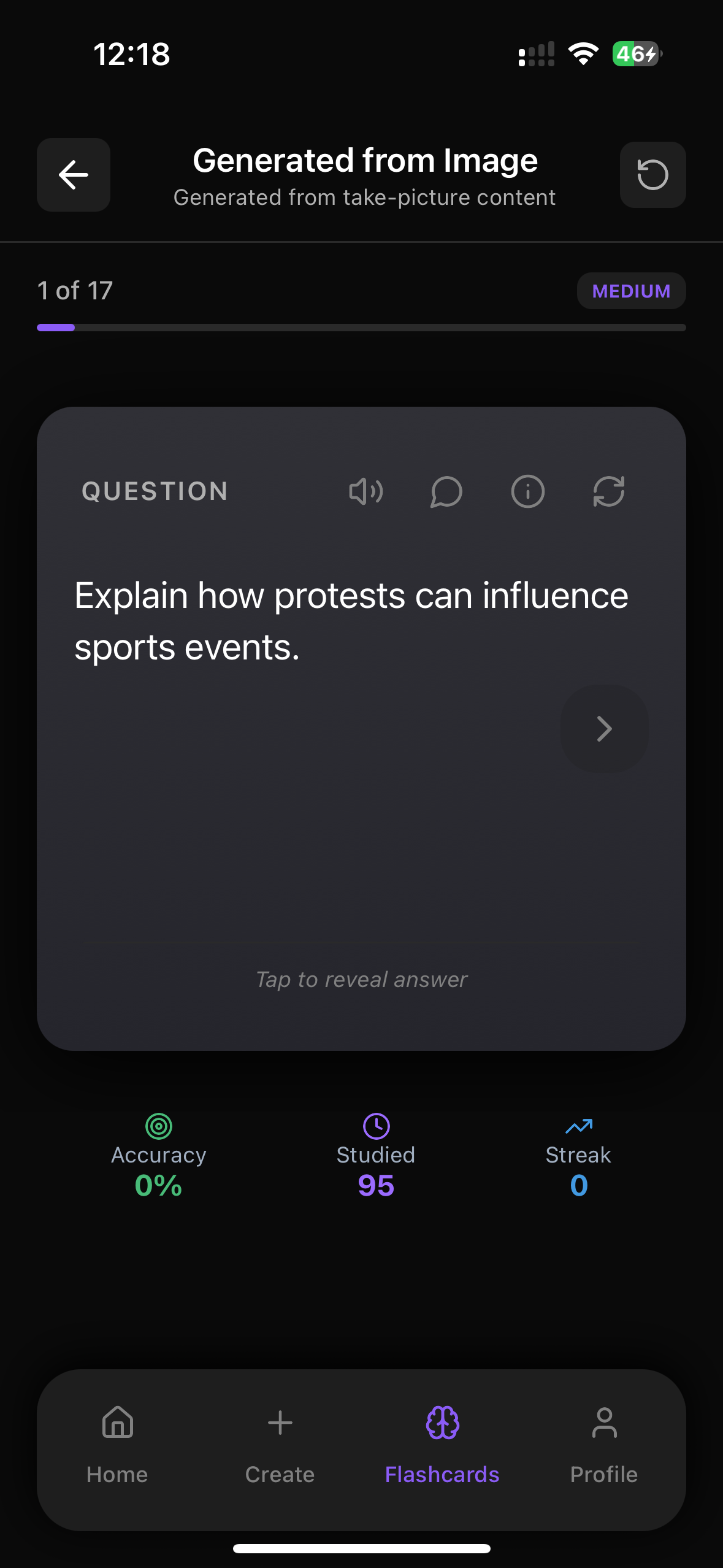
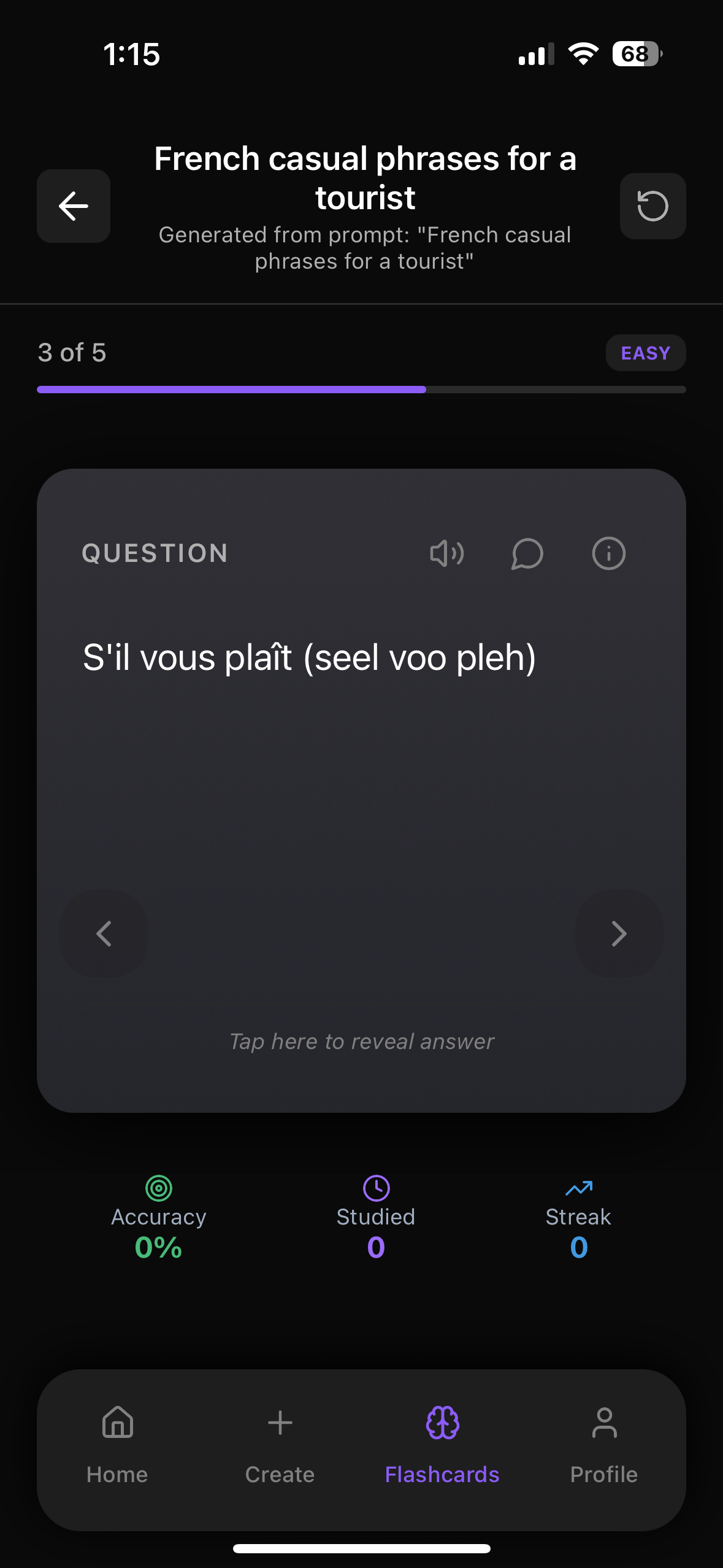
Flashrecall does all the spaced repetition and active recall stuff automatically, but with a cleaner interface and way easier card creation (including from images, PDFs, YouTube, and more).
Anki vs Flashrecall For Biology: What’s The Difference?
You probably already know Anki: super powerful, kind of ugly, a bit clunky to set up, especially on mobile.
Here’s how Flashrecall compares for biology:
- Spaced repetition
- Anki: You set up decks, tweak settings, and manually manage your reviews.
- Flashrecall: Built‑in spaced repetition with auto reminders. You just add cards and it tells you when to study. No settings rabbit hole.
- Card creation (huge for biology)
- Anki: Mostly manual typing, or importing decks. Images and cloze cards work, but setup can be slow.
- Flashrecall:
- Instantly makes flashcards from images, PDFs, text, audio, YouTube links, or typed prompts
- You can still make cards manually if you want full control
- Great for turning lecture slides or textbook screenshots into cards in seconds
- Learning support
- Anki: You review what you made. That’s it.
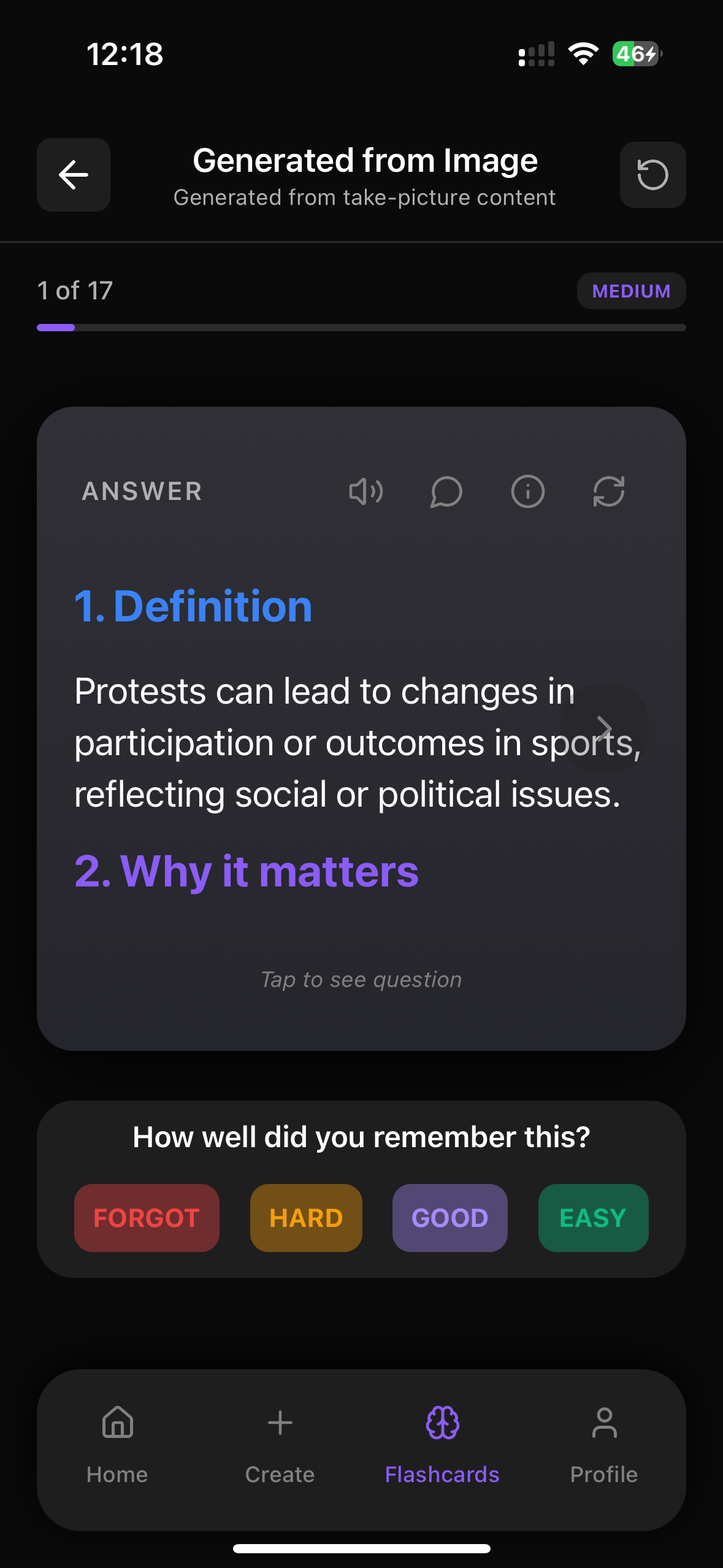
- Flashrecall: You can chat with the flashcard if you’re unsure, so if you forgot what “oxidative phosphorylation” actually is, you can ask inside the app instead of googling.
- Ease of use
- Anki: Super flexible, but has a learning curve.
- Flashrecall: Fast, modern, simple UI. Feels like a normal iOS app, not a tool from 2008.
- Platform
- Anki: Multi-platform, but the iOS app is paid.
- Flashrecall: Free to start, works on iPhone and iPad, and works offline once your cards are saved.
If you like the idea of Anki flashcards for biology but hate fiddling with settings and ugly interfaces, Flashrecall basically gives you the same learning power with less pain.
How To Use Biology Flashcards The Right Way (Anki Or Flashrecall)
You can use either Anki or Flashrecall for this, but the strategy is the same.
1. Don’t Memorize Sentences, Memorize Ideas
Bad bio card:
> Q: What is oxidative phosphorylation?
> A: Oxidative phosphorylation is the metabolic pathway in which cells use enzymes to oxidize nutrients, thereby releasing energy which is used to reform ATP.
You’ll just memorize the sentence, not the concept.
Better card:
- Q: Where in the cell does oxidative phosphorylation happen?
- A: Inner mitochondrial membrane
- Q: What’s the main purpose of oxidative phosphorylation?
- A: Use energy from electron transport to make ATP
- Q: What molecule is the final electron acceptor?
- A: Oxygen
Short, specific, and actually testable.
In Flashrecall, you can make these quickly:
- Highlight text in your notes or PDF → paste into Flashrecall → split into multiple cards
- Or snap a photo of a textbook paragraph and let Flashrecall help you turn it into cards
2. Use Images For Diagrams, Not Just Text
Biology is super visual:
- Cell diagrams
- Pathways
- Anatomy structures
- ECGs, histology slides, etc.
Instead of writing “What is structure A?”, do this:
- Screenshot your lecture slide or textbook diagram
- Import it into Flashrecall (from photos, PDF, or even a YouTube timestamp)
- Make image occlusion–style cards by covering labels mentally:
- Q: “What is the structure labeled A?” with the picture
- A: “Golgi apparatus”
In Flashrecall, you can literally:
- Add the image
- Use prompts to generate cards like “create 5 flashcards testing me on this diagram”
This is way faster than manually building every card in Anki.
3. Turn Lecture Slides Into Cards In Minutes
Most bio courses live on slides.
Here’s a simple workflow using Flashrecall:
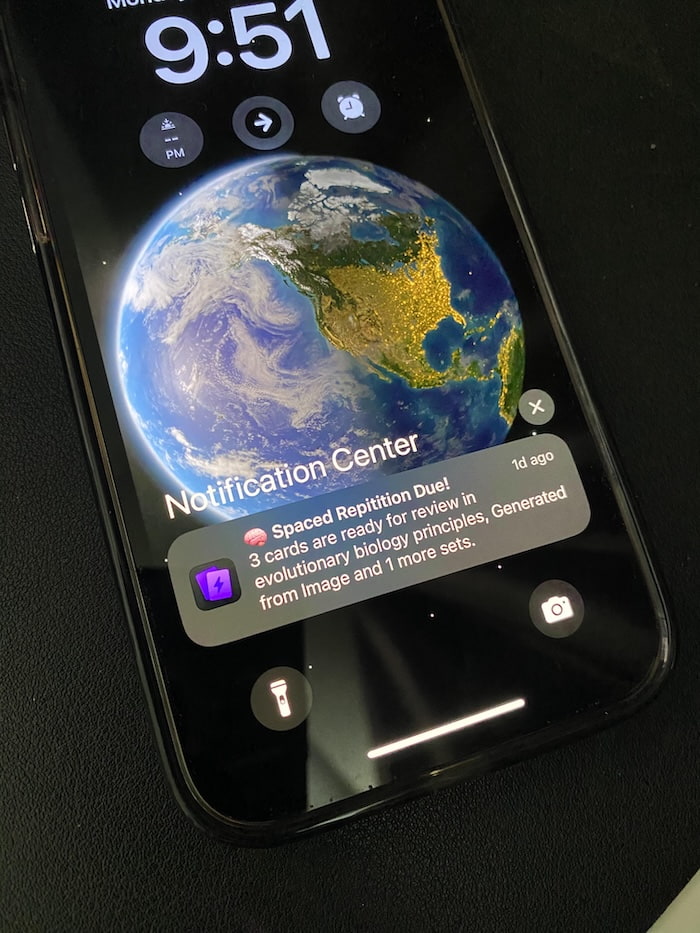
Flashrecall automatically keeps track and reminds you of the cards you don't remember well so you remember faster. Like this :
1. Export your lecture slides as a PDF
2. Import the PDF into Flashrecall
3. Let Flashrecall help generate cards from:
- Bullet points (definitions, causes, functions)
- Tables (e.g., hormones, sources, actions)
- Diagrams (cells, organ systems, etc.)
You can then:
- Edit the cards to keep only what’s actually testable
- Use active recall during review instead of just rereading slides
Yes, you can do something similar with Anki, but it’s more manual. Flashrecall just makes it smoother and faster on mobile.
4. Use Question Types That Match Your Exam
For biology, don’t just make “definition” cards. Mix it up:
- Concept → example
- Q: Give an example of active transport in cells
- A: Na⁺/K⁺ pump
- Cause → effect
- Q: What happens to blood glucose when insulin is low?
- A: It increases
- Structure → function
- Q: Function of the rough ER?
- A: Protein synthesis and modification
- Image → diagnosis / name (for med/health bio)
- Q: Identify the organ in this histology image
- A: Liver
In Flashrecall, you can:
- Type a prompt like “Create 10 exam-style biology flashcards from this text”
- Then tweak the cards so they match your exam style (multiple choice, short answer, etc.)
5. Let Spaced Repetition Handle The Timing
The whole point of using anki flashcards biology style is the spaced repetition algorithm.
- You see a card
- You try to recall the answer (active recall)
- You rate how hard it was
- The app schedules it for you
In Flashrecall, this is all built in:
- Cards you struggle with show up more often
- Easy cards get pushed further out
- You get study reminders, so you don’t fall behind
You don’t have to think about “when should I review this?” — the app does it.
And because Flashrecall works offline, you can review on the bus, in the library basement, or anywhere your campus Wi‑Fi dies.
6. Group Your Biology Decks Smartly (So You Don’t Drown)
Instead of dumping everything into one massive “Biology” deck, split things up:
Some ideas:
- “Cell Biology – Basics”
- “Genetics – Mendelian + Non-Mendelian”
- “Human Physiology – Cardiovascular”
- “Human Physiology – Respiratory”
- “Microbiology – Bacteria”
- “Microbiology – Viruses”
Why this helps:
- You can focus on weak topics (e.g., “Microbiology – Viruses”)
- You can review a specific chapter before a quiz
- It feels less overwhelming than seeing 500 due cards at once
In Flashrecall, you can:
- Create separate decks for each module or exam
- Quickly jump into the deck you need right before class or a test
7. Use “Chat With The Card” When You’re Stuck
This is where Flashrecall really beats classic Anki for biology.
Sometimes you see a card like:
> Q: Explain the role of tRNA in translation.
You blank out. You flip the card. You read it. You still feel fuzzy.
In Flashrecall, you can:
- Open that card
- Chat with it like:
- “Explain this like I’m 12.”
- “Give me another example.”
- “Compare tRNA and mRNA in one sentence.”
It’s like having a mini tutor built into your flashcard app, which is a lifesaver when you’re reviewing solo at 1 a.m.
Example: Turning A Biology Topic Into Great Flashcards
Let’s say you’re learning Photosynthesis.
Instead of one giant card like:
> Q: Explain photosynthesis
> A: [paragraph of pain]
Break it down:
- Q: Where in the cell does the light-dependent reaction occur?
- A: Thylakoid membrane
- Q: What are the main products of the light-dependent reactions?
- A: ATP, NADPH, and O₂
- Q: Where does the Calvin cycle occur?
- A: Stroma of the chloroplast
- Q: What is the main purpose of the Calvin cycle?
- A: Fix CO₂ into glucose
- Q: Which pigment mainly absorbs light in photosynthesis?
- A: Chlorophyll a
You can:
- Paste a short explanation of photosynthesis into Flashrecall
- Ask it to generate 8–10 question‑answer cards
- Edit them to match your course level (high school vs uni level)
Then you just let spaced repetition handle the rest.
Why Flashrecall Is Perfect If You Like Anki Flashcards For Biology
If you’re already into the anki flashcards biology style of learning, you’ll feel at home with Flashrecall—but with less friction:
- Spaced repetition + active recall baked in
- Auto reminders so you don’t forget to study
- Makes flashcards from images, PDFs, YouTube, text, audio, or manual input
- You can chat with cards when you’re confused
- Works great for:
- School biology
- University / pre‑med
- Medicine, nursing, pharmacy
- Any science-heavy subject, really
- Fast, modern, easy to use on iPhone and iPad
- Free to start, and works offline
If you like the idea of Anki but want something smoother, more modern, and built for how you actually study on your phone, try Flashrecall here:
👉 https://apps.apple.com/us/app/flashrecall-study-flashcards/id6746757085
Build your biology decks once, let spaced repetition do its thing, and stop relearning the same pathways before every exam.
Frequently Asked Questions
Is Anki good for studying?
Anki is powerful but requires manual card creation and has a steep learning curve. Flashrecall offers AI-powered card generation from your notes, images, PDFs, and videos, making it faster and easier to create effective flashcards.
What's the fastest way to create flashcards?
Manually typing cards works but takes time. Many students now use AI generators that turn notes into flashcards instantly. Flashrecall does this automatically from text, images, or PDFs.
How do I start spaced repetition?
You can manually schedule your reviews, but most people use apps that automate this. Flashrecall uses built-in spaced repetition so you review cards at the perfect time.
How can I study more effectively for this test?
Effective exam prep combines active recall, spaced repetition, and regular practice. Flashrecall helps by automatically generating flashcards from your study materials and using spaced repetition to ensure you remember everything when exam day arrives.
Related Articles
- Anki Powerful Intelligent Flashcards: 7 Proven Ways To Learn Faster (And A Smarter Alternative Most Students Don’t Know) – If you love Anki but want something faster, easier, and actually fun to use, this is for you.
- Paramedic Drug Flashcards: The Essential Way To Master Meds Fast (Most Students Don’t Know This) – Learn meds quicker, remember doses under pressure, and stop blanking on scene with this simple flashcard system.
- Veterinary Terminology Flash Cards: 7 Powerful Study Hacks To Master Vet Med Terms Faster Than Your Classmates – Learn smarter, remember longer, and stop blanking on those impossible words.
Research References
The information in this article is based on peer-reviewed research and established studies in cognitive psychology and learning science.
Cepeda, N. J., Pashler, H., Vul, E., Wixted, J. T., & Rohrer, D. (2006). Distributed practice in verbal recall tasks: A review and quantitative synthesis. Psychological Bulletin, 132(3), 354-380
Meta-analysis showing spaced repetition significantly improves long-term retention compared to massed practice
Carpenter, S. K., Cepeda, N. J., Rohrer, D., Kang, S. H., & Pashler, H. (2012). Using spacing to enhance diverse forms of learning: Review of recent research and implications for instruction. Educational Psychology Review, 24(3), 369-378
Review showing spacing effects work across different types of learning materials and contexts
Kang, S. H. (2016). Spaced repetition promotes efficient and effective learning: Policy implications for instruction. Policy Insights from the Behavioral and Brain Sciences, 3(1), 12-19
Policy review advocating for spaced repetition in educational settings based on extensive research evidence
Karpicke, J. D., & Roediger, H. L. (2008). The critical importance of retrieval for learning. Science, 319(5865), 966-968
Research demonstrating that active recall (retrieval practice) is more effective than re-reading for long-term learning
Roediger, H. L., & Butler, A. C. (2011). The critical role of retrieval practice in long-term retention. Trends in Cognitive Sciences, 15(1), 20-27
Review of research showing retrieval practice (active recall) as one of the most effective learning strategies
Dunlosky, J., Rawson, K. A., Marsh, E. J., Nathan, M. J., & Willingham, D. T. (2013). Improving students' learning with effective learning techniques: Promising directions from cognitive and educational psychology. Psychological Science in the Public Interest, 14(1), 4-58
Comprehensive review ranking learning techniques, with practice testing and distributed practice rated as highly effective

FlashRecall Team
FlashRecall Development Team
The FlashRecall Team is a group of working professionals and developers who are passionate about making effective study methods more accessible to students. We believe that evidence-based learning tec...
Credentials & Qualifications
- •Software Development
- •Product Development
- •User Experience Design
Areas of Expertise
Ready to Transform Your Learning?
Start using FlashRecall today - the AI-powered flashcard app with spaced repetition and active recall.
Download on App Store