Anki Spaced Repetition: Why Most Students Get Stuck (And The Smarter Flashcard App That Helps You Learn Faster)
Anki spaced repetition works, but the setup sucks. See why it’s so powerful, where people quit, and how Flashrecall gives you the same science with less hassle.
How Flashrecall app helps you remember faster. It's free
Anki Spaced Repetition Is Great… But Also Kind Of A Headache
Anki is legendary for spaced repetition. If you’ve googled “how to memorize anything,” you’ve definitely seen it.
But here’s the honest truth:
Anki is powerful, and it’s a pain to set up, sync, and actually stick with long term.
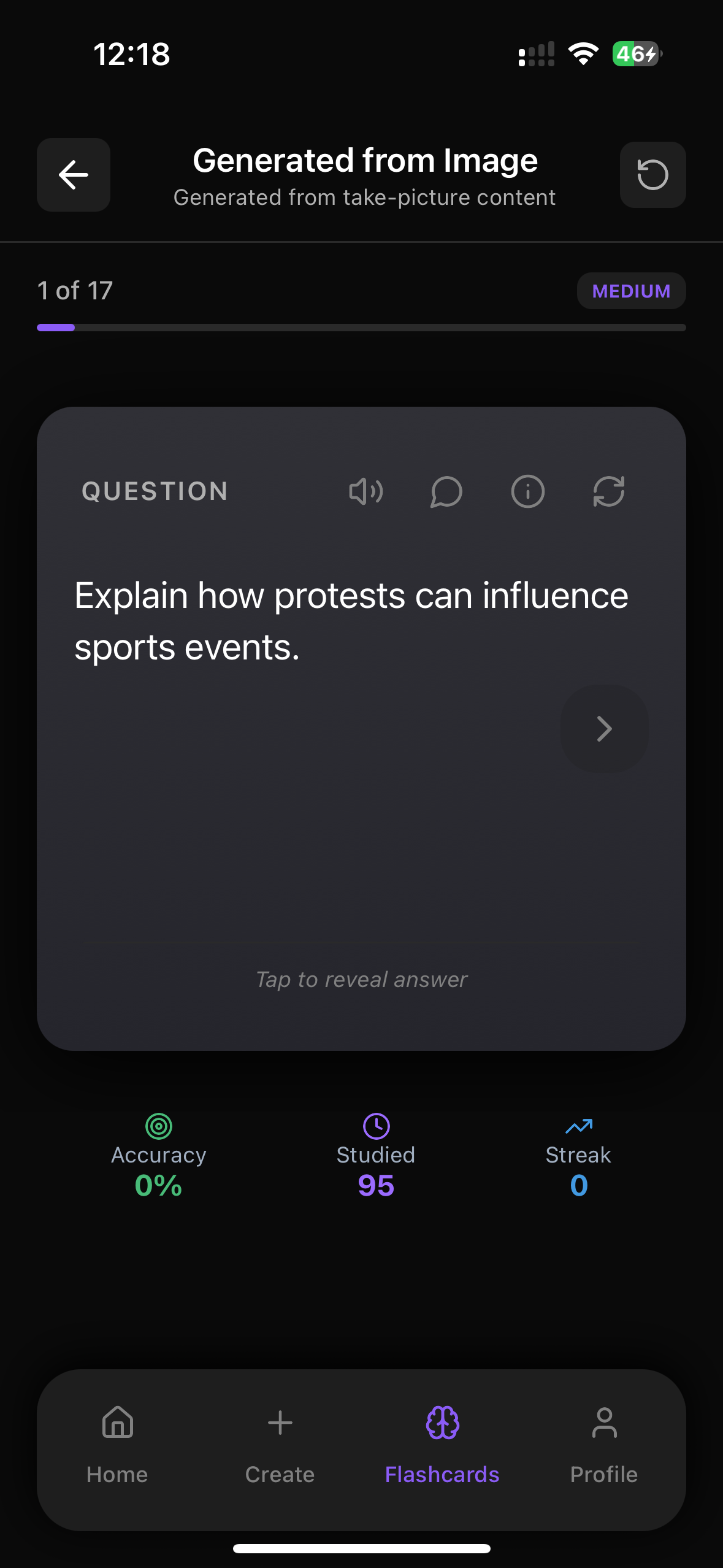
If you want the benefits of Anki’s spaced repetition without the constant tinkering, broken add‑ons, and ugly interface, there’s a smoother option: Flashrecall – a fast, modern flashcard app that bakes in spaced repetition, active recall, and reminders for you.
You can grab it here (free to start):
👉 https://apps.apple.com/us/app/flashrecall-study-flashcards/id6746757085
Let’s break down how Anki spaced repetition works, why it’s so effective, where it trips people up, and how Flashrecall gives you the same science-backed learning with way less friction.
What Is Spaced Repetition (And Why Do Anki Fans Swear By It)?
Spaced repetition is simple brain science:
- You review something
- You wait just long enough to almost forget it
- You review again
- Each time, the gap gets a little longer
Do this, and you:
- Remember more with less total study time
- Beat cramming and forgetting
- Move info into long-term memory
Anki uses an algorithm to schedule cards right before you’re likely to forget them. That’s why people use it for:
- Languages (vocab, grammar patterns)
- Medicine (drugs, conditions, anatomy)
- Exams (MCAT, USMLE, LSAT, bar, etc.)
- School subjects (history dates, formulas, definitions)
- Even business stuff (frameworks, sales scripts, interview prep)
- Built‑in spaced repetition (no config, no add‑ons)
- Automatic study reminders
- Active recall-first design
- Super fast card creation from images, PDFs, YouTube, text, or manual entry
The Problem With Anki: Powerful, But Clunky For Everyday Use
People don’t quit Anki because spaced repetition doesn’t work.
They quit because the experience is rough.
Some common pain points:
1. Steep Learning Curve
To get the most out of Anki, you often need to:
- Learn the interface (which looks… very 2005)
- Understand card types and templates
- Install add‑ons to make it usable on mobile or prettier
- Sync across devices (and hope nothing breaks)
If you just want to make flashcards and study, this is a lot.
Open the app → create a deck → start studying. That’s it.
No add‑ons, no templates, no weird settings you’re scared to touch.
2. Making Cards Takes Forever
In Anki, card creation is usually:
- Type question
- Type answer
- Fiddle with formatting
- Repeat hundreds of times
That’s fine if you’re hardcore, but most students don’t have time for that every day.
You can make flashcards from:
- Images (snap a pic of a textbook page, notes, slides)
- Text (paste lecture notes or summaries)
- PDFs (upload a chapter or handout)
- YouTube links (turn videos into cards)
- Audio
- Or just type them manually if you prefer
The app helps turn that content into cards quickly, so you spend more time reviewing and less time formatting.
3. Forgetting To Review (And Then Getting Crushed By Backlogs)
Anki’s spaced repetition is only as good as your consistency.
Miss a few days and suddenly you’re staring at 600 “due” cards. That’s demotivating.
- Automatic spaced repetition – the app schedules cards for you
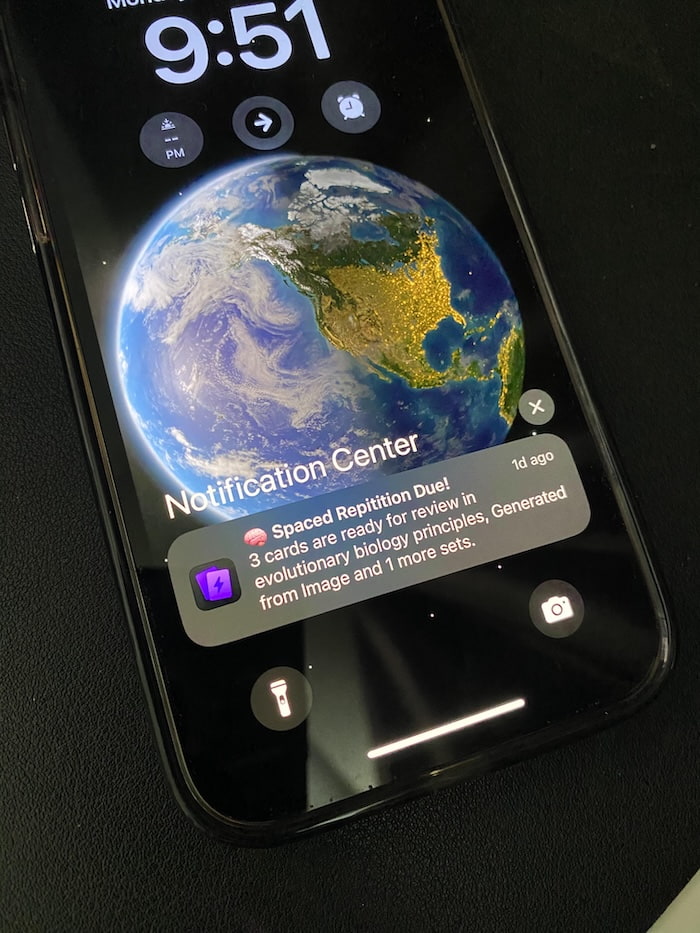
- Study reminders – gentle nudges so you don’t forget to review
- A design that makes short, frequent sessions easy (on the bus, between classes, before bed)
So instead of drowning in overdue cards, you get a steady, manageable flow.
4. Mobile Experience And Sync
Anki on mobile can:
- Feel clunky
- Require manual syncing
- Depend on add‑ons to look and feel decent
- Works on iPhone and iPad
- Fast, modern interface
- Works offline – you can study anywhere, even on a plane
- Sync is seamless; you just open the app and go
How Flashrecall Uses Spaced Repetition (Without Making You Think About It)
With Anki, you often end up tweaking settings like:
- Ease factor
- Interval modifier
- Learning steps
- Graduating intervals
If you love tinkering, cool.
If you don’t, it’s just overwhelming.
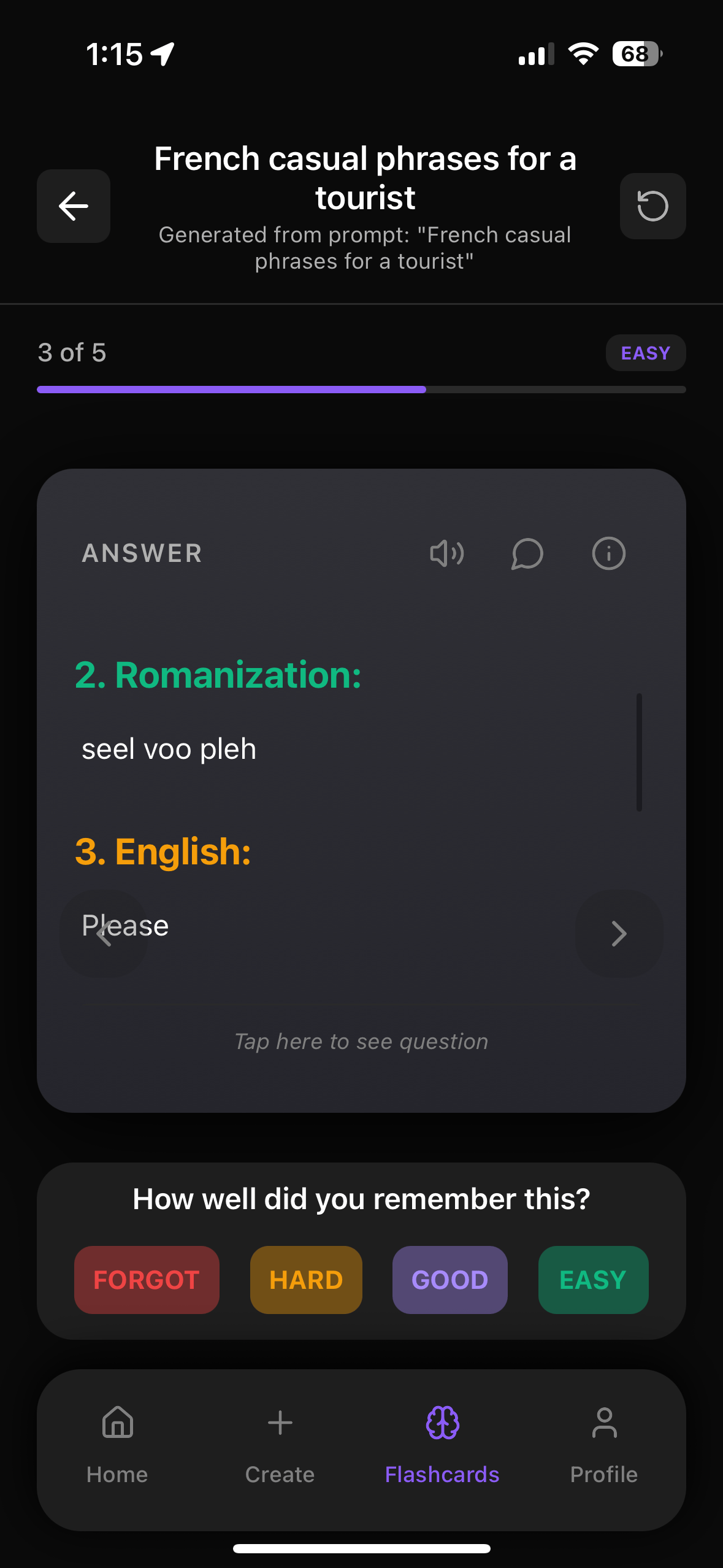
Here’s how it works from your side:
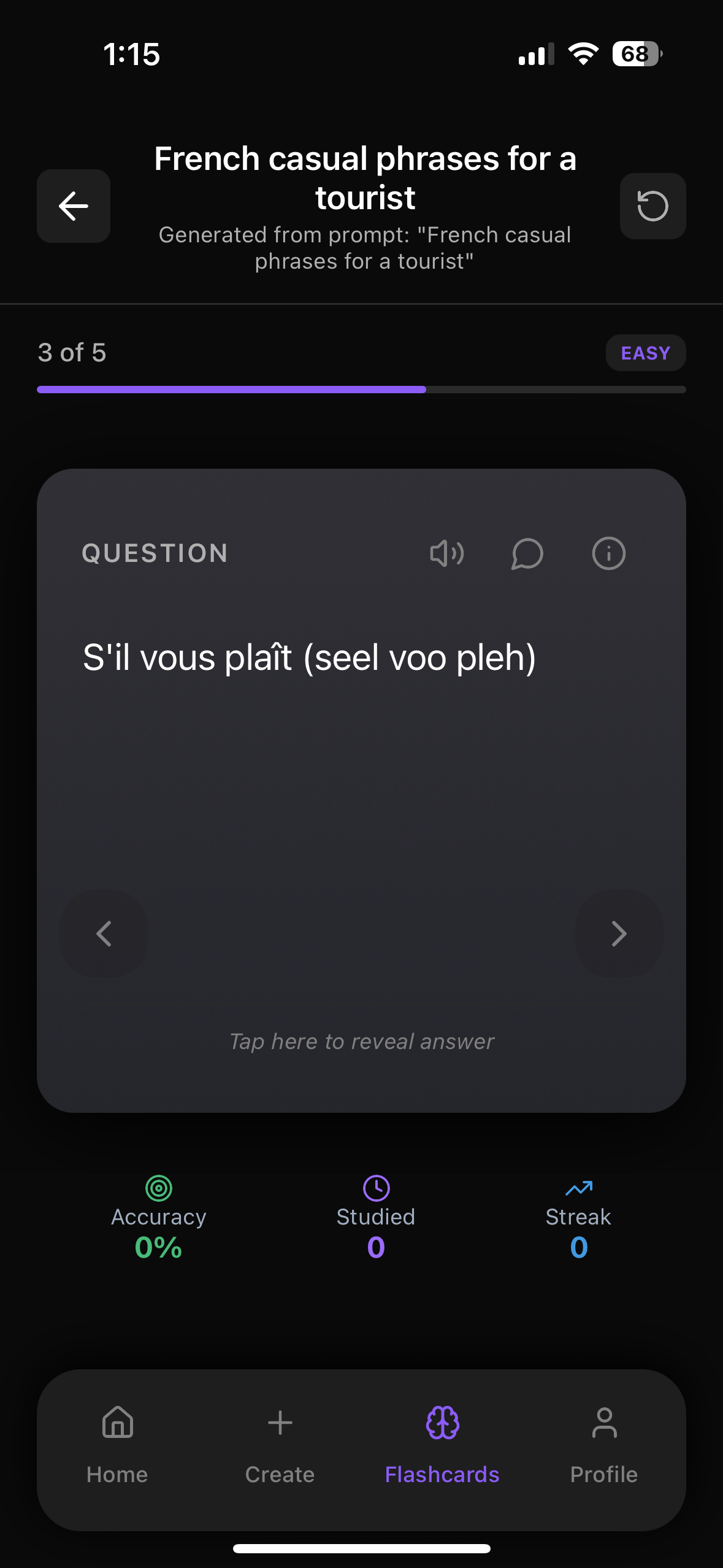
1. You create or import your flashcards
2. You start a study session
3. For each card, you try to actively recall the answer
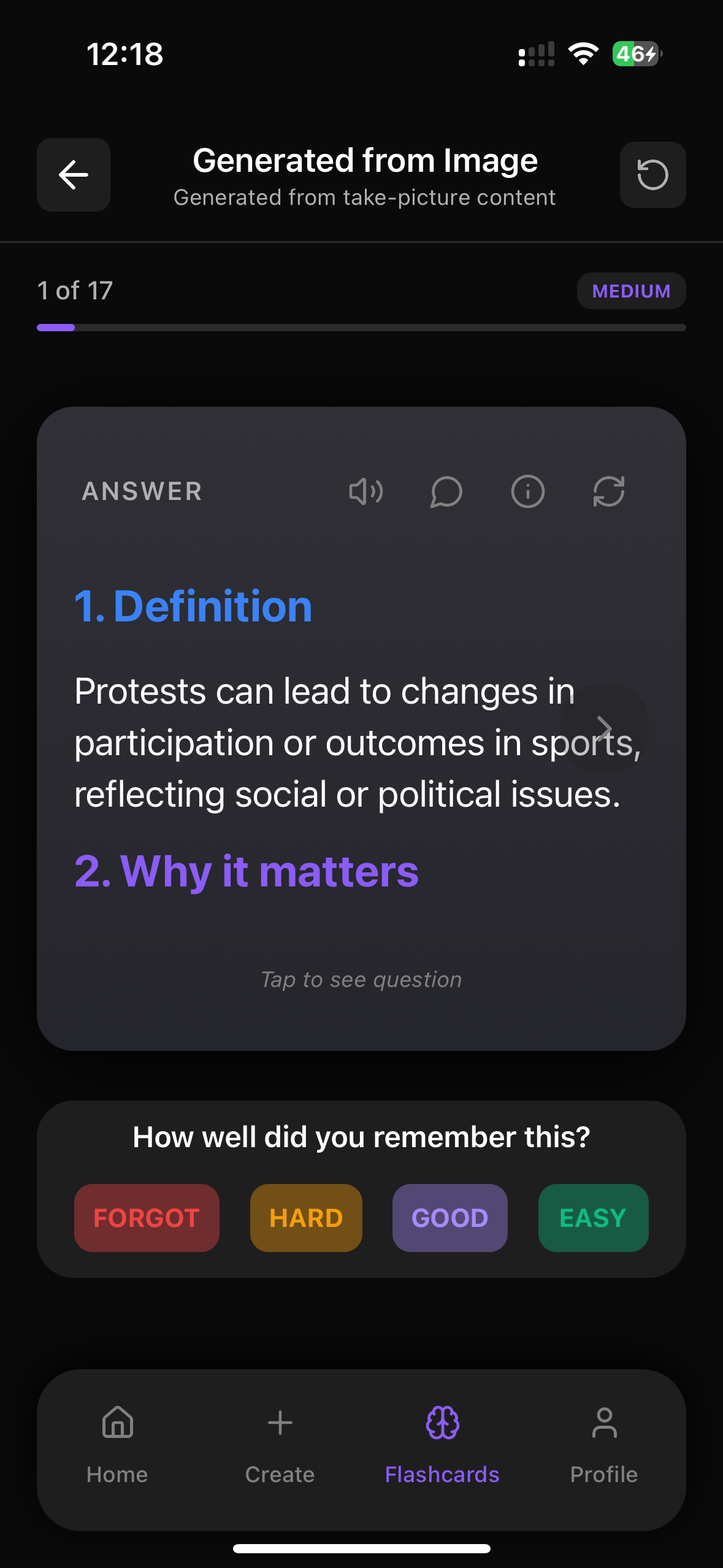
Flashrecall automatically keeps track and reminds you of the cards you don't remember well so you remember faster. Like this :
4. You rate how well you remembered it (e.g., easy / hard)
5. Flashrecall automatically schedules the next review using spaced repetition
No algorithms to configure.
No settings to stress over.
Just “study → rate → remember longer.”
Active Recall + Spaced Repetition = Memory Cheat Code
Spaced repetition is only half the story. The other half is active recall.
Instead of just rereading notes, you:
- Look at a prompt
- Force your brain to pull the answer out
- Then check if you were right
Both Anki and Flashrecall are built around this idea.
But Flashrecall adds a really helpful twist: you can chat with your flashcards.
“Chat With Your Flashcards” Sounds Weird… But It’s Super Useful
Imagine you’re studying medicine and you have a card about a certain disease. You remember the basic definition, but you’re unsure about:
- The symptoms
- The treatment
- How it differs from something similar
In Flashrecall, you can:
- Open the card
- Start a chat about it
- Ask questions like “Explain this to me like I’m 12” or “Compare this to X”
This turns your deck into a mini tutor, not just a pile of question–answer pairs.
That’s something Anki just doesn’t do.
Anki vs Flashrecall: Quick Comparison
Here’s a simple breakdown:
| Feature | Anki | Flashrecall |
|---|---|---|
| Spaced repetition | Yes (very configurable) | Yes (automatic, no setup) |
| Active recall | Yes | Yes (plus chat to go deeper) |
| Card creation from images/PDFs | Possible, but manual/awkward | Built‑in, super fast |
| YouTube → flashcards | Needs plugins / manual work | Built‑in |
| Study reminders | Basic / manual | Built‑in reminders |
| Mobile experience | Functional but dated | Modern, fast, iPhone & iPad |
| Works offline | Yes | Yes |
| Ease of use | Steep learning curve | Very beginner‑friendly |
| Best for | Power users who love tweaking | Students & learners who want results fast |
You can still love Anki and try Flashrecall. They’re not enemies.
But if you’ve bounced off Anki before, Flashrecall might finally make spaced repetition “stick” for you.
How To Use Spaced Repetition With Flashrecall (Step‑By‑Step)
Let’s say you’re learning Spanish, prepping for med school, or studying for a big exam. Here’s how you could use Flashrecall in a very practical way.
1. Create Or Import Your Content
Options:
- Take a picture of textbook pages or lecture slides → turn them into cards
- Paste vocab lists or lecture notes as text
- Import PDFs from your teacher or course
- Drop in a YouTube link from a lecture you like
- Or manually type cards for key concepts
Example (language learning):
- Front: “to run” (English)
- Back: “correr” (Spanish) + example sentence
Example (medicine):
- Front: “Side effects of ACE inhibitors?”
- Back: List of side effects + quick mnemonic
2. Let Spaced Repetition Handle The Timing
You don’t have to plan your review schedule.
Each day when you open Flashrecall:
- It shows you the cards that are due today
- You review them using active recall
- You rate how well you remembered them
- The app reschedules them intelligently
Short sessions, every day or two, and your memory compounds.
3. Use Chat When You’re Confused
If a card feels shaky:
- Open it
- Ask follow-up questions like:
- “Explain this like I’m a beginner”
- “Give me another example”
- “Compare this to [another concept]”
This is especially powerful for:
- Complicated medical concepts
- Grammar rules
- Business frameworks
- Exam strategies
You’re not just memorizing; you’re understanding.
4. Study Anywhere (Even Offline)
On the train, in a boring queue, on a flight:
- Flashrecall works offline
- Your progress syncs when you’re back online
This makes spaced repetition actually fit your life instead of demanding a dedicated “study desk” session every time.
What Flashrecall Is Great For (Beyond Just “Flashcards”)
Because it’s flexible, you can use Flashrecall for almost anything:
- Languages – vocab, phrases, verb conjugations, grammar patterns
- Exams – MCAT, USMLE, SAT, bar exam, CFA, anything with lots of facts
- School & University – definitions, theories, formulas, dates, diagrams
- Medicine & Nursing – drugs, dosages, side effects, diseases, protocols
- Business / Career – frameworks, interview questions, sales scripts, coding concepts
- Personal Learning – geography, history, trivia, anything you want to remember
If it can go on a card, you can turn it into long‑term memory.
So… Should You Use Anki Or Flashrecall?
If you:
- Love tweaking settings
- Don’t mind an old‑school interface
- Want maximum control over every tiny detail
Then Anki is still a beast. It’s powerful and free.
But if you:
- Want spaced repetition that just works
- Prefer a clean, modern app
- Like fast card creation from images, PDFs, YouTube, and text
- Want built‑in reminders and the ability to chat with your flashcards
Then Flashrecall is the easier, friendlier option.
You can start for free and see if it fits how your brain (and your schedule) works:
👉 https://apps.apple.com/us/app/flashrecall-study-flashcards/id6746757085
If Anki spaced repetition felt overwhelming, you don’t have to give up on the method.
You just might need a better tool to make it effortless.
Frequently Asked Questions
Is Anki good for studying?
Anki is powerful but requires manual card creation and has a steep learning curve. Flashrecall offers AI-powered card generation from your notes, images, PDFs, and videos, making it faster and easier to create effective flashcards.
What's the fastest way to create flashcards?
Manually typing cards works but takes time. Many students now use AI generators that turn notes into flashcards instantly. Flashrecall does this automatically from text, images, or PDFs.
How do I start spaced repetition?
You can manually schedule your reviews, but most people use apps that automate this. Flashrecall uses built-in spaced repetition so you review cards at the perfect time.
Related Articles
- Anki Cards: Smarter Flashcard Hacks Most Students Don’t Know (And a Better Alternative) – Stop wasting time making clunky decks and learn how to upgrade your flashcards for faster results.
- Android Anki Alternatives: The Best Way To Study Smarter (That Most Students Don’t Know About) – Stop fighting clunky flashcard apps and learn a faster, easier way to remember everything.
- Anki Flash Cards: The Powerful Alternative Most Students Ignore (And How To Learn Faster With Smarter Flashcards) – Discover why classic Anki decks aren’t your only option anymore and how a modern app can save you hours.
Research References
The information in this article is based on peer-reviewed research and established studies in cognitive psychology and learning science.
Cepeda, N. J., Pashler, H., Vul, E., Wixted, J. T., & Rohrer, D. (2006). Distributed practice in verbal recall tasks: A review and quantitative synthesis. Psychological Bulletin, 132(3), 354-380
Meta-analysis showing spaced repetition significantly improves long-term retention compared to massed practice
Carpenter, S. K., Cepeda, N. J., Rohrer, D., Kang, S. H., & Pashler, H. (2012). Using spacing to enhance diverse forms of learning: Review of recent research and implications for instruction. Educational Psychology Review, 24(3), 369-378
Review showing spacing effects work across different types of learning materials and contexts
Kang, S. H. (2016). Spaced repetition promotes efficient and effective learning: Policy implications for instruction. Policy Insights from the Behavioral and Brain Sciences, 3(1), 12-19
Policy review advocating for spaced repetition in educational settings based on extensive research evidence
Karpicke, J. D., & Roediger, H. L. (2008). The critical importance of retrieval for learning. Science, 319(5865), 966-968
Research demonstrating that active recall (retrieval practice) is more effective than re-reading for long-term learning
Roediger, H. L., & Butler, A. C. (2011). The critical role of retrieval practice in long-term retention. Trends in Cognitive Sciences, 15(1), 20-27
Review of research showing retrieval practice (active recall) as one of the most effective learning strategies
Dunlosky, J., Rawson, K. A., Marsh, E. J., Nathan, M. J., & Willingham, D. T. (2013). Improving students' learning with effective learning techniques: Promising directions from cognitive and educational psychology. Psychological Science in the Public Interest, 14(1), 4-58
Comprehensive review ranking learning techniques, with practice testing and distributed practice rated as highly effective

FlashRecall Team
FlashRecall Development Team
The FlashRecall Team is a group of working professionals and developers who are passionate about making effective study methods more accessible to students. We believe that evidence-based learning tec...
Credentials & Qualifications
- •Software Development
- •Product Development
- •User Experience Design
Areas of Expertise
Ready to Transform Your Learning?
Start using FlashRecall today - the AI-powered flashcard app with spaced repetition and active recall.
Download on App Store