Complete Guide To Color Flashcards: The Ultimate Guide
Color flashcards boost memory by using patterns and visuals. Use Flashrecall to create colorful cards from images or text and streamline your study sessions.
How Flashrecall app helps you remember faster. It's free
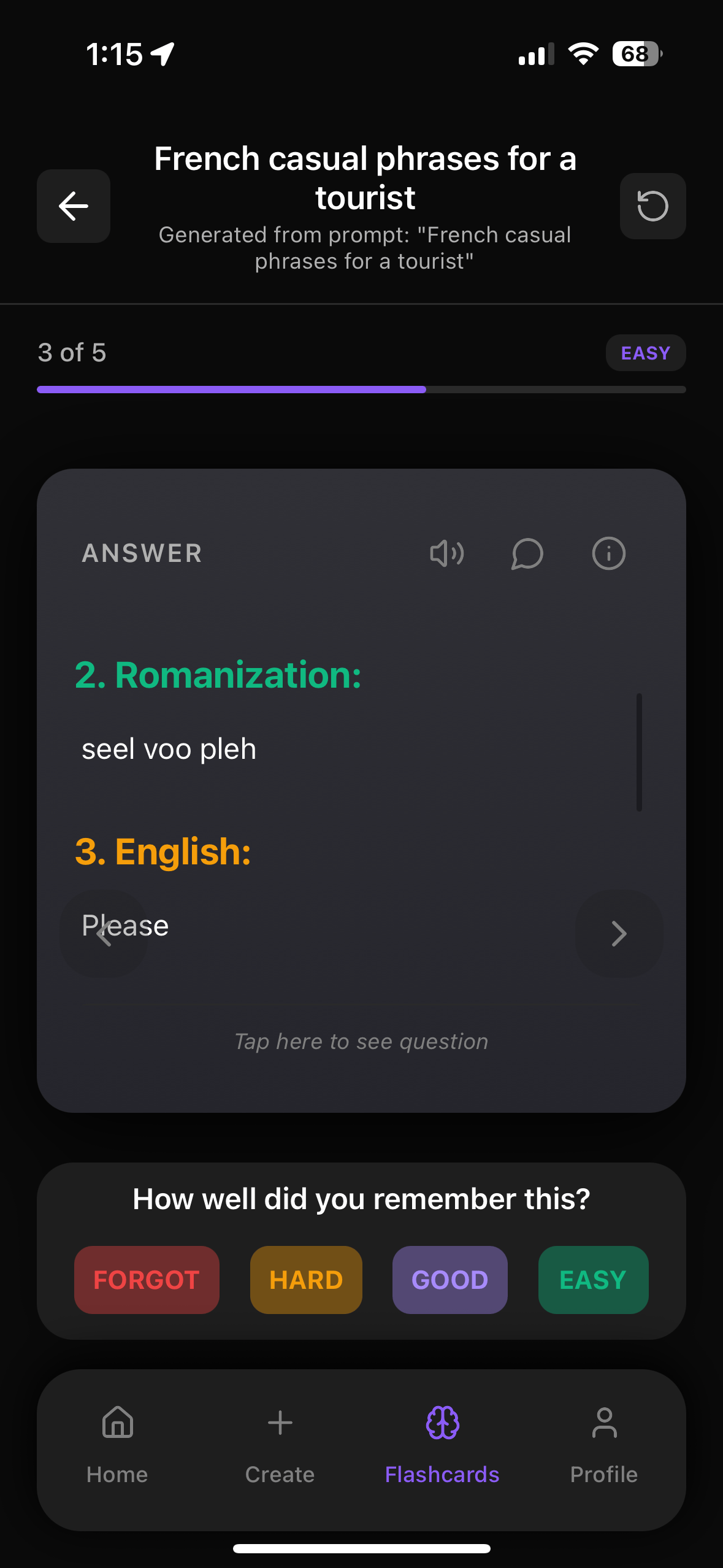
Why Color Flashcards Work So Well (And How To Actually Use Them)
Ever notice how color can totally change the way you remember stuff? It’s like magic for your memory! So, if you’re diving into the complete guide to color flashcards, you’re in for a treat. Honestly, flashcards are amazing for breaking down all that complicated info into easy-to-digest bits. It's all about using them the smart way—think active recall, spaced repetition, and hey, a little consistency doesn’t hurt either. The cool part? Flashrecall's got your back. It’s like having a study buddy that automatically whips up flashcards from your notes and then reminds you when it’s review time. If you're curious about how to turn those regular flashcards into a colorful memory superpower, do yourself a favor and check out our complete guide. It’s packed with tips that most folks never even think to use!
Our brains love patterns, contrast, and visuals. When you mix colors with key info, your brain gets more “hooks” to grab onto, which makes remembering way easier.
And if you’re thinking of making color flashcards, here’s the fun part: you don’t need to draw or print anything if you don’t want to. You can build color-based flashcards super fast in Flashrecall, a modern flashcard app for iPhone and iPad that:
- Lets you create flashcards from images, text, PDFs, YouTube links, audio, or typed prompts
- Has built-in active recall and spaced repetition with automatic reminders
- Works offline and is free to start
- Is perfect for languages, exams, school, medicine, business — anything
You can grab it here:
👉 https://apps.apple.com/us/app/flashrecall-study-flashcards/id6746757085
Now let’s talk about how to actually use color flashcards in a smart way, not just “make them pretty.”
What Are Color Flashcards, Really?
Color flashcards are just flashcards where color is part of the learning system, not just decoration.
You can use color to:
- Group related concepts
- Highlight what’s important
- Make boring info stand out
- Trigger memory through visual cues
This can work with:
- Physical cards (markers, highlighters, colored paper)
- Digital cards (colored tags, emojis, images, backgrounds, formatting)
Flashrecall makes this really easy because you can:
- Add images with colors
- Use emojis and formatting in your cards
- Organize decks with color-coded themes (e.g., a “red” deck for urgent topics, “green” for mastered ones)
Why Colors Help You Remember (Without Getting Too Nerdy)
Here’s the simple version of why color flashcards work:
1. Colors grab attention
Your brain notices red text faster than plain black. That extra attention = better memory.
2. Colors create categories
For example:
- Blue = definitions
- Yellow = formulas
- Green = examples
When your brain sees a color, it already knows what “type” of info to expect.
3. Colors act as memory “triggers”
You might not remember the exact wording, but you’ll remember:
- “Oh, that answer was on the yellow card with the diagram.”
That’s enough to pull the memory back.
4. Colors reduce mental clutter
Instead of staring at a wall of black text, your eye goes straight to what matters.
Smart Ways To Use Color Flashcards (With Examples)
1. Color by Topic or Category
This is the easiest and most powerful.
- Language learning
- Blue = verbs
- Green = nouns
- Red = irregular forms
- Purple = phrases
- Biology
- Green = plants
- Red = blood/heart topics
- Blue = cells
- Yellow = definitions
In Flashrecall, you can:
- Make separate decks by topic
- Or keep one deck and use colored emojis or labels like:
- 🔵 Verb
- 🟢 Noun
- 🔴 Irregular
So instead of writing “Verb – to go” manually 200 times, you can:
- Paste a word list
- Let Flashrecall generate cards from text
- Then quickly edit and add color emojis or labels where needed.
2. Color by Difficulty
Use colors to show how well you know something.
- 🟢 Green = Easy / mastered
- 🟡 Yellow = Medium
- 🔴 Red = Hard / keep reviewing
With physical cards, you can:
- Put a colored dot in the corner
- Or use different colored sticky notes to mark difficulty
With Flashrecall, spaced repetition already does this for you:
- You rate how well you remembered
- The app automatically schedules the next review
- Harder cards come back more often, easier ones later
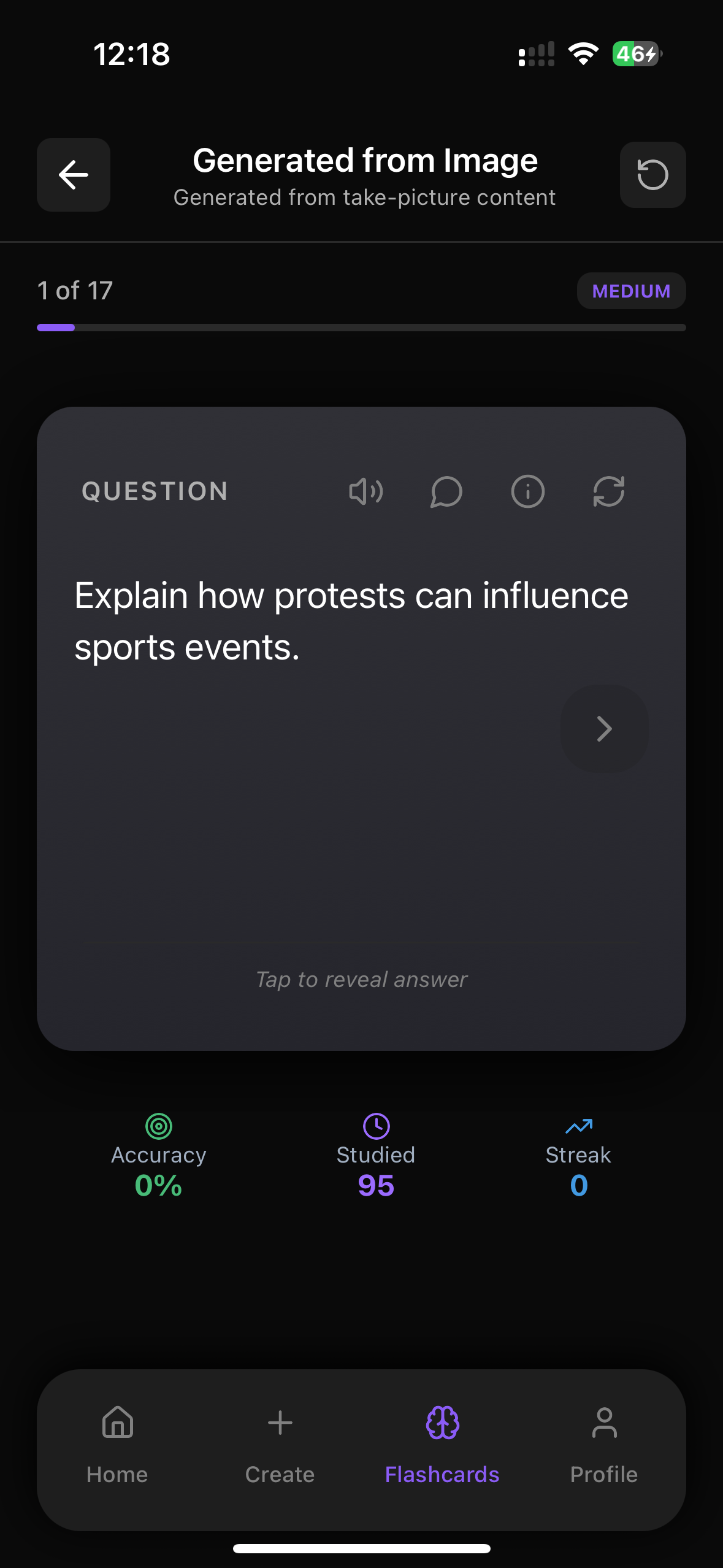
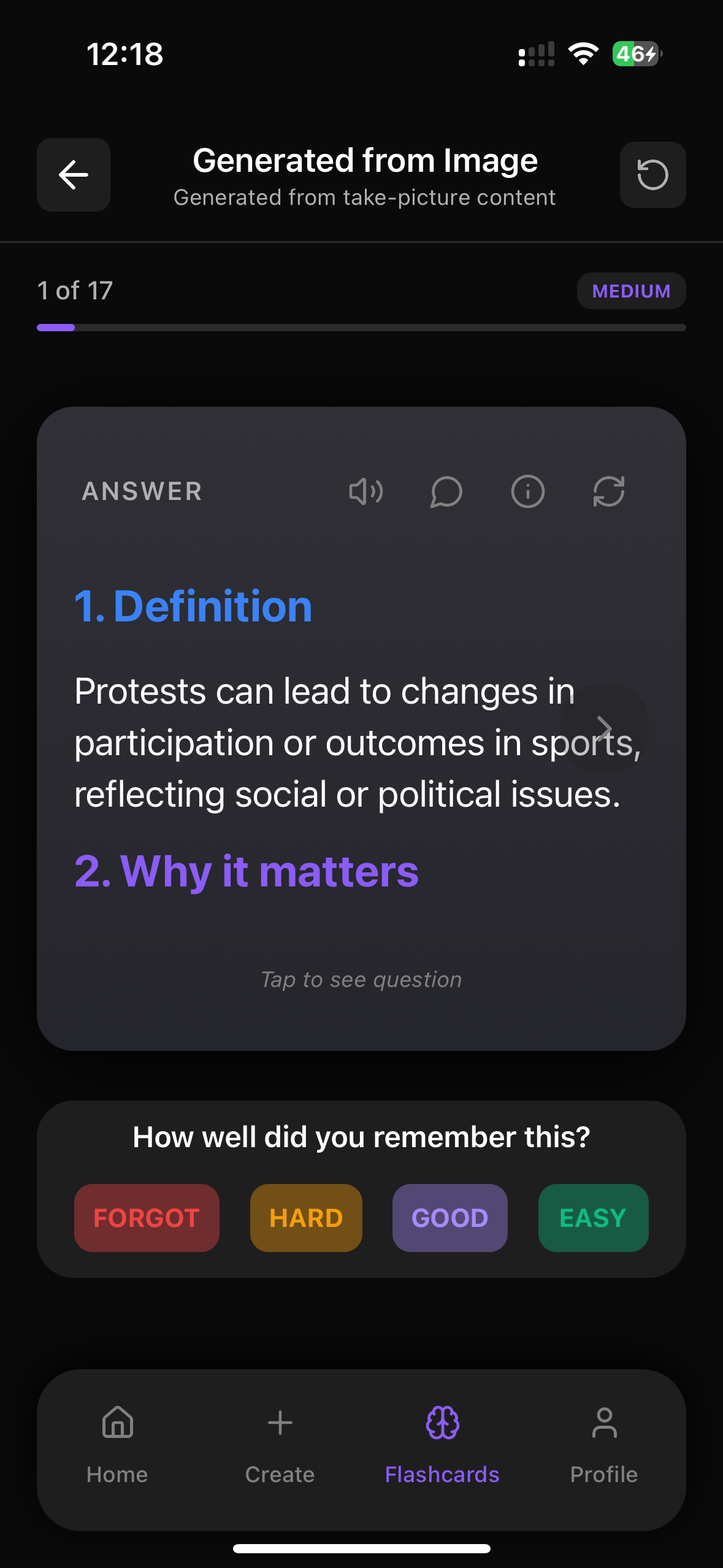
Flashrecall automatically keeps track and reminds you of the cards you don't remember well so you remember faster. Like this :
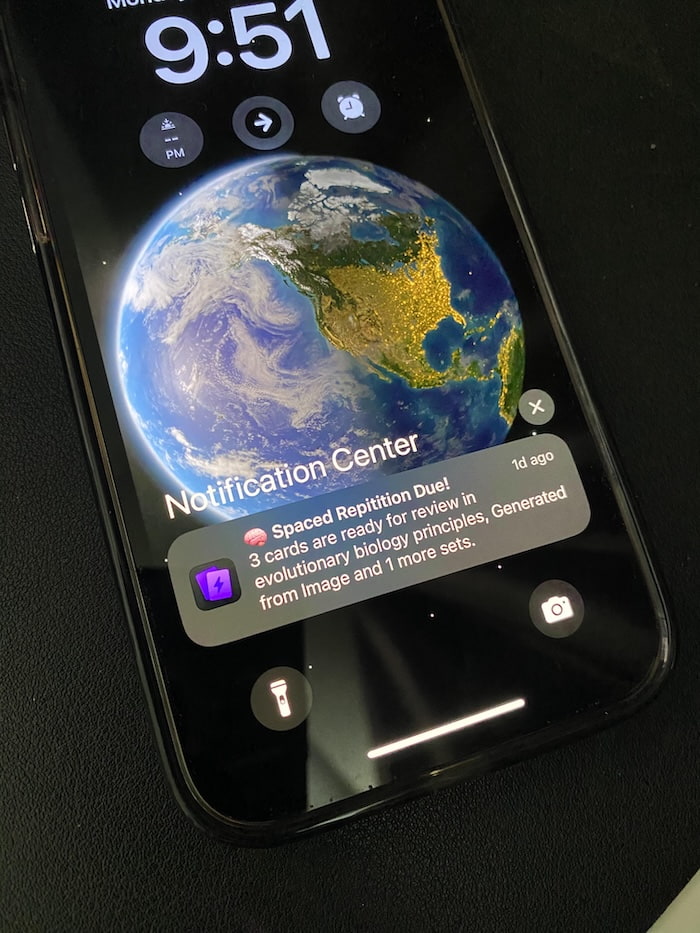
You still get the same “difficulty” effect, but without manually sorting cards all over your desk.
3. Color Inside the Card (Not Just the Card Itself)
You can also use color inside the content:
- Highlight keywords in a sentence
- Use one color for terms and another for definitions
- Color-code parts of a formula or equation
Front:
> What is the formula for the area of a circle?
Back:
> A = πr²
> - π (pi) = constant
> - r (radius) = distance from center to edge
You can bold or separate key parts, and in a digital app, use emojis like:
- 🔵 π
- 🟢 r
- 🔴 ²
In Flashrecall, you can also:
- Add an image of a circle with the radius colored in red
- Let your brain connect the color + shape + definition all at once
4. Use Color Flashcards for Kids (Or Your Inner Kid)
Color flashcards are amazing for:
- Teaching colors themselves (red, blue, green…)
- Learning shapes, animals, everyday objects
- Early reading and vocabulary
- “Colors” deck:
- Front: 🟥 (red square)
- Back: “Red” + picture of a red apple
- “Animals” deck:
- Front: Picture of a yellow duck
- Back: “Duck – yellow”
You can snap photos of real-life objects, and in Flashrecall:
- Turn those photos into flashcards instantly
- Add audio (e.g., record yourself saying “yellow duck”)
- Use it offline on iPad for kids to tap through
Physical vs Digital Color Flashcards (And Why Digital Wins Long-Term)
Physical Color Cards – Pros and Cons
- Tactile, hands-on
- Great for kids or quick DIY setups
- You can spread them on a table and physically sort them
- Time-consuming to make
- Easy to lose or damage
- Hard to reorganize by topic or difficulty
- No reminders — if you forget to review, that’s it
Digital Color Cards in Flashrecall – Pros and Cons
- Instant creation from:
- Text
- Images
- PDFs
- YouTube links
- Audio
- Or just typing
- Built-in spaced repetition so you review at the perfect time
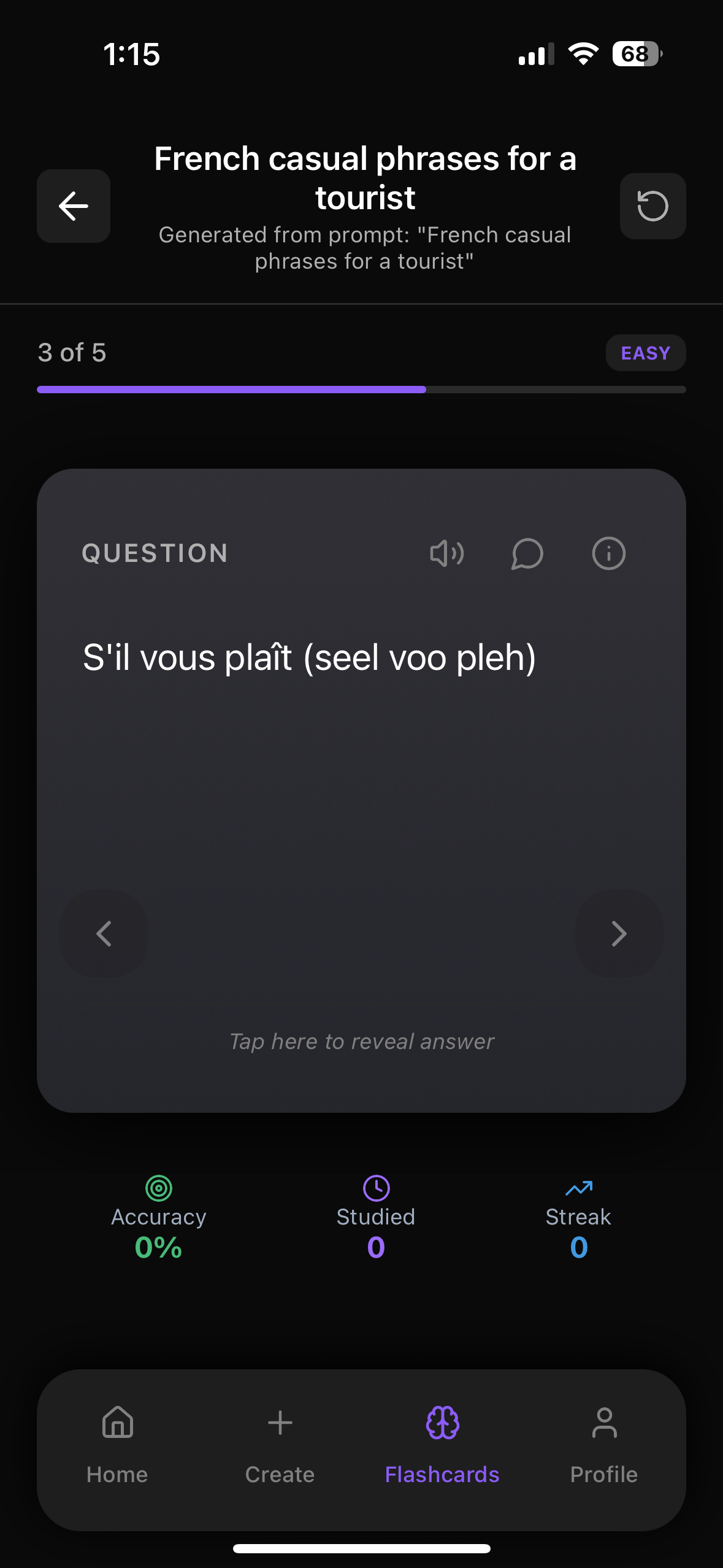
- Active recall by default (you see the question, try to answer, then reveal)
- Study reminders so you don’t forget
- Works offline
- Easy to add images, emojis, and color-based organization
- You can chat with the flashcard if you’re confused and want more explanation
- Needs a device (iPhone or iPad)
- You might get distracted if you’re not disciplined (notifications, etc.)
If you’re serious about learning and want to use color flashcards in a scalable way, digital wins. You get all the color benefits without the mess.
You can try Flashrecall here (free to start):
👉 https://apps.apple.com/us/app/flashrecall-study-flashcards/id6746757085
How To Build a Color Flashcard System in Flashrecall (Step-by-Step)
Here’s a simple way to set it up without overthinking:
Step 1: Pick One Main Color Logic
Choose one rule for colors first:
- By topic
- By difficulty
- By type of info (definition, formula, example)
Don’t mix too much at the start or it gets confusing.
Step 2: Create a Deck in Flashrecall
For example:
- “Spanish – Colors & Vocabulary”
- “Biology – Cells & Systems”
- “Exam Formulas – High Priority”
You can:
- Paste in text
- Import from PDFs
- Use YouTube links (e.g., a lecture) and create cards from it
- Or make cards manually
Step 3: Add Color Cues
Use:
- Emojis (🟢, 🔴, 🔵, 🟡)
- Images with strong colors
- Short color-coded labels like `[RED]`, `[EASY]`, `[HARD]`
Example Spanish card:
Front:
> 🔵 Ir – What does this verb mean in English?
Back:
> To go (verb – irregular)
Now every time you see 🔵, your brain knows “verb.”
Step 4: Let Spaced Repetition Do the Heavy Lifting
Flashrecall will:
- Automatically schedule reviews
- Show you harder cards more often
- Send reminders so you don’t forget to study
You just open the app, tap “Study,” and follow the queue. No manual sorting, no calendar planning.
Common Mistakes With Color Flashcards (And How To Avoid Them)
If every card is a rainbow, your brain stops caring.
→ Stick to 2–4 main colors with clear meaning.
If red sometimes means “hard” and sometimes means “verbs,” you’re done.
→ Decide once, and stay consistent.
The goal isn’t art. The goal is recall.
→ Keep the question clear, the answer short, and color as a helper, not the star.
Even the best color system fails if you don’t see the cards again.
→ This is why using an app like Flashrecall with auto reminders and spaced repetition is such a game-changer.
Turn Simple Colors Into a Powerful Study System
Color flashcards are one of those tiny tweaks that make learning feel way less painful and way more memorable.
You can:
- Use colors to group topics
- Mark hard vs easy concepts
- Make vocab, formulas, and diagrams stick
- Help kids (or yourself) actually enjoy studying
If you want to skip the hassle of cutting paper, buying markers, and manually planning reviews, try doing all this inside Flashrecall:
- Create flashcards from images, text, PDFs, YouTube links, or audio
- Use active recall + spaced repetition automatically
- Add color cues with emojis, images, and deck organization
- Study on iPhone or iPad, even offline
- Chat with your flashcards when you’re stuck and need extra explanation
Grab it here and turn your color flashcard ideas into an actual system:
👉 https://apps.apple.com/us/app/flashrecall-study-flashcards/id6746757085
Frequently Asked Questions
What's the fastest way to create flashcards?
Manually typing cards works but takes time. Many students now use AI generators that turn notes into flashcards instantly. Flashrecall does this automatically from text, images, or PDFs.
Is there a free flashcard app?
Yes. Flashrecall is free and lets you create flashcards from images, text, prompts, audio, PDFs, and YouTube videos.
How can I study more effectively for this test?
Effective exam prep combines active recall, spaced repetition, and regular practice. Flashrecall helps by automatically generating flashcards from your study materials and using spaced repetition to ensure you remember everything when exam day arrives.
Related Articles
- Rainbow Flashcards: Colorful Memory Hacks to Help You Learn Faster and Actually Remember Stuff
- A To Z Flashcards: The Complete Guide To Learning Anything Faster From Zero To Expert – Most Students Miss These Powerful A–Z Study Tricks
- Bedroom Flashcards: 7 Powerful Ways To Turn Your Room Into A Memory-Boosting Study Zone – Most Students Ignore This Easy Trick To Learn Faster
Research References
The information in this article is based on peer-reviewed research and established studies in cognitive psychology and learning science.
Cepeda, N. J., Pashler, H., Vul, E., Wixted, J. T., & Rohrer, D. (2006). Distributed practice in verbal recall tasks: A review and quantitative synthesis. Psychological Bulletin, 132(3), 354-380
Meta-analysis showing spaced repetition significantly improves long-term retention compared to massed practice
Carpenter, S. K., Cepeda, N. J., Rohrer, D., Kang, S. H., & Pashler, H. (2012). Using spacing to enhance diverse forms of learning: Review of recent research and implications for instruction. Educational Psychology Review, 24(3), 369-378
Review showing spacing effects work across different types of learning materials and contexts
Kang, S. H. (2016). Spaced repetition promotes efficient and effective learning: Policy implications for instruction. Policy Insights from the Behavioral and Brain Sciences, 3(1), 12-19
Policy review advocating for spaced repetition in educational settings based on extensive research evidence
Karpicke, J. D., & Roediger, H. L. (2008). The critical importance of retrieval for learning. Science, 319(5865), 966-968
Research demonstrating that active recall (retrieval practice) is more effective than re-reading for long-term learning
Roediger, H. L., & Butler, A. C. (2011). The critical role of retrieval practice in long-term retention. Trends in Cognitive Sciences, 15(1), 20-27
Review of research showing retrieval practice (active recall) as one of the most effective learning strategies
Dunlosky, J., Rawson, K. A., Marsh, E. J., Nathan, M. J., & Willingham, D. T. (2013). Improving students' learning with effective learning techniques: Promising directions from cognitive and educational psychology. Psychological Science in the Public Interest, 14(1), 4-58
Comprehensive review ranking learning techniques, with practice testing and distributed practice rated as highly effective

FlashRecall Team
FlashRecall Development Team
The FlashRecall Team is a group of working professionals and developers who are passionate about making effective study methods more accessible to students. We believe that evidence-based learning tec...
Credentials & Qualifications
- •Software Development
- •Product Development
- •User Experience Design
Areas of Expertise
Ready to Transform Your Learning?
Start using FlashRecall today - the AI-powered flashcard app with spaced repetition and active recall.
Download on App Store