Hesi Flashcards App: The Proven Guide
The HESI flashcards app turns your notes into smart flashcards with spaced repetition, helping you study efficiently and crush your exam prep like a pro.
How Flashrecall app helps you remember faster. It's free
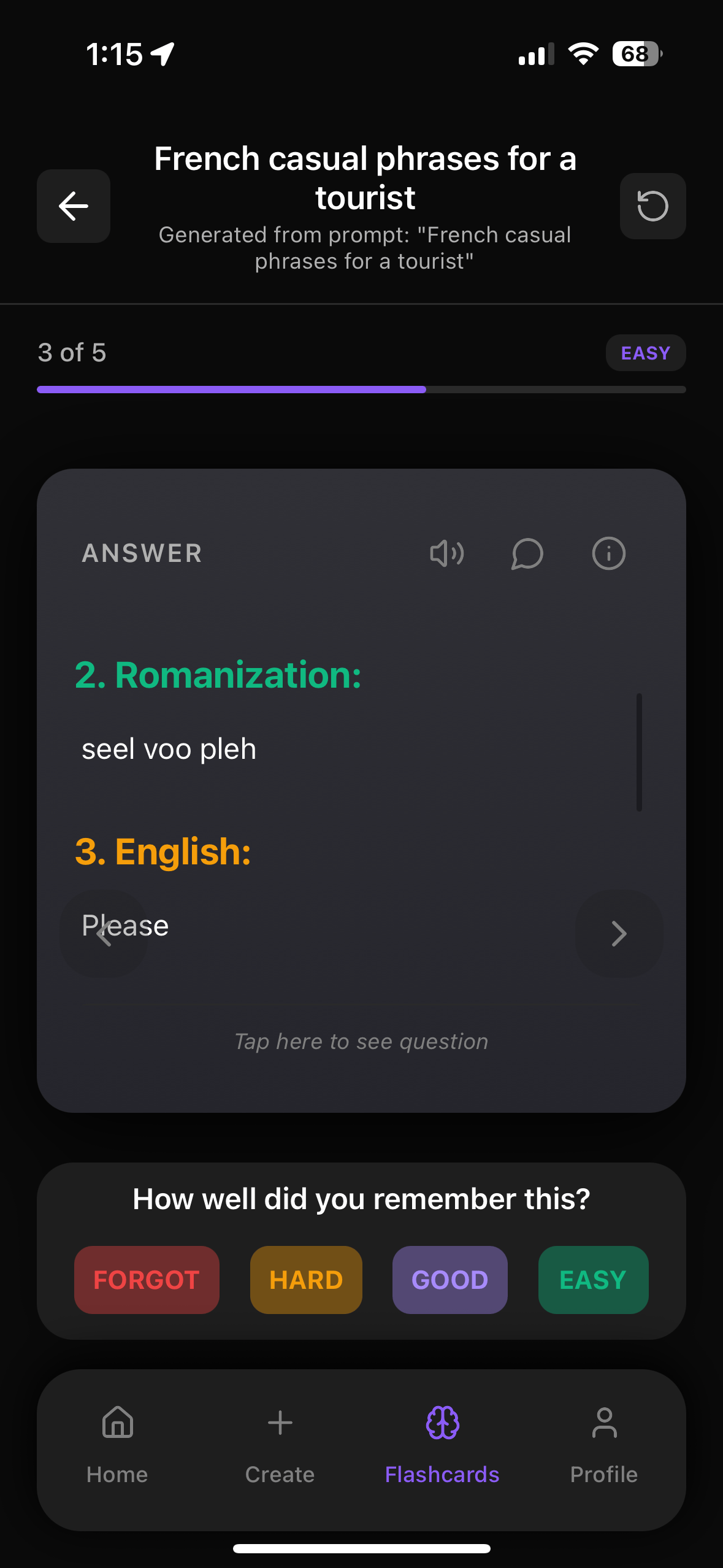
Stop Overcomplicating HESI Prep – Flashcards Are Your Secret Weapon
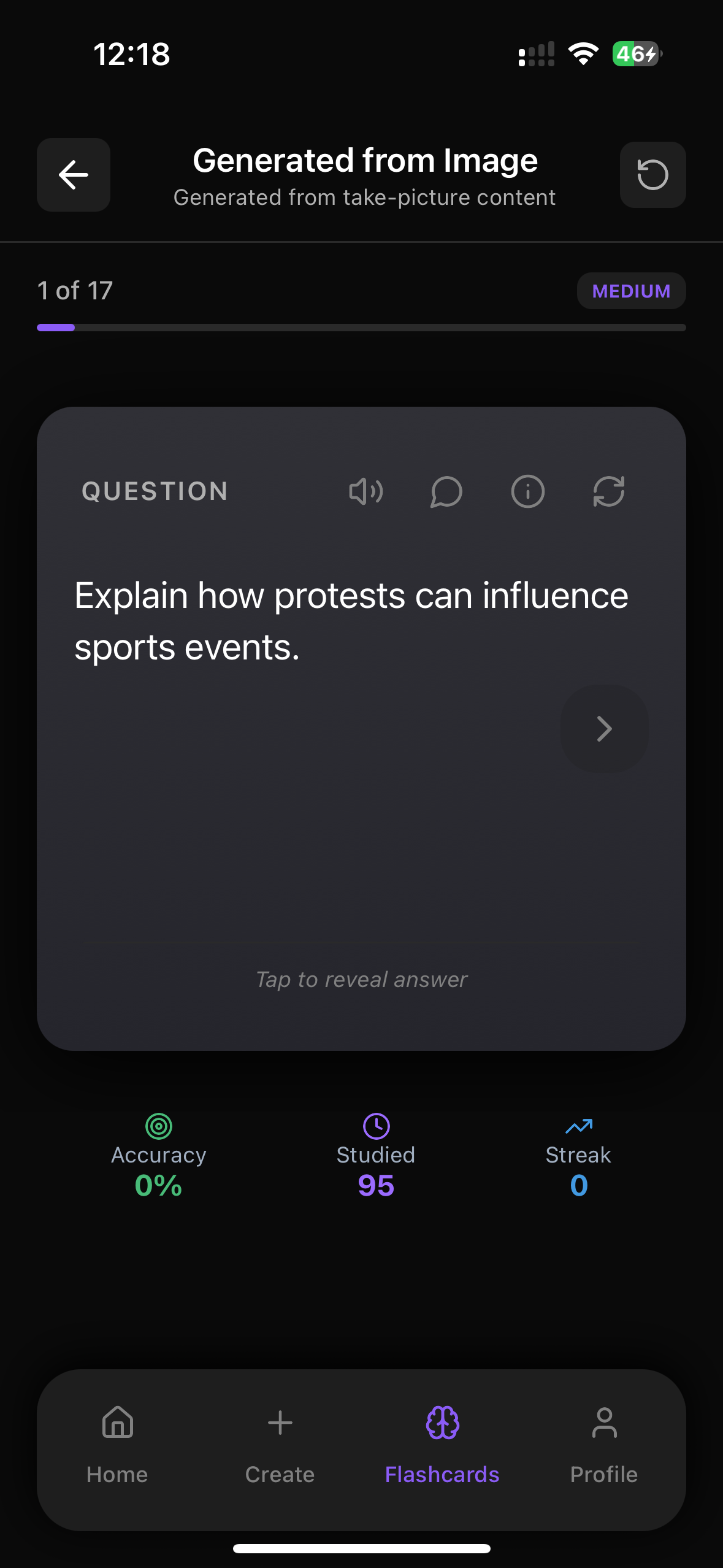
Trying to figure out the whole hesi flashcards app thing? Let me break it down for you. It's this awesome tool that makes studying a whole lot easier by turning your notes into flashcards. Seriously, it’s like having a study buddy that never sleeps! You just load your study materials into Flashrecall, and boom—you're all set with flashcards that automatically know when you need to review them. It's perfect for those of us who want to study smarter, not harder. If you're tired of just highlighting notes and want to dive into something that actually works, these flashcards are a game changer. Want to know more about how to crush your exam with these? Check out our complete guide—it’s got all the secrets you need!
The good news? You don’t need a 500‑page binder to survive this.
You need:
- Smart flashcards
- A system that forces you to remember
- An app that does the boring organizing for you
That’s exactly what Flashrecall does:
👉 https://apps.apple.com/us/app/flashrecall-study-flashcards/id6746757085
It’s a fast, modern flashcard app that:
- Uses built‑in spaced repetition (so review timing is automatic)
- Has active recall baked in (no passive “just reading”)
- Lets you instantly create cards from images, text, PDFs, YouTube links, audio, or typed prompts
- Works offline on iPhone and iPad
- Is free to start
Let’s walk through how to actually use flashcards well for HESI – and how to set it up in Flashrecall so you’re not wasting time.
Why HESI Flashcards Work So Well (If You Use Them Right)
HESI is basically a giant memory and reasoning test:
- Do you remember the facts?
- Can you recognize patterns?
- Can you apply them to scenarios?
Flashcards hit that first part perfectly if you use active recall and spaced repetition:
- Active recall = forcing your brain to pull the answer out without seeing it first
- Spaced repetition = seeing hard cards more often and easy cards less often over time
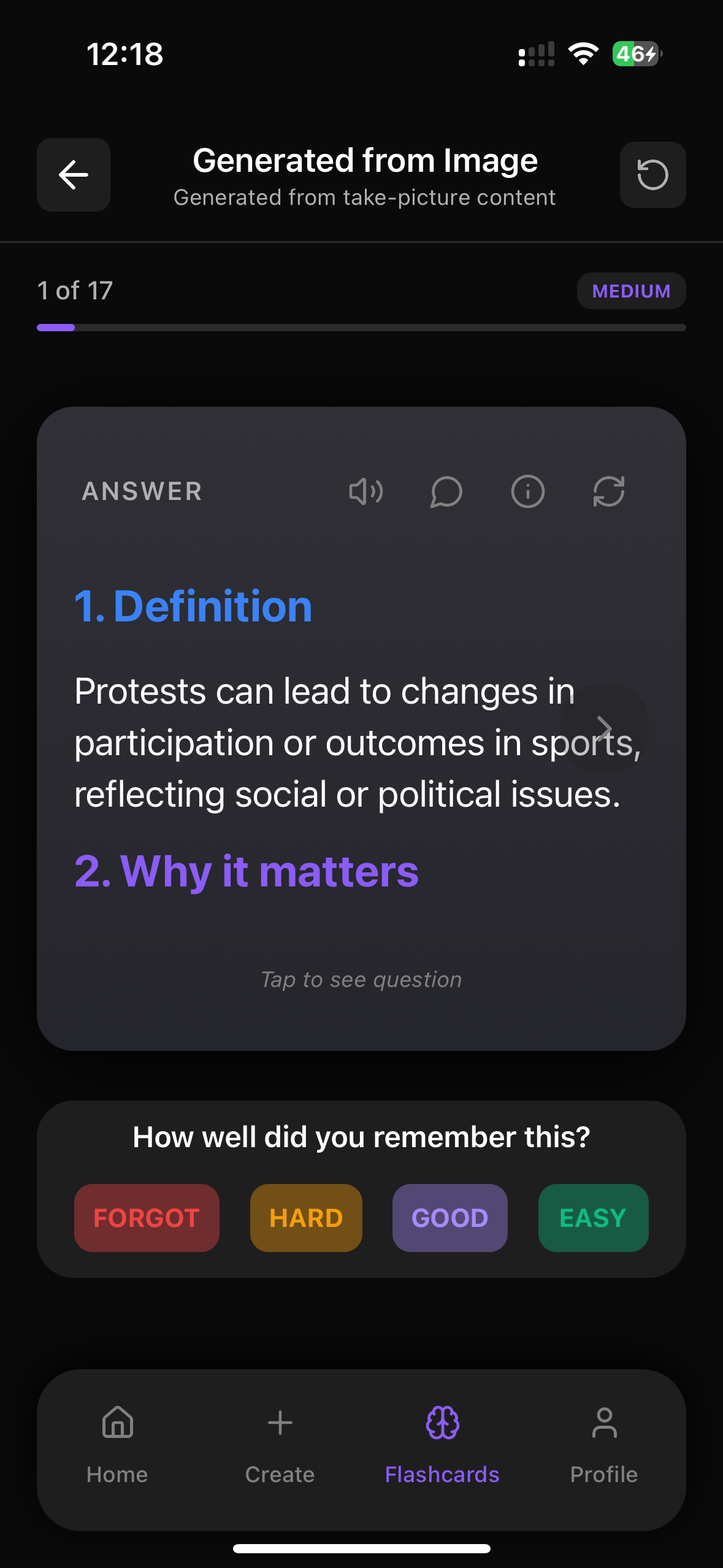
Flashrecall bakes both into how you study. You just:
1. See a card
2. Try to answer from memory
3. Tap how hard it was
4. Flashrecall schedules the next review for you
No calendars. No “What should I review today?” panic.
Step 1: Build HESI Decks That Actually Make Sense
Instead of one huge “HESI” deck, break things down. In Flashrecall, you can make multiple decks and keep everything clean.
Suggested Decks for HESI
Create decks like:
- Fundamentals of Nursing
- Pharmacology
- Med‑Surg
- Maternity & Newborn
- Pediatrics
- Psych/Mental Health
- Lab Values & Diagnostics
- Dosage Calculations
- HESI Vocabulary / Concepts (e.g., prioritization, delegation)
This way, when you’re weak in one area (like pharm), you can hammer just that deck.
In Flashrecall:
- Tap to create a new deck
- Name it clearly (e.g., “HESI – Pharm”)
- Start adding cards manually or import from your notes, PDFs, or screenshots
Step 2: Turn Your HESI Notes Into Flashcards (Fast)
You don’t have time to hand‑type every single card. Use tech to cheat the process (in a good way).
Flashrecall lets you create cards from:
- Images – snap a pic of a textbook page, lecture slide, or handwritten notes
- Text – paste in your typed notes
- PDFs – upload your HESI review book or class slides
- YouTube links – turn video content into cards
- Audio – record explanations or key points
- Or just type manually for super targeted cards
Example:
- Take a picture of a “Cardiac Medications” page
- Import it into Flashrecall
- Let the app help you pull out key info into flashcards
You can also chat with the flashcard in Flashrecall if you’re unsure about something. Stuck on a med? Open the card, ask questions, and get more explanation right where you study.
Step 3: Use These 7 Proven HESI Flashcard Techniques
Here’s where most people mess up: they have flashcards, but they’re badly written or used like a to‑do list. Use these instead.
1. Make Cards Question‑Based, Not Just Definitions
Don’t write:
> Front: Digoxin
> Back: Cardiac glycoside used for heart failure…
Instead, write NCLEX/HESI‑style prompts:
> Front: Priority assessment before giving digoxin?
> Back: Check apical pulse for 1 full minute; hold if <60 bpm in adults; assess for toxicity (nausea, vision changes, arrhythmias).
You’re training your brain for test questions, not trivia.
2. Use “If… Then…” Safety Cards
HESI loves safety and priority questions.
Example card:
> Front: If a patient on heparin has bleeding gums, what’s your first action?
> Back: Stop the infusion, assess severity, notify provider; anticipate protamine sulfate as antidote.
These “if… then…” cards make you think like a nurse, not a parrot.
3. Group Lab Values and Make Comparison Cards
Instead of random lab value cards, group them.
Example deck: Lab Values & Diagnostics
Card style:
> Front: Normal Sodium (Na⁺) range + what does high vs low look like?
> Back: 135–145 mEq/L.
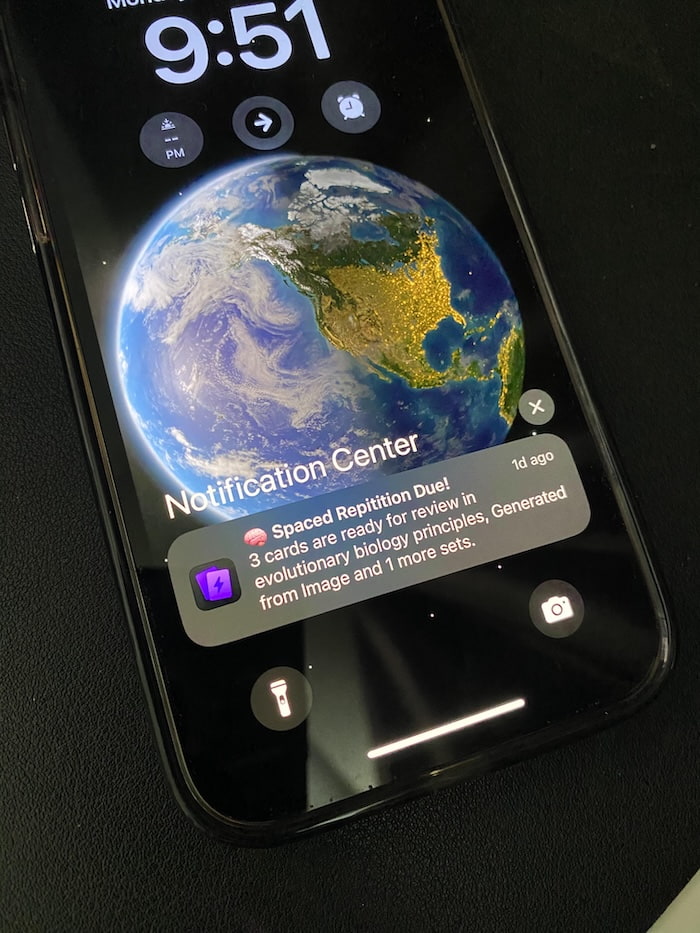
Flashrecall automatically keeps track and reminds you of the cards you don't remember well so you remember faster. Like this :
> Hyponatremia: confusion, seizures, weakness.
> Hypernatremia: thirst, dry mucous membranes, agitation.
Or comparison:
> Front: Hypokalemia vs Hyperkalemia – key EKG changes?
> Back: Hypo: U waves, flattened T waves.
> Hyper: peaked T waves, widened QRS, risk of VF.
Flashrecall’s spaced repetition will keep cycling these at the right time so they stick.
4. Turn Dosage Calcs Into Step‑By‑Step Cards
Don’t just memorize formulas—test the process.
> Front: Order: 500 mg drug. Available: 250 mg tablets. How many tablets?
> Back: 500 ÷ 250 = 2 tablets.
> Front: 20 mg/kg/day divided q12h. Pt weighs 25 kg. How many mg per dose?
> Back: 20 × 25 = 500 mg/day → 500 ÷ 2 = 250 mg per dose.
Make several of these and drill them in Flashrecall until they feel automatic.
5. Add “Red Flag” and “Don’t Miss This” Cards
HESI loves trick questions around what’s dangerous.
Example:
> Front: Post‑op patient: which findings are a priority to report immediately?
> Back: Chest pain, shortness of breath, excessive bleeding, no urine output, sudden confusion, etc.
Or:
> Front: Which antidepressant side effect is an emergency?
> Back: Signs of serotonin syndrome (agitation, hyperreflexia, fever) or suicidal ideation, especially when starting meds.
Label these in Flashrecall with a tag like `HIGH PRIORITY` so you can filter and review them more.
6. Mix Question Types: Simple, Scenario, and Mini‑Case
Use a mix of:
- Straight facts:
> Normal INR range?
- Scenario:
> Pt on warfarin has INR of 5.0 – what do you do?
- Mini‑case:
> 72‑year‑old with COPD, RR 10, O2 sat 88% on 2L NC – what’s your priority action?
This keeps your brain from going into autopilot. Flashrecall’s active recall mode forces you to answer before you flip the card.
7. Review in Short, Spaced Sessions (Not 3‑Hour Death Marathons)
Here’s how to structure your HESI flashcard routine with Flashrecall:
- 15–25 minutes in the morning
- 15–25 minutes at night
In Flashrecall:
- Turn on study reminders so your phone nudges you to review
- Let the spaced repetition engine pick which cards you see
- Mark cards as “easy,” “medium,” or “hard” – the app will show hard ones more often
You can study offline too, so you can review on the bus, between classes, or during clinical breaks.
Example: One Topic, Multiple Smart Flashcards
Let’s say you’re studying preeclampsia. You could create cards like:
> Card 1 – Definition
> Front: What is preeclampsia and when does it usually occur?
> Back: Pregnancy‑specific hypertensive disorder after 20 weeks gestation with proteinuria and/or end‑organ dysfunction.
> Card 2 – Warning Signs
> Front: Warning signs of worsening preeclampsia?
> Back: Severe headache, visual changes, RUQ/epigastric pain, hyperreflexia, sudden edema, decreased urine output.
> Card 3 – Priority Action
> Front: Priority interventions for severe preeclampsia?
> Back: Seizure precautions, magnesium sulfate, monitor DTRs & RR, control BP, fetal monitoring, prepare for possible delivery.
> Card 4 – Magnesium Toxicity
> Front: Signs of magnesium toxicity + antidote?
> Back: Decreased DTRs, respiratory depression, hypotension; antidote = calcium gluconate.
You’d put these into your Maternity & Newborn deck in Flashrecall, and the app will make sure you keep seeing them until they’re burned into your brain.
How Flashrecall Makes HESI Flashcards Way Less Painful
Here’s why Flashrecall works especially well for HESI prep:
- You don’t waste time deciding what to study
The spaced repetition system automatically surfaces the right cards each day.
- You can build decks from literally anything
- Screenshot a HESI review book page → turn it into cards
- Drop in your lecture PDFs → extract key points
- Paste text from online notes → convert to cards
- Add YouTube lecture links → pull out key concepts
- You can chat with your flashcards
Not sure why a lab value matters? Open the card and ask. You can dig deeper inside the app instead of googling for 20 minutes.
- It’s perfect for all HESI sections
Fundamentals, pharm, med‑surg, maternity, peds, psych, labs, dosage calc — just make a deck for each and let the app handle the scheduling.
- Fast, modern, and easy to use
No clunky UI, no weird setup. Just make a deck and start reviewing.
- Works offline
Study at clinicals, in the car (not driving), or anywhere with bad Wi‑Fi.
- Free to start
You can test it out for your HESI prep without committing to anything.
Grab it here:
👉 https://apps.apple.com/us/app/flashrecall-study-flashcards/id6746757085
A Simple 2‑Week HESI Flashcard Plan Using Flashrecall
If your exam is coming up soon, here’s a realistic plan.
Week 1: Build + Learn
- Day 1–2:
- Create decks: Fundamentals, Pharm, Med‑Surg, Labs, Dosage
- Add 30–50 cards per deck from your notes/textbook using images/text/PDFs
- Day 3–7:
- Review at least 60–100 cards per day (Flashrecall will mix new + review)
- Mark hard ones honestly so spaced repetition can work
Week 2: Refine + Hammer Weak Spots
- Each day:
- Start with your due cards in Flashrecall
- Then filter by deck (e.g., just Pharm) and drill your weakest area
- Add new cards only for things you keep forgetting or see in practice questions
- The last 2–3 days:
- Focus heavily on Labs, Pharm, and Priority/Safety cards
By exam week, you’re not cramming random notes—you’re reviewing high‑yield flashcards that your brain has already seen multiple times at the right intervals.
Final Thoughts: HESI Flashcards Don’t Need to Be Complicated
You don’t need the “perfect” HESI system. You need:
- Solid flashcards
- A way to see them consistently
- And a tool that removes the mental load of planning
Flashcards are still one of the most effective ways to crush HESI—especially when you combine active recall with spaced repetition.
Let Flashrecall handle the scheduling, reminders, and card creation so you can focus on actually learning:
👉 Download Flashrecall for iPhone and iPad:
https://apps.apple.com/us/app/flashrecall-study-flashcards/id6746757085
Turn your HESI prep from chaos into a simple daily habit—and walk into that exam already recognizing half the questions from your flashcards.
Frequently Asked Questions
What's the fastest way to create flashcards?
Manually typing cards works but takes time. Many students now use AI generators that turn notes into flashcards instantly. Flashrecall does this automatically from text, images, or PDFs.
Is there a free flashcard app?
Yes. Flashrecall is free and lets you create flashcards from images, text, prompts, audio, PDFs, and YouTube videos.
How do I start spaced repetition?
You can manually schedule your reviews, but most people use apps that automate this. Flashrecall uses built-in spaced repetition so you review cards at the perfect time.
What is active recall and how does it work?
Active recall is the process of actively retrieving information from memory rather than passively reviewing it. Flashrecall forces proper active recall by making you think before revealing answers, then uses spaced repetition to optimize your review schedule.
How can I study more effectively for this test?
Effective exam prep combines active recall, spaced repetition, and regular practice. Flashrecall helps by automatically generating flashcards from your study materials and using spaced repetition to ensure you remember everything when exam day arrives.
Related Articles
- Simple Nursing Flashcards: The Essential Guide To Remembering Everything In Less Time – Stop rewriting the same cards and use smarter tools that actually fit a busy nursing schedule.
- LSAT Flashcards: Proven Study Hacks To Boost Your Score Faster Than Practice Tests Alone – Learn how to actually remember what you study and turn LSAT content into automatic points on test day.
- NASM CPT Flashcards: 7 Powerful Study Tricks To Pass Your Exam Faster (Most Students Don’t Know These)
Research References
The information in this article is based on peer-reviewed research and established studies in cognitive psychology and learning science.
Cepeda, N. J., Pashler, H., Vul, E., Wixted, J. T., & Rohrer, D. (2006). Distributed practice in verbal recall tasks: A review and quantitative synthesis. Psychological Bulletin, 132(3), 354-380
Meta-analysis showing spaced repetition significantly improves long-term retention compared to massed practice
Carpenter, S. K., Cepeda, N. J., Rohrer, D., Kang, S. H., & Pashler, H. (2012). Using spacing to enhance diverse forms of learning: Review of recent research and implications for instruction. Educational Psychology Review, 24(3), 369-378
Review showing spacing effects work across different types of learning materials and contexts
Kang, S. H. (2016). Spaced repetition promotes efficient and effective learning: Policy implications for instruction. Policy Insights from the Behavioral and Brain Sciences, 3(1), 12-19
Policy review advocating for spaced repetition in educational settings based on extensive research evidence
Karpicke, J. D., & Roediger, H. L. (2008). The critical importance of retrieval for learning. Science, 319(5865), 966-968
Research demonstrating that active recall (retrieval practice) is more effective than re-reading for long-term learning
Roediger, H. L., & Butler, A. C. (2011). The critical role of retrieval practice in long-term retention. Trends in Cognitive Sciences, 15(1), 20-27
Review of research showing retrieval practice (active recall) as one of the most effective learning strategies
Dunlosky, J., Rawson, K. A., Marsh, E. J., Nathan, M. J., & Willingham, D. T. (2013). Improving students' learning with effective learning techniques: Promising directions from cognitive and educational psychology. Psychological Science in the Public Interest, 14(1), 4-58
Comprehensive review ranking learning techniques, with practice testing and distributed practice rated as highly effective

FlashRecall Team
FlashRecall Development Team
The FlashRecall Team is a group of working professionals and developers who are passionate about making effective study methods more accessible to students. We believe that evidence-based learning tec...
Credentials & Qualifications
- •Software Development
- •Product Development
- •User Experience Design
Areas of Expertise
Ready to Transform Your Learning?
Start using FlashRecall today - the AI-powered flashcard app with spaced repetition and active recall.
Download on App Store