Sight Words Flash Cards For Kids: The Powerful Guide
Sight words flash cards for kids engage them with fun images and personalized content. Use Flashrecall's spaced repetition to keep learning fresh and.
How Flashrecall app helps you remember faster. It's free
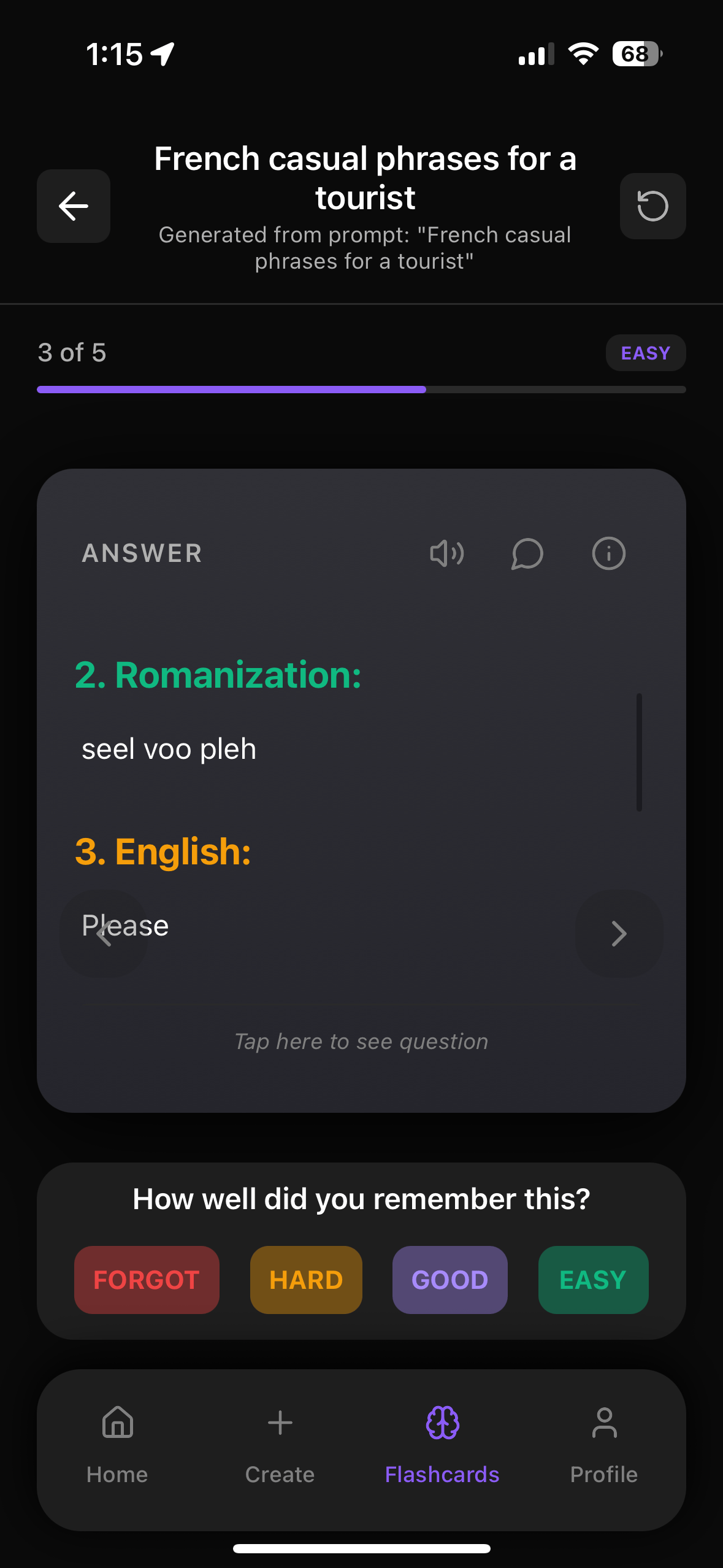
Why Sight Word Flash Cards Matter (And Why Kids Get Bored Fast)
Ever notice how kids can remember the craziest things, like the entire theme song to their favorite show, but struggle with reading? That's where sight words flash cards for kids come in handy. They're kind of like a secret weapon for learning. These cards use fun images and simple words to make remembering stuff a breeze for your little ones. It's not just about rote memory; it's about engaging them in a way that sticks. And the best part? You can make these flashcards super personal with Flashrecall. You can snap photos, doodle, or just jot down text to create a set that's uniquely theirs. Plus, with Flashrecall's spaced repetition, your kiddo doesn't get swamped with info—they review just enough to keep it fresh without feeling overwhelmed. Sounds like a win, right? If you're curious about how to really amp up reading with these cards, there's a complete guide that's packed with tips most
Flash cards are perfect for this… unless:
- You forget to use them regularly
- Your kid gets bored after 2 minutes
- You’re not sure which words to focus on
- Cards get lost, bent, or eaten by the couch
That’s where a smart flashcard app makes life way easier.
If you want sight word flash cards that remind you to review, track progress, and keep everything in one place on your phone or iPad, try Flashrecall:
👉 https://apps.apple.com/us/app/flashrecall-study-flashcards/id6746757085
It’s free to start, super fast to use, and works great for sight words, phonics, and basically any school subject.
Let’s break down how to actually use sight word flash cards in a way that works (and doesn’t drive you or your kid crazy).
What Exactly Are Sight Words?
Sight words are:
- Very common words that appear in almost every sentence
- Often tricky to sound out (like said, could, one, two, does)
- Words kids should recognize instantly without sounding out each letter
Most schools use lists like:
- Dolch sight words (Pre-K to Grade 3)
- Fry word list (1,000+ common words)
You don’t need to memorize every list. You just need a small set at a time, practiced the right way.
Why Digital Sight Word Flash Cards Beat Paper (Most of the Time)
Paper cards are fine, but here’s the problem:
- You have to remember when to review them
- You don’t know which words your child is actually struggling with
- You end up shuffling the same 20 cards forever
With Flashrecall, you can:
- Make sight word flash cards in seconds
- Let the app decide when to show each word again using spaced repetition
- Get study reminders so you don’t forget
- See which words your child already knows and which need more practice
It’s like having a smart tutor built into your phone.
1. Start With a Tiny List (10–15 Words Max)
Most parents start too big: 50+ words, kid gets overwhelmed, everyone gives up.
Instead:
- Pick 10–15 words your child is learning at school (or from a Dolch/ Fry list)
- Focus on just those for a few days
- Add new ones only when they’re comfortable
In Flashrecall, you can:
- Create a deck called “Kindergarten Sight Words – Set 1”
- Add 10–15 cards, one word per card
- Let the app handle when to review each one
You can even create them by:
- Typing the words in
- Copy-pasting from a list
- Taking a picture of a printed list and letting Flashrecall auto-generate cards from the image
2. Use Spaced Repetition So Words Actually Stick
This is the part almost everyone skips.
If you show the same 20 cards every single day, your kid may memorize the order, not the actual words. Or they get bored and tune out.
Flashrecall has built-in spaced repetition and active recall, which means:
- Your child sees a word
- Tries to say it
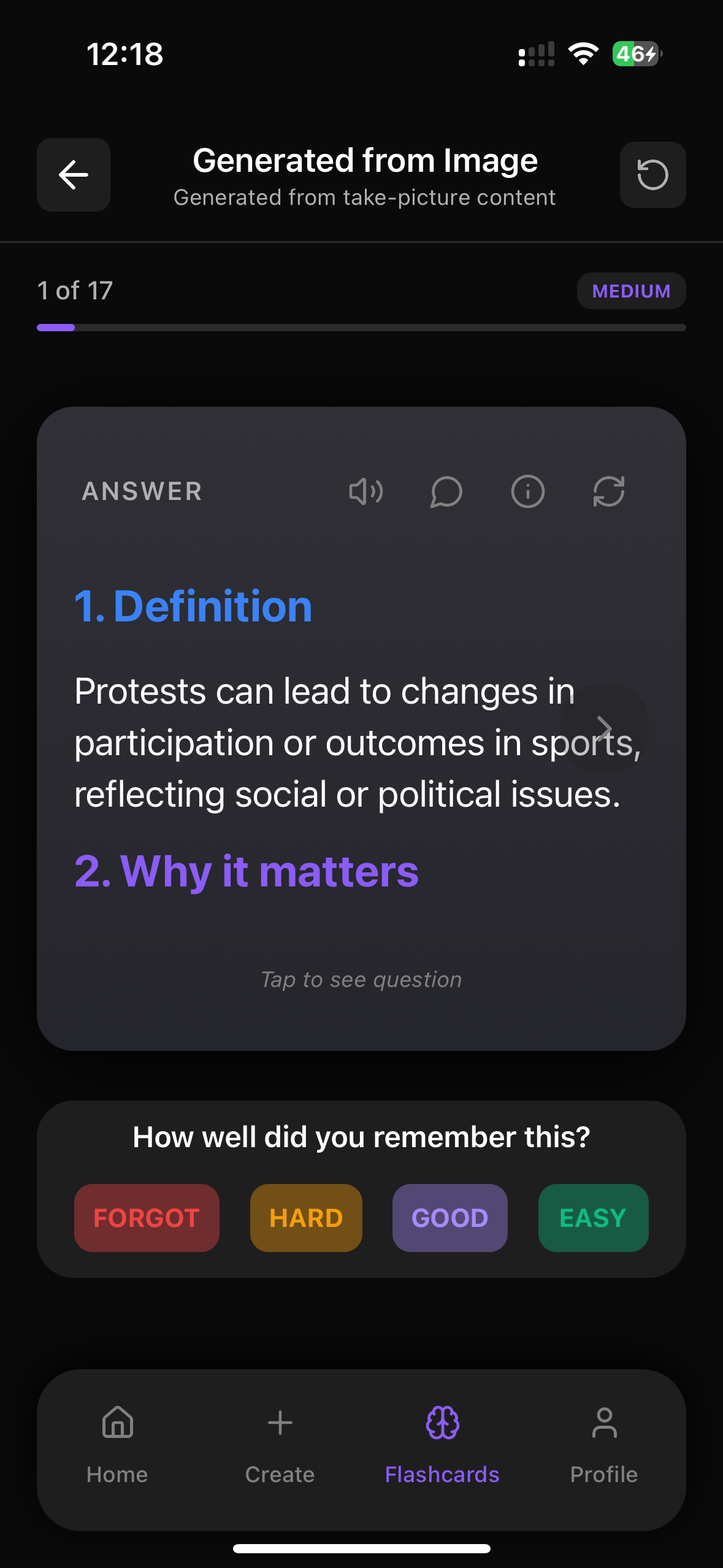
- You tap how well they knew it (easy / medium / hard)
- Flashrecall schedules the next review automatically
No calendar, no planning, no “Wait, when did we last practice these?”
The app just reminds you when it’s time.
3. Turn Sight Words Into Simple, Fun Games
Flash cards don’t have to be boring “What’s this word?” drills.
Here are some easy games you can play using Flashrecall or paper cards:
Game 1: Speed Round
- Set a 1-minute timer
- See how many sight words your child can read correctly
- Track the number and try to beat the score next time
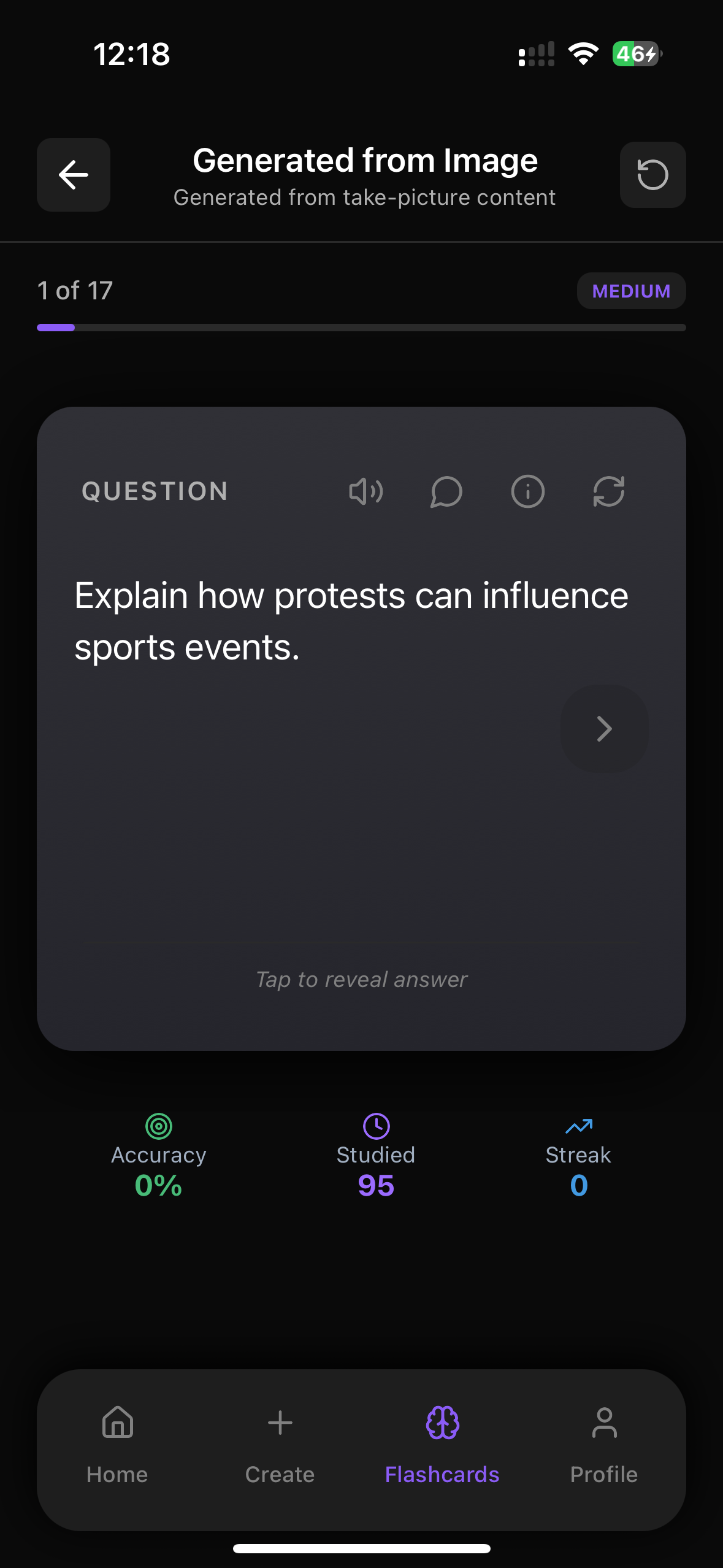
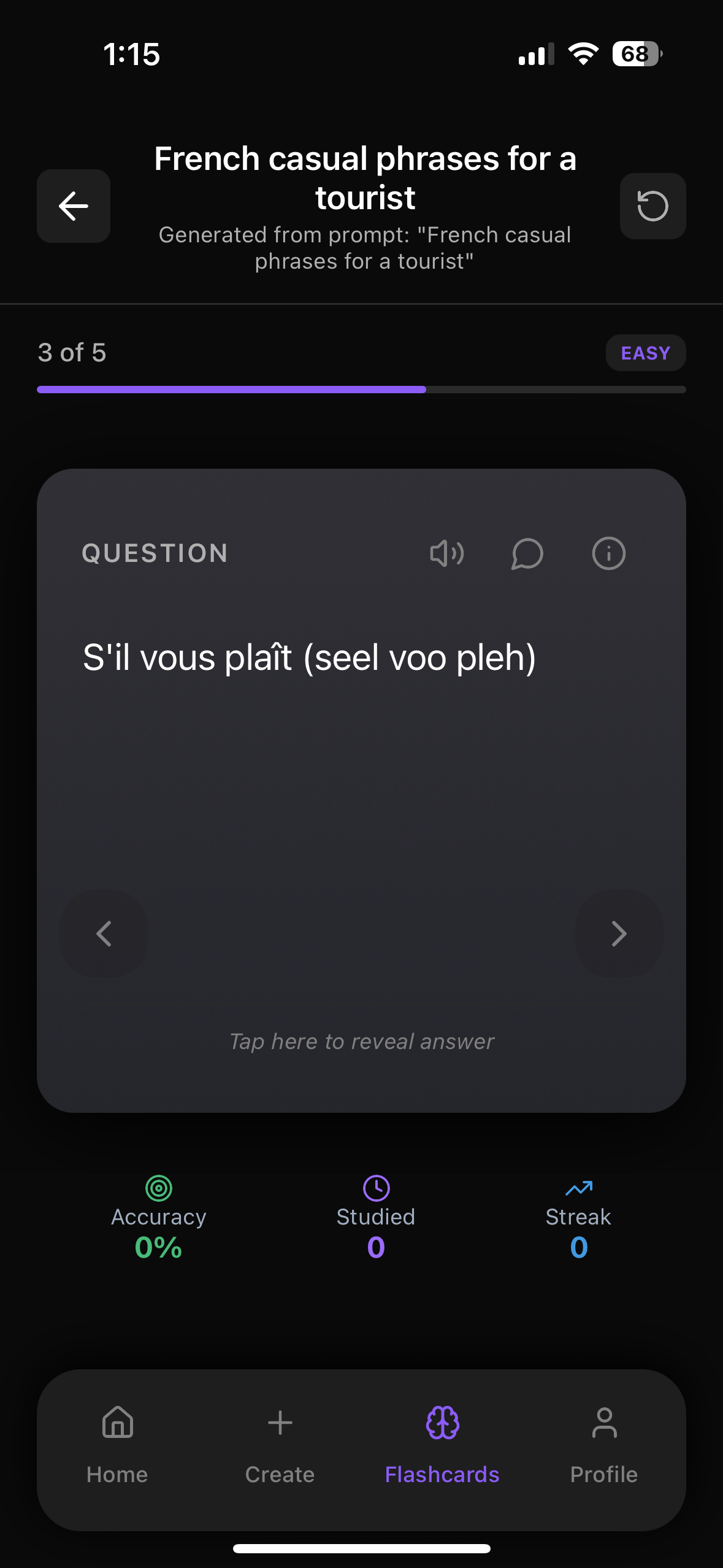
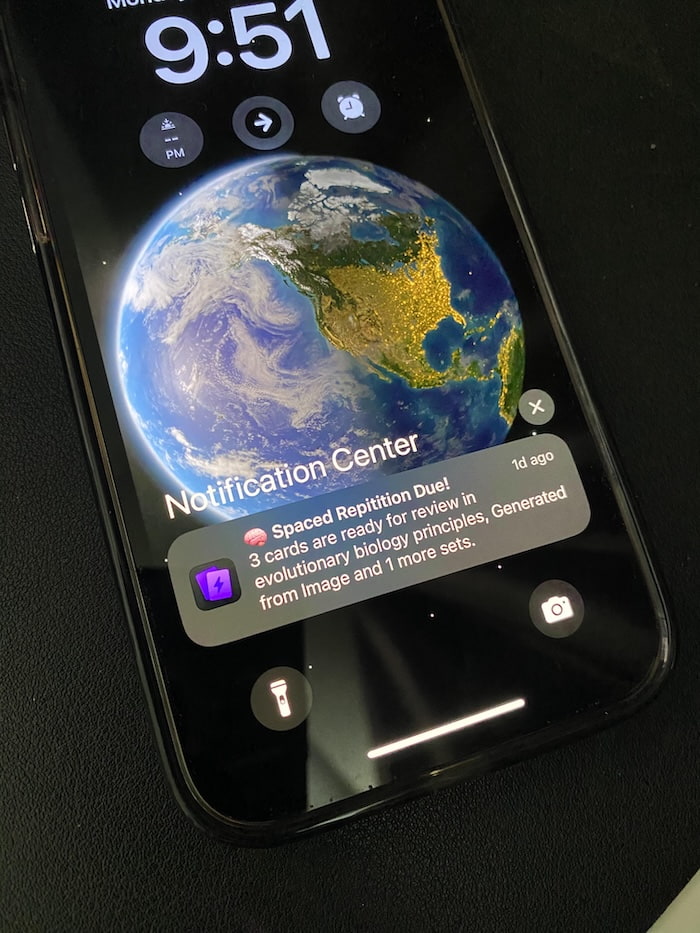
Flashrecall automatically keeps track and reminds you of the cards you don't remember well so you remember faster. Like this :
On Flashrecall, just swipe through cards quickly and keep count.
Game 2: Find the Word in a Sentence
For each sight word:
- Show the word on the card
- Then say a sentence using that word
- “The dog ran fast.”
- “I could go to the park.”
- Ask your child: “Point to the word you just read” (if you’ve written the sentence under the word)
Or have them repeat the sentence with emphasis on the sight word.
With Flashrecall, you can:
- Add example sentences on the back of each card
- Or use the “chat with the flashcard” feature to ask for example sentences if you’re stuck
Game 3: Silly Voices
Every time your child reads a word correctly, have them:
- Say it in a robot voice
- Whisper it
- Say it in a “tired” voice
- Say it like a superhero
It sounds silly, but it keeps engagement high, especially for younger kids.
4. Use Pictures and Context (Not Just Isolated Words)
Some kids remember words better with a bit of context.
On Flashrecall, you can:
- Add a picture to each card (e.g., a dog for the word “dog”)
- Add a short phrase instead of just a single word
- Front: the dog
- Back: “the dog” highlighted in a sentence
You can even:
- Upload PDFs with word lists or worksheets
- Let Flashrecall turn them into flashcards automatically
- Or paste YouTube links (like sight word videos) and make cards from the content
This way, you’re not just drilling words — you’re connecting them to something meaningful.
5. Keep Sessions Short (But Consistent)
The secret is not 1-hour marathons.
You want:
- 5–10 minutes
- Once or twice a day
- Every day (or as close as you can)
Flashrecall makes this easy because:
- You get study reminders on your phone
- You can do a quick review while waiting at the doctor, in the car, or before bed
- It works offline, so no Wi-Fi needed
Short, frequent practice beats long, rare sessions every time.
6. Track Progress So Your Child Feels Proud
Kids love seeing that they’re improving.
With Flashrecall, you can:
- See how many cards are “learned”
- Check which words are still difficult
- Celebrate when a deck is mostly green (mastered)
You can say things like:
- “Last week you knew 5 words. Now you know 18!”
- “Look how many cards you got right today!”
That little bit of visible progress can be super motivating.
7. Mix Sight Words With Other School Stuff
Once you’ve got a rhythm going with sight words, you can use the same system for:
- Phonics practice (e.g., “sh”, “ch”, “th” sounds)
- Vocabulary for older kids
- Spelling words
- Reading comprehension questions
- Even other subjects like math facts or science terms
Flashrecall isn’t just a sight word app. It’s great for:
- Languages (English, Spanish, French, etc.)
- Exams and tests
- School subjects and university
- Medicine or business terms later on
You can create decks manually or generate them from:
- Text
- Images
- PDFs
- Audio
- YouTube links
- Or even a typed prompt like “Make 20 sight word cards for kindergarten”
All on your iPhone or iPad.
How to Set Up Sight Word Flash Cards in Flashrecall (Step-by-Step)
Here’s a simple way to get started today:
1. Download Flashrecall
👉 https://apps.apple.com/us/app/flashrecall-study-flashcards/id6746757085
2. Create a new deck
- Call it: “Kindergarten Sight Words – Set 1” or “First Grade Sight Words”
3. Add 10–15 words
- Type them manually
- Or copy-paste from a list
- Or take a photo of a printed list and let Flashrecall create cards from the image
4. Set a daily goal
- Even 5–10 minutes is perfect
- Turn on study reminders so you don’t forget
5. Review together
- Have your child read each word
- Tap how well they knew it
- Let spaced repetition do its thing in the background
6. Adjust and grow
- When most words are easy, add 5–10 new ones
- Remove or “retire” words that are truly mastered
Final Thoughts: Make Sight Words Simple, Not Stressful
Sight word flash cards don’t need to be a battle.
If you:
- Keep the list small
- Use smart review (spaced repetition)
- Turn it into a quick daily habit
- Add a bit of fun and context
Your child will start recognizing those tricky words way faster.
If you want an easy way to manage everything — cards, reminders, progress, and fun extras like chatting with the flashcard when you’re unsure — Flashrecall makes it ridiculously simple:
👉 https://apps.apple.com/us/app/flashrecall-study-flashcards/id6746757085
Free to start, fast, modern, and perfect for sight words on iPhone and iPad.
Frequently Asked Questions
What's the fastest way to create flashcards?
Manually typing cards works but takes time. Many students now use AI generators that turn notes into flashcards instantly. Flashrecall does this automatically from text, images, or PDFs.
Is there a free flashcard app?
Yes. Flashrecall is free and lets you create flashcards from images, text, prompts, audio, PDFs, and YouTube videos.
How do I start spaced repetition?
You can manually schedule your reviews, but most people use apps that automate this. Flashrecall uses built-in spaced repetition so you review cards at the perfect time.
Related Articles
- Sight Word Cards: 7 Powerful Ways To Help Kids Read Faster (Most Parents Don’t Know These Tricks) – Turn boring word drills into a fun, smart system your kid actually enjoys.
- Multiplication Flash Cards: 7 Powerful Ways To Help Kids Master Times Tables Faster (Without Tears) – Turn boring drills into a fun, smart study system that actually sticks.
- Addition Flash Cards: 7 Powerful Ways To Help Kids Master Math Facts Faster (Without Tears) – Turn boring drills into quick, fun wins with smart digital flashcards that actually work.
Research References
The information in this article is based on peer-reviewed research and established studies in cognitive psychology and learning science.
Cepeda, N. J., Pashler, H., Vul, E., Wixted, J. T., & Rohrer, D. (2006). Distributed practice in verbal recall tasks: A review and quantitative synthesis. Psychological Bulletin, 132(3), 354-380
Meta-analysis showing spaced repetition significantly improves long-term retention compared to massed practice
Carpenter, S. K., Cepeda, N. J., Rohrer, D., Kang, S. H., & Pashler, H. (2012). Using spacing to enhance diverse forms of learning: Review of recent research and implications for instruction. Educational Psychology Review, 24(3), 369-378
Review showing spacing effects work across different types of learning materials and contexts
Kang, S. H. (2016). Spaced repetition promotes efficient and effective learning: Policy implications for instruction. Policy Insights from the Behavioral and Brain Sciences, 3(1), 12-19
Policy review advocating for spaced repetition in educational settings based on extensive research evidence
Karpicke, J. D., & Roediger, H. L. (2008). The critical importance of retrieval for learning. Science, 319(5865), 966-968
Research demonstrating that active recall (retrieval practice) is more effective than re-reading for long-term learning
Roediger, H. L., & Butler, A. C. (2011). The critical role of retrieval practice in long-term retention. Trends in Cognitive Sciences, 15(1), 20-27
Review of research showing retrieval practice (active recall) as one of the most effective learning strategies
Dunlosky, J., Rawson, K. A., Marsh, E. J., Nathan, M. J., & Willingham, D. T. (2013). Improving students' learning with effective learning techniques: Promising directions from cognitive and educational psychology. Psychological Science in the Public Interest, 14(1), 4-58
Comprehensive review ranking learning techniques, with practice testing and distributed practice rated as highly effective

FlashRecall Team
FlashRecall Development Team
The FlashRecall Team is a group of working professionals and developers who are passionate about making effective study methods more accessible to students. We believe that evidence-based learning tec...
Credentials & Qualifications
- •Software Development
- •Product Development
- •User Experience Design
Areas of Expertise
Ready to Transform Your Learning?
Start using FlashRecall today - the AI-powered flashcard app with spaced repetition and active recall.
Download on App Store